I’d had my wolf cut for close to eight months, still genuinely happy with the shape and texture, when I started noticing in photos that my hair looked noticeably flatter and less dimensional than it had right after the initial cut. Nothing about the layering itself had changed, my stylist confirmed as much during a routine trim, but my all-over single-process color had quietly stopped doing the cut any favors as it settled into a slightly duller, more uniform version of itself over those months. She suggested adding highlights specifically to work with the existing layering rather than just refreshing the base color, and the difference once she finished was honestly bigger than I expected from what I’d assumed would be a fairly minor addition rather than a genuine transformation of how the whole cut read.
That appointment taught me something I hadn’t fully understood before, that a wolf cut’s dramatic layering and strategically placed highlights aren’t really two separate style choices happening to exist on the same head, they’re specifically designed to amplify each other when done thoughtfully together. If your own wolf cut has started feeling a little flat or one-dimensional the way mine had, or you’re planning a first appointment and want to understand why so many people pair this specific cut with highlights, here’s everything worth knowing.
Why Highlights and the Wolf Cut Are Such a Natural Pairing
The wolf cut’s entire visual appeal depends on visible movement and layer separation throughout the head, concentrated most dramatically at the crown with softer pieces framing the face. A flat, single-process color can only showcase that movement so much, since there’s no color variation to further emphasize how each individual layer catches light differently as hair moves throughout a normal day. Highlights, placed thoughtfully alongside the existing layering pattern, essentially give the cut’s built-in movement something additional to work with, creating a combined effect that’s considerably more dynamic than either the cut or the color could achieve entirely on its own.
My stylist explained the technical relationship this way during that appointment: highlights placed without any consideration for an existing haircut’s layering can end up looking random or disconnected, while highlights specifically mapped to follow where the cut’s layers actually fall create a genuinely cohesive result where the eye reads the cut and color as one unified, considered style rather than two separate decisions loosely stacked on top of each other.
1. Face-Framing Highlights

Concentrating lighter pieces specifically within the wolf cut’s signature curtain-style face-framing sections draws additional attention to exactly the area the cut already emphasizes, creating a focal point that feels intentional and cohesive rather than scattered throughout the whole head without any particular concentration or purpose.
2. Crown-Concentrated Highlights
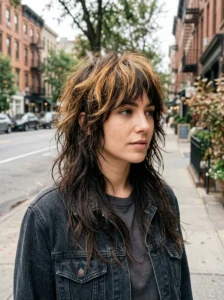
Placing the brightest, most noticeable highlights specifically at the crown, where the wolf cut’s shortest and most dramatically layered pieces live, emphasizes exactly the area carrying the most visual weight and movement throughout the cut, making this often the single most impactful placement decision within the whole highlighting process.
3. All-Over Dimensional Highlights

Rather than concentrating color in one specific area, weaving highlights more evenly throughout the entire cut creates consistent dimension everywhere the layering creates movement, resulting in a look where virtually every angle and every bit of hair movement reveals some visible color variation rather than just specific, isolated sections.
4. Money Piece Highlights

A few concentrated, noticeably lighter pieces right at the front, framing the face most directly, offers a more subtle, lower-maintenance approach than full highlighting throughout, while still delivering a genuine visual boost exactly where it’s most immediately visible in everyday interactions and photos.
5. Underneath Highlights
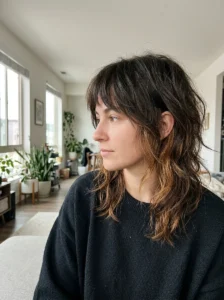
Placing highlights specifically in the underneath layers, hidden beneath the top sections when hair is worn down, creates a surprise element that’s revealed through the cut’s natural movement throughout the day, as different layers shift and expose the hidden color beneath them.
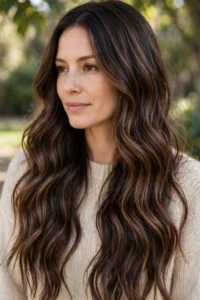
6. Caramel Highlights on Brunette
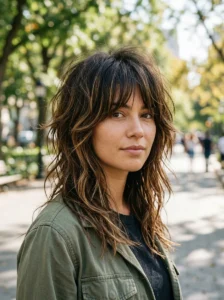
Warm caramel tones woven through a brunette base create soft, sun-kissed dimension that particularly complements the wolf cut’s layering, since the warm color echoes the kind of natural variation you might see in hair that’s simply spent considerable time outdoors.
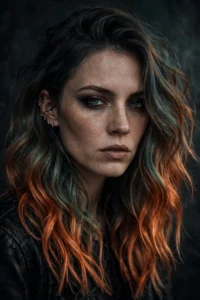
7. Platinum Highlights on Dark Hair
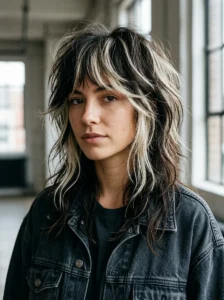
High-contrast platinum pieces against dark brown or black hair create dramatic, striking dimension, particularly emphasizing the wolf cut’s layer separation given how clearly the stark color difference reveals exactly where each section falls throughout normal movement.
8. Honey Highlights on Medium Brown

A warm, golden honey tone blended through medium brown hair offers a softer, more naturally-reading dimensional effect than higher-contrast options, appealing to anyone wanting the highlighted, multidimensional look without as dramatic or obvious a color statement.
9. Ash Highlights on Cool-Toned Blonde

For already-blonde hair with cool undertones, adding slightly lighter, ash-toned highlights maintains tonal consistency while still creating the visible dimension and depth the wolf cut’s layering is specifically designed to showcase.
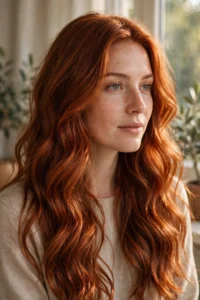
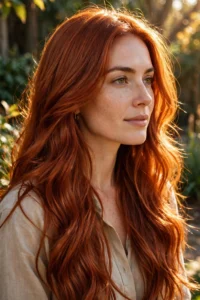
10. Copper Highlights on Auburn
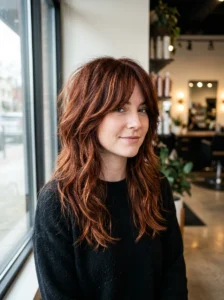
Warm copper pieces woven through an auburn base intensify and enrich the existing warmth rather than fighting against it, creating a cohesive, multidimensional red-toned result that particularly flatters the cut’s face-framing curtain pieces.
Highlighting Techniques Worth Discussing
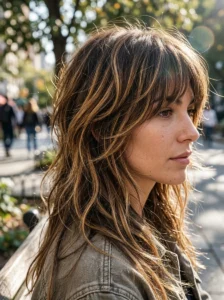
Balayage, a hand-painted technique creating a soft, gradual transition rather than sharp lines, tends to particularly complement the wolf cut’s already soft, undone aesthetic, avoiding the more structured, graphic quality that traditional foiled highlights sometimes create.
Foilyage, combining traditional foiling with hand-painted technique, offers more precise, controlled placement than balayage alone while still maintaining some of that softer, more blended quality, often recommended specifically for anyone wanting more dramatic lightness without losing the cut’s inherently relaxed character.
Traditional foils, placed with careful attention to the cut’s specific layering pattern, can achieve the most precise, controlled highlighting placement, particularly useful for anyone wanting very specific, deliberate color concentration in exact sections rather than a more blended, organic-looking result.
Getting the Placement Right at the Salon
Bring your current haircut’s layering pattern into the conversation explicitly, since a colorist working without reference to exactly where your specific layers fall may place highlights in a way that doesn’t actually interact with and enhance the cut’s existing structure.
Discuss whether you want highlights concentrated in specific areas, like the crown or face-framing pieces, or distributed more evenly throughout, since this single decision significantly affects both the finished look and how dramatic or subtle the overall result reads.
Ask about maintenance realistically, since highlights generally require more involved upkeep than a single-process color, including regular toning to prevent brassiness and more frequent appointments to manage visible regrowth.
Maintaining Highlighted Wolf Cut Hair
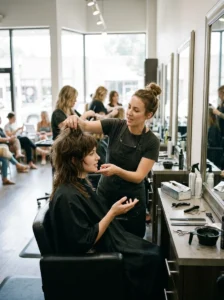
A purple or blue-toned shampoo, depending on your specific highlight tone, helps manage unwanted brassiness between salon visits, particularly important for cooler-toned highlights that can shift warm over time without this kind of regular maintenance.
Regular toning appointments, roughly every six to eight weeks, refresh the highlights’ intended tone without requiring a full reapplication, often conveniently aligning with the wolf cut’s own regular trim schedule.
Deep conditioning treatments matter more with highlighted hair than with a simpler, single-process color, since the lightening process involved in creating highlights makes hair more porous and prone to dryness without consistent moisture support.
Which Hair Types Showcase Highlights on This Cut Best

Straight hair displays highlight placement very clearly, since there’s no competing natural texture, making precise placement decisions particularly important given how visibly each section will read against the smooth surface.
Wavy hair showcases dimensional highlighting beautifully, since the natural movement adds extra opportunities for different sections of color to catch light throughout the day, working directly with the highlights rather than requiring additional styling effort to reveal that dimension.
Curly hair genuinely excels with highlighted wolf cuts, since each curl catches and reflects the varying tones slightly differently, creating a particularly rich, multidimensional effect that straighter hair types typically need more active styling to achieve to the same degree.
Fine hair benefits from the illusion of added depth and density that dimensional highlighting provides, since a flat, single-process color can sometimes make fine hair look thinner than highlights specifically placed to create visual layers would achieve.
Thick, dense hair can carry bold, high-contrast highlighting particularly well, with plenty of volume for dramatic color placement to create real visual impact without any section looking sparse.
How Highlight Placement Can Flatter Different Face Shapes
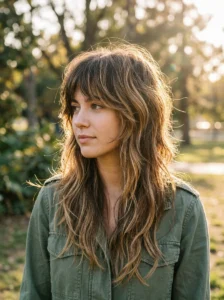
Round faces tend to benefit from highlights concentrated slightly longer around the jaw and chin area within the face-framing pieces, helping elongate the overall shape rather than adding brightness at the widest part of the face.
Square or angular faces often look particularly striking with highlights that soften the jawline specifically, using lighter pieces to draw the eye in a way that complements rather than emphasizes strong, defined bone structure.
Heart-shaped faces, wider at the forehead and narrower at the chin, tend to benefit from highlights concentrated near the jaw to help balance proportions between a wider top and narrower bottom.
Long or oval faces generally have the most flexibility, since there’s less specific correction needed, allowing freedom to choose placement based purely on personal preference for drama or subtlety.
Products Worth Having on Hand
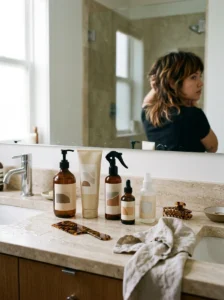
A color-safe, sulfate-free shampoo and conditioner matter significantly for highlighted hair specifically, since the lightening process makes hair more porous and prone to both dryness and faster fading without gentle, color-focused formulas.
A purple or blue-toned color-depositing conditioner, used in rotation with your regular routine, helps maintain the intended tone between full salon toning appointments, preventing the gradual drift toward unwanted brassiness.
A lightweight leave-in conditioner or hair oil applied to the ends combats dryness from the lightening process, keeping the cut’s layered ends looking healthy and glossy rather than dry or frizzy.
A heat protectant spray remains essential for highlighted hair given how much more vulnerable lightened sections are to heat damage compared to natural, unprocessed hair throughout the rest of the cut.
Common Mistakes to Avoid
Getting highlights without discussing your specific cut’s layering pattern can result in color placement that looks disconnected or random rather than working cohesively with the cut’s existing structure and movement.
Choosing highlights that are too high-contrast for your comfort level without discussing maintenance expectations can lead to frustration within just a few weeks if you’re not prepared for the more involved upkeep schedule bold highlights typically require.
Skipping regular toning appointments between full highlighting sessions can let the color drift toward unwanted brassiness, undermining the carefully considered placement and tone your colorist originally achieved.
Frequently Asked Questions
How many highlights does a wolf cut typically need to look dimensional without being overwhelming? This varies depending on your desired intensity, but many colorists recommend starting with fewer, more strategically placed highlights, particularly around the face and crown, and adding more at subsequent appointments if you want a more all-over, heavily highlighted result.
Will highlights work on a wolf cut with any hair texture? Yes, though curly or very textured hair tends to showcase dimensional highlights particularly dramatically, since each curl catches and reflects the varying tones differently throughout the day compared to straighter hair.
How often do I need to touch up highlights on this cut? Generally every eight to twelve weeks for a full refresh, with toning touch-ups recommended more frequently in between to maintain the intended tone and prevent unwanted brassiness.
Can I add highlights to an already-colored wolf cut, or do I need to start with natural hair? Highlights can generally be added to previously colored hair, though your colorist will need to assess your hair’s current color and condition to determine the safest, most effective approach for achieving clean, accurate highlighting results.
Does highlighting damage hair more than a standard single-process color? Highlighting generally involves more lightening than a simple, same-level color change, making it somewhat more intensive on hair health, which is why regular deep conditioning becomes especially important when maintaining highlighted hair over time.
Will highlights make my wolf cut’s layering look more or less dramatic? Generally more dramatic, since the color variation gives the eye additional information about where each layer falls and how it moves, amplifying the structural contrast that’s already built into the cut rather than competing with or flattening it.
Is balayage or traditional foiling better suited to this specific cut? Balayage tends to complement the wolf cut’s inherently soft, undone aesthetic particularly well, though traditional foiling can achieve more precise, controlled placement for anyone wanting very deliberate color concentration in specific sections rather than a softer, more blended result.
Final Thoughts
Looking back at that appointment where I first realized my flat, dulling color was quietly undermining a cut I otherwise still loved, I’m genuinely glad my stylist suggested addressing the color rather than just assuming the cut itself needed to change. Highlights and the wolf cut’s layering turned out to be specifically designed to amplify each other, and if your own cut has started feeling a little flat the same way mine did, it might not be the haircut that needs reconsidering at all.