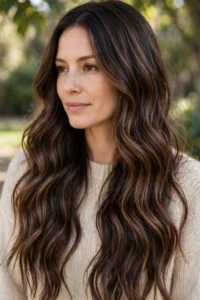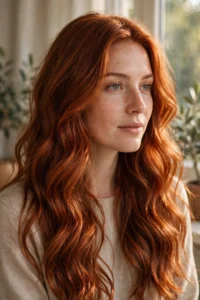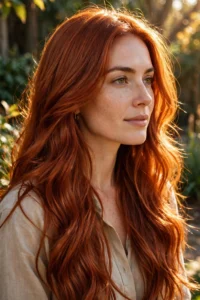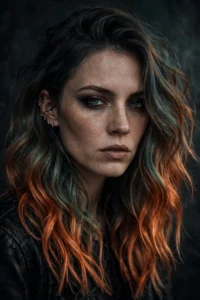
I’d had my wolf cut for about six months, genuinely happy with the layering and texture, when I started feeling like something about the overall shape was missing without quite being able to put my finger on what. I brought this up almost offhandedly during a routine trim, expecting my stylist to suggest some adjustment to the existing layering, and instead she asked whether I’d ever considered bangs, specifically pointing out that a lot of wolf cut interpretations she’d done recently incorporated some kind of fringe, and that the style I currently had, while beautiful, was actually missing an element a lot of people specifically associate with the trend. I hadn’t realized bangs were such a common, almost expected component, having mentally filed my own bangs-free version as simply “the” wolf cut rather than one variation among several genuinely different approaches to incorporating or excluding this particular element.
That conversation led to adding soft curtain bangs at my next appointment, and the difference in how the whole cut read afterward was honestly more significant than I expected from what felt like a relatively small addition. If you’ve been wondering whether bangs belong with your own wolf cut, or you’re planning your first appointment and want to understand the real range of options here, here’s everything worth knowing about this particular combination.
Why Bangs and the Wolf Cut Pair So Naturally
The wolf cut’s core design already emphasizes dramatic volume at the crown paired with softer, face-framing pieces toward the front, which means bangs, in whatever specific form, aren’t really an addition competing with the cut’s existing structure so much as an extension of an element already built into the style’s core philosophy. My stylist explained this specific relationship while working on mine: the curtain-style face-framing pieces that already define a lot of wolf cut interpretations are essentially a looser, less committed version of bangs, meaning adding actual bangs doesn’t require fighting against the cut’s existing design, it simply pushes an element that’s already present further into a more defined, more intentional statement.
1. Classic Soft Curtain Bangs
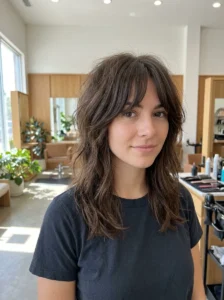
Parted down the center and swept gently to either side, classic curtain bangs blend seamlessly with the wolf cut’s existing face-framing layers, creating one of the most natural, cohesive-feeling combinations within this entire category. This version requires relatively minimal daily styling since the bangs are specifically cut to fall into their intended shape with minimal intervention, particularly on hair with any natural wave or movement already present.
2. Longer, Face-Grazing Curtain Bangs

Kept slightly longer than the classic version, these bangs brush against the cheeks rather than stopping at the forehead, offering a softer, more subtle framing effect that blends even more gradually into the rest of the cut’s layering throughout the sides and crown.
3. Wispy, Textured Curtain Bangs

Cut with deliberately uneven, textured ends rather than a smooth, blended edge, this version echoes the wolf cut’s overall choppy, undone aesthetic more directly than the softer, classic curtain style, creating a more cohesively textured look throughout the entire cut.
4. Full Blunt Bangs
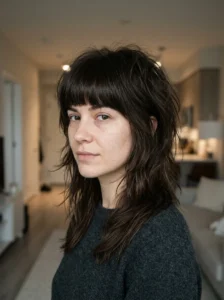
Cut straight across rather than swept to the sides, full blunt bangs create a considerably bolder, more graphic statement than the softer curtain options, offering real visual drama right at the front of the face that contrasts intentionally with the cut’s more textured, choppy layering elsewhere.
5. Full Textured Bangs
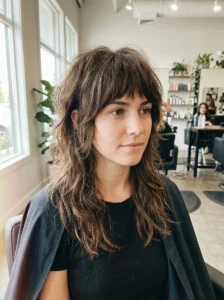
Combining the boldness of full-width bangs with some deliberate choppy texture throughout, rather than a completely smooth, blunt line, this version bridges the gap between the dramatic statement of full bangs and the overall undone quality that defines the wolf cut’s broader aesthetic.
6. Full Bangs With a Slight Arch

Cut with a subtle curve rather than a perfectly straight line, this softer take on full bangs avoids reading as quite as severe or graphic as a completely blunt version, while still delivering considerably more visual presence than curtain-style options.
7. Deep Side-Swept Bangs
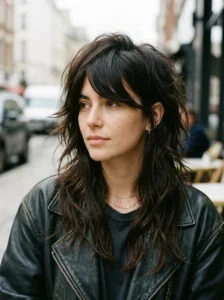
Styled to sweep dramatically to one side rather than falling relatively evenly across the forehead, this version adds genuine asymmetry to the overall cut, pairing particularly well with an already deep side part elsewhere in the style.
8. Asymmetrical Bangs With Uneven Length
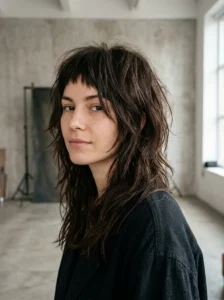
Deliberately cut shorter on one side than the other, asymmetrical bangs create a bold, editorial quality that particularly suits more dramatic wolf cut interpretations with equally bold, uneven layering throughout the rest of the head.
9. Baby Bangs

Cut considerably shorter than traditional bangs, sitting well above the eyebrows, baby bangs create a genuinely striking, statement-making contrast against the wolf cut’s longer, more dramatically layered sections throughout the rest of the head.
10. Micro Fringe
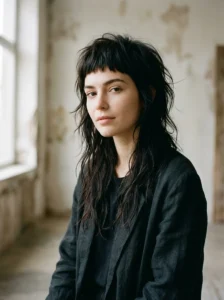
An even more extreme, shorter version than baby bangs, micro fringe represents the boldest possible bang choice within this entire category, suited specifically to anyone wanting maximum visual drama and contrast against the cut’s existing length and texture.
Which Hair Types Suit Different Bang Styles Best
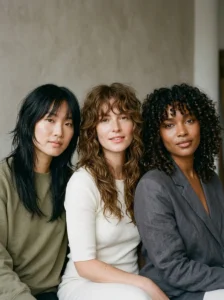
Straight hair works particularly well with blunt or full bang variations, since the lack of competing texture lets these cleaner, more precise lines read clearly without natural wave or curl disrupting the intended shape.
Wavy hair pairs beautifully with the softer curtain bang options specifically, since natural wave helps the bangs fall into their intended swept-to-the-side shape with minimal styling intervention required on most days.
Curly hair can incorporate bangs successfully, though curtain or wispy, textured options tend to work better than full, blunt bangs, since curl pattern and shrinkage make achieving a perfectly straight, uniform line considerably more challenging to maintain consistently.
Getting the Right Bang Style at the Salon
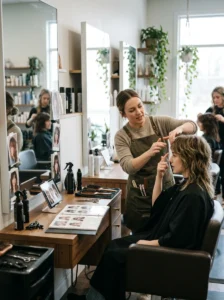
Discuss your face shape honestly with your stylist, since different bang styles genuinely suit different proportions, and this conversation significantly affects which specific option within this broad category will actually look most flattering on your individual features.
Ask about daily maintenance expectations for whichever style you’re considering, since full, blunt bangs generally require more active daily styling to maintain their precise shape compared to the more forgiving, naturally-falling curtain options.
Bring reference photos specifically showing the bang style alongside a wolf cut, rather than bang inspiration alone, since seeing how the specific combination has worked on other people helps set more accurate expectations for your own result.
Maintaining Bangs on a Wolf Cut
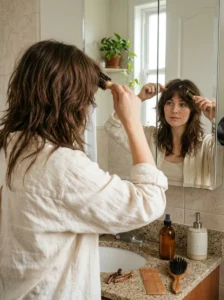
Bangs generally need more frequent trims than the rest of the cut, often every three to four weeks for full or blunt styles specifically, since even small amounts of growth can noticeably change how they fall and function around the face.
Curtain and softer, longer bang styles can typically stretch slightly longer between dedicated bang trims, since their looser, swept shape is somewhat more forgiving of gradual growth than a precise, blunt line would be.
How Face Shape Affects Which Bang Style Suits You Best
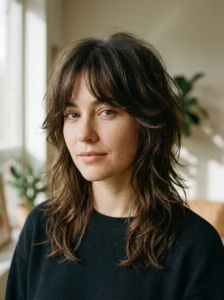
Round faces tend to benefit from side-swept or deep curtain bangs that add some length and angle, rather than full, blunt bangs cut straight across, which can sometimes emphasize roundness by adding a strong horizontal line at the widest part of the face.
Square or angular faces often look softer with wispy, textured curtain bangs or full bangs with a slight arch, since the movement and gentle curve help break up strong, defined jaw and forehead angles more effectively than a severe, perfectly straight line would.
Heart-shaped faces, wider at the forehead and narrower at the chin, tend to benefit from side-swept or longer curtain bangs that add softness near the temples without adding further width at the widest point of the face.
Long or oval faces generally have the most flexibility across this entire range, including full, blunt bangs, since the horizontal line these create can actually help balance a longer face shape by visually shortening the overall proportions.
Styling Tips for Each Bang Category
For curtain bangs specifically, a round brush used while blow-drying, curving the ends outward and away from the face, helps them fall into their intended swept shape, though many people with some natural wave find air drying alone achieves a similar result with minimal effort.
For full or blunt bangs, a flat iron or round brush used daily helps maintain the precise, clean line these styles depend on, since this particular bang category tends to look noticeably less polished without some regular, deliberate styling attention.
For baby bangs or micro fringe, minimal styling is typically needed given the shorter length, though a small amount of texturizing product worked through with fingers can help maintain definition and prevent the shortest pieces from looking flat against the forehead.
Products Worth Having on Hand
A lightweight texturizing spray helps maintain movement and definition in curtain or wispy bang styles without weighing down the shorter, face-framing pieces.
A small round brush, sized specifically for bangs rather than the full head, makes daily styling for full or blunt bang variations considerably more manageable than attempting to use a larger brush meant for the rest of the cut.
A heat protectant spray matters particularly for bang sections specifically, since this area often receives more frequent, concentrated heat styling than the rest of the cut, especially for full or blunt bang styles requiring daily attention.
Common Mistakes to Avoid
Choosing a bang style without discussing face shape can lead to a result that doesn’t flatter your specific proportions as effectively as a style chosen with that consideration in mind from the start.
Underestimating the maintenance commitment, particularly for full or blunt bangs, can lead to frustration within just a few weeks as growth changes how the bangs fall and interact with your eyes and face considerably sooner than people often expect.
Frequently Asked Questions
Do I need to get bangs cut at the same appointment as the rest of my wolf cut, or can they be added later? Bangs can generally be added at a later appointment to an existing wolf cut, and many stylists are comfortable incorporating this addition into your regular trim schedule rather than requiring an entirely separate appointment.
Will bangs work on a shorter wolf cut, or do they need more length elsewhere to balance? Bangs work across the full range of wolf cut lengths, though your stylist may adjust the specific bang style recommended based on how much overall length and layering you have elsewhere to maintain a cohesive, balanced proportion throughout the cut.
How often will I need to trim just the bangs between full haircut appointments? Generally every three to four weeks for full or blunt styles, with softer curtain bangs often able to stretch slightly longer, sometimes four to six weeks, before needing a dedicated trim.
Can I style my bangs differently day to day, or do they need to stay in one consistent shape? Many bang styles, particularly curtain and wispy variations, offer genuine flexibility for different daily styling, swept to the side one day, pushed back the next, while full, blunt bangs tend to look most intentional styled consistently in their original cut shape.
Will bangs require a completely different daily styling routine than the rest of my wolf cut? Often yes, at least to some degree, since bangs frequently need separate attention with a round brush or straightener even if the rest of the cut is styled with minimal intervention, so factoring in this additional daily step matters when deciding whether to add bangs to your existing routine.
Is it possible to grow out bangs gracefully once I have them, if I decide I want to go back to a bangs-free wolf cut? Curtain bang styles generally grow out more gracefully than full or blunt bangs, since their longer, swept shape blends more naturally into the rest of the cut’s face-framing layering over time, though working with your stylist on strategic trims during the growing-out period helps any bang style transition more smoothly regardless of which specific version you started with.
Final Thoughts
Looking back at that conversation where my stylist first pointed out how common bangs actually are within wolf cut interpretations, I’m genuinely glad I brought up that vague sense that something was missing rather than just living with mild dissatisfaction indefinitely. Bangs turned out to be exactly the element that pulled my own cut together, and if you’ve had a similar feeling about your own wolf cut without quite identifying the cause, it might be worth having the same conversation with your own stylist before assuming the issue lies somewhere else entirely.