The side part might be the most dependable haircut a man can wear. It has survived a century of trends without ever really leaving. It makes almost every face shape look sharper, it works at any age, and a good version of it can carry you from a Monday meeting to a Saturday night without much effort in between.
That said, "side part" covers a lot of ground. There is the slick Mad Men version, the textured modern one, the faded one, the curly one. Picking the wrong variation for your hair type or lifestyle is what turns a classic into a headache. Below are ten distinct versions: who each suits, what to tell your barber, and what styling actually takes.
1The Classic Side Part
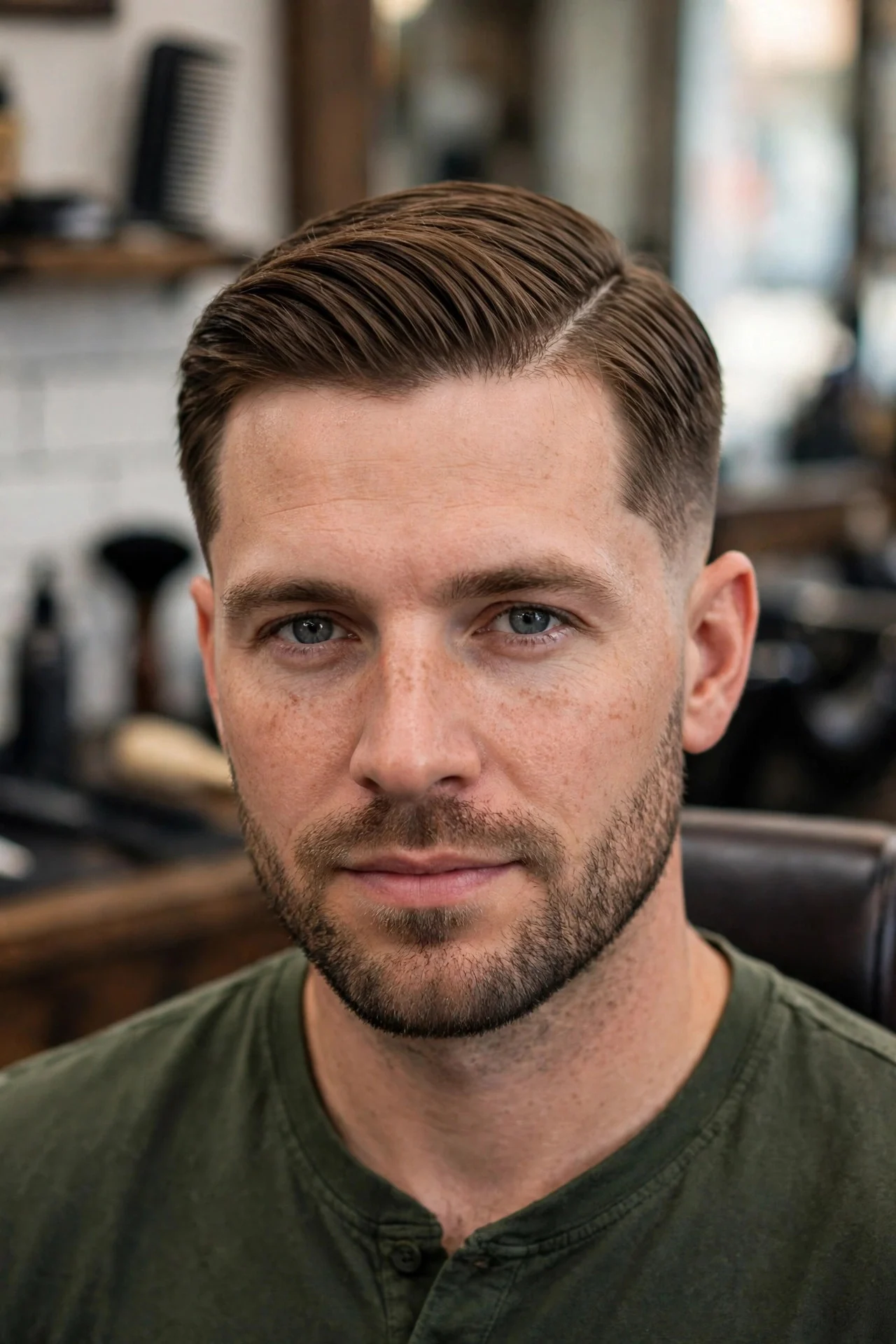
Ask your barber for a classic side part with a scissor cut: roughly 3 to 4 inches on top, tapered neatly at the sides and back with clippers no lower than a #3, blended into the neckline. No fade, no disconnected edges. This is the Don Draper shape, and it lives or dies on a clean part line.
It suits straight to slightly wavy hair best, and it is kindest to oval, square, and rectangular faces. Rounder faces should keep a little extra height on top so the style does not round everything out further. Styling takes three minutes: blow dry forward and to the side from the part, then work a pea-sized amount of medium-hold pomade through. Maintenance is a trim every 3 to 4 weeks to keep the taper crisp. The drawback is that it looks unfinished on very thick or unruly hair unless you commit to the blow dryer.
2The Modern Textured Side Part

This is the current default version of the side part. Ask for point-cut texture through the top with length around 3 to 5 inches, sides faded or tapered (a low to mid fade works), and a defined but natural part. The texture replaces the old slick finish, so it holds shape without looking wet.
Best for guys with straight or wavy hair of medium thickness who want something office-safe but not stiff. Style it by applying matte clay to towel-dried hair, then blow drying from the part with a slight lift at the roots. The texture does the work for you, which means it still looks decent on day two without restyling. You will need a trim every 4 weeks to keep the fade fresh, and over-texturizing is the real risk: too much thinning turns the top stringy. A barber who understands texture rather than just removing bulk is worth the hunt.
3Side Part With Fade
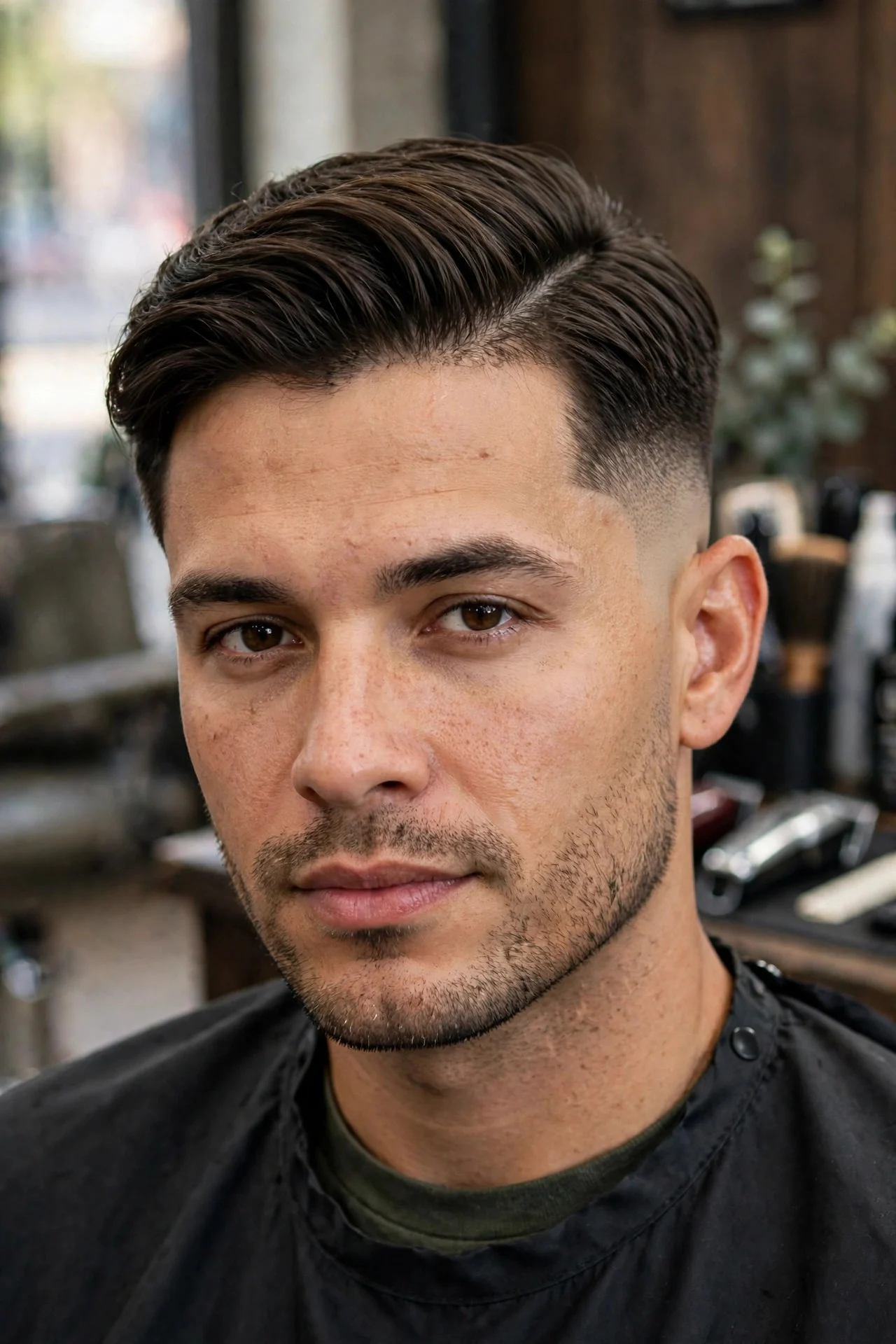
Ask for your choice of low, mid, or high skin fade on the sides and back, with 2.5 to 4 inches left on top and a part either combed in or etched with a hard line (more on that in #7). The fade gives the old classic a sharp, graphic frame.
This suits men who like a tight, clean outline and do not mind visiting the barber every 2 to 3 weeks, because a grown-out fade ruins the effect fast. It works well on thick and coarse hair since the sides are simply removed from the equation. Oval, heart, and diamond faces benefit most; very square jaws can look overly angular with a high fade, so go mid or low there. Styling is quick: pomade or paste, comb from the part, done. The honest trade-off is the upkeep schedule and the cost of it.
4Side Part With Undercut
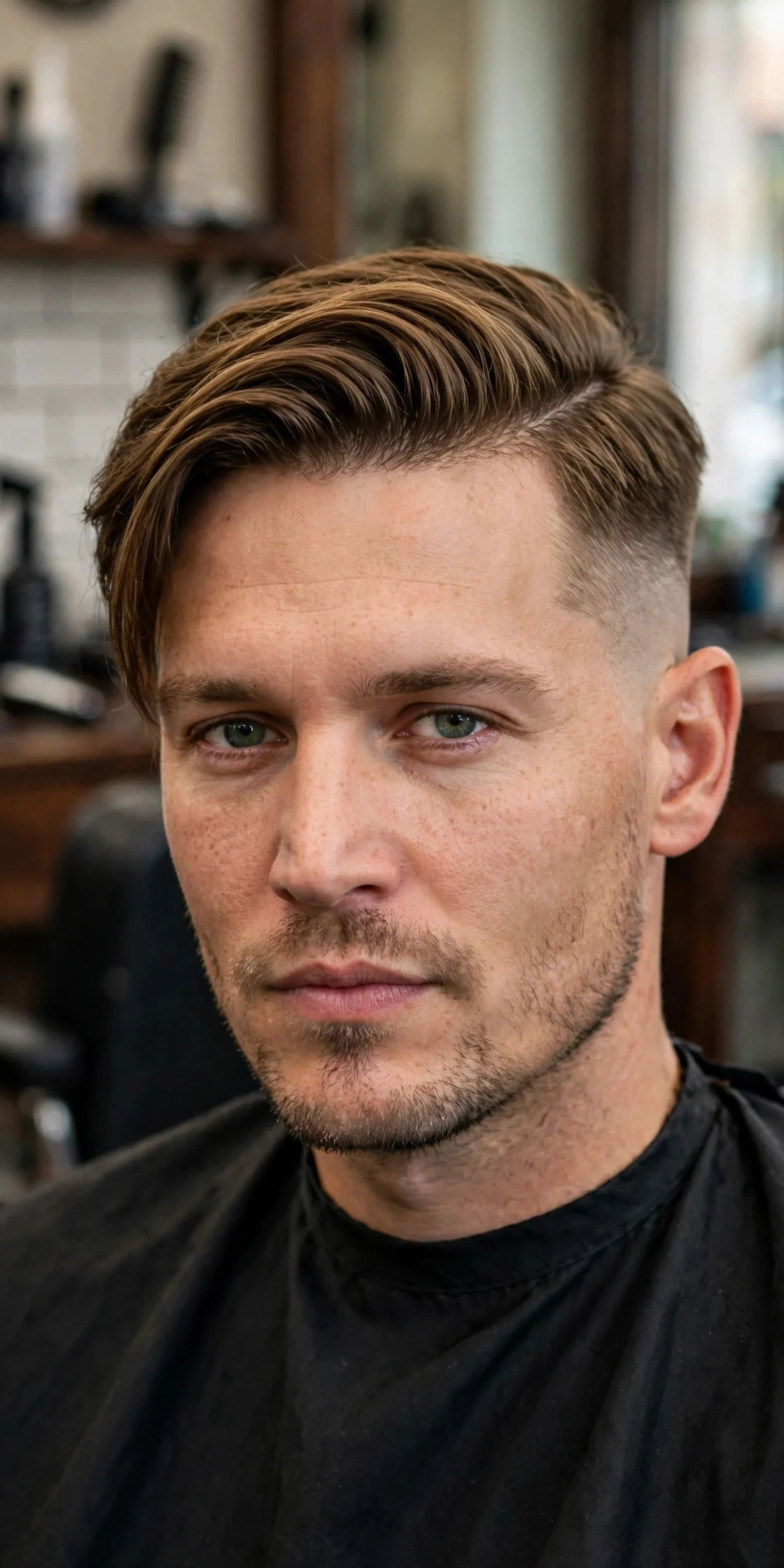
Ask for a disconnected undercut on the sides and back, taken to a #1 or #2 or scissored short, with 4 to 6 inches of length on top that sweeps from the part. The disconnect means no blending, just a sharp drop-off between the long top and the short sides.
This is for bold dressers with enough top length and thickness to make the contrast dramatic. It suits thick, straight hair and strong jawlines, and it reads youthful and edgy rather than corporate. Thin or fine hair struggles here because the top needs real density to look intentional. Styling needs a blow dryer and a strong-hold product, then the top gets swept and shaped from the part. Maintenance runs on two clocks: the undercut needs attention every 2 to 3 weeks, and the grow-out phase is awkward since the top keeps getting heavier.
5Wavy Side Part
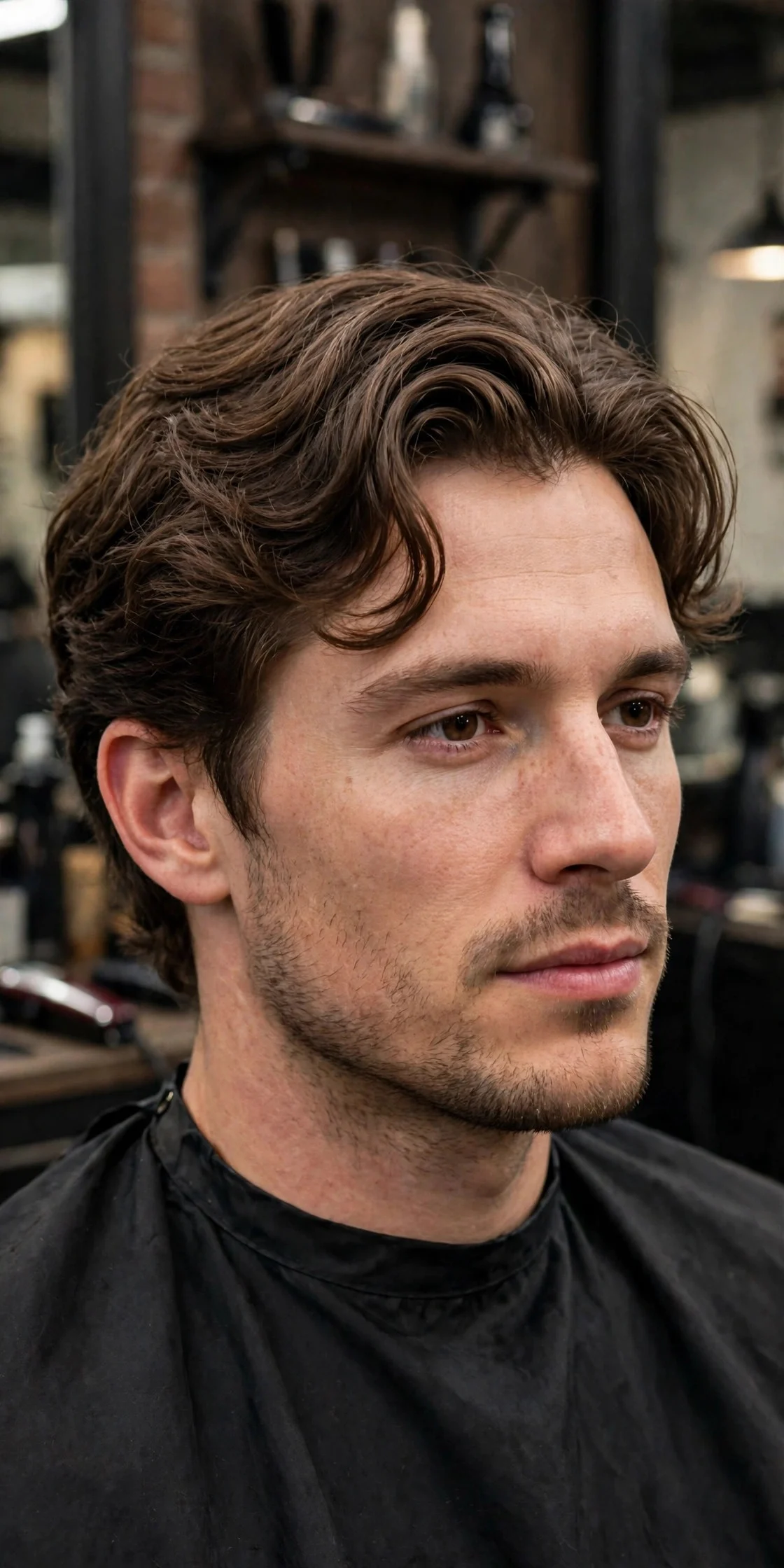
Ask your barber to leave generous length, 4 to 6 inches on top, with soft layers that follow your natural wave pattern. Sides can be scissored neat or lightly tapered. Tell them you want the part placed where your hair naturally wants to separate, not forced. That one detail changes everything.
Naturally wavy hair finally gets a version of the side part that does not fight it. This suits oval and oblong faces especially well, and the waves add volume that flat-lying classic parts lack. Style on damp hair with a light cream or sea salt spray, then tousle from the part and let it air dry. A diffuser helps on thick hair. Trims every 5 to 6 weeks, and the style tolerates grow-out gracefully. The drawback is humidity: wavy hair expands in damp air, so keep a little anti-frizz serum in your routine through the warm months.
6Curly Side Part
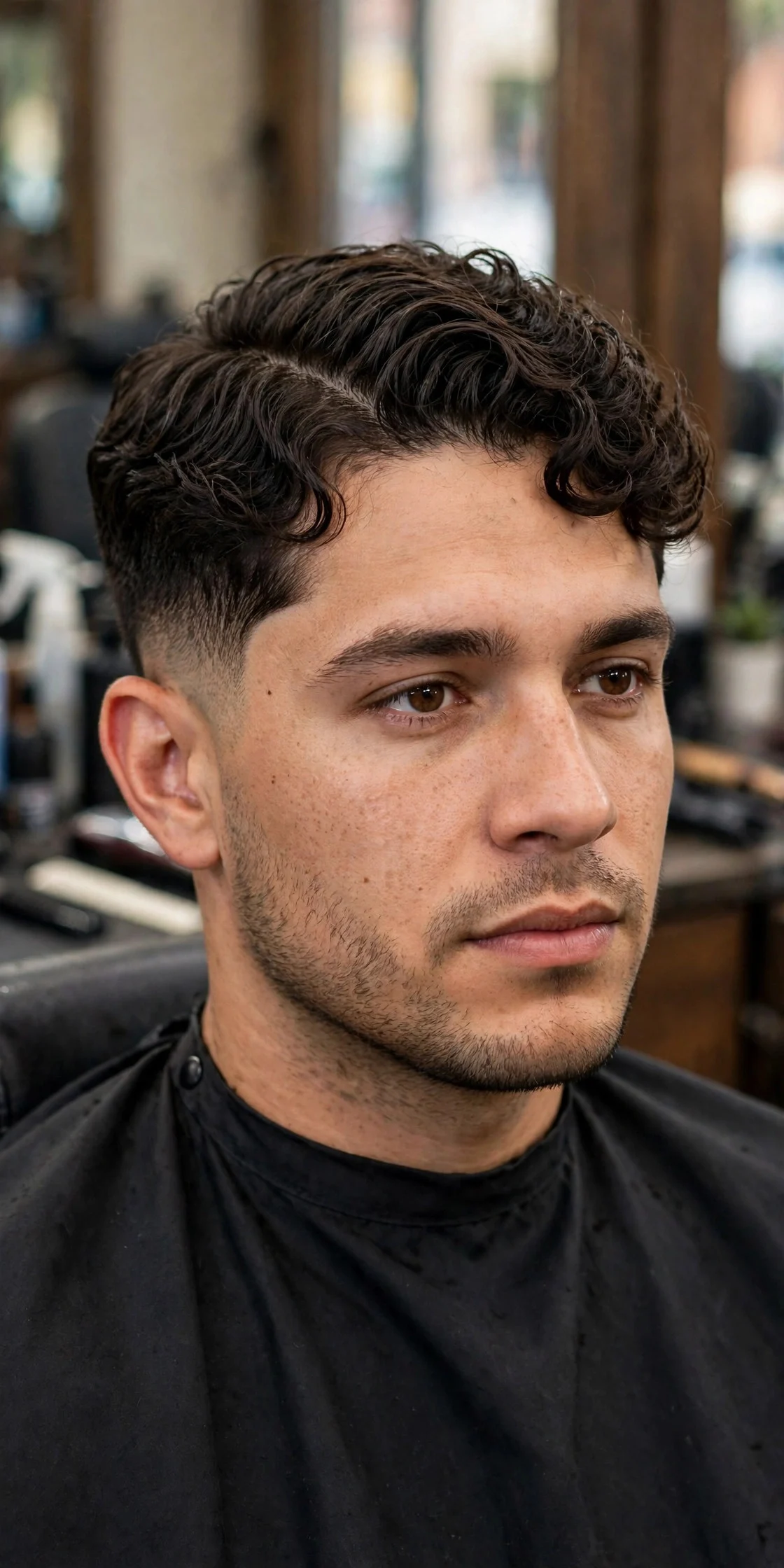
Ask for 3 to 5 inches on top shaped to your curl pattern with the part defined at your natural separation point, and sides tapered or faded so the volume sits where it belongs. Tell your barber you want the curls to be the feature, not tamed into submission.
This is the version most curly-haired men should try before anything else. It gives curls structure and direction without the poodle effect of an even cut. Best for medium to tight curls with decent density. Use curl cream on damp hair, define the part with your fingers or a wide-tooth comb, and diffuse or air dry. A trim every 4 to 5 weeks keeps the shape from ballooning at the sides. The honest drawback: curly hair shrinks, so the length you see in the chair is not the length you get dry. Find a barber who cuts curls dry or understands shrinkage, or you will leave with less than you asked for.
7The Hard Part
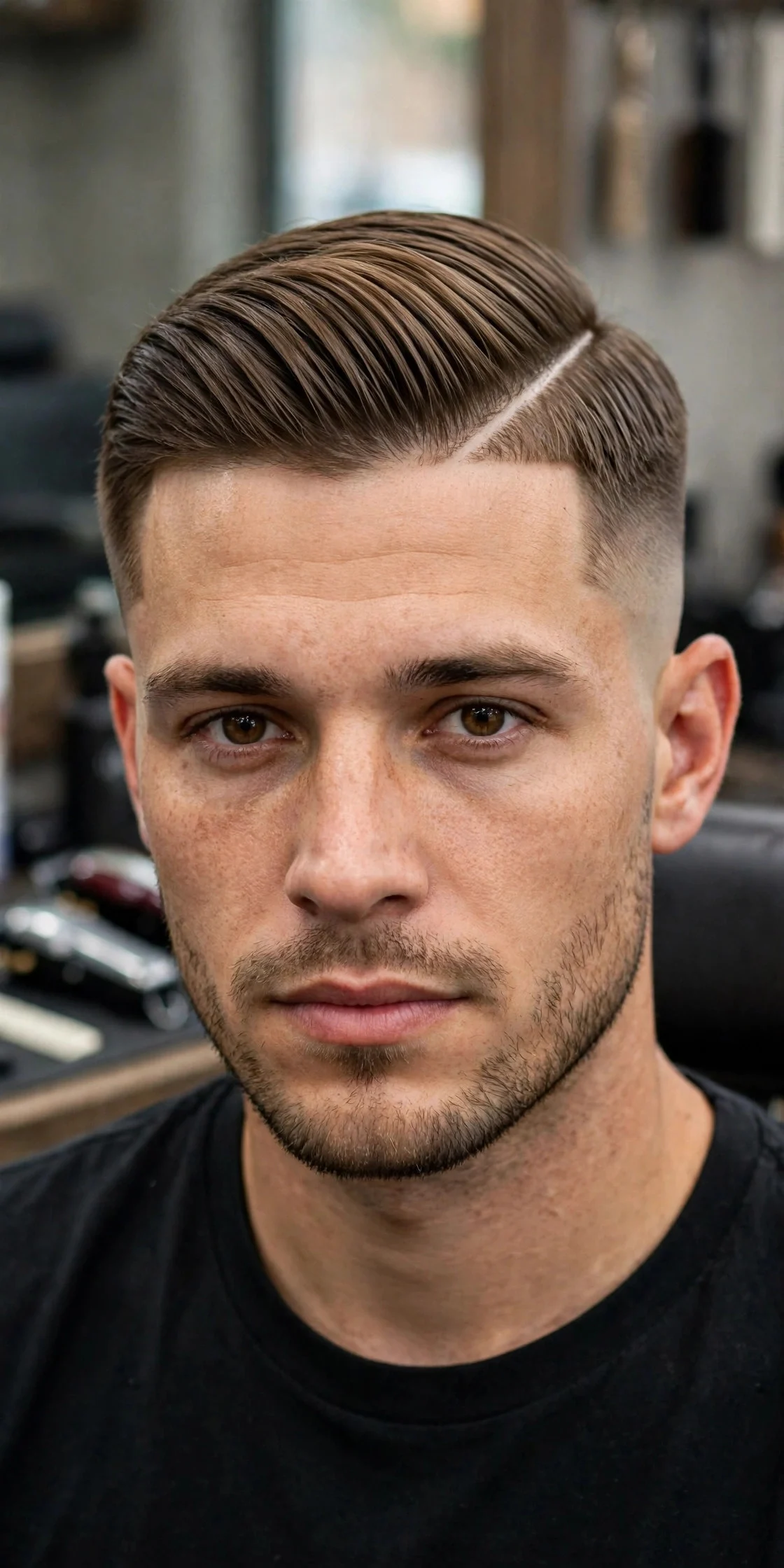
Ask your barber to shave a defined part line with clippers, usually a #0 or a razor edge, where your part sits. The rest can be any side part you like: classic top, textured top, faded sides. The line itself is the signature.
This adds instant precision and contrast, and it photographs extremely well. It suits men who already keep a clean style and want a sharper signature. Any hair type can carry it as long as the part placement flatters the face. The styling is the same as your underlying cut, so there is no extra daily work. But the line grows out in about two weeks, faster than the haircut around it, and it looks messy the moment it softens. It also reads dressy, so if your wardrobe is mostly hoodies, the precision can feel mismatched.
8The Long Side Part
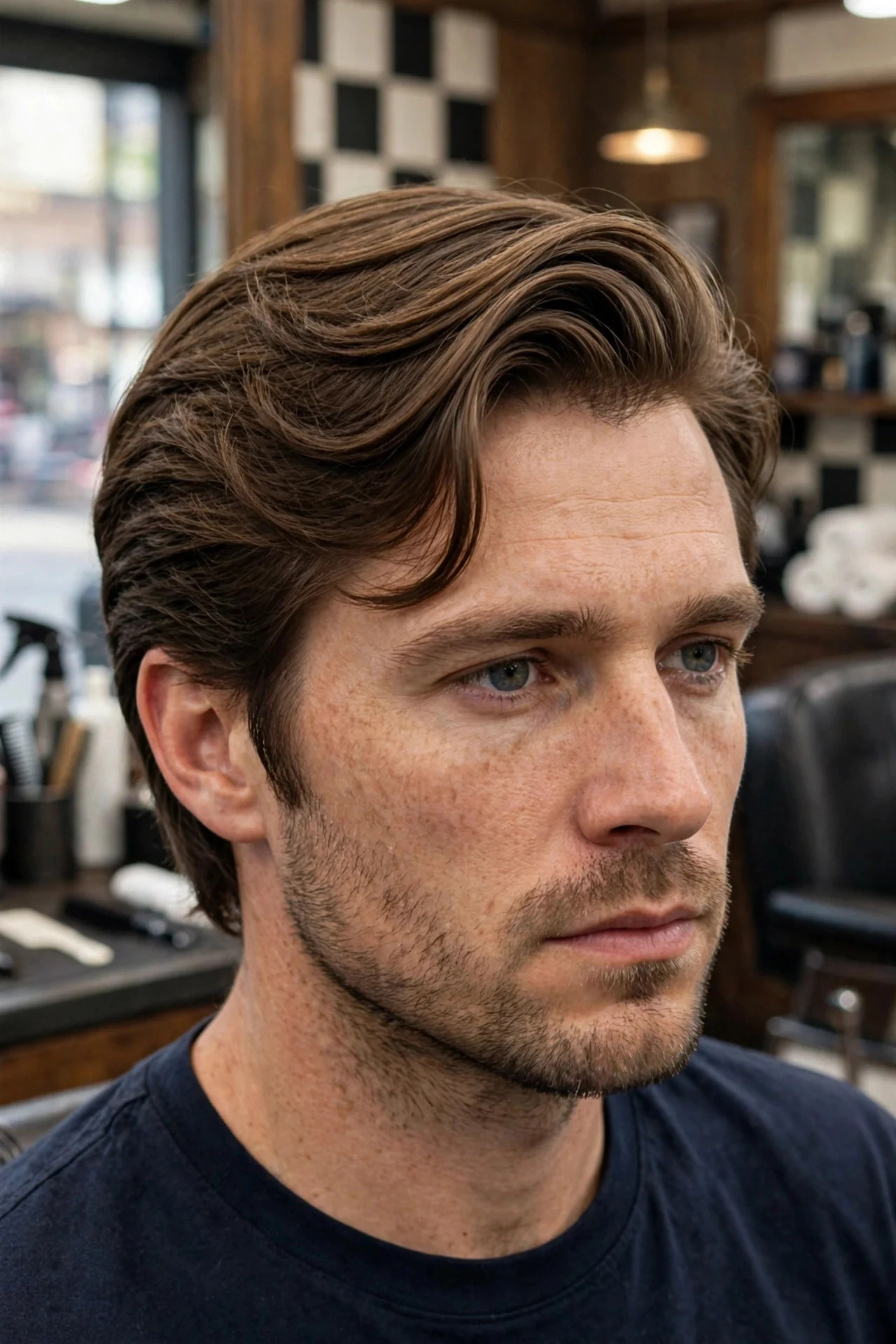
Ask for 6 inches or more on top, swept from a side part, with the sides either scissored long-ish and tucked behind the ears or faded for contrast. This is the flowing version: hair moves, falls, and needs to be pushed back.
Best for straight to wavy hair with good density and for men willing to spend five minutes styling. It suits longer faces and strong noses, because the movement softens sharp features. Blow dry from the part with a brush, use a light paste or cream, and let gravity do part of the job. Trims every 6 to 8 weeks, mostly to keep the ends healthy. The drawback is real: long top hair gets in your face on windy days, needs washing more often to avoid looking limp, and gym sessions destroy it.
9The Messy Side Part

Ask for choppy, point-cut layers through a 3 to 4 inch top with a low-effort taper on the sides. The part should be visible but imperfect, like you drew it with your fingers. Tell your barber "structured mess, not bedhead."
This is the casual sweet spot for guys who want the sharpness of a side part without the boardroom stiffness. It works on straight, wavy, and thick hair, and it is genuinely low maintenance day to day. Apply a matte paste to dry or damp hair, mess it into shape from the part, and walk out. Trims every 4 to 5 weeks keep the shape from collapsing into a mop. The drawback is the ceiling: it does not dress up as well as the classic. A messy side part at a formal wedding reads underdressed next to a suit.
10Side Part With Beard
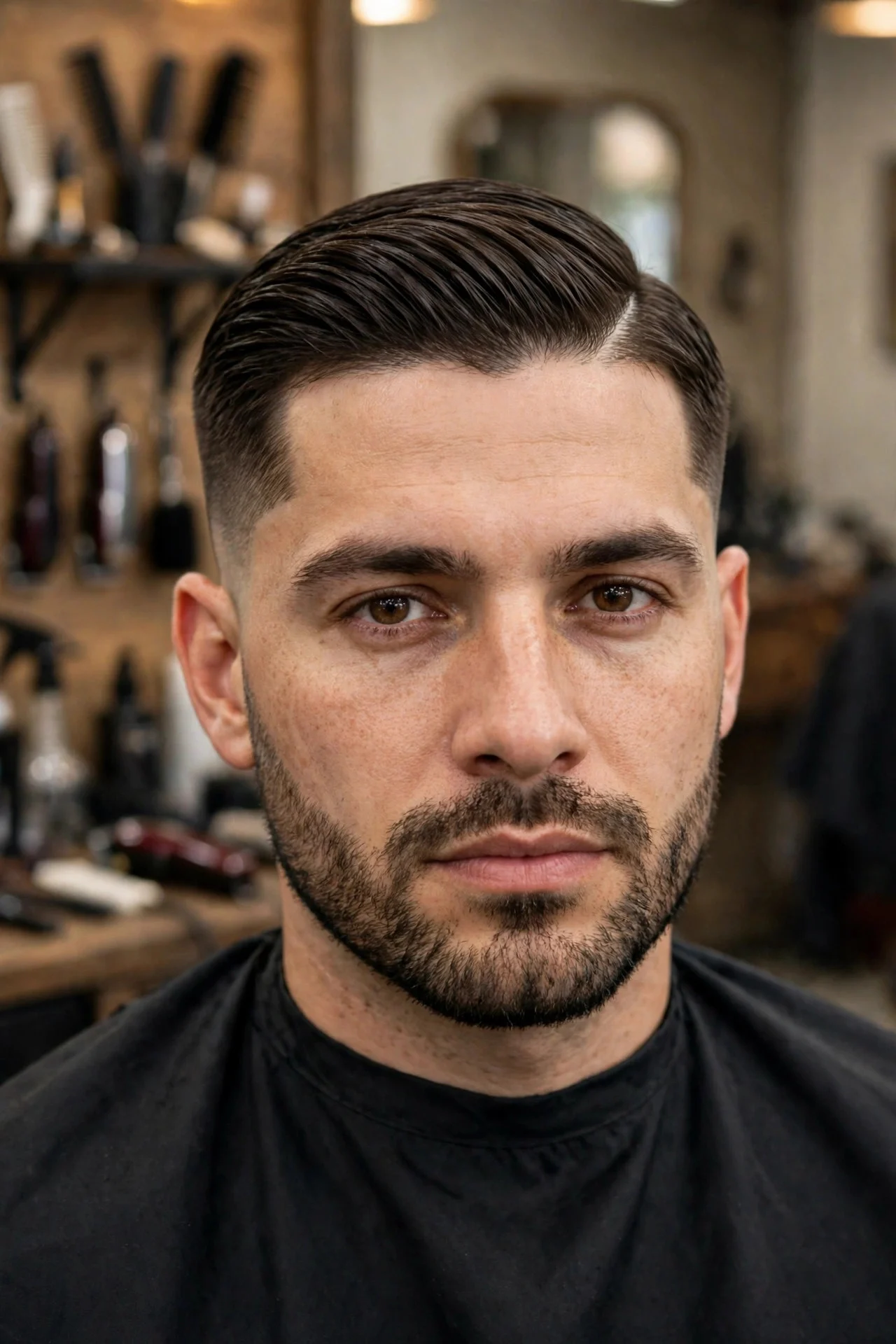
Ask your barber for a side part with clean, deliberate proportions, then shape the beard to match: faded cheek lines, defined neckline, and length that balances the hair on top. The cut and the beard should be planned together, not as two separate jobs.
This is the full package version. A crisp side part plus a well-shaped beard is one of the strongest looks a man can wear, and it suits square and oval faces particularly well. It works with any of the side part variations above. Styling adds beard oil and a daily pass with a boar brush to the hair routine, maybe two extra minutes. Maintenance doubles though: the haircut needs its regular schedule and the beard needs edging every week or two. The honest drawback is that a sloppy beard ruins a sharp haircut, and vice versa.
How to Style a Side Part
Finding your part line is the step most men skip. Wash your hair, comb it straight back, then push it forward and let it fall. Where it separates is your natural part, and it is almost always where the style will sit best. Forcing the part to the wrong spot means it will fight you every morning.
Combing technique matters more than the product. Work from the part outward, keeping the comb close to the scalp so the hair lies flat at the roots. On the shorter side, comb straight down. On the longer side, comb across and slightly forward. Blow drying in these same directions, with medium heat, locks the shape in. Finish with your product: pomade for shine and hold on the classic, matte clay or paste for texture on the modern versions. Less product is nearly always better than more.
Frequently Asked Questions
Where exactly should my side part sit?
Let your hair tell you. Comb it back wet, then push it forward and watch where it naturally separates. That is your part. Most men land somewhere above the outer corner of one eyebrow. Try both sides for a day each if unsure. One will hold shape with almost no effort, and that is your answer.
Can men with thin hair wear a side part?
Yes, with conditions. Keep the top shorter, 2 to 3 inches, and use a matte product rather than anything shiny, since shine reveals scalp. A light blow dry with lift at the roots creates the illusion of density. Avoid the long and undercut versions, which expose thinness, and skip heavy waxes that clump strands.
How often does a side part need trimming?
It depends on the version. Faded and hard-part versions need attention every 2 to 3 weeks. The classic and textured versions hold well at 4 weeks. Wavy, curly, and long versions stretch to 5 or 6 weeks. The tell is the neckline and sides: when they stop looking deliberate, book the chair.
Which product is best for a side part?
Match the product to the finish you want. Pomade gives the classic slick look with shine and firm hold. Matte clay gives the modern textured look with a natural finish. Paste sits in the middle: flexible, medium shine, easy to restyle. Start with less than you think you need.
Does a side part suit a round face?
It can, if you build height. Keep extra length on top and some lift at the roots so the silhouette gets taller rather than wider. A fade on the sides also narrows the overall shape. What you want to avoid is a flat, wide part with no volume up top, which will emphasize roundness instead of balancing it.
Keep exploring: if you like sharp, short structure, the mid fade haircuts for men pair a tight fade with plenty of top styling options. For a softer take on the same parting idea, these soft side part hairstyles show the more relaxed, low-effort side of the look.