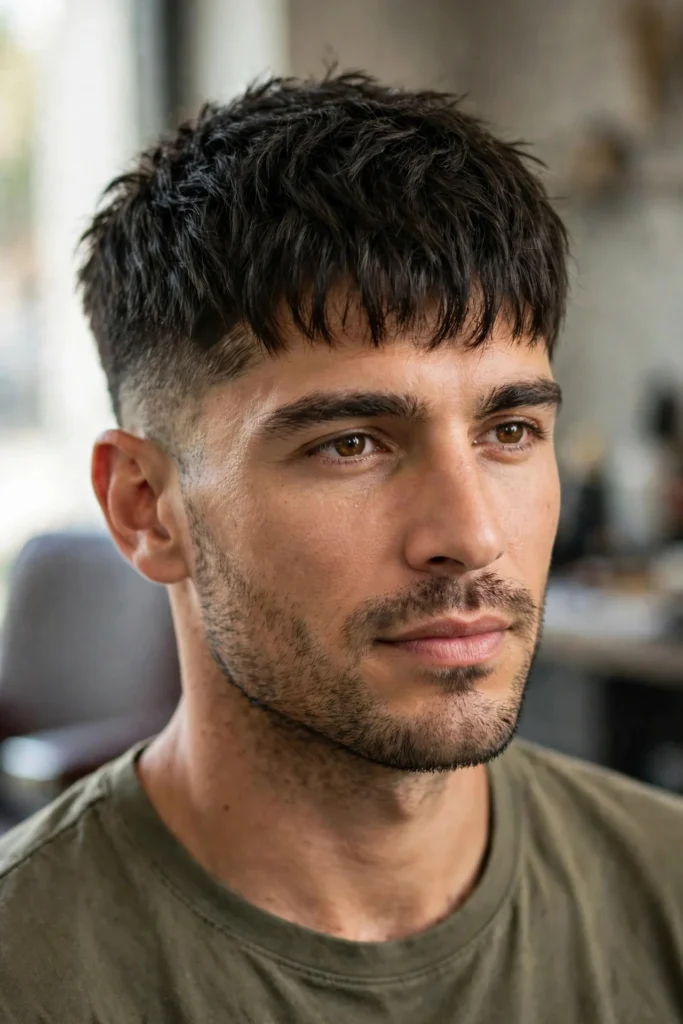
Thick hair is a gift and a daily negotiation. Left alone, it mushrooms out, swallows styling products, and turns every haircut into a helmet by week three. The fix isn’t fighting the density; it’s choosing a cut that works with it.
The best short haircuts for men with thick hair all do the same three things: they remove weight where it causes bulk, they add texture so the hair sits in deliberate pieces instead of one solid block, and they keep the sides tight enough that the volume on top reads as intentional. Below are ten cuts that do exactly that, with the exact words to say in the barber’s chair, who each cut flatters, and what it actually costs in time and money to maintain.
1The Textured Crop
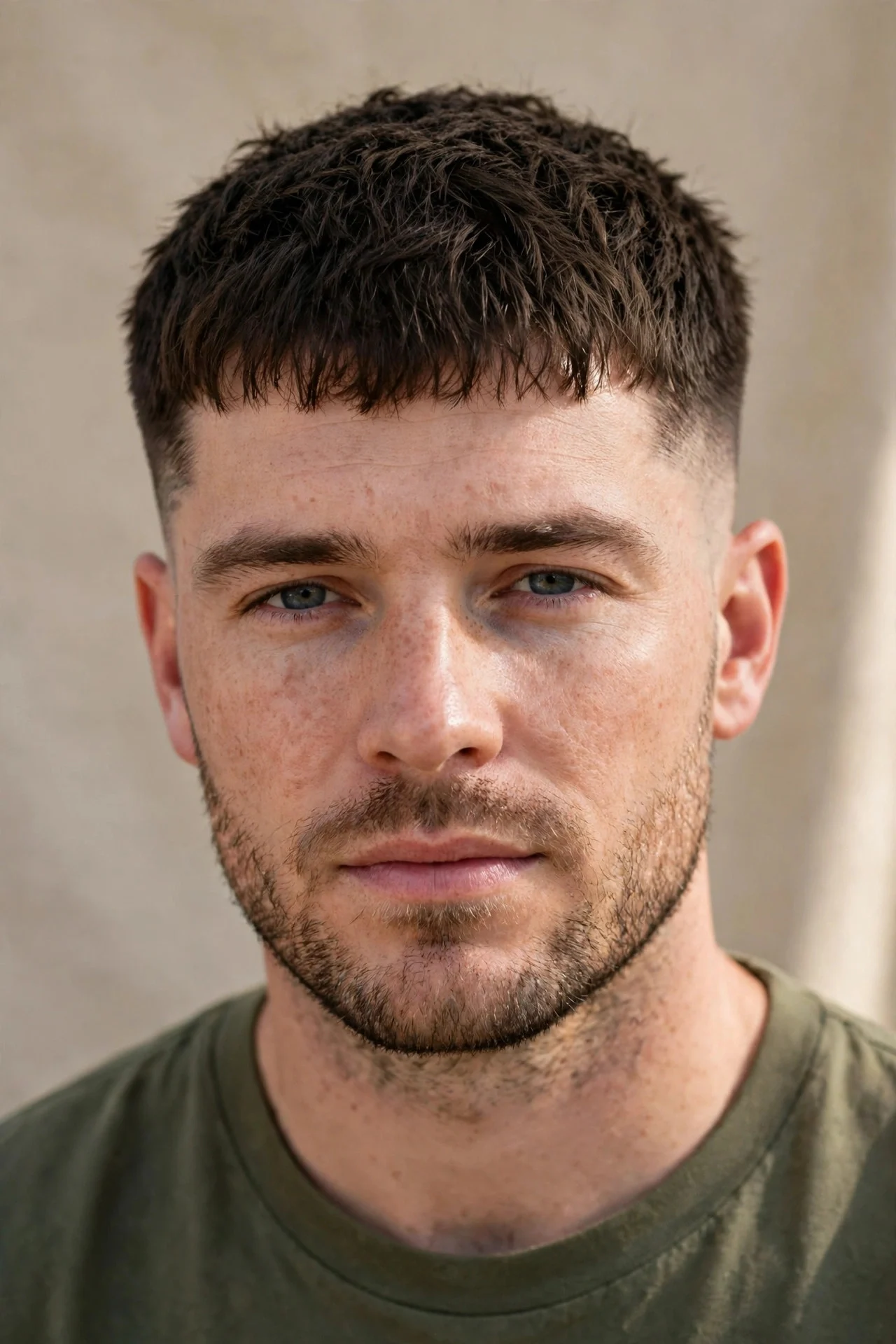
This is the thick-hair workhorse. The top stays short (about an inch to an inch and a half) with heavy point cutting through the ends, which lets your barber carve out internal weight so the hair lies flatter without looking thin. The sides are faded or tapered to match. Ask for “a textured crop, short on top with lots of texture through it, mid skin fade on the sides.” It suits nearly every face shape, especially round and square faces, since the controlled top avoids adding width. Style it with a pea-sized amount of matte clay on dry hair, pushing everything forward and slightly to one side. Drawbacks: the texture grows out fast on thick hair, so you’ll need a cleanup every three to four weeks or the fringe starts lifting off your forehead like a shelf.
2The Short Buzz With Faded Sides
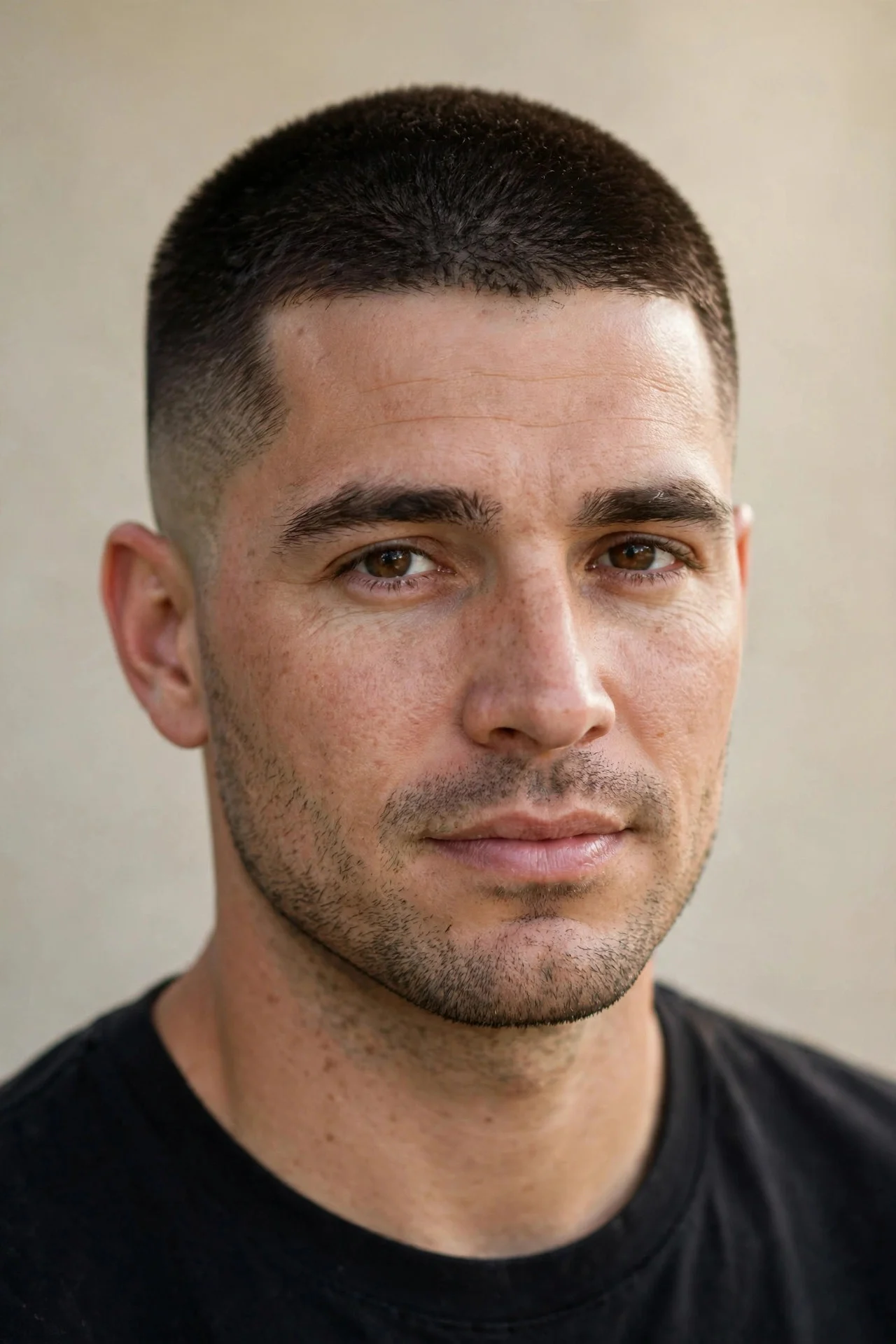
Nothing tames thick hair faster than taking length off the top entirely. A uniform buzz (a #4 or #5 guard, roughly 12 to 16mm) eliminates the bulk problem at the root, literally. Ask for “a buzz cut, one length on top, faded from the temples down so it blends.” This is ideal if your hair grows upward or outward in an unruly halo, and it works on any face shape because the proportions stay balanced. Styling is almost nothing: no product, just a quick brush or towel rub. It’s the cheapest cut to maintain and the fastest morning routine you’ll ever have. The honest trade: you lose all styling versatility, and on thick hair the regrowth looks patchy around week two as density pushes back through. Book every two to three weeks if you want it crisp.
3The French Crop With Choppy Fringe
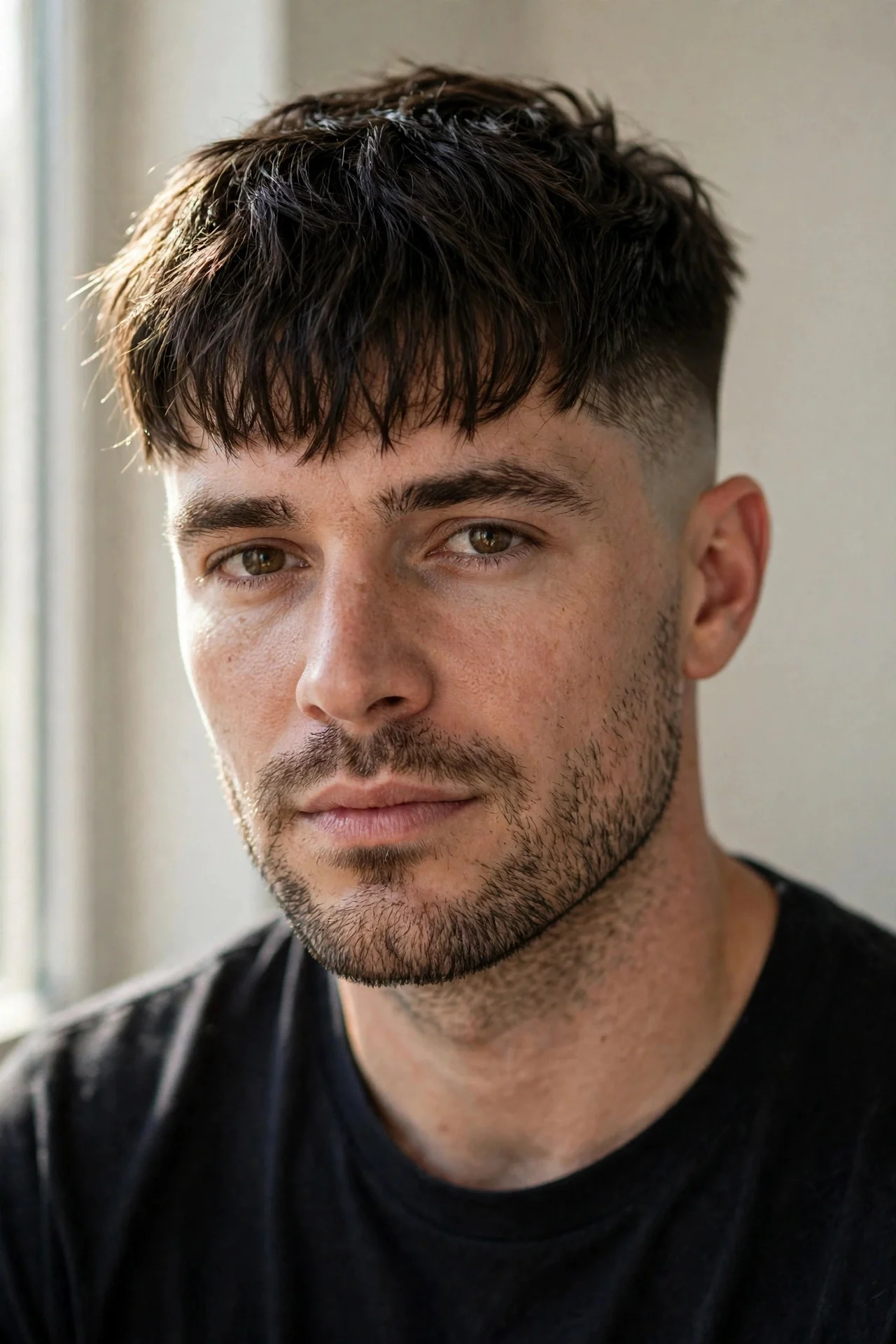
The French crop keeps everything short and brings a blunt, broken-up fringe down toward the forehead, while the sides fade tight. For thick hair, the choppy fringe is doing real work: the point-cut ends remove weight at the front so the fringe doesn’t puff up into a wall. Ask for “a French crop with a textured, choppy fringe, high fade on the sides.” It flatters oval and oblong faces beautifully and gives rounder faces a sharper frame. Wear it pushed straight forward with a little matte paste for separation, or sweep it slightly sideways. Maintenance is moderate: the fringe needs trimming every three weeks or it starts poking your eyebrows, and you’ll want to avoid heavy pomades that clump thick strands together into ropes.
4The High Fade With Spiky Texture
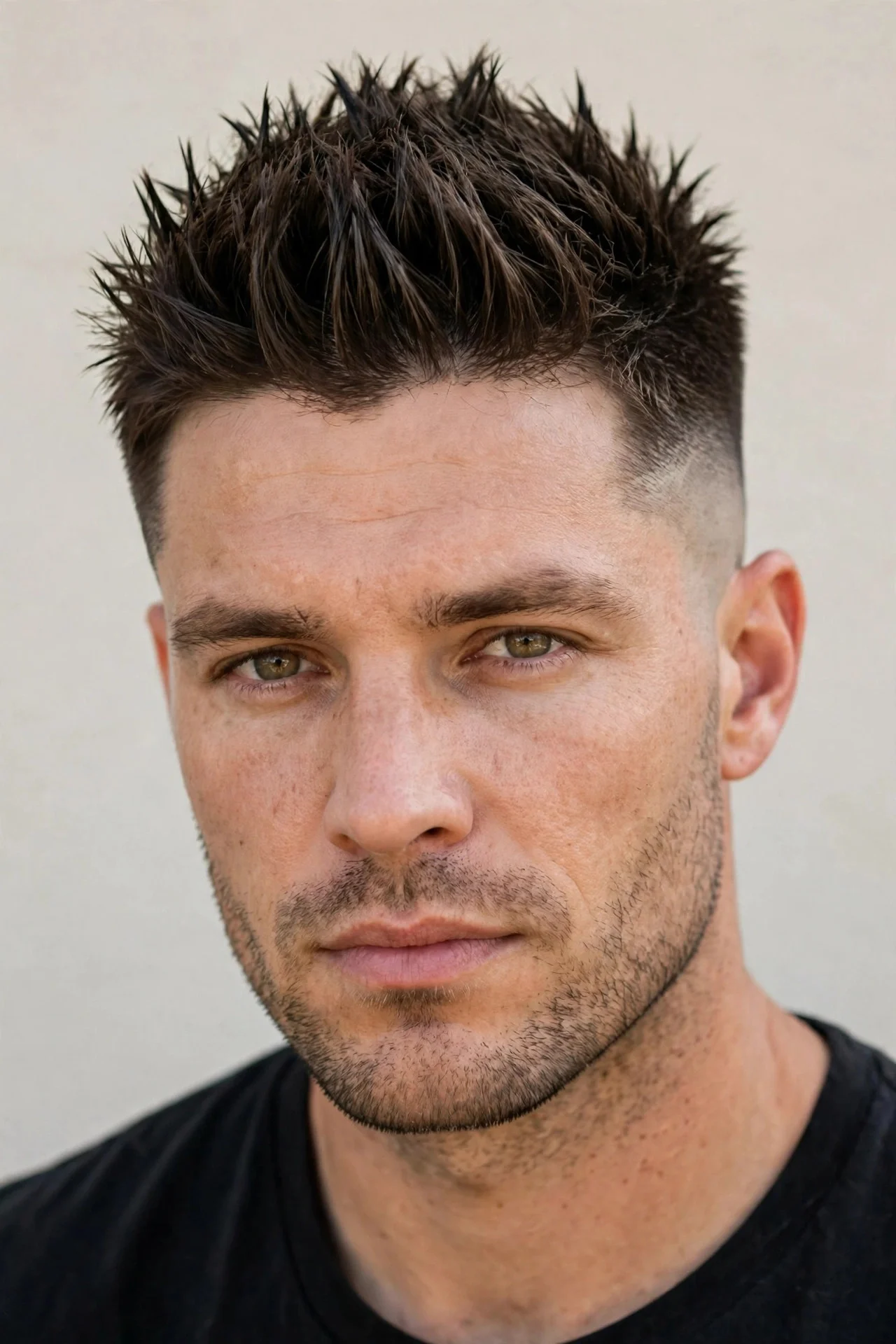
If you want your thick hair to look like an asset instead of a problem, this cut leans into the volume. The sides go high and tight (a #1 fading up), while the top keeps two to three inches of length cut with deep texture for spiky, separated pieces. Ask for “a high skin fade with a short textured top I can spike up, lots of thinning through the bulk.” Square and oval faces carry this best, and it has a youthful energy that suits guys in their twenties and thirties. Style with a strong-hold clay on dry hair, twisting small sections upward. The downside is commitment: spiking thick hair takes five minutes every morning, and without product the top collapses into a shapeless puff by noon. Trims every three weeks keep the fade sharp.
5The Classic Crew Cut

The crew cut is shorter on the sides and slightly longer on top, graduated so the crown area is the longest point. On thick hair, your barber should use thinning shears or deep point cutting through the top to remove the internal mass that makes crew cuts balloon. Ask for “a crew cut with the top textured and thinned out, tapered sides.” It suits oval, square, and heart-shaped faces and reads as clean and professional at any age, from college to the boardroom. Styling is minimal: a dab of light cream, combed forward or slightly to the side. The grow-out is forgiving, so you can stretch visits to four or five weeks. The drawback is sameness; it’s a handsome cut, but it won’t turn heads, and on very coarse hair the top can still lift at the corners if the thinning isn’t aggressive enough.
6The Undercut With Short Disconnected Top
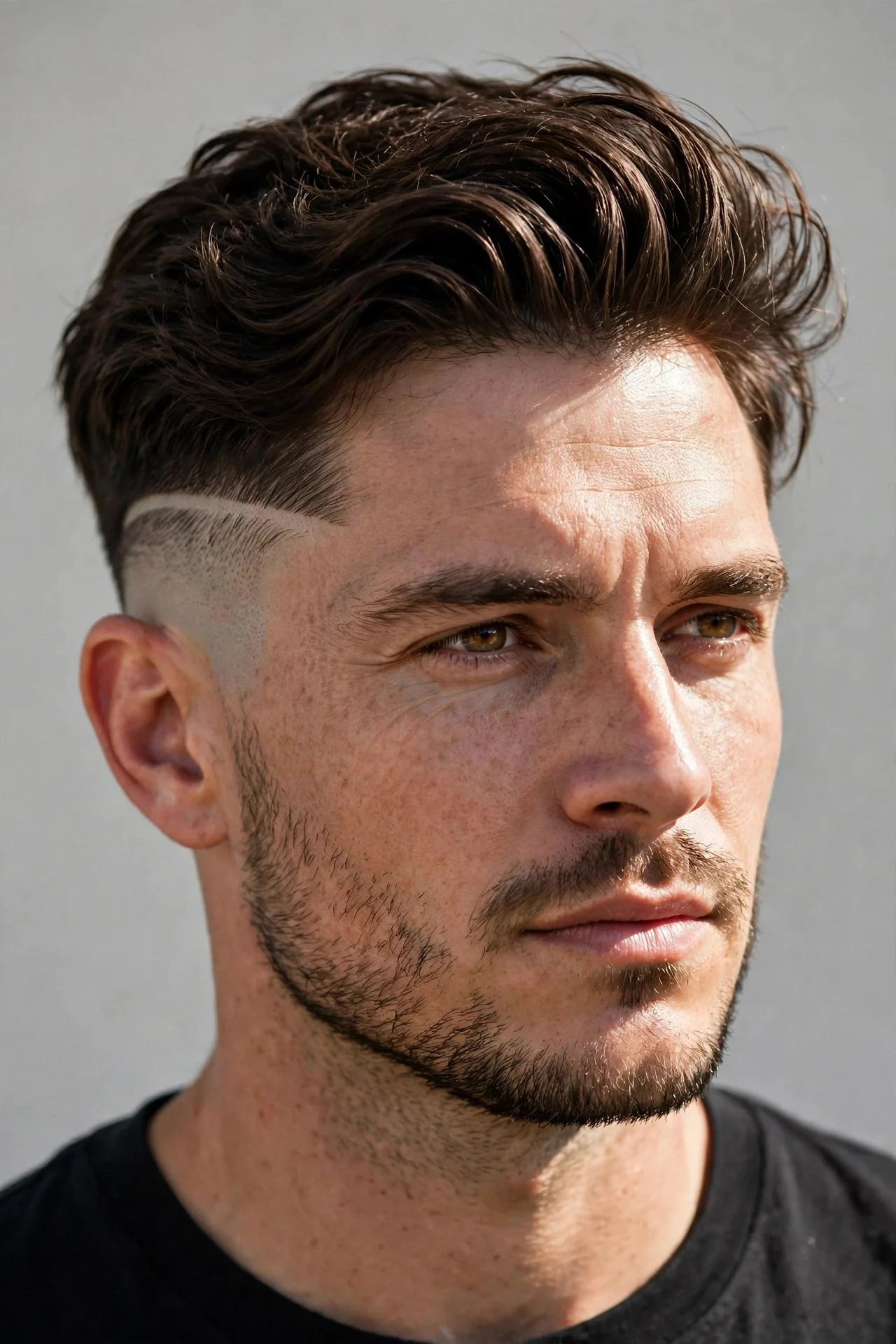
An undercut buzzes or fades the sides completely short while leaving the top abruptly longer with no blend between the two. For thick hair, that disconnection is strategic: the harsh contrast removes all the side bulk, so the volume on top becomes the whole point of the look. Ask for “an undercut, disconnected, with about two inches on top, texturized.” It works best on oval and longer face shapes, and it suits guys who like a bolder, fashion-forward edge. Style by pushing the top back or to the side with matte paste. Be warned about upkeep: the line of disconnection grows out visibly fast, so the sides need attention every two to three weeks, and the top requires daily product to keep its shape. Skip this if you hate frequent barber visits.
7The Tapered Ivy League
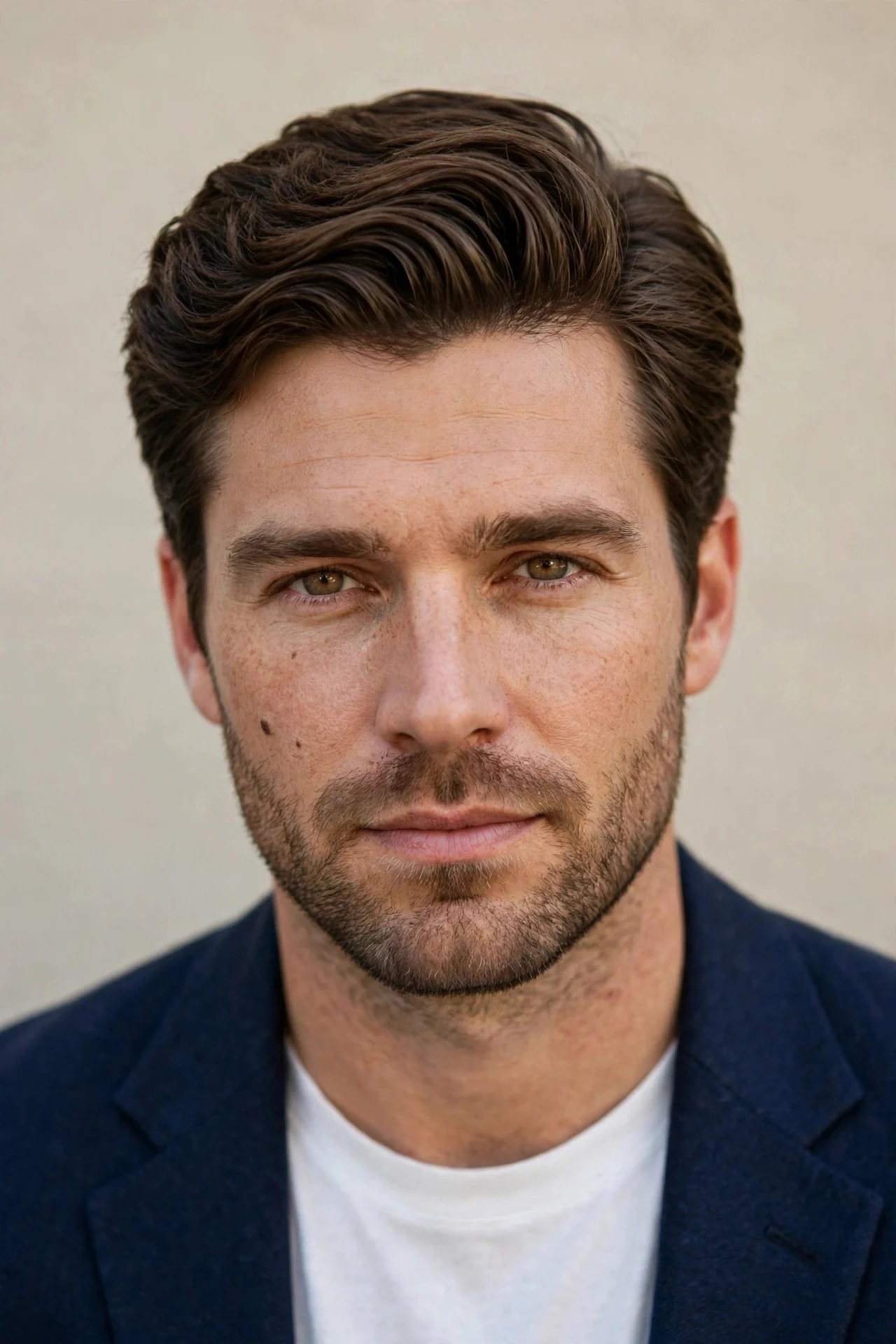
Think of this as a crew cut with more length and a side part: two to three inches on top, tapered (not faded) sides, and enough length to sweep across. On thick hair, the key is aggressive internal layering so the sweep lies flat instead of floating. Ask for “an Ivy League, tapered sides, longer textured top with the weight taken out, worn with a side part.” Oval and square faces look great here; it has a timeless, put-together feel that works from the office to a wedding. Style with a light cream or a classic pomade for a neater finish. The taper grows out more gracefully than a skin fade, so four-week intervals work. The real drawback is product discipline: too much product and thick hair turns greasy-looking by evening, too little and the part won’t hold through the day.
8The Short Messy Quiff

A quiff pushes the front of the hair up and back for height, and the messy version keeps it deliberately undone. For thick hair, this cut is a natural fit because you already have the volume; your barber just needs to shape it. The sides are faded or tapered to keep the silhouette tight. Ask for “a short textured quiff, messy, with a mid fade, take the bulk out of the top.” It flatters round faces especially well since the height lengthens the face visually, and it has a relaxed confidence that suits most ages. Style with sea salt spray on damp hair, then a little matte clay once dry, pushing the front up and back. Honest drawbacks: humidity is the enemy (thick hair plus moisture equals instant deflation), and it needs daily styling, so it’s not a wash-and-go option.
9The Curly Crop
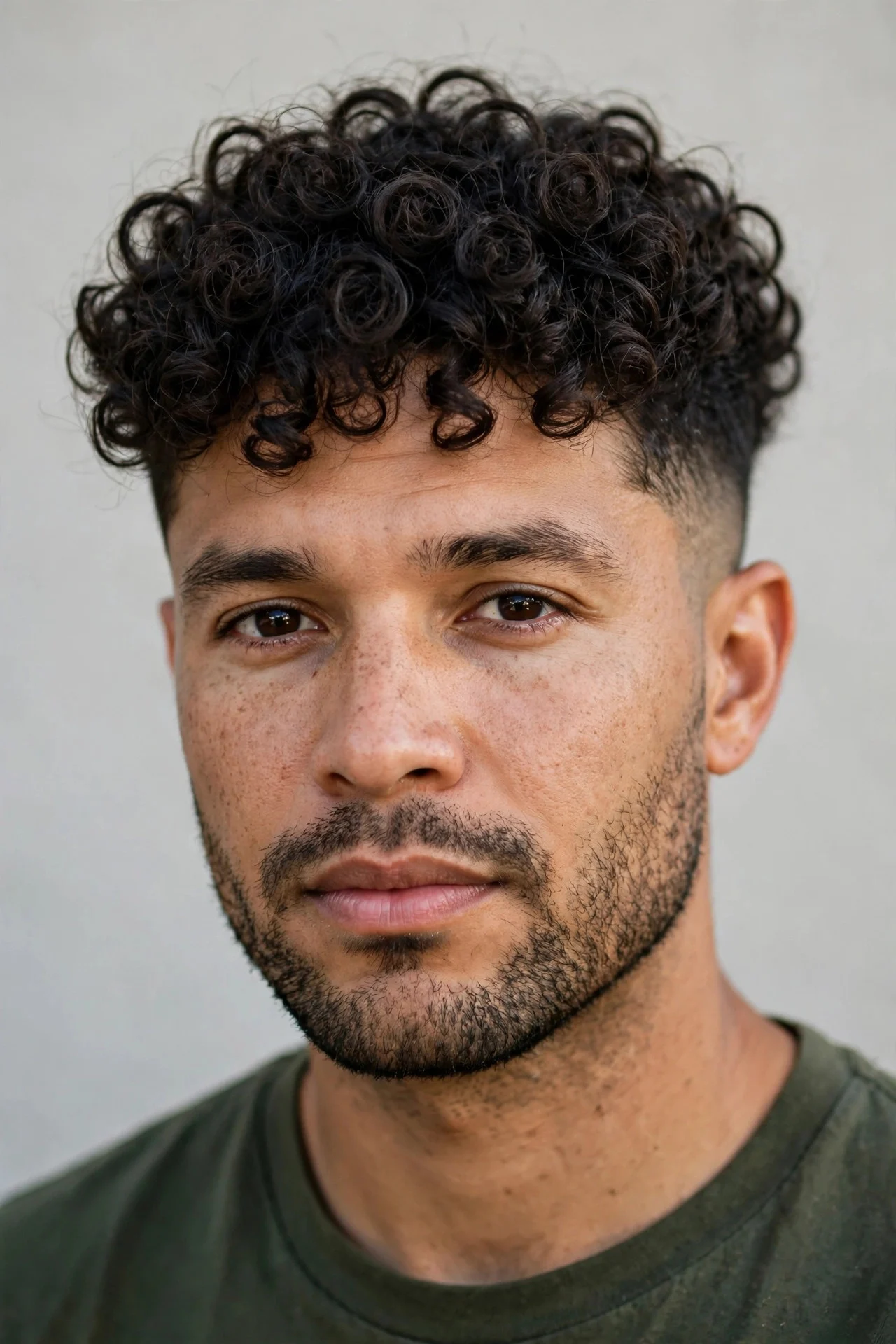
Thick, curly hair needs a cut that respects the curl pattern instead of shearing it into a frizz ball. The curly crop keeps the top at two to four inches with curls cut in their natural fall, while the sides are faded or taken short to remove the width that makes curly heads look triangular. Ask for “a curly crop, keep the length on top, fade the sides, and cut the curls dry so you can see the pattern.” This is the best option in this list for genuinely curly or coily thick hair, and it works on all face shapes. Style with curl cream on damp hair and scrunch; skip the brush entirely. Maintenance is low on styling but regular on cuts (every three to four weeks), and the biggest drawback is finding a barber who actually knows how to cut curly hair dry. A bad one will give you a pyramid.
10The Short Side Part With Low Fade
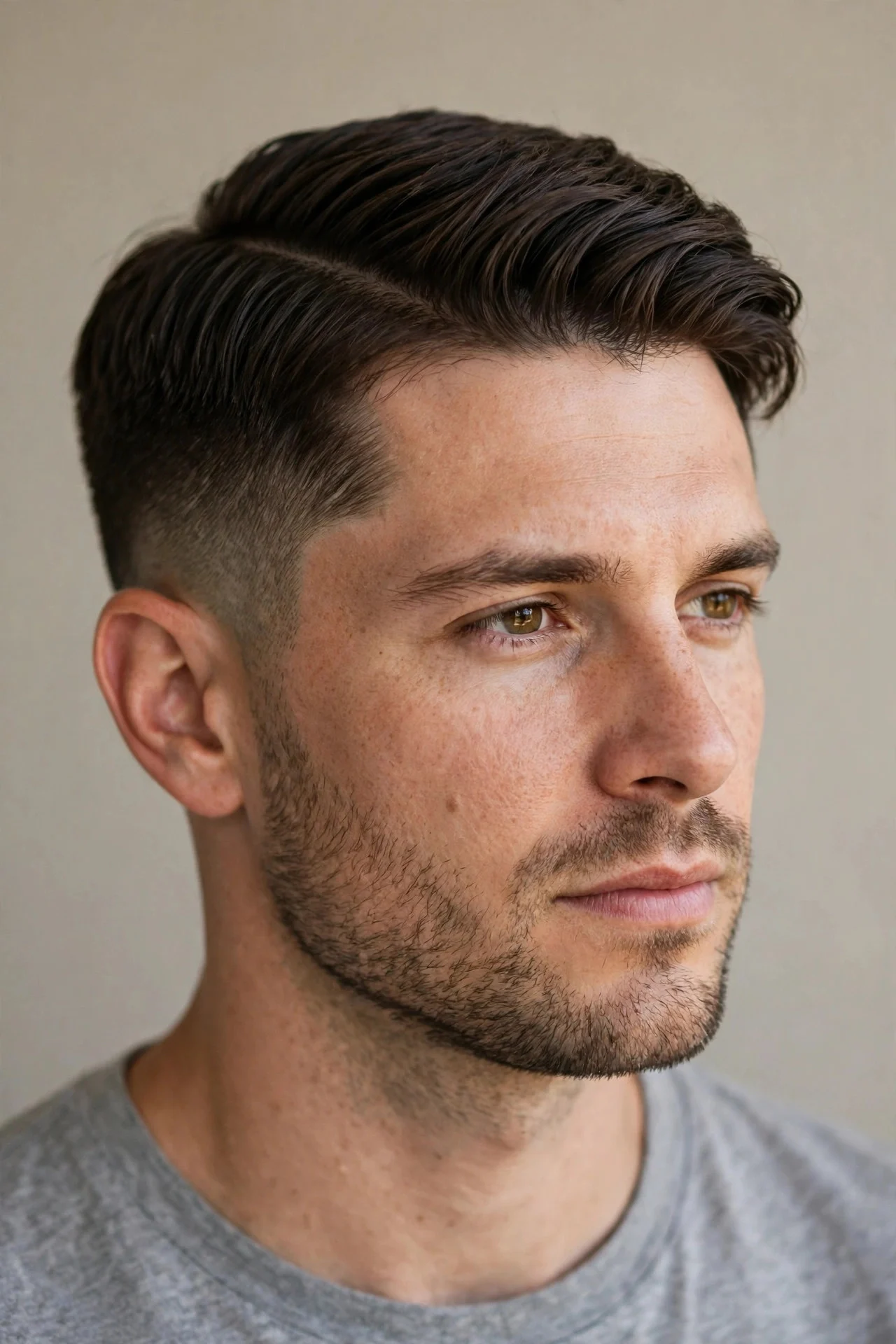
The side part is the most versatile classic on this list: a clean part line, about two inches of textured length on top swept to one side, and a low fade that keeps the sides neat without going dramatic. For thick hair, ask your barber to thin the part side more aggressively, since that’s where bulk tends to collect. Say: “a short side part with a low fade, textured top, thin out the heavy side.” It suits oval, square, and rectangular faces and reads polished without trying too hard, making it a safe pick for job interviews and formal events. Style with a small amount of pomade or cream, comb to the side. Grow-out is gentle, and five-week intervals are fine. The main drawback: on a windy day or after a hat, the part disappears, and thick hair takes real effort to re-part without re-wetting it.
How to Style and Maintain Short Haircuts for Thick Hair
Thick hair rewards the right products and punishes the wrong ones. Start with a sulfate-free shampoo and always condition; thick hair drinks moisture, and skipping conditioner leads to dryness that makes every cut harder to control. When styling, less product is more: a pea-sized amount of matte clay or paste, warmed between your palms, beats a big scoop that leaves hair greasy and heavy. Sea salt spray is an underrated tool for thick hair because it adds grit and separation without weight.
Drying matters more than most guys realize. Letting thick hair air-dry often means it dries into whatever shape it wants. A quick blast with a blow dryer on medium heat, pushing the hair in the direction you want it to sit, sets the foundation before product even touches it. This two-minute step is the difference between a cut that looks sharp all day and one that collapses by lunch.
Finally, respect the trim schedule. Thick hair shows grow-out faster than fine hair because density fills in the shape your barber carved. Most of these cuts need attention every three to four weeks. Stretching to six or eight weeks doesn’t save money; it means paying for a full re-cut instead of a maintenance cleanup.
Does thick hair need thinning shears?
Usually, yes. Thinning shears or deep point cutting remove internal bulk without changing the outline of the cut. On thick hair, skipping this step is why a cut looks great leaving the barbershop and like a helmet by week three. Ask your barber to thin through the heaviest areas.
How often should men with thick hair get haircuts?
Every three to four weeks for most short cuts. Thick hair grows out visibly faster because the density fills in faded sides and textured tops. Fades and undercuts need the shorter end of that range; tapers and crew cuts can stretch to five weeks.
What products work best for thick hair?
Matte clays and pastes are the sweet spot: they give hold and separation without shine or grease. Sea salt spray adds texture on damp hair. Avoid heavy oil-based pomades and anything labeled “high shine” unless you want your thick hair to look wet all day.
Should I blow-dry thick hair after a haircut?
Yes, a quick blow-dry sets the direction and removes the puffiness that air-drying leaves in thick hair. Use medium heat, dry in the direction you want the hair to sit, and finish with a cool shot to lock it. It takes two minutes and doubles how long the style holds.
Can thick hair pull off a buzz cut?
Absolutely, and it’s one of the lowest-maintenance options. A #4 or #5 buzz removes the bulk problem entirely. The only watch-out is regrowth: thick hair pushes back through unevenly around week two, so keep the trim schedule tight if you want it looking clean.
Keep exploring
If you’re weighing different fade heights, our guide to 15 Mid Fade Haircuts for Men (2026) breaks down the most versatile fade of all. For the absolute simplest route, 12 Buzz Cut Styles for Men shows how much variety a short buzz can actually offer. And if your thick hair has curl to it, 12 Curly Top Fade Ideas pairs natural texture with clean faded sides.