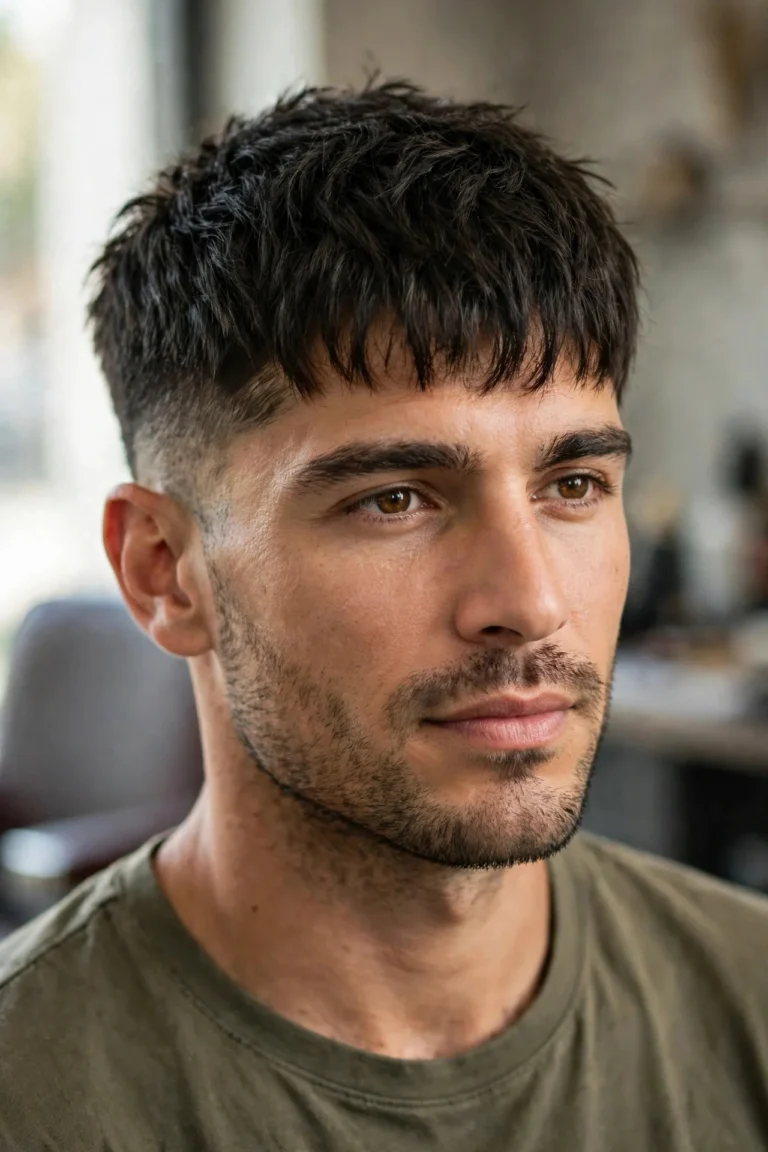
The eboy haircut has outlived the TikTok era that birthed it, and by 2026 it has grown into a real haircut family instead of a one-note meme. The core formula: flowy, textured length on top, usually split down the middle into curtains or pushed forward into a heavy fringe, with sides that range from softly tapered to undercut. The whole look runs on movement. What separates a good one from a bad one now is intention: the sloppy grow-out version is out, and the current take is more controlled, with cleaner sectioning and cuts that work with your hair type instead of against it.
These ten variations are what barbers are actually being asked for. Some lean emo, some lean indie, a couple sit closer to mainstream short hair. Each tells you what to say in the chair, who it flatters, and what daily life with it costs, because eboy hair always photographs as effortless and never quite is at home.
1Classic Curtain Eboy

The curtain is where it all started. Four to six inches of textured hair on top, split down the middle, each side falling forward and outward over the temples, with softly tapered sides that keep the shape tidy. Ask your barber for “long, textured layers on top with a middle parting, point-cut ends, and a soft taper on the sides, no harsh fade.” It flatters oval and square faces and loves thick, straight or wavy hair; tight curls will fight the parting. Style by blow-drying forward, parting in the middle, and finishing with a pea of matte clay. The drawback is wind: it looks undone but needs a morning reset or it collapses by noon. Trims every four to five weeks keep the curtains off your ears.
2Choppy Textured Fringe
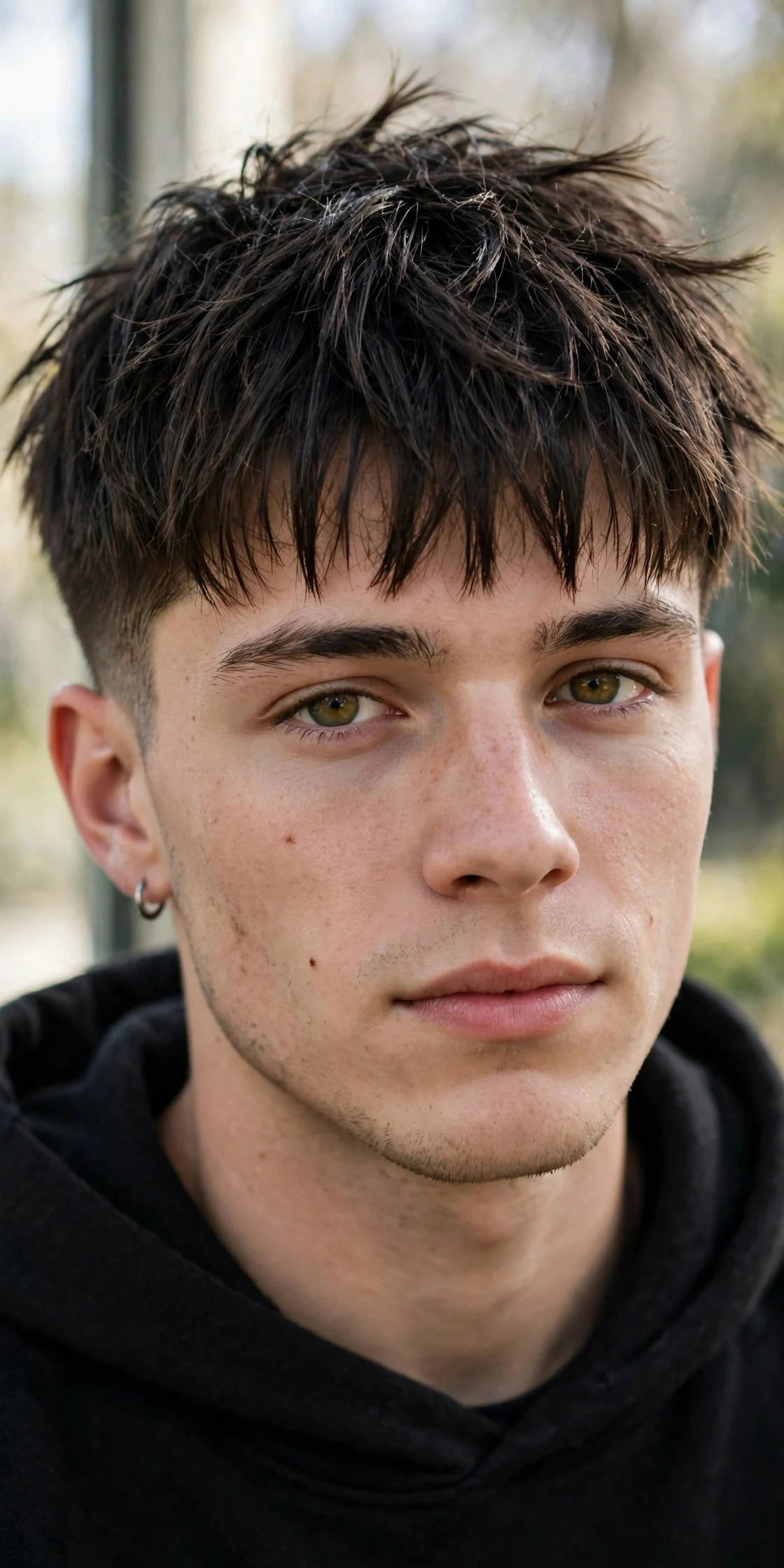
This one pushes the curtain forward instead of splitting it. The fringe is cut blunt-ish but heavily point-cut into a jagged edge across the forehead, the top left longer and messier overall. Ask for “a heavy, choppy fringe with texture cut in, disconnected from short-ish sides.” It suits strong foreheads and high hairlines, since the fringe hides both, and it works on most face shapes. Thick hair holds it best; fine hair can go stringy without root volume. Scrunch sea-salt spray into damp hair and rough-dry with your fingers down the fringe. Honest downside: forehead breakouts from hair plus product all day, and it drips into your eyes at the gym. Get a fringe trim between full cuts, because three extra weeks of growth turns choppy into blind.
3Flowing Mop Eboy

The mop is the eboy at its longest: six-plus inches on top, long layers, hair falling wherever it wants, sides grown out to blend rather than tapered. It reads indie musician, which is exactly why it is having a moment in 2026. Tell your barber “keep all the length, just clean the shape: long layers through the top and sides, trim the back into the neckline, point-cut for movement.” It suits oval and long faces and medium-to-thick wavy hair. Flat straight hair hangs lifeless without help. Morning routine: a little mousse on damp hair, scrunch, done. Maintenance is deceptively low, but you need a full cut every six to eight weeks or it becomes a shapeless bowl. Budget more shampoo and conditioner, and accept the occasional awkward hat day.
4Eboy with Undercut
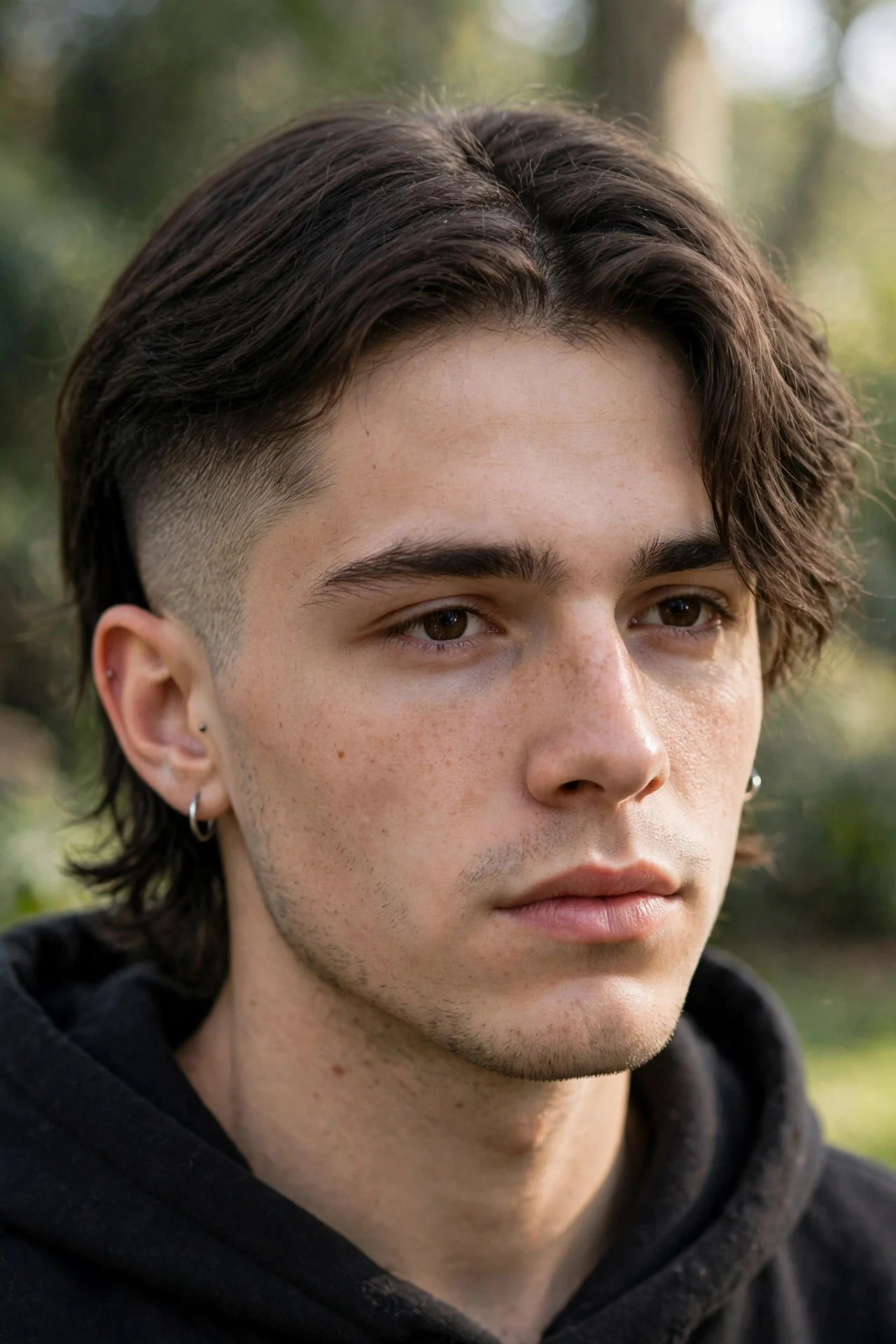
The gateway version for guys who want the vibe without drowning in hair. The top stays long and curtain-parted, but the sides and back are clippered into a real, usually disconnected undercut. Ask for “a disconnected undercut with the top left long, four to five inches, textured on top, middle part.” It suits rounder faces especially well, since the contrast slims the sides visually, and it is the best pick for thick hair that gets too puffy. Styling is fast: towel-dry, a touch of paste through the top, part it, go. The catch is the sides grow out in two to three weeks and the disconnect blurs into a mullet-adjacent shape if you skip trims, so budget a visit every three weeks or learn to buzz the sides yourself. This is also the most obviously alternative version here, so weigh your dress code.
5Wispy Mid-Part Mullet Hybrid

The mullet keeps refusing to die, and its 2026 form has merged with the eboy. The front reads pure curtain (mid-part, face-framing layers) while the back flows a couple of inches past the neckline, all in wispy, feathered layers. Ask for “an eboy curtain in front with mullet length in the back, heavily layered and wispy, nothing blunt.” It suits oval and heart-shaped faces, and wavy or curly hair makes the back look intentional rather than neglected. Style with light cream on damp hair and air-dry; the wisps do the work. The drawback is commitment: this is a statement, and it is hard to walk back without chopping the back. People will have opinions, so if you are not ready for “is that a mullet?” three times a week, pick another. Trim every five weeks to keep the back from looking feral.
6Straight Sleek Curtain

For naturally straight, fine-to-medium hair, this is the polished end of the spectrum. Same middle-part curtain shape, but cleaner, less shattered ends so it falls smooth and glossy, a 90s heartthrob update. Ask for “a middle-part curtain, blunt-ish ends with light texture, longer over the ears, sides tapered smooth.” It is made for straight hair; curls mean a daily heat-tool fight. It suits oval and square faces and softens a sharp jaw when the front pieces graze the cheeks. Style with a two-minute blow-dry and a drop of shine serum or argan oil, no heavy matte products. The drawback is flatness: fine hair plus humidity equals curtain plastered to scalp, and the smooth finish shows grease fast, so plan daily washing or a good dry shampoo. Greasy roots kill this look completely.
7Curly Eboy Fringe
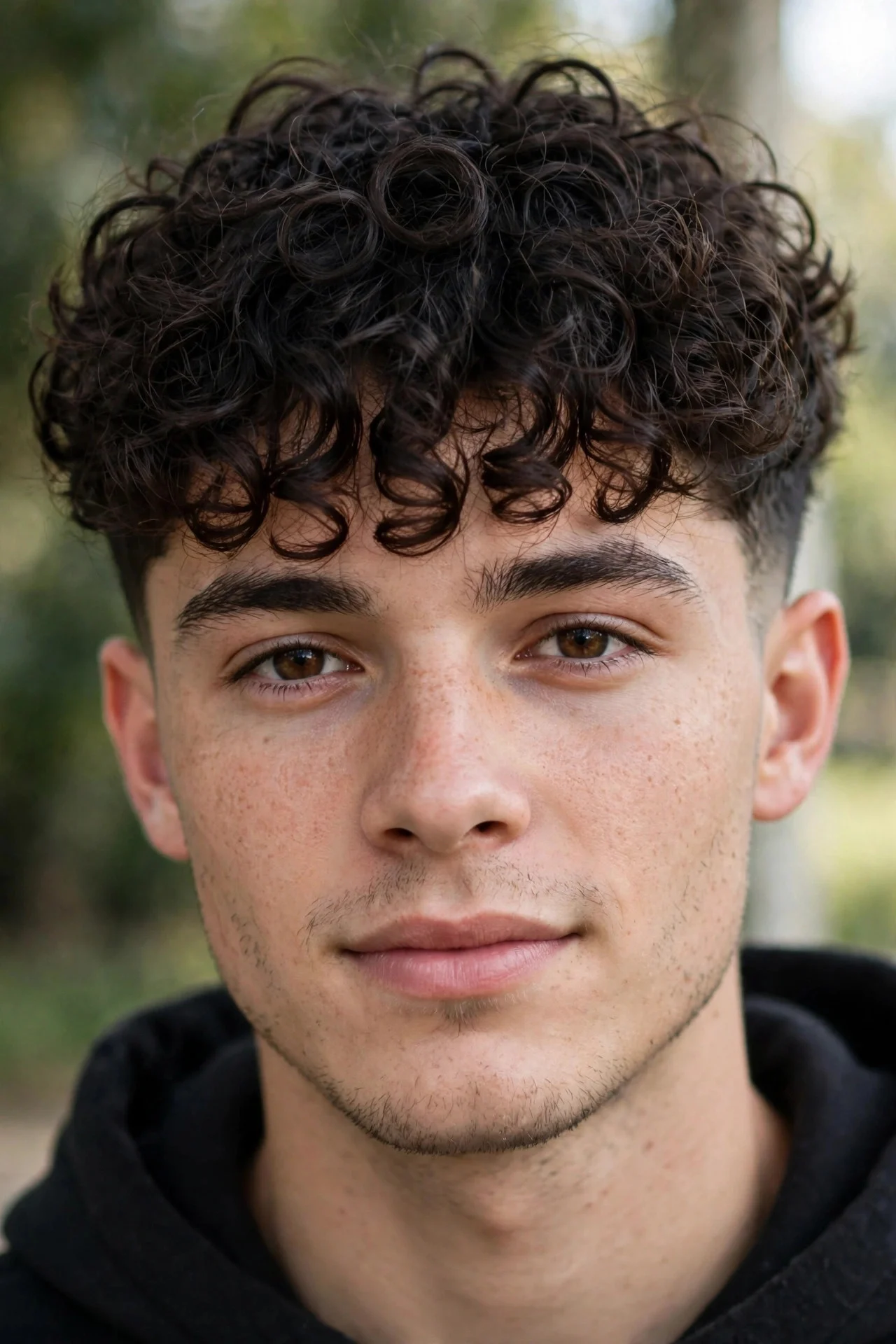
Curly guys get their own eboy, and it might be the best-looking version. Four to seven inches on top with the curls encouraged forward into a full fringe, sides kept short enough for shape but not buzzed off. Tell your barber or curl specialist “cut it dry for curl pattern, keep the top long with a fringe shape, taper the sides to follow my head.” It suits oval, round, and square faces; the curls frame naturally. Type 3A to 3C curls are ideal, and 2C waves can pull it off with help. Routine: leave-in conditioner plus curl cream on soaking-wet hair, scrunch, diffuse or air-dry. Real drawbacks: shrinkage means you need more length than you think, humidity is the enemy, and you become someone who cares about pillowcases (satin, or the fringe frizzes overnight). Cuts every eight to ten weeks work fine since curls hide grow-out well.
8Side-Parted Soft Eboy

If the middle part feels too on-the-nose, the side part is the grown-up compromise. Three to five inches on top with a deep-ish side part, hair swept across with soft texture and longer pieces brushing the temple. Ask for “a textured top, three to five inches, with a side part and point-cut fringe swept to one side, tidy tapered sides.” It suits nearly everyone: round faces get slimming asymmetry, long faces get forehead coverage, and it reads “stylish guy” rather than internet subculture in professional settings. Works with straight, wavy, and lightly curly hair. Styling takes two minutes: blow-dry toward the part, dab of matte paste. The downside is that hair trained to a middle part will not stay sideways without heat and product for the first week or two. Retrain it while wet and you will win. Trims every four weeks keep the sweep from getting heavy.
9Bleached Two-Tone Eboy

Less a cut than a color treatment on the curtain shape, but “the bleached eboy” is a specific ask that deserves its own entry. The base cut is the classic curtain or fringe (ideas 1 and 2), with the top bleached blonde or platinum while roots and undercut stay dark, or bold streaks through the fringe. Tell your colorist “bleach the top curtain section, leave the roots natural, platinum or ash blonde,” and get the cut first. It suits younger guys and casual or creative environments; paired with glasses it is basically a uniform. Any hair type works since the shape carries it. The drawbacks are long, so be honest: bleaching costs real money every six to eight weeks, blonde on dark roots needs toning products, and bleach plus daily heat equals breakage without conditioning masks. Purple shampoo is now your life. Check workplace or school rules first, because this one announces itself.
10Grown-Out Eboy with Low Taper
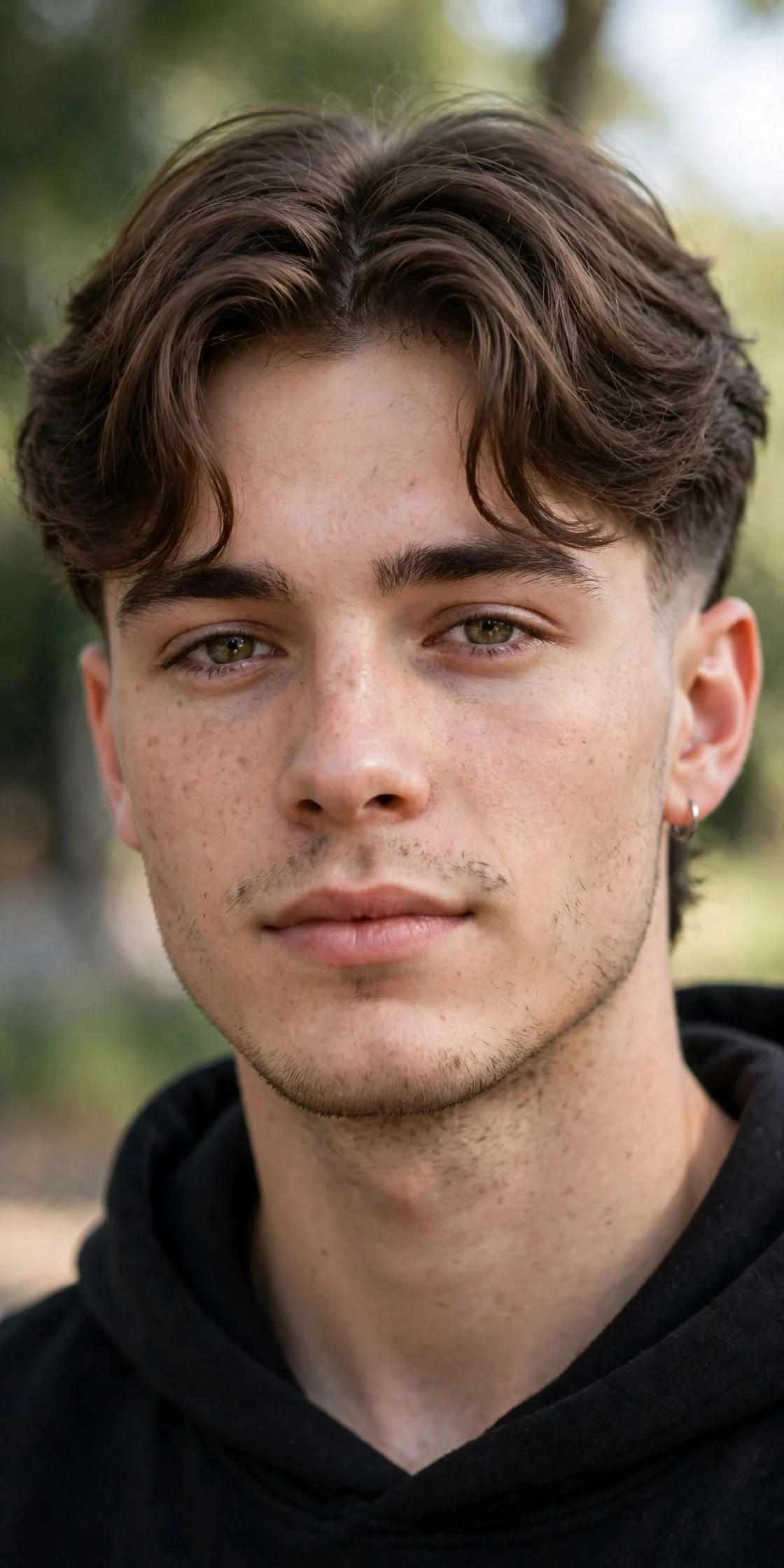
The most low-key entry, and maybe the most wearable for 2026. Everything runs a little longer than the classic version, with a gentle low taper at the sides and neckline so it looks like a fresh cut even three weeks overdue. Ask for “grow the top out, five to six inches, soft curtain shape, and clean it up with a low taper on the sides and back.” It suits oval, oblong, and square faces and is forgiving on most textures because the taper does the tidying. Styling is optional: air-dry and go, or add cream for control. Best eboy for guys who hate daily effort, since grow-out looks intentional rather than neglected. The main drawback is patience: surviving the awkward middle phase while growing in from something shorter. That low taper still needs refreshing every three to four weeks to keep its polish, but if you want eboy energy with minimum drama, this is the pick.
How to Style and Maintain an Eboy Haircut
Eboy hair lives or dies on its products. Build a small kit: matte clay or paste for texture, sea-salt spray for volume on fine hair, and a light cream or leave-in if your hair is curly or coarse. Heat protectant is non-negotiable if you blow-dry, which most of these cuts benefit from. A two-minute blow-dry forward or to the side is the difference between styled and just-woke-up; a vent brush plus your fingers are all the technique you need.
Washing matters more than you think. Most versions look best on day-two hair, but fine hair goes stringy fast, so wash daily or hit the roots with dry shampoo. Coarse and curly hair should wash two to three times a week and lean on leave-in. And the trim schedule is part of the haircut: four to six weeks for most versions, three if you have an undercut or taper to maintain. The most common mistake is growing out a precision shape and wondering why it stopped looking like the photo. Keep the appointments.
FAQs
What is an eboy haircut, exactly?
A men’s cut with long, textured hair on top, usually middle-parted into curtains or swept forward into a fringe, with sides from tapered to undercut. It grew out of 2019-era TikTok aesthetics and has evolved into a broader family of cuts defined by movement, length on top, and a relaxed, slightly undone finish.
How long does my hair need to be for an eboy cut?
Three to four inches on top for the shorter versions, five to seven for the full curtain or mop. Most barbers can shape the sides while the top grows, so book a consultation instead of waiting: they will tell you what works now and what to grow toward.
Which eboy haircut is best for round faces?
The undercut version (idea 4) and the side-parted version (idea 8) are the strongest picks. Both create vertical contrast and asymmetry that slim the cheeks. Skip the heavy bowl-like shapes and the grown-out mop if roundness is what you want to play down.
How often do I need to trim an eboy haircut?
Four to six weeks for most versions. Undercuts and low tapers need attention every three weeks or they blur into the top. Curly versions are the exception and can stretch to eight to ten weeks, since curls disguise grow-out better than straight hair.
Does the eboy haircut work in a professional job?
The softer versions do. A side-parted eboy (idea 8) or grown-out low taper (idea 10) reads stylish, not rebellious, in most offices. The bleached two-tone and the mullet hybrid are harder sells in conservative workplaces, so pick your version with your actual life in mind.
Keep exploring: if you are weighing eboy against its short-hair cousins, our guides to 15 Mid Fade Haircuts for Men (2026) and 14 Textured Fringe Haircuts for Men cover the fade-based alternatives, and for a softer fringe direction check out 12 French Crop Haircuts for Men.