I chopped my hair into a genuine pixie for the first time about eight months ago, after years of wearing some version of a longer wolf cut that I’d genuinely loved but had started to feel like more maintenance than I wanted to keep committing to. I walked into that appointment assuming I’d have to accept losing all the texture and personality I’d gotten used to in exchange for the shorter, lower-maintenance length I actually wanted. My stylist, mid-consultation, mentioned almost casually that this assumption wasn’t really accurate, that the specific layering and texturizing philosophy behind a wolf cut could genuinely translate down to pixie length if approached with the right technique, rather than requiring me to choose between short hair and the textured drama I’d come to associate specifically with the wolf cut.
I left that appointment with considerably less hair and, somehow, just as much visible personality and movement as I’d had at a much longer length. It’s remained my go-to cut ever since, and if you’ve been assuming the same false choice I was, between committing to genuinely short hair and keeping the textured, dynamic quality of a wolf cut, here’s everything worth knowing about this specific short-length interpretation.
What Actually Defines the Pixie Wolf Cut
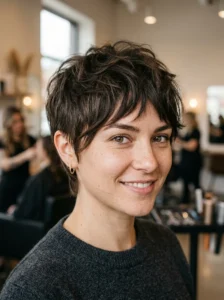
A traditional pixie cut typically maintains a fairly uniform, closely cropped length throughout, with minimal internal layering beyond what’s needed to create a bit of texture at the crown. This hybrid takes that same short overall length parameter but applies the wolf cut’s characteristic heavier, more dramatic layering technique and curtain-style face-framing pieces throughout, resulting in considerably more visible texture and movement than a standard pixie typically achieves.
My stylist explained the core technical difference this way while working on mine: rather than the more uniform, closely cropped approach typical of a classic pixie, this hybrid deliberately varies the length more dramatically between different sections, particularly concentrating volume and movement at the crown while keeping softer, longer pieces specifically around the face, mirroring the wolf cut’s core layering philosophy but scaled down considerably to work within a much shorter overall length.
Why This Combination Solves a Genuine Dilemma

Having lived with both a longer wolf cut and now this shorter hybrid version, I understand why this specific combination has found real traction among people facing the exact tension I was navigating. A lot of people who love the wolf cut’s textured, dynamic aesthetic eventually reach a point where they want a significant length change, whether for practical reasons like reduced daily maintenance time, or simply wanting to try something considerably shorter, without feeling like that length change requires sacrificing the specific visual qualities that drew them to the wolf cut aesthetic in the first place.
This hybrid resolves that tension directly, offering genuine, dramatic texture and movement at a length that requires meaningfully less daily washing, drying, and detangling time than even a moderate-length wolf cut would demand. It’s become a natural landing point specifically for people transitioning from a longer, more textured style toward something considerably shorter without wanting to give up the personality that made the longer version appealing.
Which Hair Types Work Best With This Shorter Version
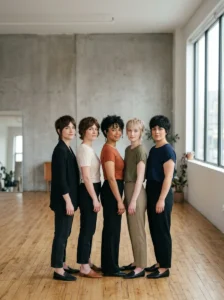
Straight hair can achieve this look, though it typically requires more active daily styling, texturizing spray and some strategic loose curling through the shorter top layers, to encourage the separation and movement this hybrid depends on.
Wavy hair pairs beautifully with this cut, since the natural texture works directly with the layering technique rather than needing to be forced into shape, requiring considerably less daily effort to achieve a dynamic, finished look.
Curly hair genuinely thrives here, since natural curl provides exactly the kind of voluminous, dynamic texture this hybrid is built around, though the cutting needs to carefully account for curl shrinkage, which becomes considerably more significant at this shorter overall length than it would with more hair to work with.
Fine hair benefits significantly from the heavier layering incorporated into this style, since the varying layer lengths create the illusion of noticeably more volume and density than a completely uniform, closely cropped pixie would achieve on the same hair type.
Thick, dense hair can carry a particularly dramatic version of this hybrid, with plenty of volume for the heavier layering to create real visual texture without any individual section looking sparse or thin.
Getting the Cut Right at the Salon
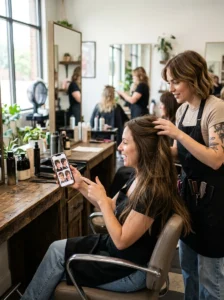
Bring reference photos specifically of this shorter hybrid interpretation, rather than photos of a longer wolf cut alone, since the specific technique and proportions genuinely differ enough at this length that a stylist working purely from longer references may not translate the concept accurately.
Discuss how dramatic you want the layering contrast between the shortest crown pieces and the longer face-framing sections to be, since this single detail significantly affects how bold or more subtle the finished texture actually reads.
Ask specifically about your stylist’s experience with this particular combination, since achieving genuine wolf cut texture at a much shorter pixie length requires more technical precision than either a standard pixie or a standard longer wolf cut individually, given how much less length there is to work with while still creating meaningful contrast.
Mention your natural hair texture honestly, and ask realistically how much daily styling effort will be needed to achieve and maintain the specific texture you’re picturing, since this varies considerably depending on whether your hair naturally provides that movement or requires active styling technique.
Styling This Hybrid Day to Day
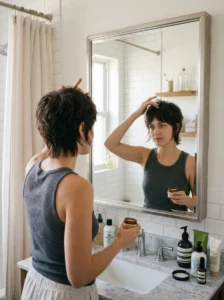
For maximum texture and definition, a texturizing spray or mousse applied to damp hair before diffusing or air drying encourages genuine separation between the shorter layers, which is central to achieving the intended dramatic effect at this compact length.
A small curling wand, used loosely and briefly through just the shorter crown layers rather than the entire head, adds definition without creating an overly polished, uniform curl that would work against the deliberately undone quality that defines this style.
Dry shampoo or a light texturizing powder applied at the roots helps maintain volume throughout the day, particularly important at this shorter length where flatness can become noticeable more quickly than it would with more hair providing natural weight and structure.
For naturally wavy or curly hair specifically, a lightweight curl-defining cream applied to damp hair and left to air dry is often genuinely sufficient to achieve much of the intended texture with minimal additional styling effort required.
Maintaining This Shorter Hybrid
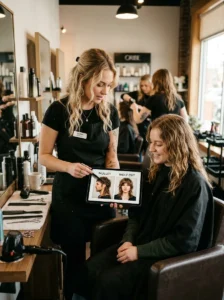
Regular trims, generally every four to six weeks, matter more with this cut than with the longer wolf cut version, since both the shorter overall length and the dramatic layering contrast mean growth becomes visually obvious more quickly, softening the intended texture and definition between appointments.
Finding a stylist genuinely experienced with this specific shorter interpretation, rather than someone more accustomed to cutting either a standard pixie or a longer wolf cut, makes a real difference in how well the cut actually holds its intended shape and texture between visits, given how much precision this particular combination requires at a compact length.
Investing in a quality texturizing product for daily maintenance genuinely matters here, particularly for straighter hair types that don’t naturally provide the separation and movement this style depends on without some styling assistance.
How This Differs From Other Short Wolf Cut Interpretations
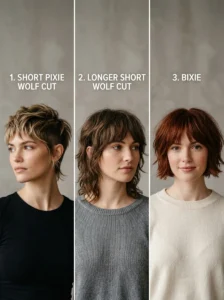
It’s worth understanding that this specific pixie-length interpretation is meaningfully shorter and more compact than some other “short wolf cut” variations that land closer to chin length or a longer pixie-bob blend. This version goes considerably shorter throughout, closer to a true, classic pixie length, while still working in the wolf cut’s characteristic layering rather than settling for the more moderate length reduction some other short wolf cut interpretations offer.
Compared to a bixie, which specifically blends closely cropped sides with more length left on top in a bob-adjacent shape, this pixie wolf cut tends to maintain a more consistently short length throughout the sides and back, with the dramatic layering and length variation concentrated more at the crown and around the face rather than creating the more pronounced top-versus-sides length contrast that defines a bixie specifically.
How Face Shape Factors Into This Cut
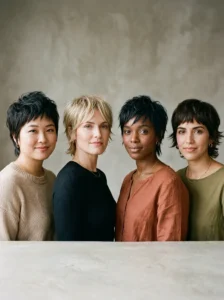
Round faces tend to benefit from keeping a bit more height and volume specifically at the crown, elongating the overall face shape, while keeping the shorter side sections fairly close to the head to avoid adding unwanted width.
Square or angular faces often look particularly striking with this cut, since the softness and movement from the wolf cut layering helps break up strong jaw and cheekbone structure more effectively than a completely uniform, closely cropped pixie would achieve alone.
Heart-shaped faces, wider at the forehead and narrower at the chin, tend to benefit from keeping the face-framing pieces slightly longer near the jaw specifically, helping balance a wider top against a narrower chin.
Long or oval faces generally have the most flexibility with this style, since there’s less specific correction needed, allowing freedom to lean into a more dramatic version of the layering without much concern about it being unflattering for the underlying face shape.
Color Choices That Enhance This Cut’s Texture
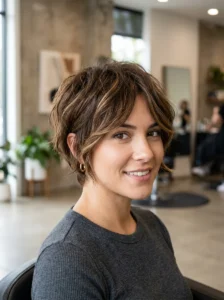
Dimensional color, whether through subtle highlights or a soft balayage technique adapted for shorter hair, enhances the visible layering and texture this cut is built around, since varying tones catch light differently across the different layer lengths even at this compact overall length.
A solid, rich single-process color also works beautifully for anyone who wants the cut’s technical structure and texture to remain the primary visual focus without additional dimensional color competing for attention at such a short length.
Common Mistakes to Avoid
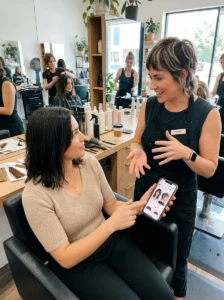
Bringing only longer wolf cut reference photos without specifying you want this specific shorter interpretation can lead to a stylist attempting to simply shorten the longer concept without properly adjusting the technique, often resulting in a less defined, less intentional-looking finished cut.
Underestimating the trim frequency needed to maintain this style’s characteristic layering can lead to disappointment within just a few weeks, since the dramatic contrast between layer lengths softens noticeably faster at this shorter overall length than it would with more length to work with.
Skipping texturizing products for straighter hair types, assuming the cut alone will create sufficient movement and definition, often results in a flatter, less dynamic finished look than the style is actually capable of achieving with the right styling technique consistently applied.
Frequently Asked Questions
How is this different from just asking for a “textured pixie”? A generically textured pixie typically involves more uniform, evenly distributed texture throughout, while this specific hybrid incorporates the wolf cut’s more dramatic, concentrated layering pattern and characteristic face-framing pieces, creating a considerably more varied, dynamic finished look than a standard textured pixie achieves.
Will this cut work if I’m transitioning directly from much longer hair? Yes, and many people specifically choose this hybrid as their landing point when making a significant length reduction, since it offers genuine texture and personality that helps ease the transition compared to a completely uniform, closely cropped pixie with minimal internal layering.
How often will I need trims to maintain this cut’s shape? Generally every four to six weeks, somewhat more frequent than the longer wolf cut version typically requires, since both the shorter overall length and the dramatic layering contrast mean growth becomes noticeable more quickly.
Does this style require more daily styling effort than a standard pixie cut? Generally yes, particularly for straighter hair types, since achieving the dramatic texture and movement this hybrid depends on typically requires more active styling than a simpler, more uniform pixie would need on the same hair type.
Can I incorporate bangs or a fringe with this shorter hybrid? Yes, and many versions naturally incorporate softer, curtain-style face-framing pieces that function similarly to bangs, though discussing your specific preference with your stylist beforehand helps ensure whatever fringe element you want integrates cohesively with the rest of the layering.
Final Thoughts
Looking back at that consultation where I walked in assuming I’d have to choose between genuinely short hair and the textured personality I’d grown attached to with my longer wolf cut, I’m glad my stylist pushed back on that assumption before I committed to a completely different, more uniform short cut instead. The core techniques that make a wolf cut recognizable and appealing translate to a much shorter length with the right approach, and if you’ve been facing that same false choice between significant length reduction and keeping genuine texture and movement, it’s worth having the same conversation before assuming you have to give up one for the other.