I’d been growing my hair out for close to three years, genuinely committed to reaching a specific length I’d had in my head since I first started the process, when I finally got there and realized the actual result looked considerably less exciting than I’d pictured for all that time. Long, yes, technically the exact length I’d been working toward, but flat, heavy, and honestly a little shapeless once I actually saw it fully grown out rather than imagining it. My stylist, sensing my obvious disappointment during what should have been a celebratory “we finally made it” appointment, suggested cutting in the wolf cut’s characteristic layering rather than simply trimming the ends to maintain the length I’d worked so hard to grow. I was hesitant, worried about undoing years of patient growing, but she assured me the length itself would barely change, only the internal structure would.
She was right, and that single appointment transformed hair I’d been quietly disappointed by into exactly the dynamic, dimensional look I’d been picturing the entire time I was growing it out. If you’ve reached your own long-hair goal only to find it looking flatter or less exciting than expected, or you’re simply drawn to the idea of significant length paired with real movement and low daily effort, here’s everything worth knowing about this specific long-length interpretation.
What Actually Defines the Long Wolf Cut

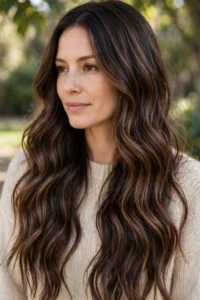
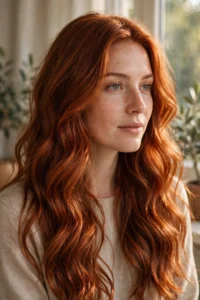
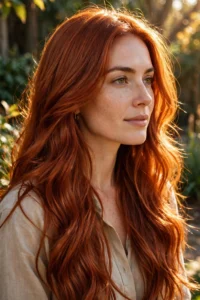
At its core, this version applies the wolf cut’s characteristic heavy layering, concentrated most dramatically at the crown, softer curtain-style face-framing pieces, and an overall textured, undone finish, to hair reaching well past the shoulders, often significantly longer. Unlike the shorter interpretations of this same core concept, there’s considerably more length available here for the dramatic layer contrast to fully develop and create visible, striking movement throughout.
My stylist explained the specific appeal of this longer version this way while cutting mine: with more overall length to work with, the layering can create more dramatic, visible movement than a shorter version typically achieves, since there’s simply more hair available to actually move and catch light differently across the varying layer lengths, resulting in a particularly striking, dynamic effect that shorter interpretations of the same technique can’t quite replicate to the same degree.
Why This Longer Version Delivers Such Low-Effort Styling

This was genuinely the most surprising part of getting this cut, having assumed that a more dramatic, textured style would naturally require more daily maintenance than the simple, flat length I’d been wearing before. The opposite turned out to be true, and understanding why matters for anyone hesitant about this cut for the same reason I initially was.
A single-length, unlayered long haircut, the kind I had before this appointment, actually requires quite a bit of active styling effort to look intentional rather than simply heavy and flat, since there’s nothing built into the cut itself creating movement or shape. The wolf cut’s layering, by contrast, builds that movement and shape directly into the haircut, meaning even simply air-dried, minimally styled hair looks considerably more finished and dynamic than an equivalent single-length cut would achieve with the same minimal effort.
Which Hair Types Benefit Most From This Longer Version

Straight hair shows the technical structure of the layering very clearly at this length, and while it can achieve genuine movement with minimal styling, a light texturizing spray applied to damp hair before air drying helps maximize the natural separation between layers.
Wavy hair genuinely thrives with this longer interpretation, since the natural texture works directly with the extensive layering to create even more dramatic movement than either element would achieve independently, often requiring very little additional daily styling effort.
Curly hair pairs beautifully with this cut, since natural curl provides exactly the kind of dynamic, voluminous texture this style is built around, though the cutting needs to carefully account for curl shrinkage, which becomes more pronounced the more length is involved.
Thick, dense hair can carry the most dramatic version of this longer cut beautifully, since there’s ample volume for the heavy layering to create real visual texture and movement without appearing sparse anywhere throughout the considerable length.
Fine hair benefits enormously from this style specifically at longer lengths, since fine hair left at a single, unlayered long length can look particularly thin or stringy, while the wolf cut’s layering creates the illusion of significantly more density and volume throughout.
Getting the Cut Right at the Salon
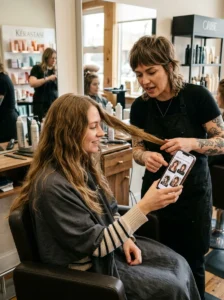
Bring specific reference photos of the longer wolf cut interpretation, and be clear about how dramatic you want the overall layering to be, since this longer version offers considerable range between more subtle, gently layered versions and much more extreme, dramatically contrasted interpretations.
Discuss how much length you’re comfortable potentially reducing at the very shortest crown layers, since achieving genuine movement and texture at this length typically does require removing some length in specific sections, even while the overall longest length you see day to day barely changes.
Ask specifically about face-framing pieces and how prominent you want them, since this remains a defining element of the wolf cut’s overall aesthetic regardless of length, and deciding how dramatic you want this particular element changes the finished look considerably.
Mention your natural hair texture honestly, and discuss realistically how much daily styling will actually be needed to achieve your desired result, since this genuinely varies based on texture even within this specific longer interpretation.
Styling for Maximum Movement With Minimal Effort

For the lowest-effort version of this style, simply air drying with a lightweight texturizing spray applied to damp hair allows the built-in layering to create movement and shape without any active styling technique required beyond that initial product application.
A loose curling wand pass through just the mid-lengths and ends, rather than tight, uniform curling throughout, adds definition to individual layers for a slightly more polished result on days you want a bit more intentional-looking texture without significant additional time investment.
Dry shampoo applied at the roots, even on relatively fresh hair, helps maintain volume specifically at the crown, an area carrying significant visual weight in this particular cut, and adds grip that helps the layering hold its shape and separation throughout a full day.
For naturally wavy or curly hair specifically, minimal intervention beyond a curl-defining cream applied to damp hair is often genuinely sufficient, letting the existing texture handle most of the styling work that straighter hair types would need to achieve more actively.
Maintaining Length While Keeping the Layering Sharp
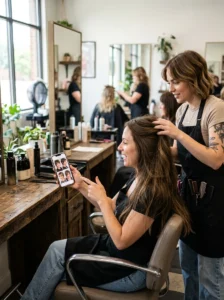
Regular trims, generally every eight to ten weeks, help maintain the layering’s intended definition without requiring significant overall length loss, since these trims primarily address the shorter layered sections and any split ends rather than meaningfully shortening the longest pieces that determine your overall visible length.
Deep conditioning treatments become especially important at this length, since the longest layers have simply existed and been exposed to cumulative styling, washing, and environmental factors for a longer period than shorter hair typically experiences, making moisture and health maintenance genuinely more critical.
If you’re specifically growing toward an even longer target length while maintaining this style, discussing a growth-friendly trimming schedule with your stylist, one that maintains the layering’s shape without meaningfully impacting your longest length, helps balance both goals simultaneously.
How This Compares to Other Wolf Cut Variations
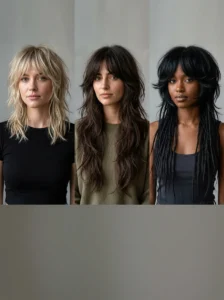
Compared to a shorter interpretation landing around chin or collarbone length, this longer version offers considerably more dramatic movement, since there’s simply more length available for the layering to develop visible, striking contrast throughout. Compared to the octopus cut specifically, which pushes the same core layering concept into even more numerous, more dramatically separated tiers, this standard long wolf cut typically maintains a somewhat more moderate, wearable balance between drama and everyday practicality, without quite as many distinct layering tiers as that more extreme variation incorporates.
How Face Shape Factors Into This Longer Cut
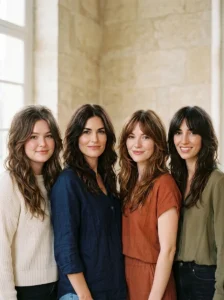
Round faces tend to benefit from keeping the shortest crown layers positioned to add height rather than width, elongating the overall face shape, while the softer face-framing pieces can be adjusted to fall slightly longer near the jaw specifically.
Square or angular faces often look particularly striking with this style, since the abundant movement and softness the layering creates at this length helps considerably in breaking up strong jaw and cheekbone structure.
Heart-shaped faces, wider at the forehead and narrower at the chin, tend to benefit from face-framing pieces with a bit more volume concentrated near the jaw, helping balance a wider top against a narrower chin.
Long or oval faces generally have the most flexibility with this cut, since there’s less specific correction needed, allowing freedom to lean into either a more subtle or more dramatic version of the layering based on personal preference alone.
Color Choices That Enhance This Longer Cut’s Movement
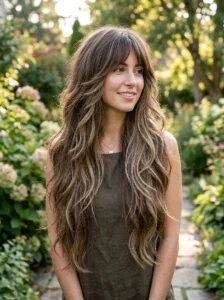
Dimensional color, whether through balayage or subtle highlights woven throughout, particularly enhances this cut’s already dramatic layering at longer lengths, since the varying tones have considerably more length and movement to catch and reflect light across, creating even more visible depth than shorter interpretations of the same coloring technique typically achieve.
A solid, rich single-process color also works beautifully for anyone wanting the cut’s inherent movement and texture to remain the primary visual focus without additional dimensional color competing for attention.
Common Mistakes to Avoid

Assuming any layering will result in significant visible length loss is a common misconception that can lead people to avoid this style entirely, when in reality, well-executed long wolf cut layering barely affects the overall length you see when your hair is down, since that visible length is determined by the longest pieces, which typically remain close to their original length.
Skipping regular trims because the overall length hasn’t changed much can let the layering’s intended definition soften considerably over time, even though the visible overall length stays relatively stable, undermining the dynamic movement that’s the whole point of choosing this style.
Using overly heavy, smoothing products can work against this cut’s intended texture and movement, since many of these formulas are specifically designed to weigh hair down and eliminate the kind of natural separation and volume this style depends on for its full visual impact.
Products Worth Having on Hand
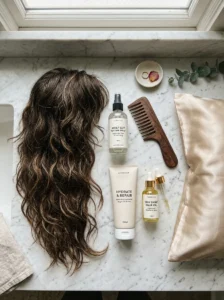
A lightweight texturizing spray, applied to damp hair, remains the single most useful product for this style, encouraging natural separation and movement between layers without weighing down the considerable length involved.
A wide-tooth comb, rather than a standard brush, helps detangle this longer length gently, particularly important given how much more hair there is to manage compared to shorter interpretations of the same cut, reducing breakage during daily detangling.
A lightweight hair oil or leave-in conditioner applied specifically to the ends helps combat the dryness that naturally accumulates over the longer length these ends have existed, keeping the layering’s ends looking healthy and defined rather than dry or frizzy.
A silk or satin pillowcase reduces overnight friction considerably at this length, helping preserve both the style’s texture and the health of the ends between washes.
Frequently Asked Questions
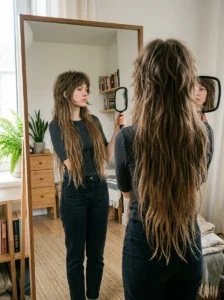
Will I actually lose significant length getting this cut done? Generally very little visible length loss occurs, since the overall length you see day to day is determined by the longest pieces, which typically remain close to their starting length, with the layering technique primarily affecting shorter internal sections rather than the visible perimeter length.
How does this longer version differ from long layers without the specific wolf cut styling? Standard long layers tend to be more subtle and evenly distributed, while the wolf cut specifically incorporates more dramatic, concentrated layering at the crown along with distinct curtain-style face-framing pieces, creating a considerably more textured, dynamic finished look than standard long layers typically achieve.
Does this cut require heat styling to look good, or can it be worn air-dried? Many people, particularly those with natural wave or curl, achieve a fully finished-looking result simply air drying with the right texturizing product, though a bit of heat styling can add extra polish or definition on days you want a slightly more intentional look.
How often do I need trims if I want to maintain length while keeping the cut’s shape? Generally every eight to ten weeks, with these trims primarily addressing the layered sections and any damaged ends rather than meaningfully reducing your overall visible length, allowing the style’s shape to stay defined while you continue growing or maintaining your length.
Will this cut work if my hair is currently damaged from a lot of previous heat styling or coloring? It can, though discussing your hair’s current health with your stylist beforehand matters, and a deep conditioning treatment or health-focused trim before committing to a more dramatic layering pattern often helps the finished cut look its healthiest and most polished.
Final Thoughts
Looking back at that appointment where I sat disappointed by hair I’d spent three years patiently growing, I’m genuinely grateful my stylist suggested addressing the internal structure rather than just accepting that flat, heavy result as simply what long hair looks like. The specific combination of significant length and genuine, built-in movement turned out to be exactly what had been missing, and if you’ve reached a length goal only to find the result underwhelming, or you’re drawn to the idea of longer hair that still moves and looks intentional with minimal daily effort, this particular approach might be exactly the missing piece.