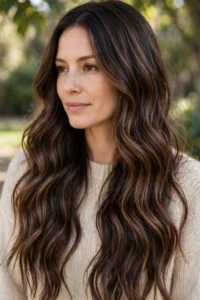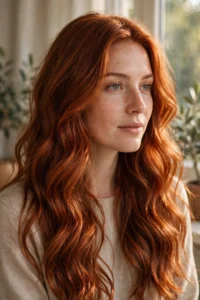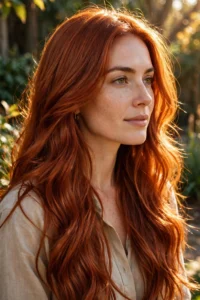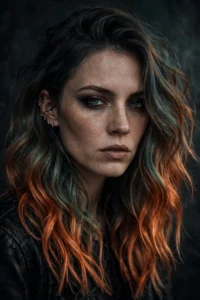
I spent a genuinely embarrassing amount of time comparing reference photos before my own medium-length wolf cut appointment, mostly because I kept noticing how differently the same general trend could look from one photo to the next. Some versions looked almost like a long, dramatically layered shag. Others looked closer to a heavily textured bob with a bit of extra length. By the time I actually sat down in the chair, I’d saved enough conflicting screenshots that my stylist, scrolling through my phone, laughed and said she could build me an entirely different haircut from each individual photo I’d sent her. That conversation turned into a genuinely useful back-and-forth about the real range that exists within “medium wolf cut” as a category, rather than it being one single, fixed look the way I’d been assuming going in.
That appointment happened almost a year ago now, and I’ve stayed with some version of this length and style ever since, occasionally adjusting the specific balance between drama and wearability depending on my mood. If you’re staring down your own folder of conflicting reference photos the way I was, here’s a real range of medium wolf cut ideas, organized by how dramatic or subtle each one actually is, so you can walk into your appointment with a much clearer sense of exactly where on that spectrum you actually want to land.
Why Medium Length Is Genuinely the Sweet Spot for This Cut
Before getting into specific ideas, it’s worth understanding why this particular length range has become such a popular landing point for the wolf cut specifically, rather than people consistently choosing the much shorter or much longer versions of the same core concept.
Medium length, generally falling somewhere between the collarbone and shoulders, offers enough length for the wolf cut’s characteristic dramatic layering to fully develop and create visible, striking movement, while still remaining meaningfully lower maintenance in terms of daily washing and drying time compared to a significantly longer interpretation. It also tends to suit a wider range of face shapes and hair textures than either extreme, since there’s simply more flexibility within this middle range to adjust the specific balance of length and layering to flatter individual proportions.
1. Soft Layers With Minimal Curtain Fringe

A gentler interpretation, incorporating just a small amount of face-framing length rather than a full, dramatic curtain fringe, offers movement and texture without reading as overtly dramatic, making it a good entry point for anyone nervous about committing to a bolder version.
2. Long Layers With Subtle Crown Texture

Keeping the overall layering fairly gentle and evenly distributed, with just a touch of extra texture specifically at the crown, captures some of the wolf cut’s signature volume without the more dramatic, choppy contrast typical of bolder interpretations.
3. Medium Shag With Blended Ends

Borrowing some texture from shag-cutting technique but keeping the ends more blended rather than sharply choppy, this version offers movement while still reading as reasonably polished and office-appropriate.
4. Classic Medium Wolf Cut With Full Curtain Bangs

The most iconic, widely recognized interpretation, combining noticeable crown layering with full, soft curtain bangs framing the face, strikes a solid balance between drama and everyday wearability for most people.
5. Choppy Layers Throughout With Face-Framing Pieces

More dramatic, visibly choppy layering distributed throughout the entire length, paired with distinct face-framing pieces, creates genuine texture and movement without going to the most extreme version of this style.
6. Wavy Medium Wolf Cut

Specifically styled with loose waves throughout, this version lets natural or styled texture amplify the cut’s inherent movement, creating a soft, lived-in quality that photographs particularly well.
7. Medium Wolf Cut With a Deep Side Part
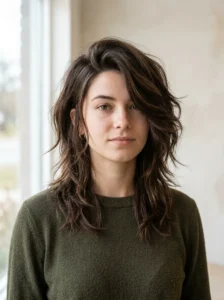
Simply shifting from a center part to a deep side part changes the whole character of an otherwise moderate wolf cut, adding asymmetry and a slightly more editorial quality without any additional cutting involved.
8. Straight, Sleek Medium Wolf Cut

For anyone who prefers a smoother daily finish, styling this cut pin-straight still showcases the underlying layering structure clearly, offering a more polished, precise alternative to the typically more textured styling associated with this trend.
9. Heavily Layered With Maximum Crown Volume
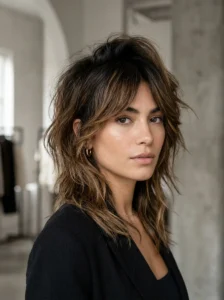
The most dramatic standard interpretation, incorporating significant layering contrast and maximum volume specifically at the crown, delivers serious visual impact at this moderate length.
10. Medium Wolf Cut With Blunt, Full Bangs

Rather than the softer curtain style, pairing this cut with full, blunt bangs cut straight across creates a bolder, more graphic overall look with real visual drama up front.
11. Asymmetrical Medium Wolf Cut
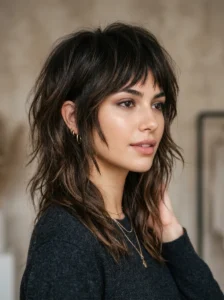
Incorporating deliberate asymmetry, with one side cut noticeably shorter or styled differently than the other, adds an edgier, more unconventional quality to the standard symmetrical version of this cut.
12. Medium Wolf Cut With an Undercut
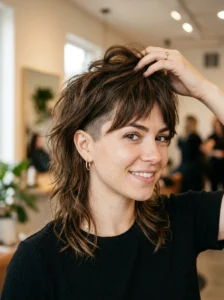
Pairing the visible top layering with a hidden, closely cropped undercut underneath adds dimension that’s revealed when hair is pulled up or worn in certain styles, while the top layer maintains the cut’s signature textured look most of the time.
13. Dimensional Balayage Throughout the Layering

Warm, hand-painted balayage woven through the cut’s layers adds visible depth and movement, since the varying tones catch light differently across each distinct layer length.
14. High-Contrast Highlights on Darker Base
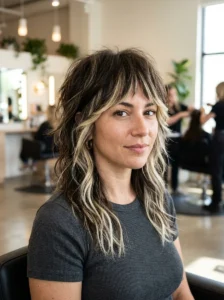
Significant, noticeable highlights against a darker overall base create dramatic contrast that particularly emphasizes the cut’s layering structure as hair moves throughout the day.
15. Root Shadow With Lighter Lengths

A darker, natural-looking root blending into lighter, warmer lengths offers a low-maintenance color option that still adds genuine dimension and depth to the cut’s overall texture.
16. Solid, Rich Single-Process Color

For anyone wanting the cut’s structure and texture itself to remain the primary focus, a rich, single-process color without additional highlighting still looks dynamic thanks to how the layering alone creates visible movement and shadow throughout.
17. Two-Tone Color Blocking

Combining two distinctly different colors in specific sections, rather than a blended, gradual transition, creates a bold, graphic effect that particularly showcases the cut’s dramatic layer separation.
Matching the Cut to Your Hair Type
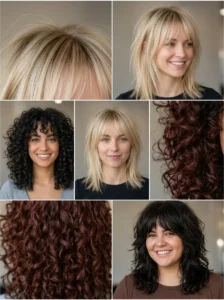
Straight hair can achieve any of these variations, though it typically requires more active daily styling, some texturizing product and loose curling, to encourage the separation and movement this cut depends on for its full intended effect.
Wavy hair genuinely thrives across this entire range, since natural texture works directly with the layering to create dynamic movement with considerably less daily styling effort required.
Curly hair pairs beautifully with the bolder, more dramatic versions specifically, since natural curl provides exactly the kind of voluminous texture these interpretations are built around, though the cutting needs to carefully account for curl shrinkage.
Fine hair benefits significantly from the layering across all these options, since the varying lengths create the illusion of noticeably more volume and density than a single, uniform medium length would achieve.
Thick, dense hair can carry the boldest, most dramatic interpretations particularly well, with plenty of volume for heavy layering to create real visual texture without appearing sparse anywhere.
How Face Shape Factors Into Your Choice
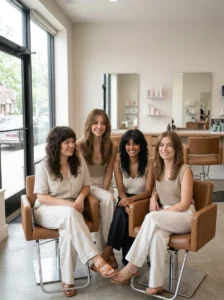
Round faces across all these variations tend to benefit from keeping layering concentrated more toward the crown and chin rather than close to the cheeks, elongating the overall shape rather than adding unwanted width at the widest point.
Square or angular faces often look particularly striking with the bolder, more textured interpretations specifically, since the additional movement and softness helps break up strong jaw and cheekbone structure more effectively than the subtler versions might achieve.
Heart-shaped faces, wider at the forehead and narrower at the chin, tend to benefit from face-framing pieces with a bit more volume concentrated near the jaw across any of these versions, helping balance the proportions.
Long or oval faces generally have the most flexibility across this entire range, since there’s less specific correction needed, allowing freedom to choose based on personal preference for drama level rather than face-shape requirements.
Getting the Right Version at the Salon

Bring specific reference photos, and be honest with yourself and your stylist about where on the spectrum, from subtle to dramatic, you actually want to land, since “medium wolf cut” alone leaves considerable room for interpretation given the genuine range that exists within the category.
Discuss how prominent you want face-framing bangs or curtain pieces to be, since this single element significantly affects how dramatic or subtle the overall finished look reads, independent of how much layering is incorporated elsewhere.
Ask specifically about daily maintenance expectations for whichever version you’re leaning toward, since the bolder, more dramatic interpretations generally require more active daily styling than the subtler options to look their best.
Maintaining a Medium Wolf Cut
Regular trims, generally every six to eight weeks, help maintain whichever specific balance of drama and subtlety you’ve chosen, since the layering contrast that defines this cut softens as hair grows out between appointments.
Styling Each Level of Drama
For the subtler, more everyday-wearable options, a round brush and blow dryer, focused on smoothing while allowing a bit of natural movement at the ends, keeps the look polished and low-key, with minimal additional product needed beyond a light smoothing serum.
For the medium-drama versions, a texturizing spray applied to damp hair before diffusing or air drying encourages genuine separation between layers, while a loose curling wand pass through just the face-framing pieces adds a bit of extra definition without requiring a full head of curling.
For the boldest, most dramatic interpretations, a combination of texturizing mousse, strategic backcombing at the crown, and a finishing hairspray helps achieve and maintain the maximum volume and visible layer separation these versions are specifically built around.
Products Worth Having on Hand
A lightweight texturizing spray works well across nearly every version on this list, adjustable in how much product you use depending on whether you’re going for a subtle or dramatic finished result.
A quality round brush remains useful even for the more textured, dramatic interpretations, particularly for adding volume and lift specifically at the roots before layering in additional texture through the mid-lengths and ends.
A firm-hold hairspray matters more for the bolder, more voluminous versions specifically, helping the additional volume and layer separation actually hold up throughout a full day rather than gradually softening.
A deep conditioning treatment, used weekly, helps offset any additional dryness from more frequent heat styling, particularly relevant for anyone choosing one of the more dramatic, higher-maintenance interpretations on this list.
Common Mistakes to Avoid
Not being specific about where you want to land on the subtle-to-dramatic spectrum is probably the most common source of disappointment, since this trend genuinely spans a wide range, and a stylist without clear direction may default toward whichever interpretation they personally favor rather than what you actually had in mind.
Choosing the boldest, most dramatic version without honestly assessing how much daily styling time you’re willing to commit can lead to frustration if the cut doesn’t maintain its intended look without more active effort than you’d initially planned for.
Frequently Asked Questions
How do I know which version of this cut will actually suit my face shape? Discussing your specific face shape with your stylist, rather than choosing based purely on a photo of someone with different proportions, helps ensure whichever version you choose, subtle or dramatic, is adjusted appropriately to flatter your own features.
Will the subtler versions still look like a recognizable wolf cut, or do they read as something else entirely? The subtler interpretations still incorporate the core layering philosophy that defines this trend, just with less dramatic contrast, so they remain recognizable as part of this broader category while reading as considerably more wearable for everyday, lower-key styling.
How often do I need trims across these different variations? Generally every six to eight weeks regardless of which specific version you choose, since the layering contrast central to all these interpretations softens similarly as hair grows out between appointments.
Can I start with a subtler version and go bolder later if I like how it feels? Yes, and this is a genuinely reasonable approach for anyone unsure how dramatic they want to go, starting conservatively and discussing a bolder interpretation at a future appointment once you’ve lived with the initial, more moderate version for a while.
Does color change how dramatic this cut appears, independent of the layering itself? Yes, significantly, since dimensional color choices like balayage or high-contrast highlights can make even moderately layered versions appear considerably more dramatic and textured than the same cut would look with a flat, single-process color applied instead.
Is one of these variations better suited to a first-time wolf cut, versus someone who’s had one before? The subtler options, like soft layers with minimal curtain fringe or a medium shag with blended ends, tend to be better entry points for anyone trying this general trend for the first time, while the bolder interpretations are often better suited to someone who already knows they enjoy the style and wants to push it further.
Final Thoughts
Looking back at that folder of conflicting screenshots I brought to my own first appointment, I understand now why my stylist found it so amusing, given how differently each photo actually interpreted the same general trend name. There’s a genuine, wide spectrum within this particular style, and taking the time to figure out specifically where you want to land on it, rather than assuming it’s one single, fixed look, makes a real difference in walking out of your own appointment with something that actually matches what you had in mind.