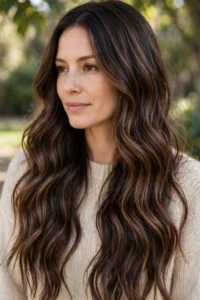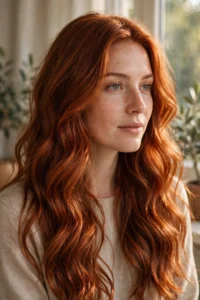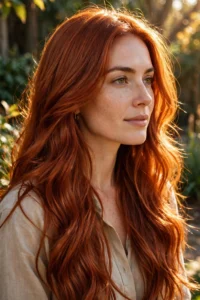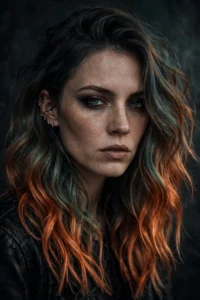
Some colors arrive quietly and then refuse to leave. Mocha balayage is one of them. Pinterest searches for “mocha balayage hair” are up 949% this season, which tells you this isn’t a passing fling. People want color that looks expensive, grows out gracefully, and doesn’t demand a salon visit every month. Here’s everything you need to know before you book.
The appeal is easy to see. A deep mocha base ribbons into slightly lighter coffee tones, hand-painted so there’s no harsh regrowth line. You get movement, shine, and depth without the upkeep of full highlights. If you’ve been scrolling for rich color with low pressure, start here. These are 15 ways to wear it, from whisper-subtle to high drama.
What Exactly Is Mocha Balayage?
Balayage is a freehand painting technique, and mocha is the shade family: deep, cool-to-neutral browns the color of strong coffee with milk. Combined, you get a brunette look with painted ribbons of lighter mocha woven through, darkest at the root and brighter through the ends. It reads natural, never stripey, and suits almost every skin tone when the undertones are matched right.
1. Classic Mocha Balayage on Dark Brown
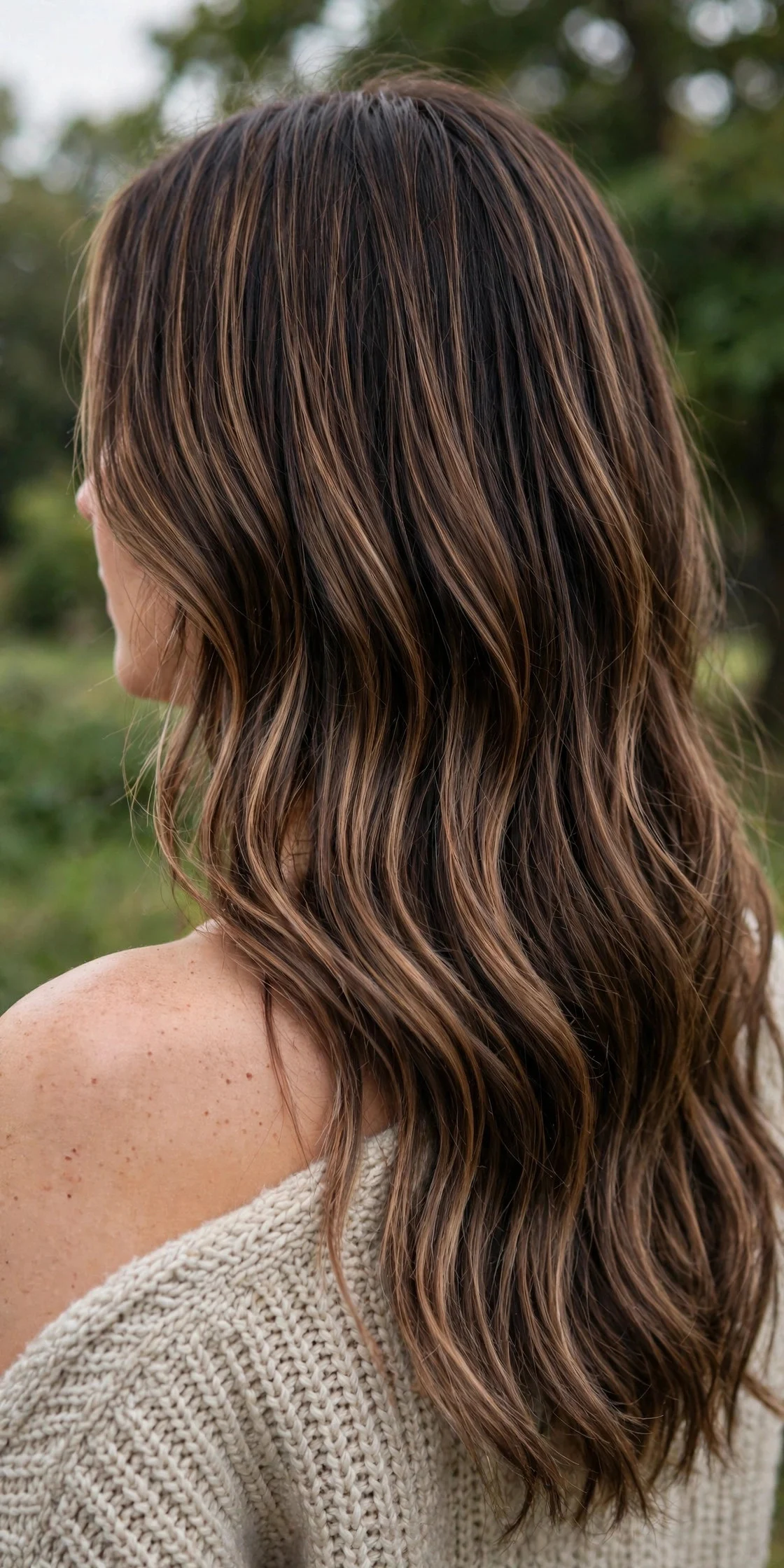
This is the version that started the obsession. Your stylist keeps your natural dark brown base and paints mocha ribbons a level or two lighter through the mid-lengths and ends. Ask for soft transitions with brightness concentrated lower. The grow-out is seamless because nothing starts at the root, and most people go four to six months between appointments. One honest note: on very dark, coarse hair, the first session may not lift as light as you hoped, and a toner refresh around week six keeps the ribbons from turning brassy.
2. Mocha Balayage With Curtain Bangs
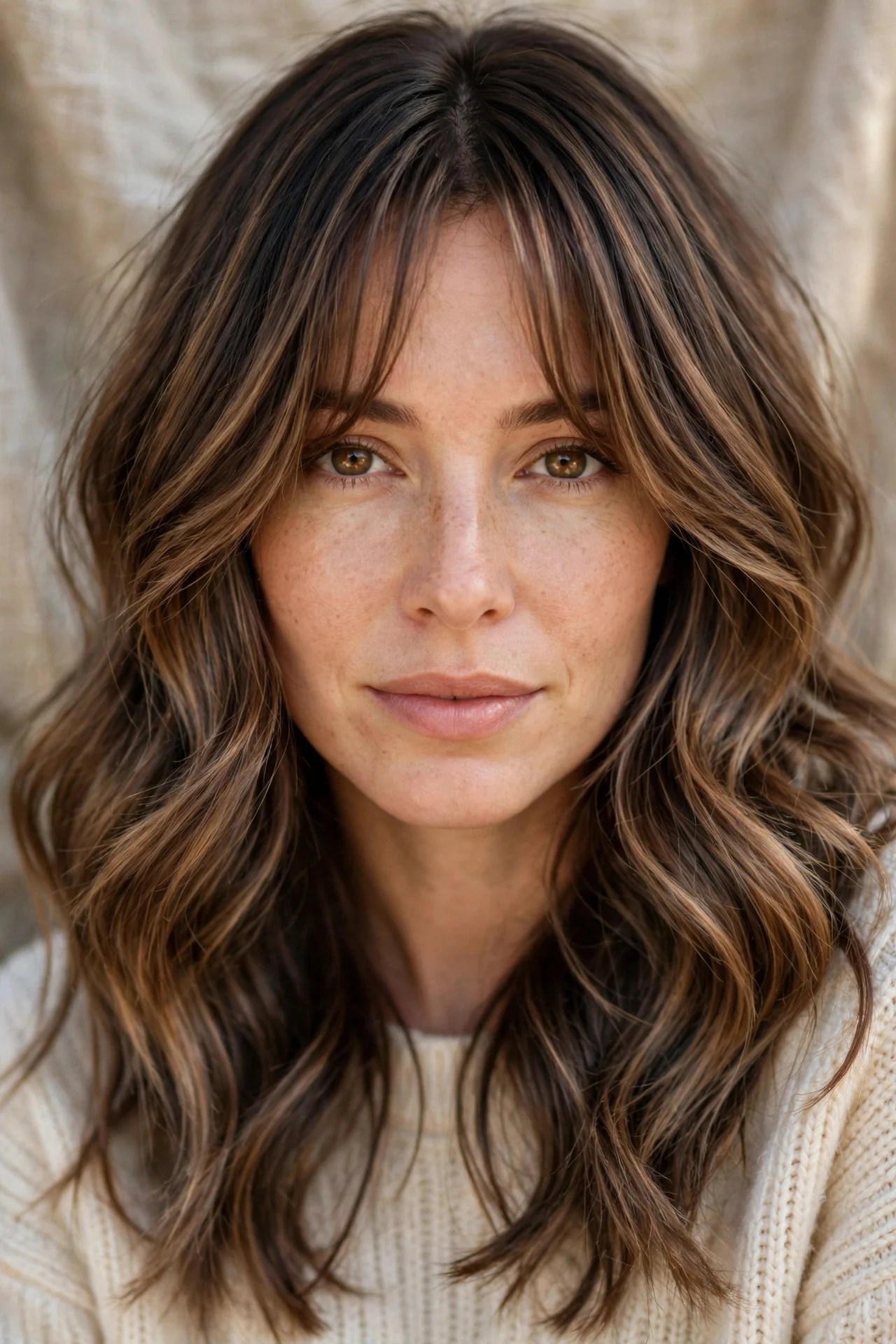
Curtain bangs plus mocha balayage is a smart pairing, because the bangs catch the lighter ribbons and frame your whole face. Tell your stylist to concentrate color around the front pieces, with a couple of brighter strands right where the bangs part. Those face-framing lights make cheekbones pop. The bangs suit oval, round, and heart faces, and the mocha color stops them from looking flat. Keep dry shampoo handy: bangs get oily fast. Trim them every three weeks or they stop reading as curtains and start reading as plain long bangs.
3. Subtle Mocha Ribbons on Black Hair
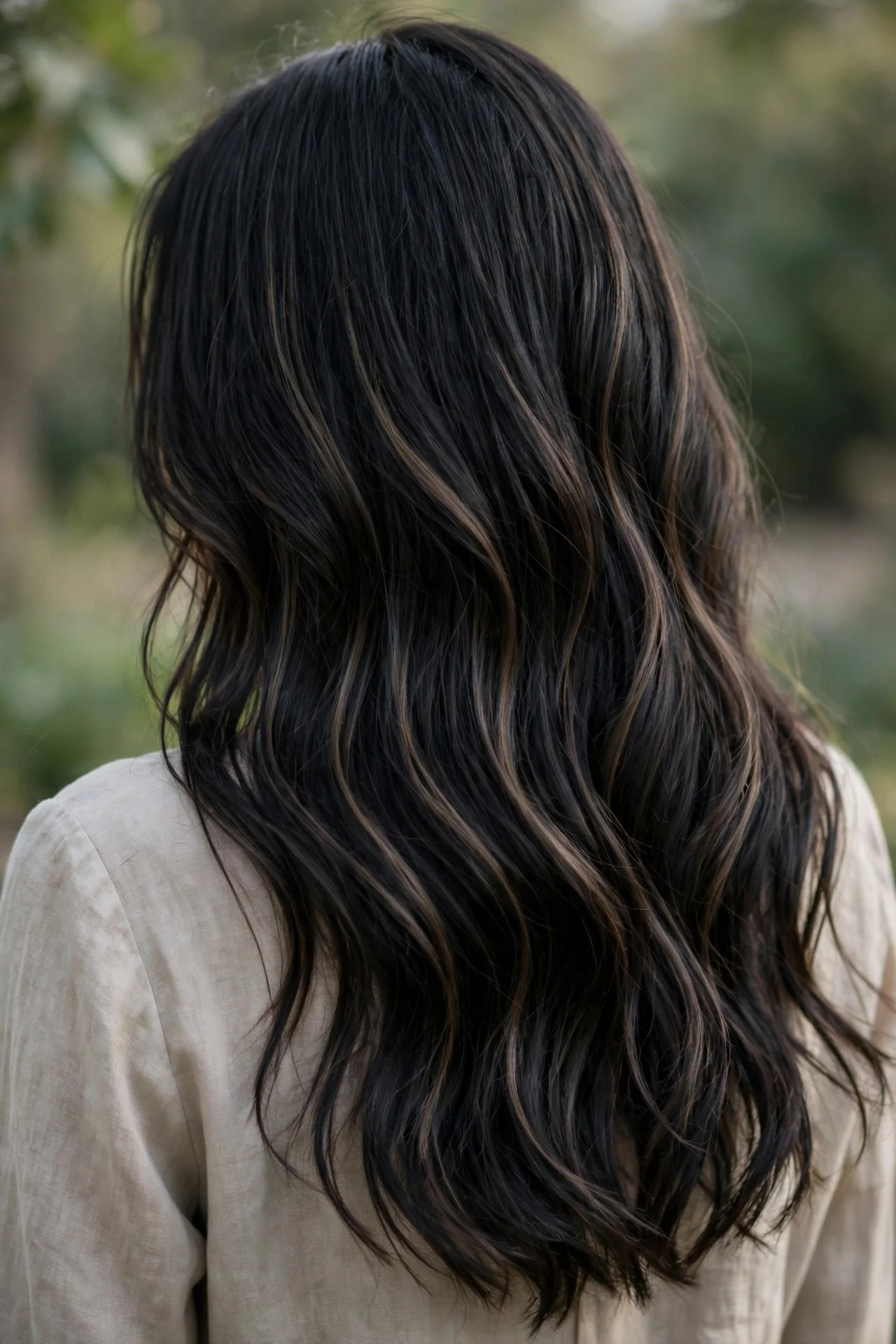
On near-black hair you don’t need dramatic lift to get the effect. Your colorist can paint fine ribbons just two levels lighter than your base, which reads as dimension rather than highlights. Indoors it looks almost solid; sunlight reveals the ribbons. Ask for a demi-permanent formula instead of bleach, since it causes less damage and fades more gracefully. The catch is that even subtle lift on true black hair can pull warm, so book a gloss appointment around week eight to keep the tone neutral. Done right, it photographs beautifully and won’t raise eyebrows anywhere.
4. Mocha Balayage Lob
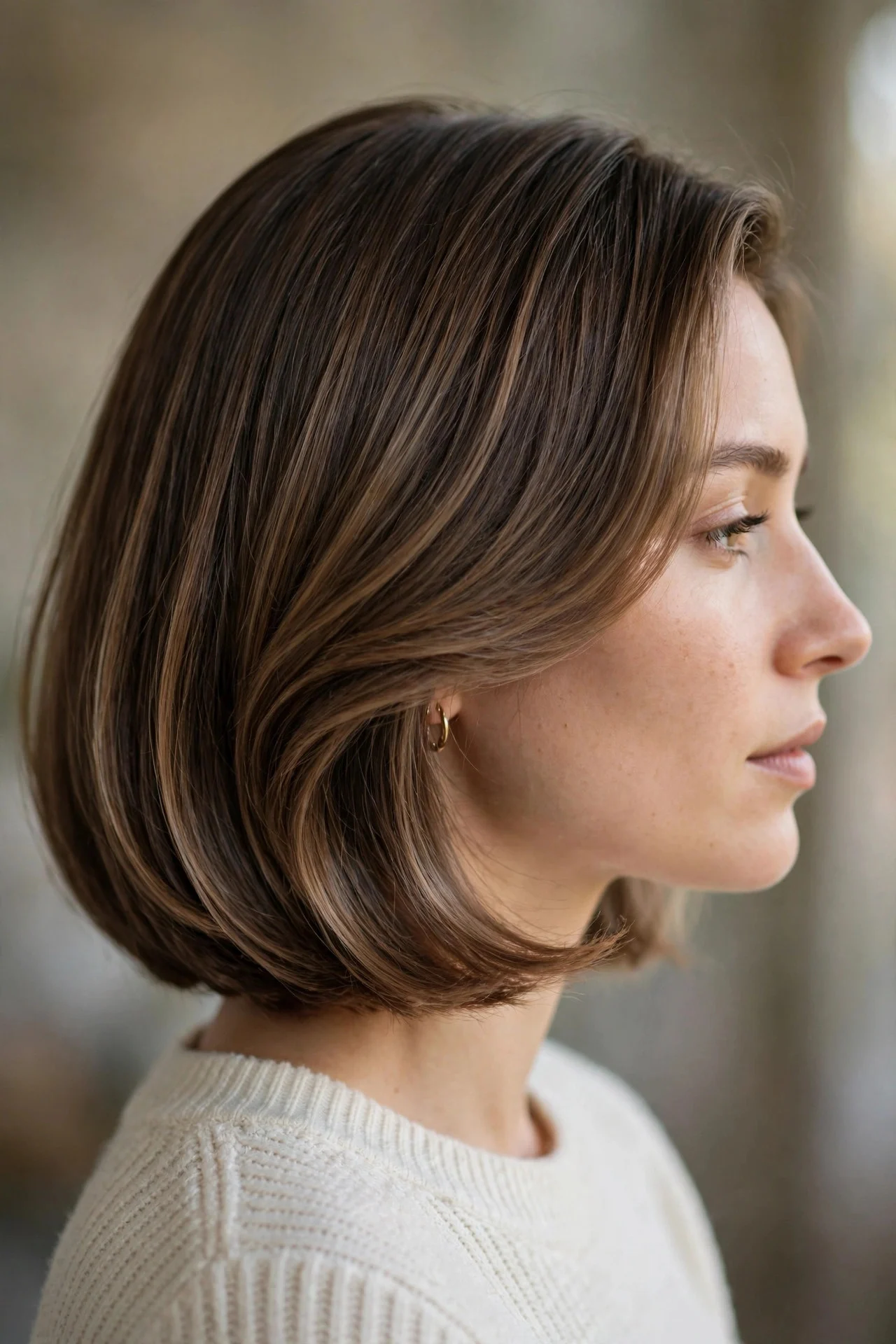
A shoulder-length lob is an ideal canvas for this color. The cut ends where the painted brightness peaks, so shape and color finish each other off. Ask for long layers starting at the chin, plus balayage that gets progressively lighter toward the ends. Straightened, the ribbons look polished and deliberate; scrunched with wave, it goes beachy. The lob suits fine hair well because the color creates an illusion of thickness. Maintenance is moderate: trim every eight weeks so the ends don’t look thin, and use a blue-toned shampoo weekly to keep the mocha from oxidizing warm.
5. High-Contrast Mocha Balayage
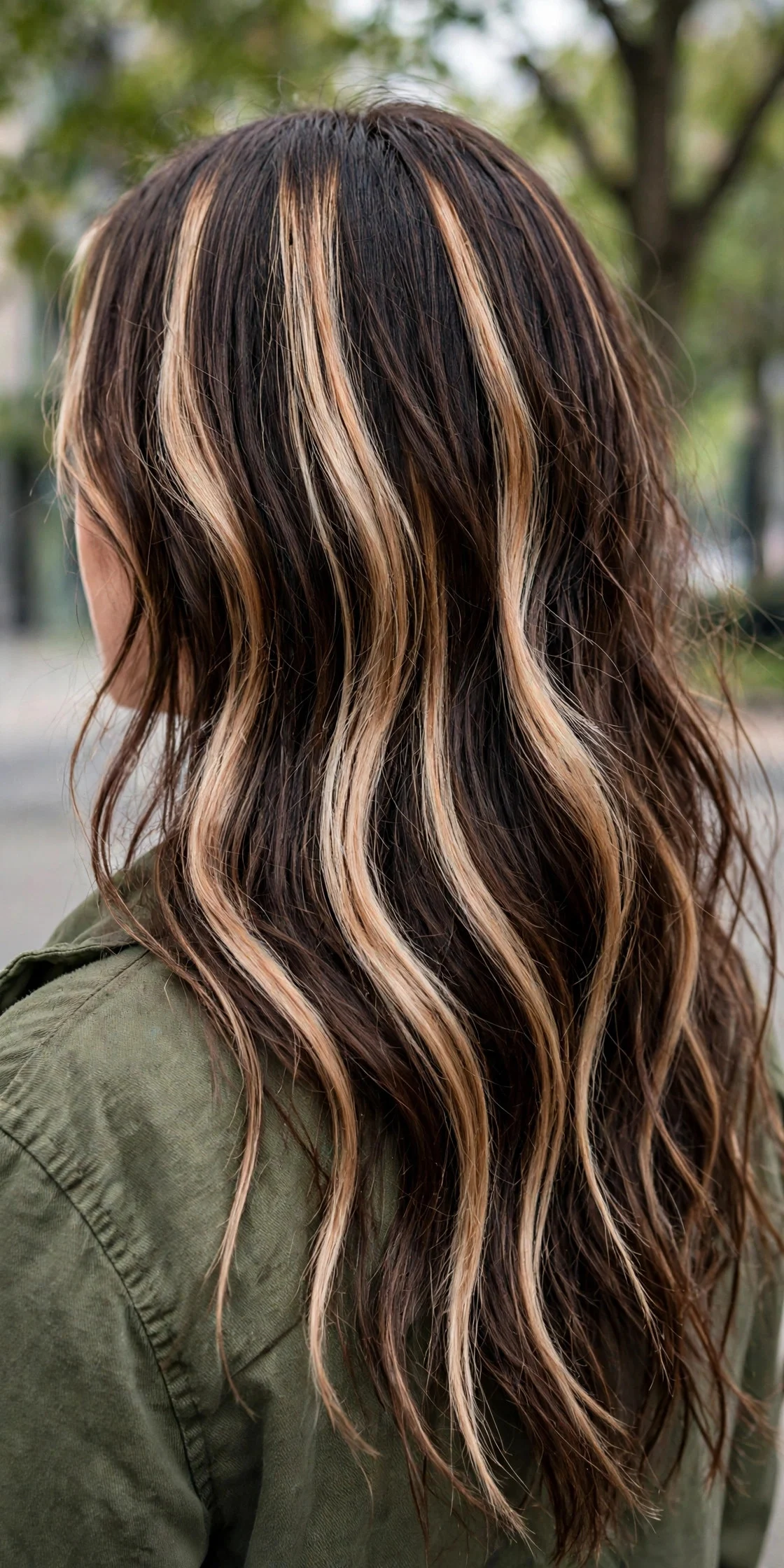
This is mocha balayage with real attitude. Thick, bold ribbons of light mocha against a dark base, with visible contrast instead of a soft blend. Ask for chunkier weaves and less feathering at the top of each ribbon. It looks incredible on long hair, where the contrast has room to travel. Fair warning: high contrast shows regrowth sooner than the classic version, so plan a partial refresh every eight to ten weeks. It also costs more because the application takes longer. But the payoff is head-turning color that doesn’t need heat styling to look interesting.
6. Mocha Balayage With a Money Piece
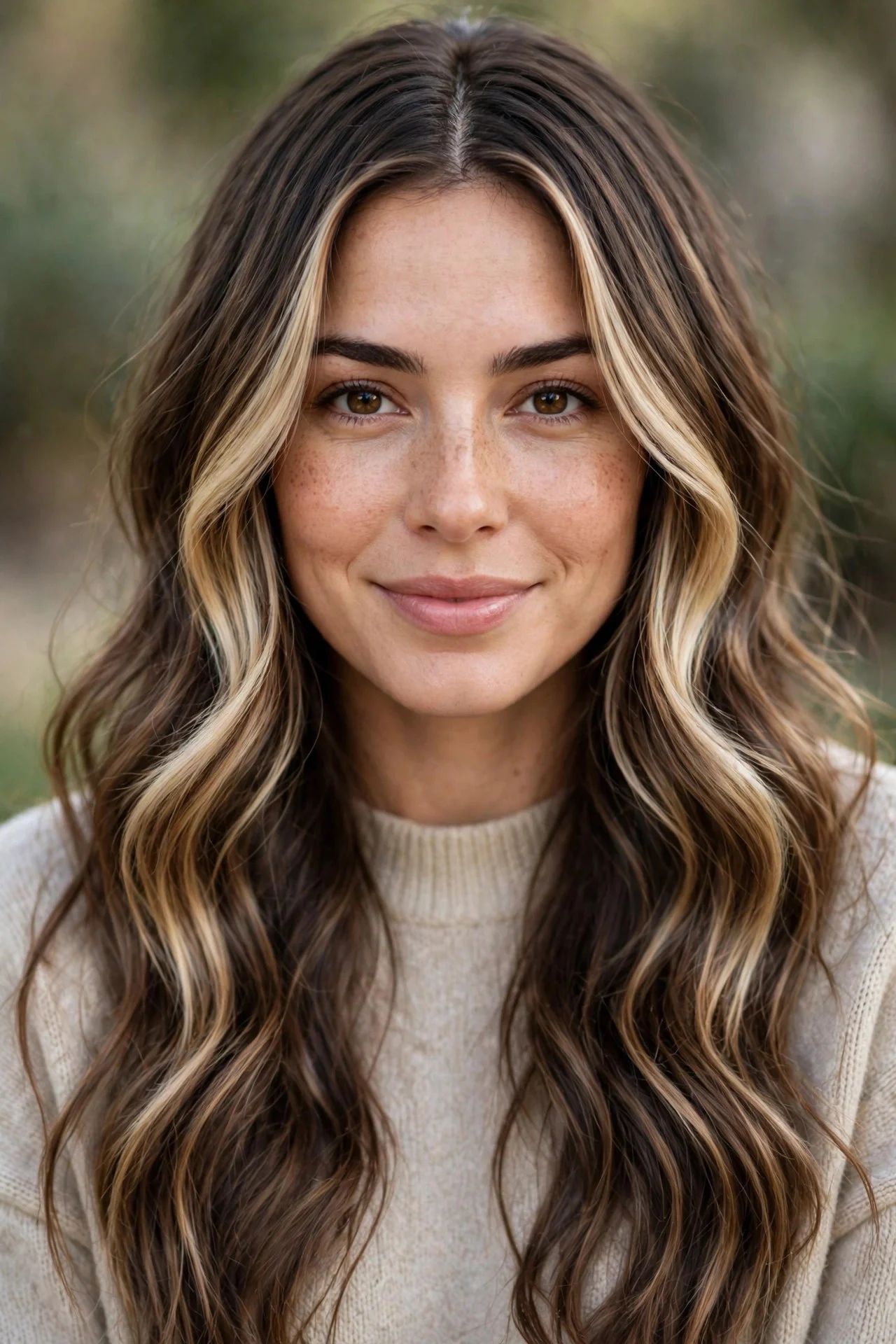
A money piece is the brightest ribbon at the front hairline, and on mocha balayage it works like a built-in highlighter. The rest of your hair stays in soft mocha tones while the two front pieces run one to two levels lighter. Ask for it bright but blended, not a stripe. This draws attention to your eyes and cheekbones without lightening your whole head. It’s also the cheapest part to refresh: a money piece touch-up takes twenty minutes. Going too light looks harsh against a dark base, so bring a reference photo and agree on brightness first.
7. Lived-In Mocha Balayage on Long Layers
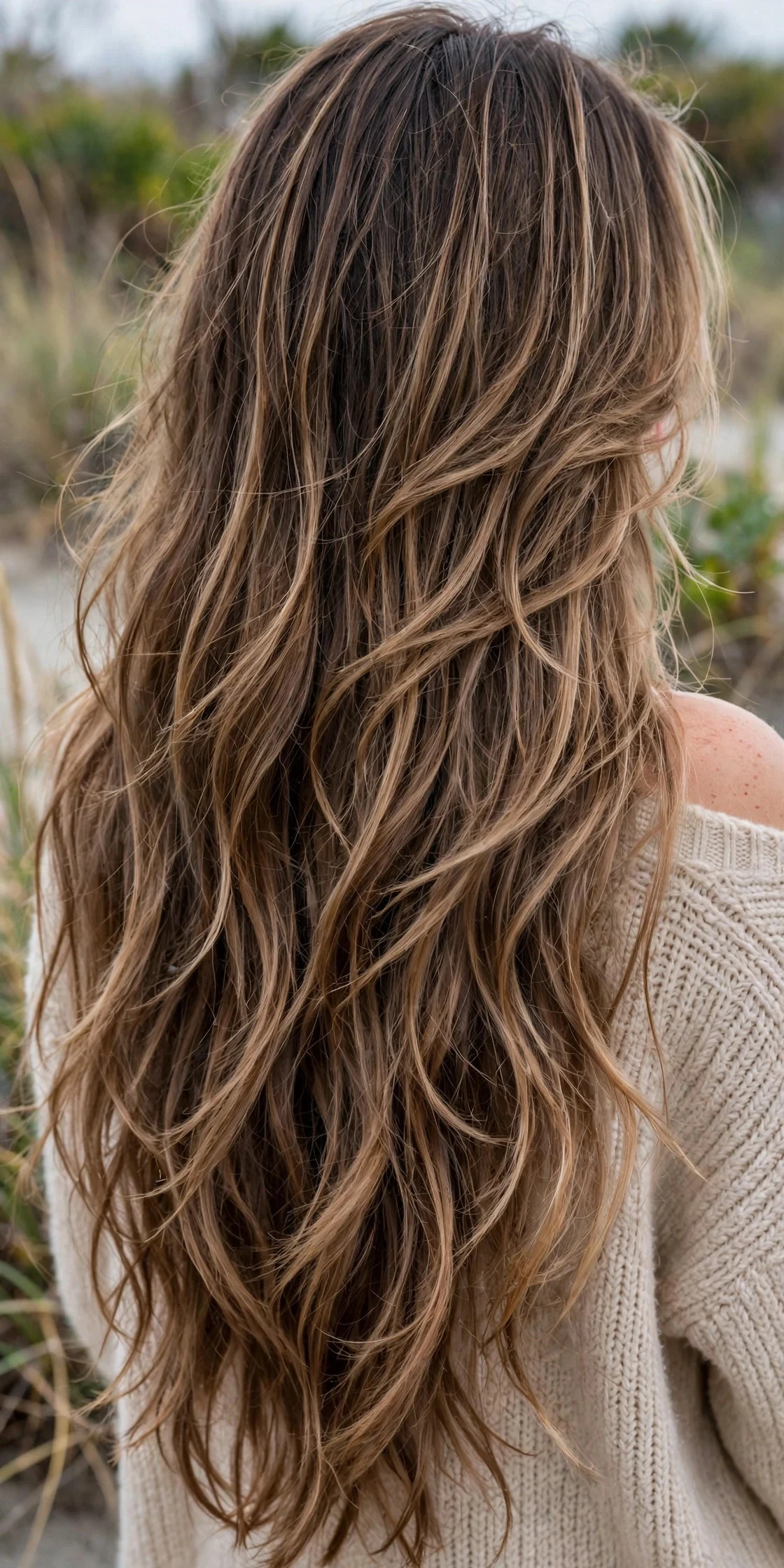
Long layers and lived-in mocha balayage are made for low maintenance. The colorist paints heavily through the bottom half and barely touches the top, so the grow-out looks intentional for months. Many people stretch this to six or eight months between appointments, with just a toner in between. Ask for a root shadow in your natural shade to blur the transition zone. This is the pick if you hate salon appointments but love good color. One note: the dark top can read plain in photos unless your stylist adds enough ribbon density through the ends.
8. Mocha Balayage on Curly Hair
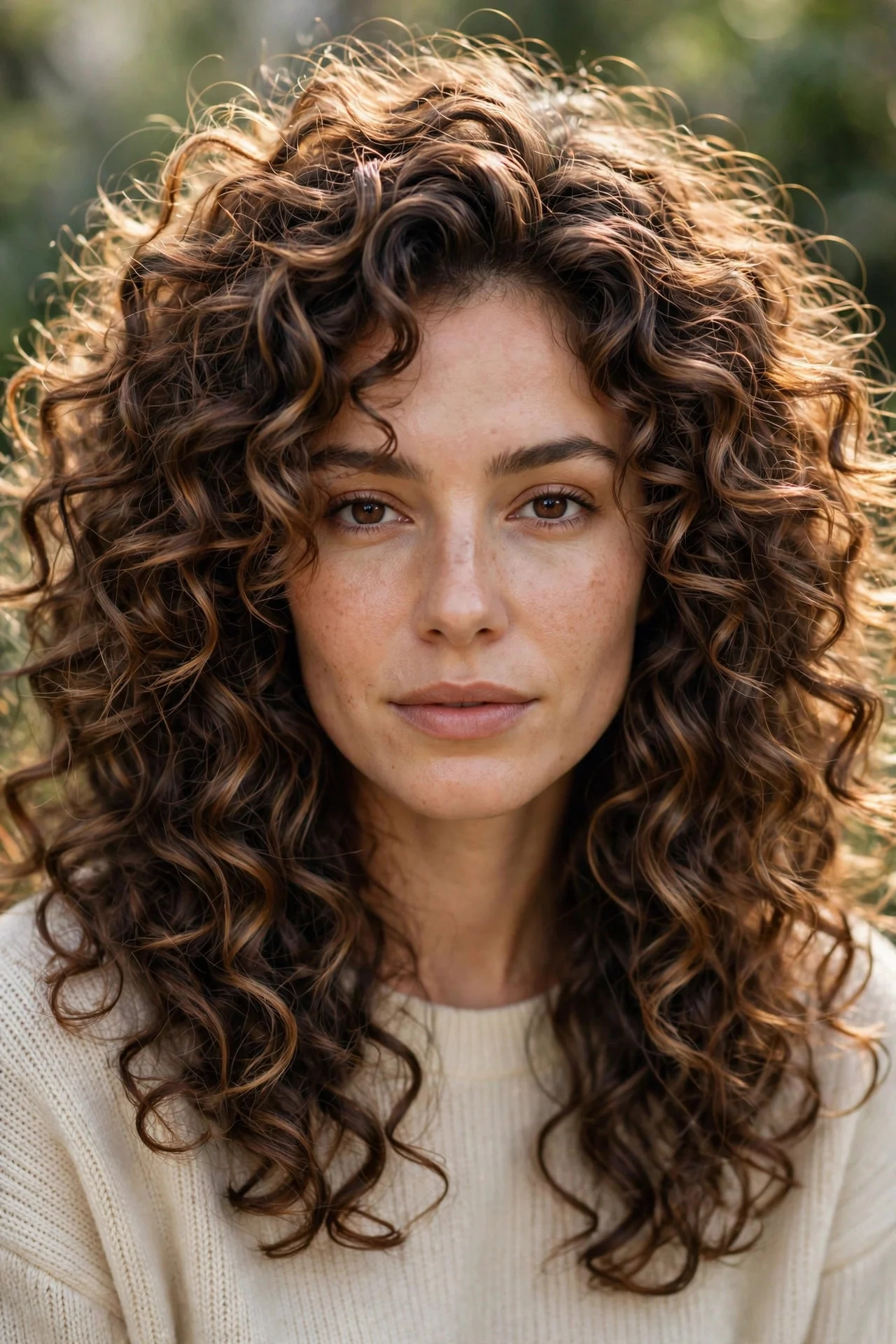
Balayage was practically made for curls, and mocha tones make them look richer. Your stylist should paint on dry, styled curls rather than wet hair, because that’s how the color will actually sit. Ribbons on the outside of curl clumps catch light; ribbons hidden inside create depth. The result is curls that look three-dimensional instead of one flat mass of brown. Ask for the lightest pieces around your face and crown. Maintenance is easy since curls disguise regrowth beautifully. Do budget for a curly-hair specialist: a colorist who paints curls like straight hair will misplace the ribbons, and the color looks patchy once they spring up.
9. Cool-Toned Mocha Balayage
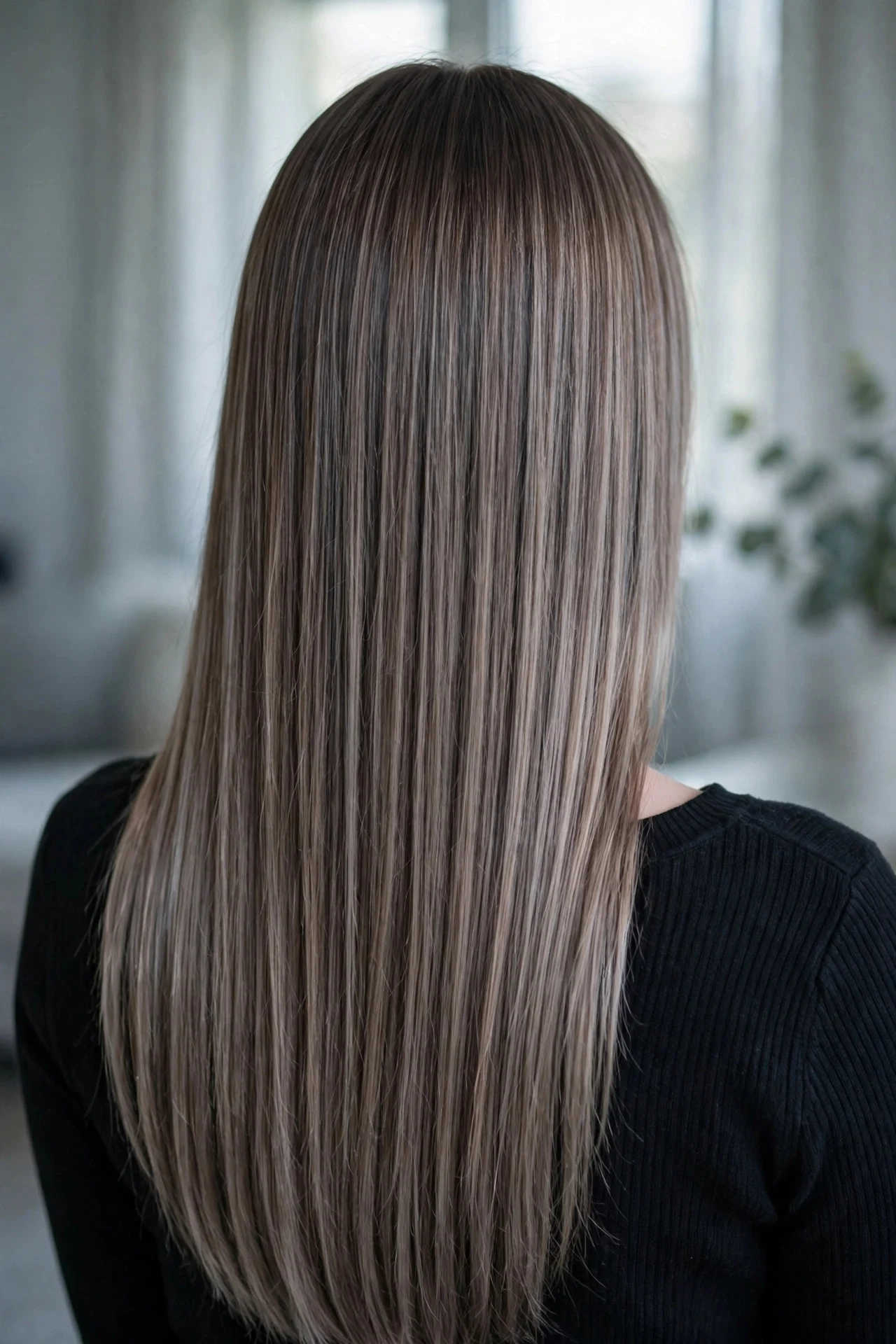
Not everyone wants warmth, and cool mocha is the answer: think espresso with an ash or mushroom undertone instead of golden light. Ask for a level 6 ash-mocha ribbon over a level 4 cool base with zero red showing through. This suits fair and cool skin tones, and it’s the best option if your hair pulls orange when lightened. The trade-off is upkeep. Cool tones fade fastest, so use a blue-based toning mask every other week and sulfate-free shampoo always. Skip hot tools when you can, since heat strips cool toner in days.
10. Warm Mocha With a Copper Tint
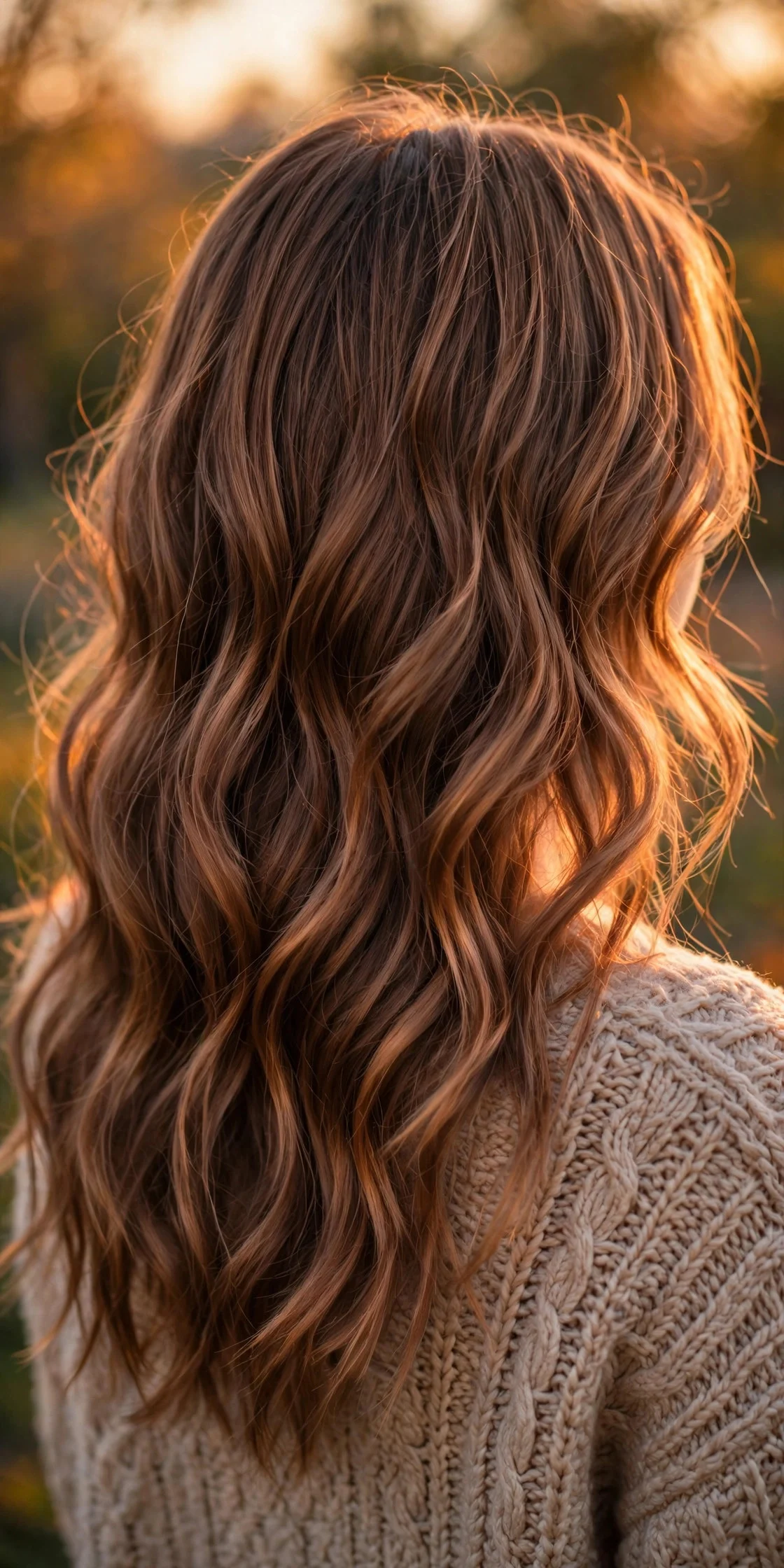
On the other end sits mocha with a copper kiss. The base stays mocha, but the painted ribbons carry a warm copper reflect that glows in sunlight. It’s the color equivalent of golden-hour lighting, and it flatters warm and olive skin tones like nothing else. Ask for a copper additive in the toner rather than full copper, so the warmth stays a shimmer, not a statement. Maintenance is friendlier than the cool version because warmth fades more gracefully. One watch-out: on hair that already pulls red, this can tip into full copper, so formulate conservatively on the first pass.
11. Mocha Balayage Bob
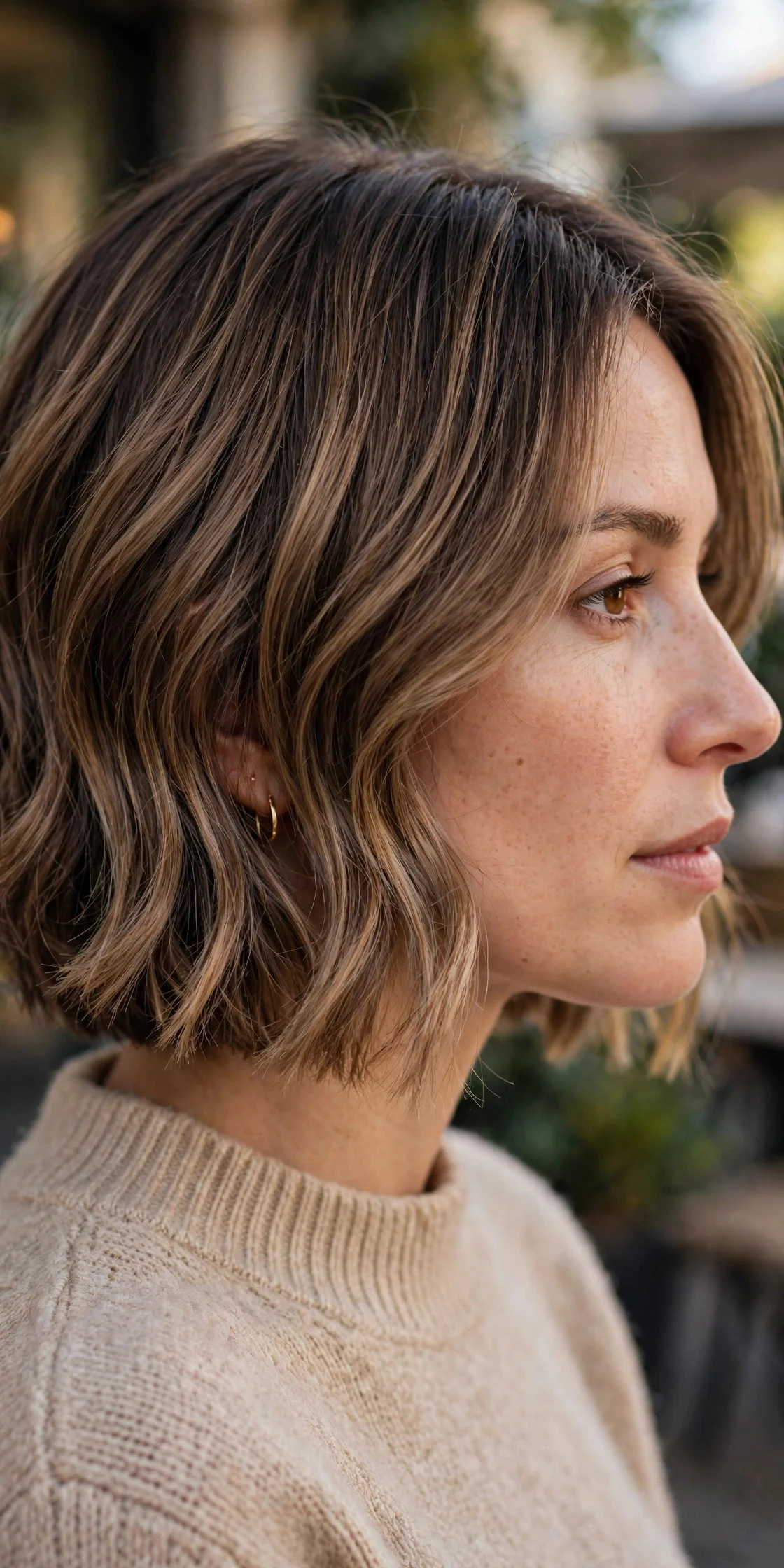
Short hair gets dimension too. On a bob, mocha balayage is painted mostly through the ends and the pieces around the face, since there’s less length for a long gradient. The effect is a bob that looks expensive and textured instead of flat and one-note. Ask for brightness to start around ear level so the top keeps its depth. This cut-and-color combo suits fine hair because the contrast creates visible texture. You’ll need trims every six to eight weeks to hold the bob’s shape, and each trim removes some painted ends, so expect a quick toner at the same appointment.
12. Face-Framing Mocha Balayage
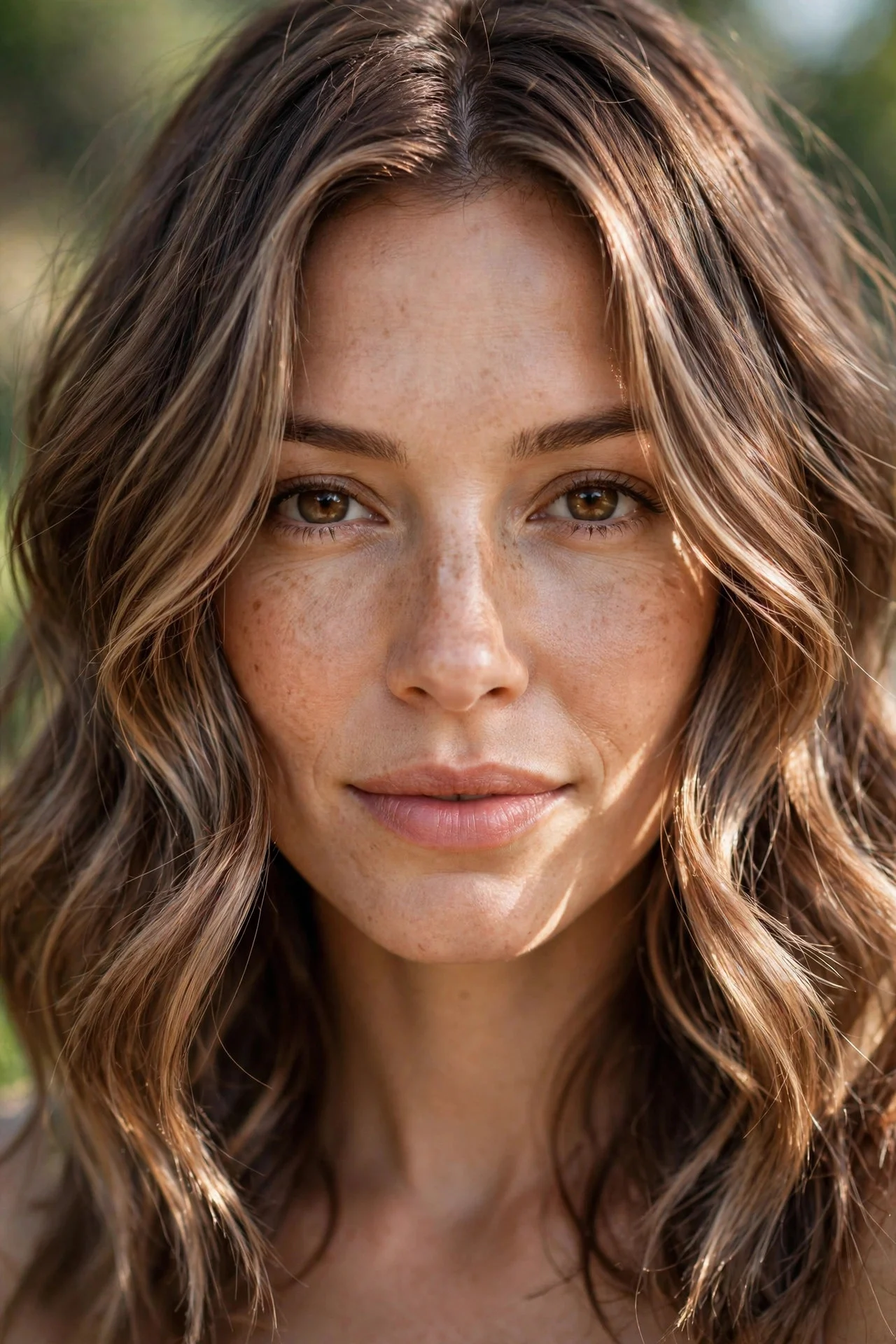
This is the minimalist’s balayage. Instead of painting the whole head, your colorist concentrates mocha ribbons around your face and keeps the back darker and simpler. From behind it reads as rich solid brunette; from the front it glows. It costs less than a full balayage, takes about ninety minutes, and the grow-out is invisible because so little hair is actually colored. Ask for the front ribbons to start at cheekbone level for the most flattering effect. It works on every length, though it’s especially pretty on medium hair where the front pieces have room to move.
13. Mocha Balayage With Root Shadow
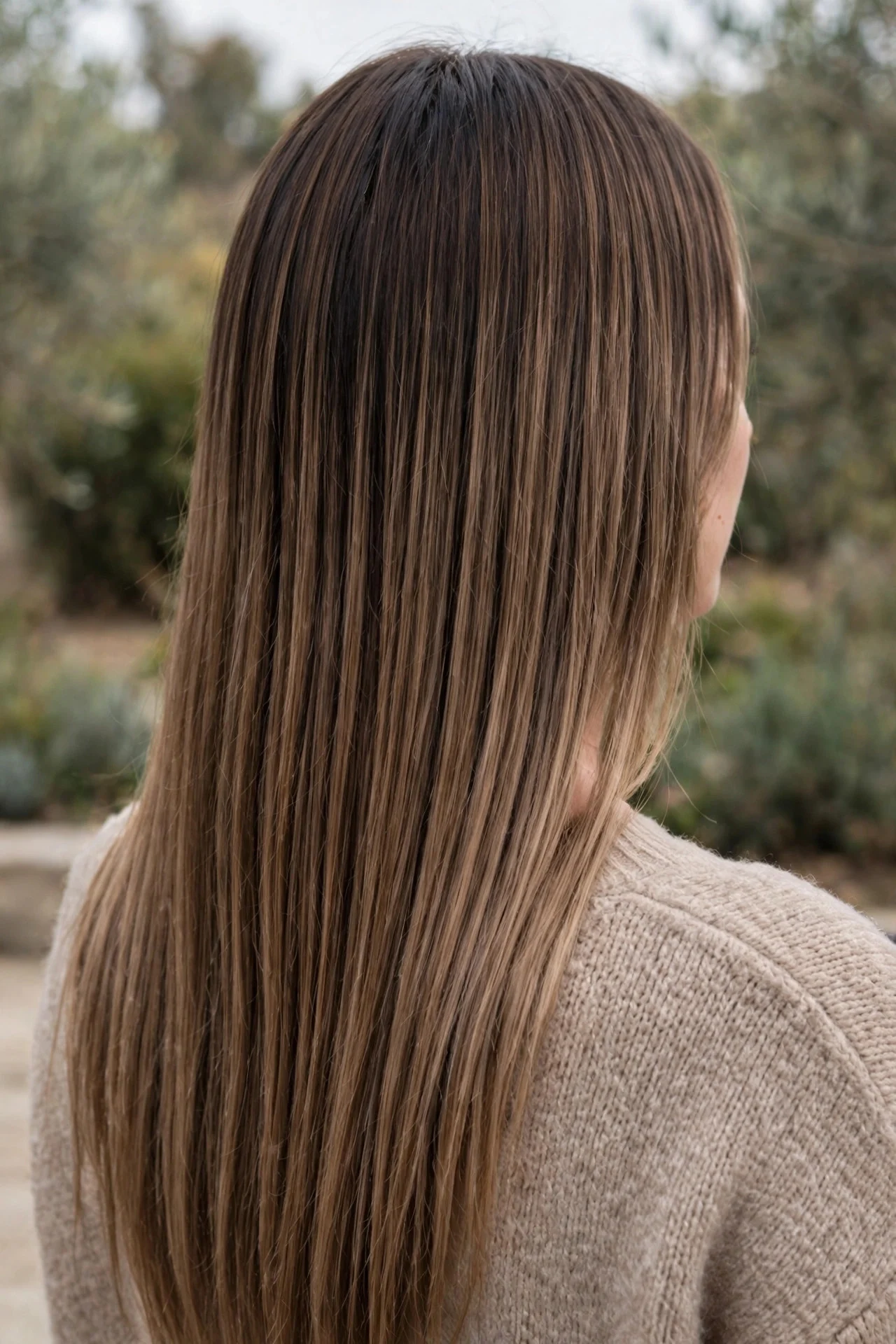
A root shadow, sometimes called a root melt, is a slightly darker toner applied at the roots to blur where your natural color meets the balayage. On mocha hair it creates the softest possible grow-out. Ask for the root shadowed one level darker than your natural shade for extra blending, or matched exactly for the most natural look. This technique is what separates balayage that lasts three months from balayage that lasts six. It suits everyone, honestly. The only downside is fifteen extra minutes and a bit of cost at the appointment.
14. Soft Mocha Ombré Blend
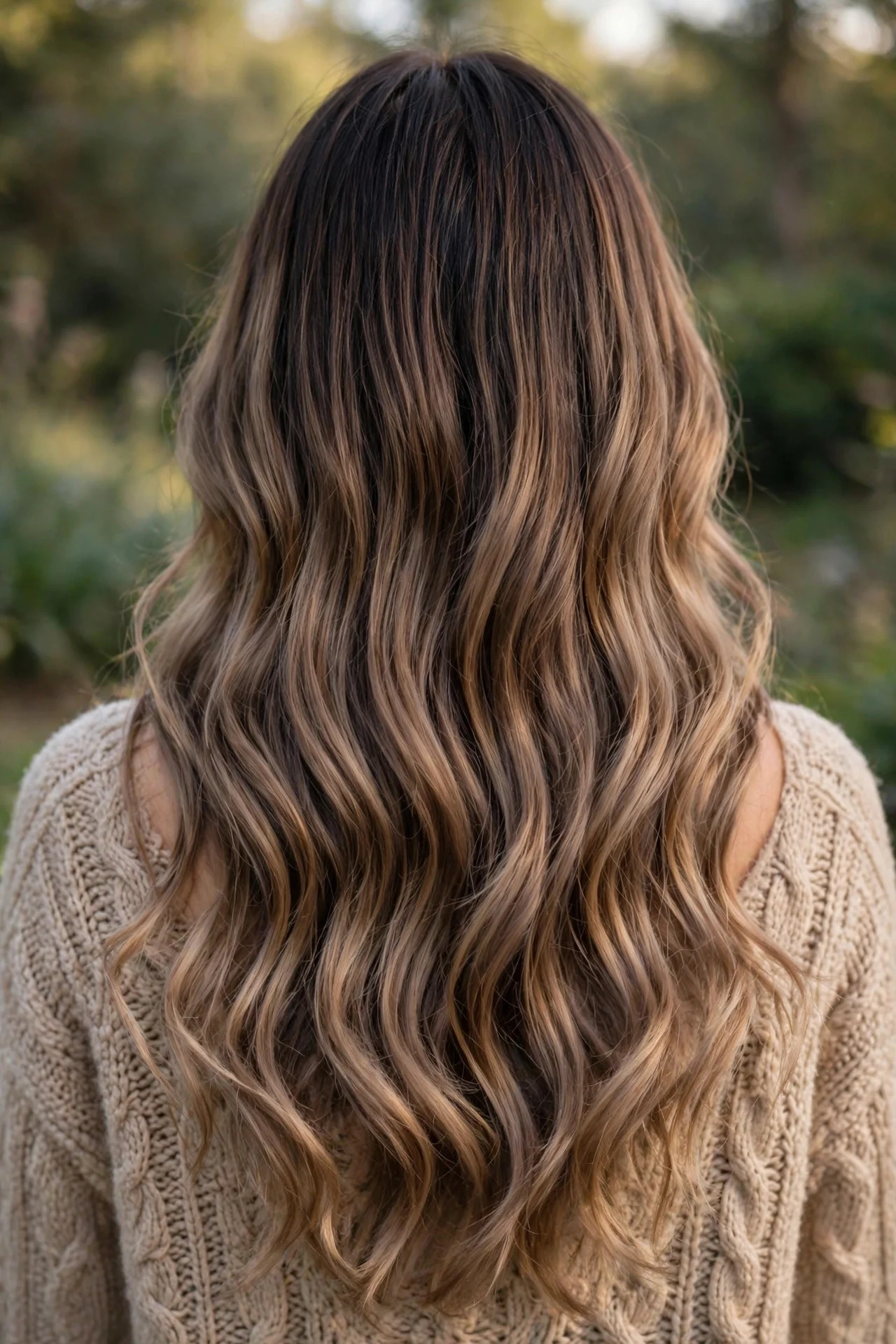
Ombré and balayage get confused constantly, so here’s the distinction that matters at your appointment. Ombré is a vertical gradient: dark on top, lighter on the bottom, with a smooth transition zone. A soft mocha ombré keeps that gradient gentle, moving from deep mocha roots to lighter mocha ends without any harsh line. Ask for the transition to start below the chin so it doesn’t look like grown-out roots. This suits long hair best, where the gradient has space to unfold. Keep the difference between top and bottom within three levels, or it skews dated.
15. Mocha Balayage on a Wavy Shag
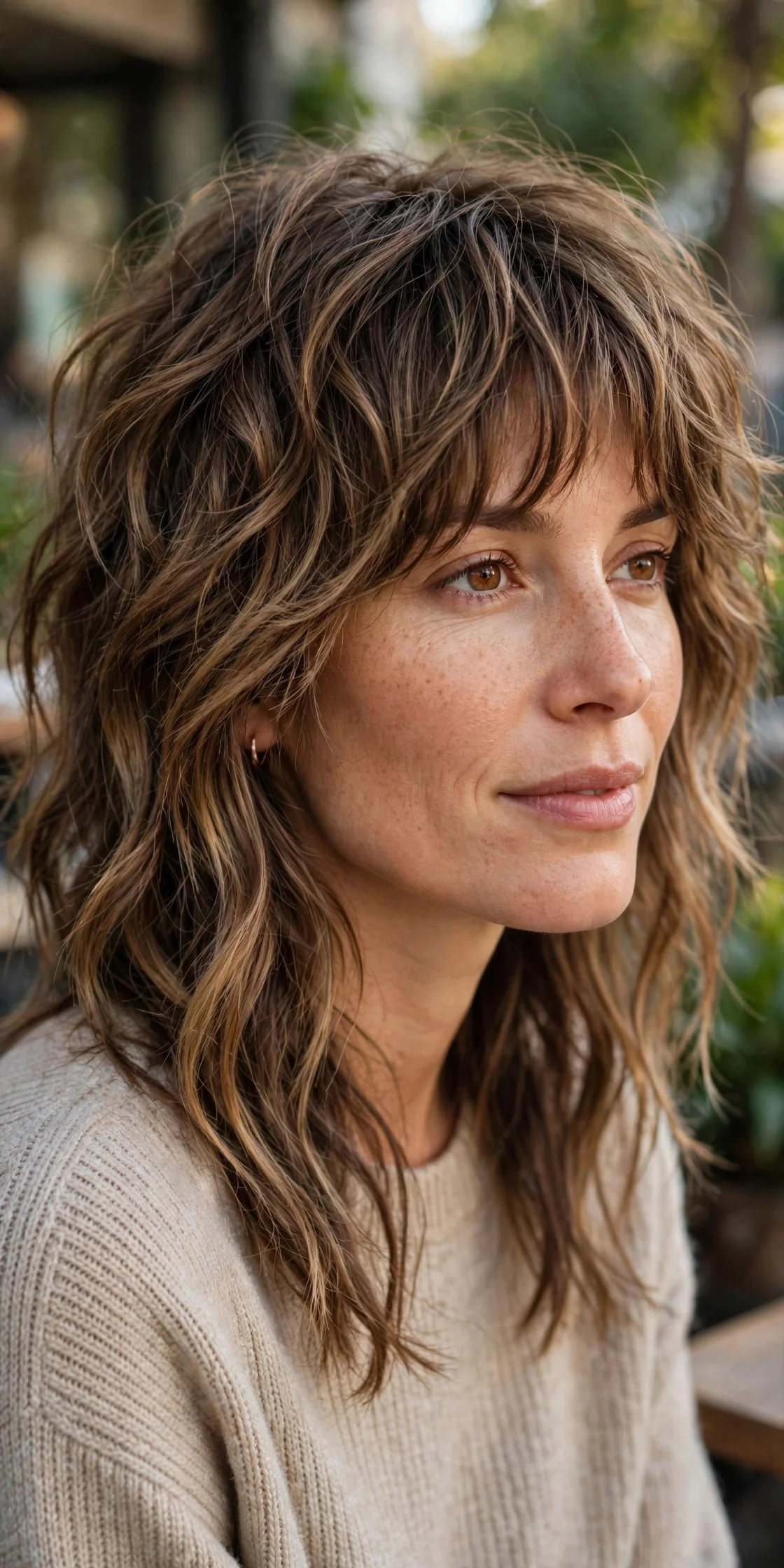
The shag is back, and mocha balayage might be its best friend. All those choppy layers give the painted ribbons dozens of edges to catch light on, so the color looks different from every angle. Ask for the balayage to follow the layering, brighter on top and softer underneath. The shag’s natural texture means you can air-dry and still look styled, and the color does half the work. This suits thick hair especially well, because the layers remove weight while the color adds perceived movement. Use a texture spray rather than heavy oils, which can make ribbons look stringy on layered cuts, and trim every ten weeks.
Keeping Mocha Balayage Fresh
Wash less, and when you do, reach for sulfate-free shampoo: two to three washes a week is the sweet spot. A color-depositing mocha gloss once a month keeps ribbons rich between visits. Book a toner refresh every six to eight weeks, which is cheaper and faster than a full appointment. Heat protectant isn’t optional with hot tools, since heat fades toner fast. If your water runs hard, a shower filter noticeably extends color life.
Frequently Asked Questions
How long does mocha balayage last?
The color doesn’t wash out like semi-permanent dye, but the tone fades. Expect ribbons to stay fresh six to eight weeks before a toner refresh. The grow-out is the real win: with nothing painted at the root, most people go four to six months between full appointments, longer for lived-in versions.
Does mocha balayage suit warm skin tones?
Yes, it’s one of the best options for warm skin. Warm and neutral mocha shades pair beautifully with it, especially the copper-tinted version. Prefer cooler hair? Your stylist can formulate a neutral mocha that won’t clash. Match the color’s undertone to your skin’s, and bring photos of people with similar coloring.
What’s the difference between mocha balayage and bronde?
They’re cousins, not twins. Bronde sits halfway between brown and blonde, with noticeably lighter pieces throughout. Mocha balayage stays firmly brunette: ribbons run one to three levels lighter than the base, reading rich brown rather than blonde-brown. Want visible lightness? Go bronde. Want depth and shine? Choose mocha.
Can I get mocha balayage on black hair without damage?
You can, with the right approach. The stylist will need lightener, but balayage processes in open air without foils, so it’s gentler than traditional highlights. Ask for bond-building additives and a demi-permanent toner instead of permanent color. Be realistic: black-to-mocha may take two visits, and deep conditioning between appointments isn’t negotiable.
How much does mocha balayage cost at a salon?
It varies by city and stylist. In most US markets a full mocha balayage runs $150 to $350, with major cities and master colorists charging more. Partial versions cost $100 to $200, and toner refreshes run $40 to $80. Ask what’s included: some salons bundle toner, haircut, and styling, while others price each separately.
Mocha balayage earned its 949% spike the honest way: it looks good on almost everyone and asks little in return. Pick the version matching your maintenance tolerance, bring reference photos, and be specific about tone.
Keep exploring: not sure which technique suits you? Read our balayage vs highlights breakdown, or browse more brunette hair color ideas for your next appointment.