
For years I fought my curls instead of working with them. I brushed them dry, which turned every strand into a fuzzy triangle by noon. I used whatever shampoo was in the shower, which happened to be a sulfate-heavy one made for straight hair. I towel-dried by rubbing my head like I was trying to start a fire. Looking back, I was doing almost everything wrong, and my curls looked frizzy, dry, and shapeless because of it — not because “curly hair is just hard to manage,” which is what I used to tell myself.
It took a genuinely embarrassing amount of trial and error, a lot of wasted products, and a few honest conversations with a stylist who specializes in curly hair before things actually started clicking. The frustrating part is that most of what changed my curls wasn’t expensive or complicated — it was just wrong habits I didn’t know I had. So this isn’t a list of miracle products. It’s the real, practical stuff that made a visible difference for me and for the curly-haired friends I’ve dragged into testing routines with me.
Curly Hair Isn’t High-Maintenance — It’s Just Misunderstood
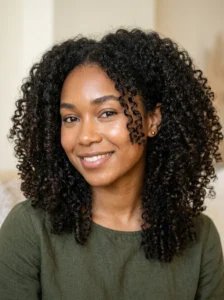
The biggest shift in my thinking happened when I stopped treating my curls like they needed to be fixed. Curly hair has a naturally different structure than straight hair — the hair shaft is oval rather than round, which is literally why it grows in a curved pattern instead of a straight one. That same shape also means natural oils from your scalp travel more slowly down the length of the hair, which is why curls tend to be drier than straight hair by default.
Once I understood that dryness wasn’t a personal failing but just how curly hair works, I stopped trying to make it behave like straight hair and started giving it what it actually needed: moisture, gentle handling, and a lot less friction.
Wash Day: Where Most of the Damage (and Most of the Fixing) Happens

Skip the sulfates, but don’t skip washing
I used to think “less washing” was the secret to healthier curls, and while over-washing can strip natural oils, under-washing left my scalp feeling heavy and my curls limp. The real fix was switching to a sulfate-free shampoo. Sulfates are the ingredients that create that big, foamy lather, and while that feels satisfying, they strip curls of moisture far more aggressively than they need to. My curls held their shape noticeably longer once I made this one swap.
Condition like you mean it
This was the biggest habit change for me. On straight hair, a small amount of conditioner focused on the ends is usually enough. Curly hair needs conditioner all over, generously, and left in for longer than the bottle usually suggests. I started applying conditioner section by section, working it through with my fingers from root to tip, and leaving it in for a full five minutes before rinsing. My curls went from crunchy-when-dry to genuinely soft within about two washes of doing this properly.
Detangle in the shower, not after
I used to wait until my hair was dry to detangle, which is essentially the worst possible time to do it — dry curls are at their most fragile and most prone to breakage. Now I detangle with a wide-tooth comb or my fingers while conditioner is still in my hair, starting from the ends and working upward in small sections. It sounds like a small change, but it dramatically reduced the amount of hair I was losing in my brush every day.
Drying: The Step That Made the Biggest Visible Difference
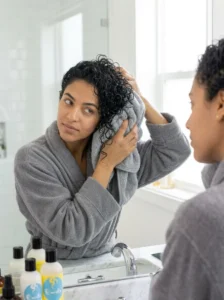
If I had to pick the single habit that changed my curls the most, it’s this one — how I dry my hair.
The towel is the enemy
A regular terry cloth towel is rough on the hair cuticle, and rubbing curls dry with one is basically asking for frizz. I switched to a microfiber towel (an old cotton t-shirt works just as well and costs nothing) and instead of rubbing, I scrunch the hair upward gently to absorb water. The difference in frizz the next morning was immediate and obvious.
Plopping actually works
I was skeptical about “plopping” — wrapping wet, product-coated curls up in a t-shirt or microfiber towel on top of your head for ten to twenty minutes — until I tried it myself. It sounds like an internet trend more than a real technique, but it genuinely helps curls hold their shape while removing excess water without disturbing the curl pattern the way a regular towel-dry does.
Diffusing versus air drying
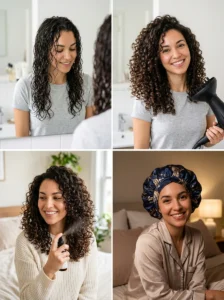
Both work, but they give different results, and I switch depending on my schedule. Air drying gives my curls a looser, more natural look but takes longer and can occasionally dry a little flatter at the roots. Diffusing on low heat and low speed adds volume and defines the curl pattern more clearly, but takes practice — moving the diffuser around too much just creates more frizz instead of less. My rule now is: air dry when I have time, diffuse on low heat when I don’t.
Product Layering: Less Guessing, More Method
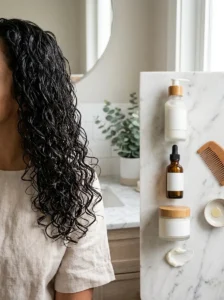
For a long time, I threw random amounts of product at my hair and hoped for the best. What actually helped was learning a proper layering order, sometimes called the LOC or LOG method — leave-in conditioner, oil, then cream or gel.
Leave-in conditioner goes on soaking wet hair, right after the shower, to lock in moisture before anything else.
A light oil seals that moisture in — I use a small amount, focused mostly on the ends where dryness shows up first.
A curl cream or gel goes on last to define the actual curl pattern and, in the case of gel, create the “cast” that dries stiff and gets scrunched out later for softer, bouncier curls.
The order matters more than I expected. When I applied gel before the leave-in, my curls dried stiffer and crunchier because there was nothing underneath holding moisture in. Once I got the order right, the same products I’d already owned worked noticeably better.
Nighttime Habits Nobody Tells You About
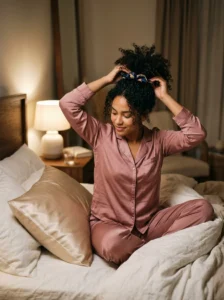
This is the part of curly hair care that took me the longest to actually stick to, mostly because it felt unnecessary — until I skipped it for a week and saw the difference.
Silk or satin pillowcases
Cotton pillowcases pull moisture out of hair and create friction while you sleep, which is a big source of overnight frizz and breakage. Switching to a silk or satin pillowcase (or a satin bonnet if you don’t want to replace your pillowcase) cut down on the “why does my hair look worse than when I went to bed” problem almost completely.
Pineappling
This is just gathering your curls loosely on top of your head with a scrunchie before bed, instead of letting them get crushed against the pillow all night. My curls hold their shape into day two far better since I started doing this, and it takes about five seconds.
Trims Matter More Than You Think
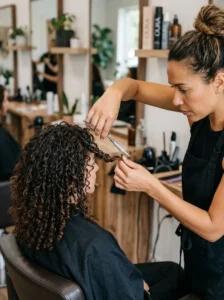
I used to avoid haircuts because I was scared of losing length, but split ends on curly hair are more noticeable than on straight hair — they cause the curl to lose its shape and separate into frizzy strands at the tip. Getting a trim every ten to twelve weeks, even just a small one, kept my curls looking more defined and honestly made my hair look longer, not shorter, because healthy curls hold their spiral shape instead of splitting apart and appearing shorter than they actually are.
Common Mistakes I See (Because I Made Them All)
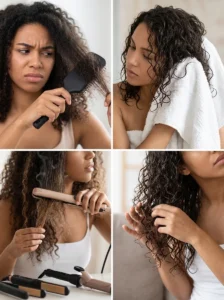
- Touching your hair too much once it’s drying. Every time you scrunch, flip, or play with curls while they’re setting, you risk breaking the curl pattern and creating frizz. I learned to walk away and let it dry undisturbed.
- Using too much heat, too often. Straightening or heavily heat-styling curly hair regularly weakens the curl pattern over time. I now save heat styling for occasional use, not a weekly habit.
- Skipping protein treatments entirely, or overdoing them. Curly hair needs a balance of moisture and protein. Too little protein and curls feel limp and stretchy; too much and they feel stiff and straw-like. I do a protein treatment roughly once a month, not every wash.
- Brushing dry curls. This is the one that took me the longest to unlearn. Brushing dry curls breaks the curl clusters apart and creates a frizzy, triangular shape instead of defined spirals. Fingers or a wide-tooth comb, wet hair only, is the way to go.
- Expecting instant results. Curl patterns that have been damaged by years of the wrong products or techniques don’t fully recover in one wash. It took me a few weeks of consistent care before I saw my actual curl pattern come back.
Building a Routine That Actually Fits Your Life

I want to be honest about something: not every night I do the silk pillowcase, pineappling, and perfect product layering. Life gets busy. What I’ve learned is that consistency in the basics — sulfate-free washing, proper conditioning, gentle drying — matters far more than doing every single step perfectly every time. The nights I skip the extras, my curls are just slightly less defined the next day, not ruined. That’s the version of “curly hair care” that’s actually sustainable long-term.
Knowing Your Curl Pattern and Porosity Actually Helps
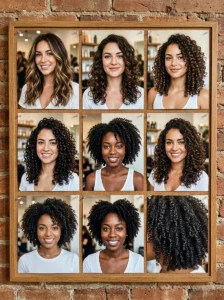
I ignored this for years because it felt like unnecessary internet jargon, but understanding two things about my hair — curl type and porosity — changed how I chose products, and honestly saved me a lot of money on things that were never going to work for my hair in the first place.
Curl types are usually grouped from 2 (loose waves) to 4 (tight coils), with sub-categories like A, B, and C within each based on how tightly the curl or wave is formed. I spent a long time buying products marketed for tight coils when my hair is actually a looser, more wave-leaning pattern, and wondered why my curls felt weighed down and greasy by midday. Once I switched to lighter products meant for my actual pattern, that problem disappeared.
Porosity — how easily your hair absorbs and holds moisture — matters just as much. A simple way to get a rough idea is dropping a clean strand of hair into a glass of water: hair that sinks quickly usually has high porosity and absorbs moisture fast (but also loses it fast), hair that floats for a while has low porosity and can be more resistant to product absorption, and hair that sinks slowly and gradually is somewhere in the middle. My hair turned out to be high porosity, which explained why my curls dried out so quickly during the day — I needed heavier creams and oils to actually seal moisture in, rather than the lightweight products I’d been using.
None of this requires a professional consultation to figure out. A few minutes of observation and one water-glass test told me more about why my routine wasn’t working than months of randomly switching products ever did.
Frequently Asked Questions
How often should curly hair be washed? This varies by curl type and scalp, but most curly hair does well with washing every two to four days rather than daily. Daily washing tends to strip natural oils that curls rely on for moisture. Between washes, a light mist of water with a bit of leave-in conditioner can refresh curls without a full wash.
Why does my hair feel great right after styling but frizzy the next day? This is usually a sign that the “cast” from gel or cream wasn’t fully dry before it was disturbed, or that moisture wasn’t sealed in properly with oil beforehand. Sleeping on a cotton pillowcase without pineappling is another common cause.
Can curly hair actually get less curly over time? Yes, this can happen due to heat damage, chemical treatments, hormonal changes, or even just prolonged use of the wrong products. In many cases, switching to gentler care and cutting off damaged ends allows the natural curl pattern to gradually return.
Do I need expensive products for curly hair care? Not necessarily. The technique and consistency matter more than the price of the product. A budget-friendly sulfate-free shampoo used correctly will outperform an expensive one used the wrong way.
Is it normal for different sections of my hair to curl differently? Very normal, and something that stressed me out until I learned it’s common for most curly-haired people. Curl pattern can vary across the head due to hair growth direction, texture differences, and even how each section dries. Styling techniques like diffusing evenly can help even out the appearance.
Final Thoughts

Curly hair care isn’t about finding one miracle product — it’s about a handful of small habits done consistently: gentle washing, thorough conditioning, careful drying, and protecting your curls while you sleep. None of the changes that made the biggest difference for me were complicated or expensive. They were just the right techniques, done regularly, instead of guessing and hoping for the best. If your curls have felt unmanageable, there’s a good chance it’s not your hair — it’s just a few habits away from looking like the curls you actually have underneath all that frizz.