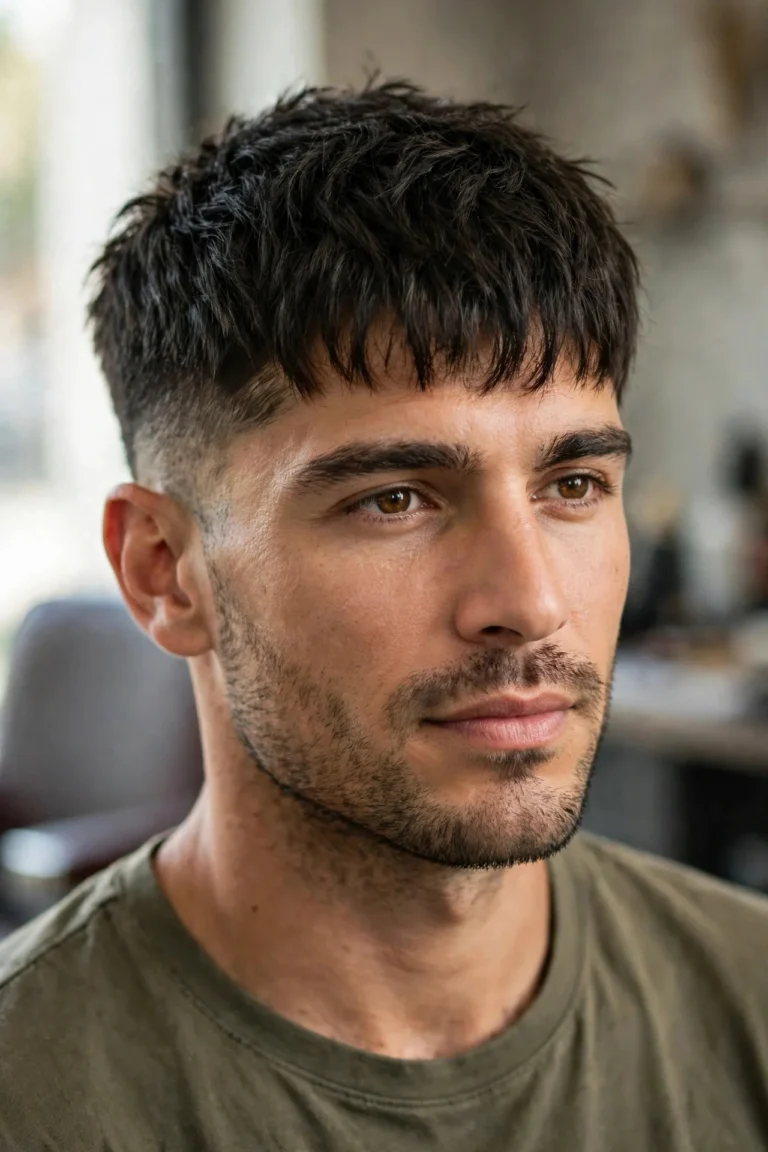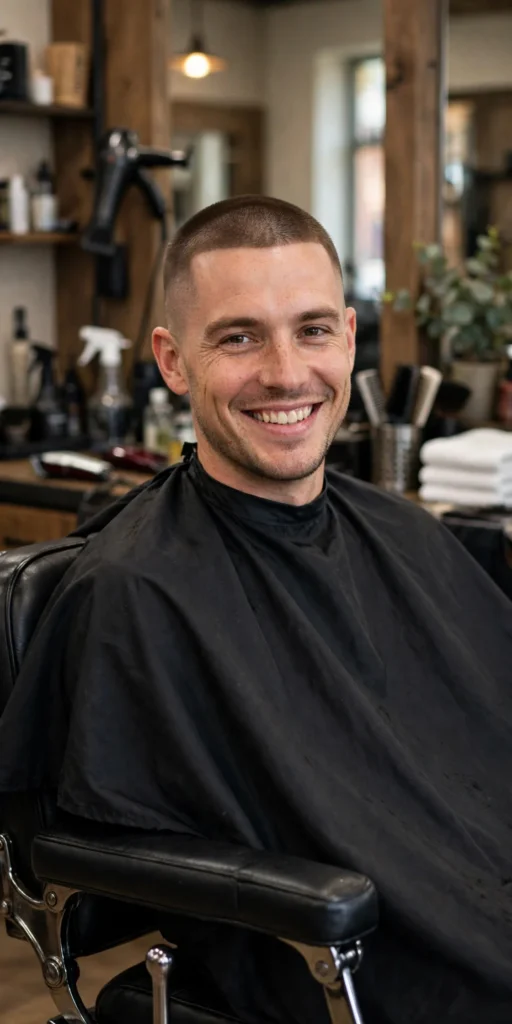
Some haircuts have a moment. The crew cut just keeps having decades. It is the haircut your grandfather trusted, your college roommate wore, and half the NFL still wears, and somehow it looks right on all of them. There is a reason it never fully leaves: short on top, clean on the sides, zero fuss before coffee.
This year the cut is getting softer at the edges and more personal on top. Barbers are leaving extra length to work with, adding texture for guys who hate the flat look, and shaping sides that grow out gracefully. Here are ten versions worth asking for, with the honest version of what each one takes.
1The Classic Crew
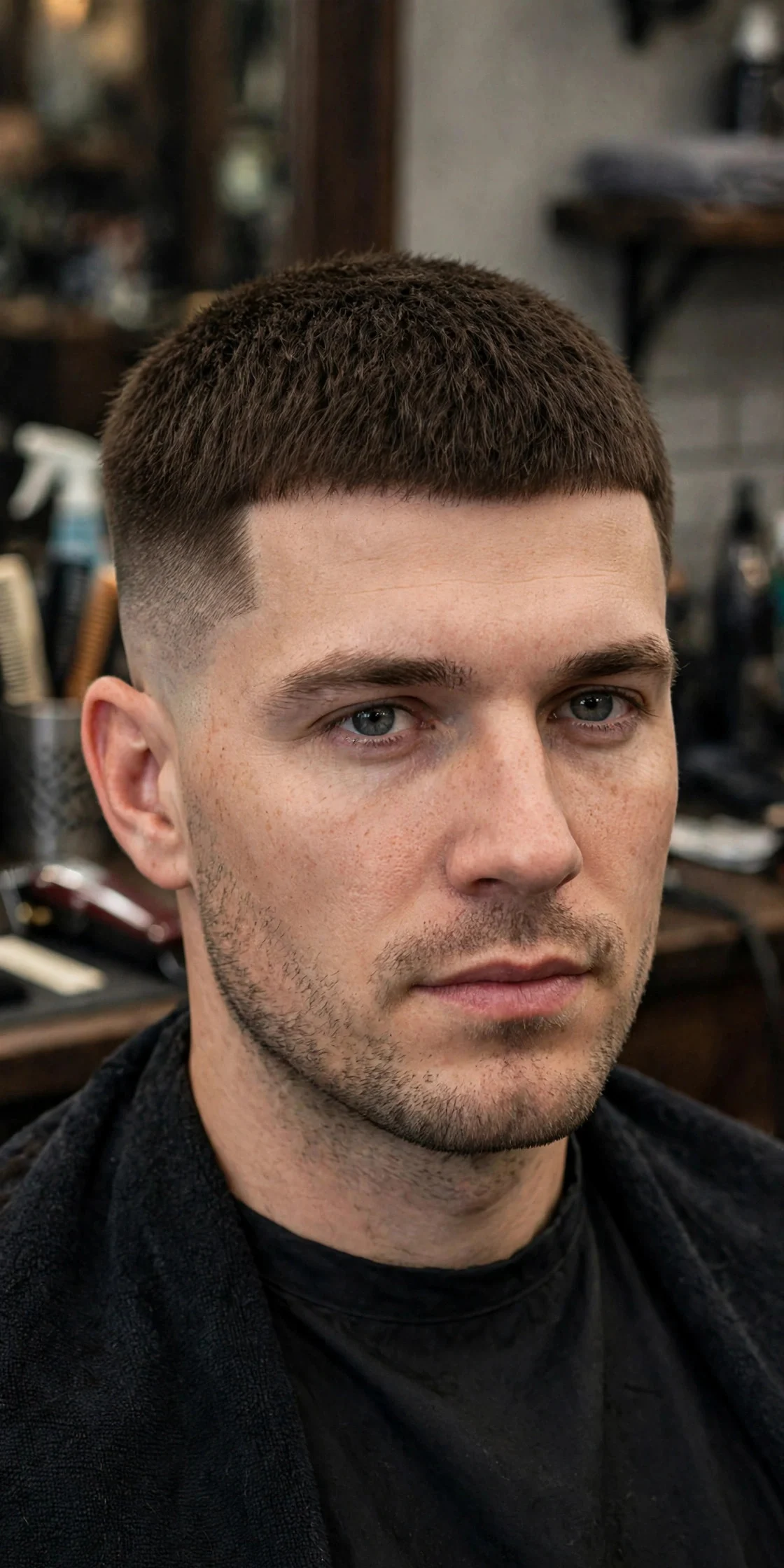
This is the one everyone pictures. Short back and sides, top around an inch long with a slight taper from front to crown, and the hairline squared or rounded to your face. Ask your barber for a number 3 or 4 on top and a number 2 on the sides, blended through the middle, and tell them whether you like a crisp hairline or something softer.
It suits almost everyone, which is why it survived this long, and it is especially forgiving on thick, straight hair and slightly thinning hair. Maintenance is nearly nothing: wash, go. The drawback is the regrowth cycle. You will need a cleanup every three to four weeks or the crispness disappears fast.
2Textured Crew
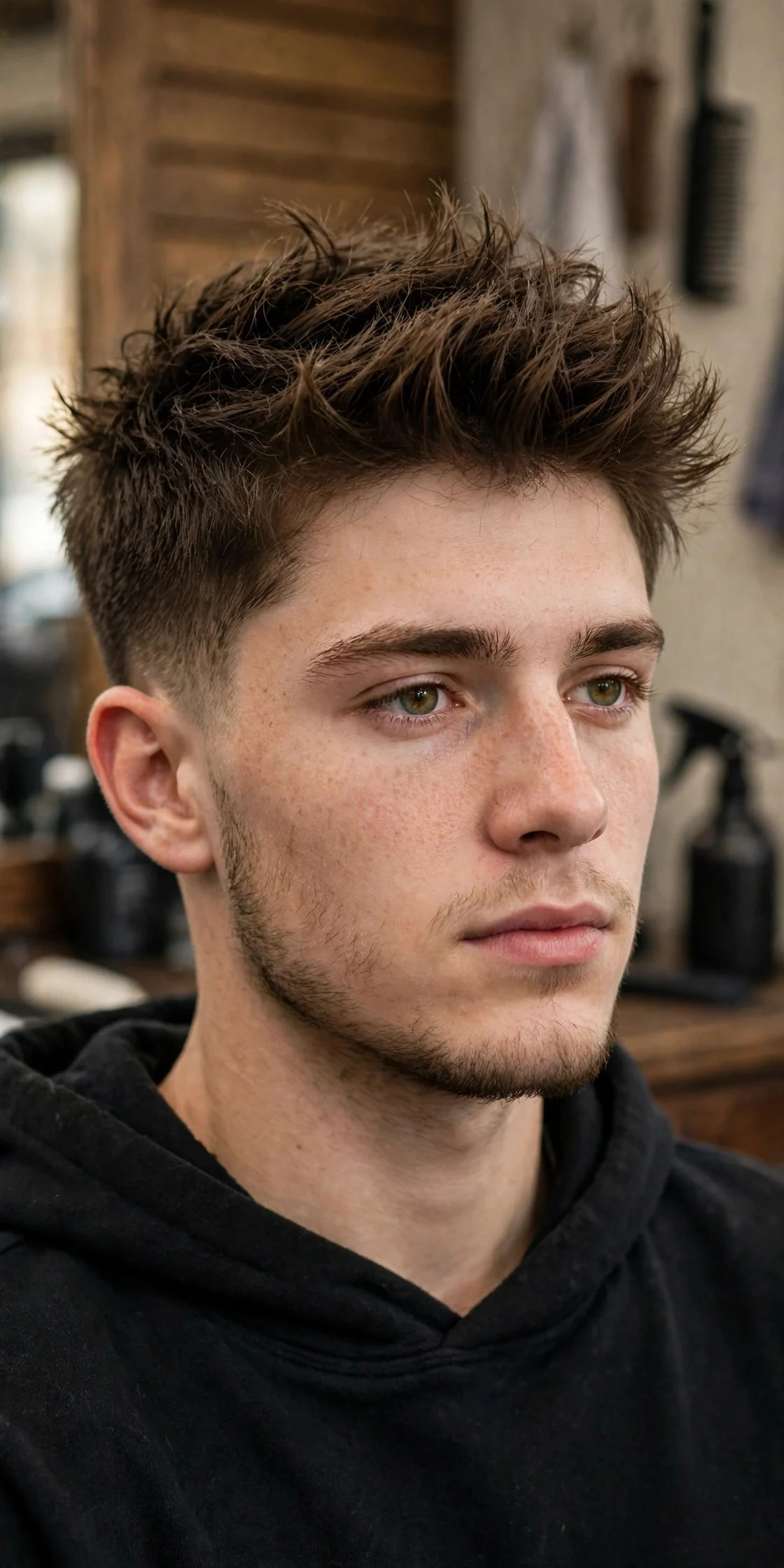
Same skeleton, different personality. The top gets point-cut and piecey instead of cut in one even length, so it sits with some lift and movement instead of lying flat like Astroturf. Ask for texture through the top, around three-quarters of an inch to an inch, and sides faded or tapered short. A pinch of matte clay in the morning makes it come alive.
Great for guys with fine hair who need volume, and for anyone whose straight crew looks a bit lifeless. It flatters square and round faces because the texture breaks up the symmetry. Downside: it needs that thirty seconds of product to look intentional. Without it, some people just read it as an unfinished classic.
3Crew With Mid Fade

This is the 2026 uniform version. The fade starts halfway up the side of the head, usually at a number 0 or 1, and melts up into a half-inch to one-inch top. Ask for a mid fade, skin or low depending on how bold you want the contrast, and keep the top long enough to push up or forward.
It suits younger guys, anyone with sharp facial structure, and thick hair that grows like it has a grudge. Athletic builds carry it well. The catch is pure commitment: a fade this clean has a two-week expiration date. Budget for a lineup or full cut every two to three weeks, and know that growing it out goes through an awkward middle stage.
4Ivy League Crew
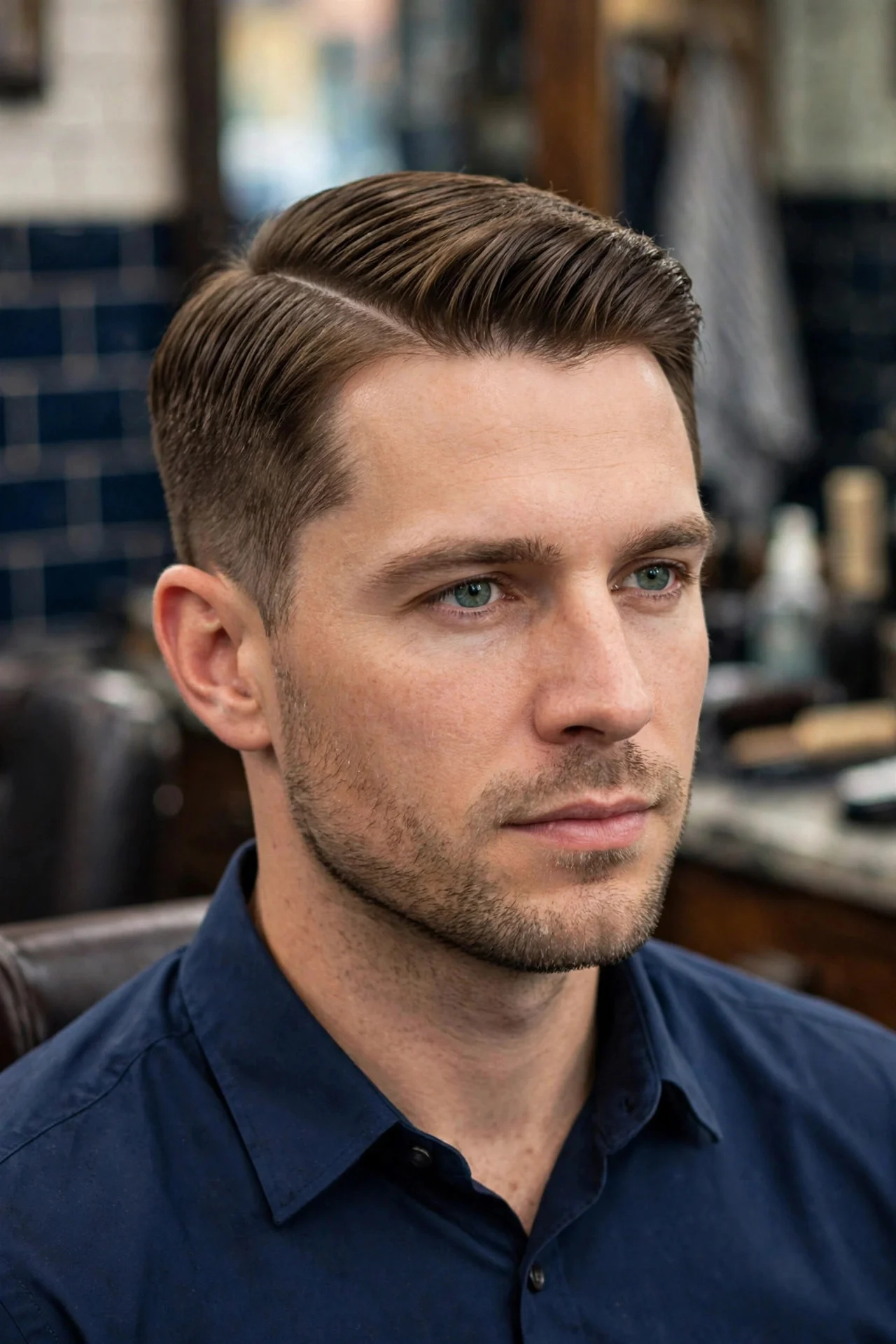
The longer cousin of the classic. Top runs one to two inches, long enough to sweep to the side with a defined part, while the sides stay tapered and neat. Ask for length on top with scissors, tapered sides, and enough weight left to hold a part. A little pomade and a comb and you are done.
Perfect if you work in an office but hate feeling like a recruit, and ideal for wavy hair, which sits into the sweep naturally. It also handles cowlicks better than shorter crews because the weight tames them. The drawback is that it is not truly wash-and-go: you will style it most mornings, and humid weather can undo the part by lunchtime.
5Wavy Crew

A lot of guys with waves think short cuts flatten them out. Cut right, the opposite happens. Keep about an inch on top, let the natural wave form little curls and bends, and taper the sides tight so the top has all the attention. Tell your barber to cut the top with scissors following the wave direction, not against it.
It suits medium to thick wavy hair and guys who want texture without products. Faces with strong jawlines look great with it. Maintenance is easy, though a dab of salt spray or light cream on damp hair brings the wave pattern out properly. The main drawback: if the top gets even a little too long between cuts, it stops looking intentional and starts looking overgrown.
6Curly Crew

The boldest one here, and one of the most flattering for the right head. About an inch to an inch and a half of curl on top, sides faded or tightly tapered, and the top shaped so the curls sit in a neat rounded silhouette. Ask your barber to trim curls dry or stretched so they do not take off too much, because wet curly hair lies.
It suits tight curls and coils especially well, and it looks incredible with a full beard. It is also one of the best crews for thinning crowns, since curl density hides them. The drawback is the upkeep on the shape: curls grow out unevenly, so plan a trim every three weeks, and sleep can flatten one side into a shape you did not agree to.
7Side-Swept Crew

Think of it as the neat older brother of the textured crew. The top is cut slightly longer toward the front and swept to one side, with a soft, natural part. Sides are tapered short but not faded to the skin, so the whole thing reads tidy rather than edgy. Ask for tapered sides and a front that sits about an inch long, swept with a comb.
It suits professional settings, mature hairlines (the sweep covers recession gracefully), and guys with straighter hair that likes direction. It works on almost every face shape. The drawback is wind and hats: both destroy the sweep instantly. It also needs a comb or a quick finger-sweep most mornings to look like itself.
8Crew With Full Beard
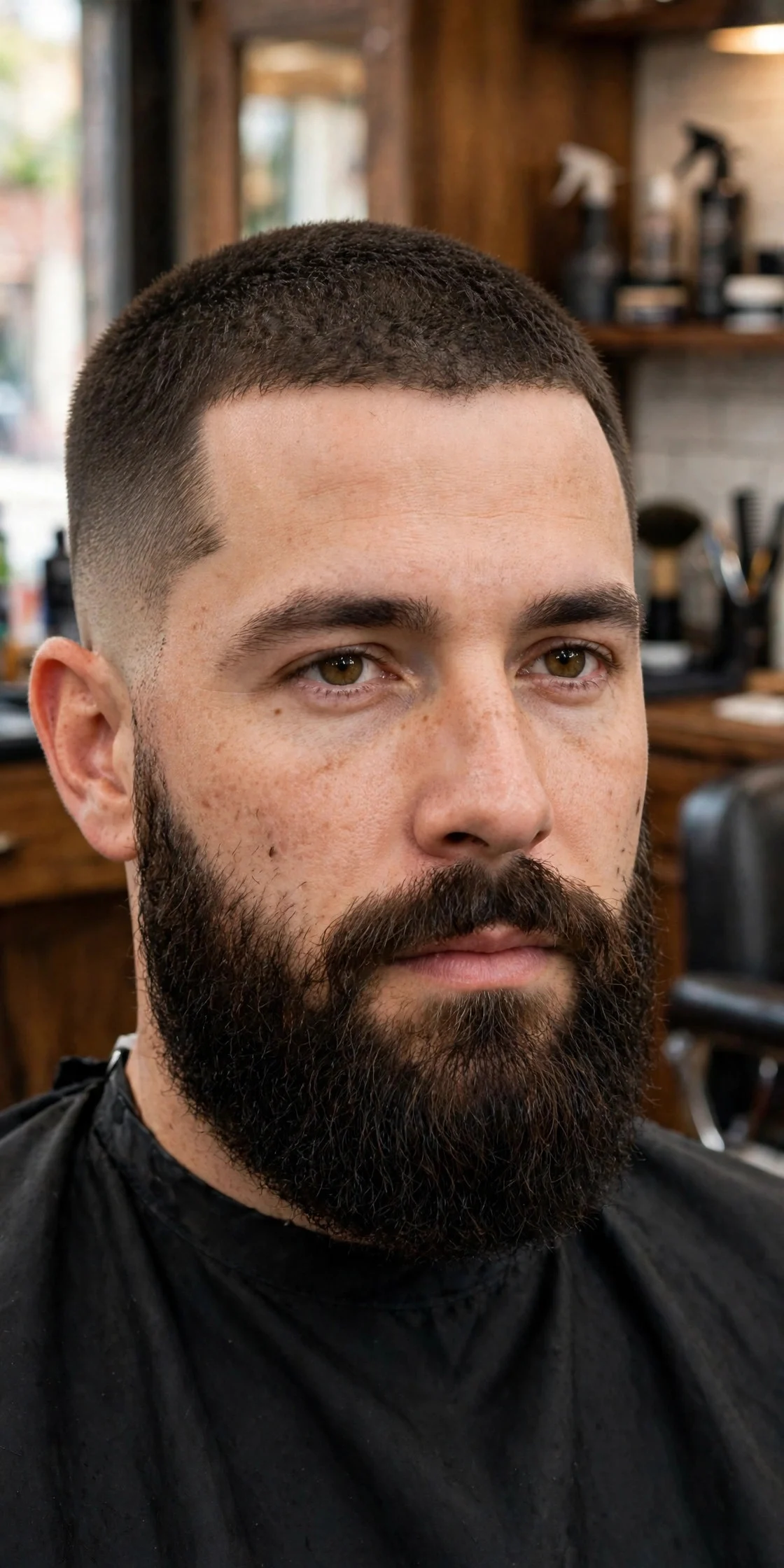
This is less a haircut and more a combination play. The crew stays tight and clean on top, a half inch to an inch with neat tapered sides, while the beard carries the length and the character. The key is the transition: the sideburns should blend into the beard rather than stopping in a hard line, so tell your barber to shape both in the same visit.
It suits guys whose beard grows thick and even, and it balances longer faces and strong chins beautifully. The contrast of tidy hair and rugged beard is flattering on a lot of men. The drawback is doubled maintenance: you are now grooming two things. The beard needs oiling and shaping weekly, and the crew needs its usual three-week cut.
9Athletic Buzzed Crew

The shortest one here, for guys who want the crew's shape with the buzz cut's simplicity. Top cut to a quarter or half inch with a slight gradient from front to back, sides taken tight, and the hairline kept natural rather than carved. Ask for a number 2 up top fading to a 1 on the sides, or just tell your barber you want a crew with the training wheels off.
It suits gym routines, hot climates, and thinning hair better than almost anything, because short hides everything. Round faces benefit from keeping the top slightly longer than the sides for some height. The drawback is total exposure: your head shape, scars, and hairline are all on display, and there is nowhere for a bad barber to hide.
10Grown-Out Crew

Proof that even the simplest cut has a second act. Let a classic crew grow for six to eight weeks without cutting, then have your barber clean up just the neckline and edges while leaving the top alone. You get a soft, tousled inch and a half of length that still carries the crew's structure underneath.
It suits guys growing their hair out with dignity, and anyone who likes the crew look but hates the constant barber visits. Wavy and thick hair wears this best. The drawback is the in-between weeks, when it can look like you simply forgot to book an appointment. One edge-cleanup midway through makes all the difference.
How to Style a Crew Cut
The honest answer is that most crews barely need styling. A good crew cut is engineered to look right straight out of the shower. For the shorter versions, all you need is a towel-dry and maybe a fingertip of matte product if you want a bit of control. Rub it in until it is invisible, then press the top forward or slightly up. Done.
Longer and textured versions ask a little more. Work product into damp hair, not dry, because it distributes evenly and does not clump. A pea-sized amount is plenty; using more just makes short hair look greasy. Comb or finger-style in the direction of your cut, then leave it alone. One more thing: because a crew cut shows your scalp line and hairline so clearly, a quick mirror check after styling is worth the ten seconds.
Frequently Asked Questions
How often does a crew cut need a trim?
Every three to four weeks for a standard crew, every two to three weeks if it has a fade. Short cuts lose their shape fast, so regular cleanups matter more here than with longer styles. An edge cleanup between full cuts can stretch things a week or two.
Will a crew cut make thinning hair more obvious?
Usually the opposite. Short hair stands up and overlaps, which creates the illusion of density, while long thin hair lies flat and shows the scalp. Keep the top short and the sides tight and it is one of the most forgiving cuts for thinning hair.
What should I ask my barber for a crew cut?
State the numbers you want on top and sides, like a 3 on top and a 2 on the sides, then describe the finish: tapered or faded sides, hairline sharp or natural, top flat or textured. Bring a photo of one of these versions. A picture removes all guesswork.
Does a crew cut suit round faces?
Yes, with one tweak: keep the top slightly longer and the sides tighter. That adds height on top and narrows the sides, which lengthens the face visually. The athletic buzzed crew and textured crew work particularly well.
Can you style a crew cut for formal occasions?
Absolutely. The Ivy League crew and side-swept crew were basically designed for suits. Comb the top neatly to one side with a touch of pomade, clean up the edges, and you are wedding-ready. The classic crew needs no extra work at all.
Keep exploring: if you like short styles with attitude, see how the mid fade haircut sharpens the sides, or if you are on the curlier side, the curly butterfly cut ideas show what happens when short layers get playful.