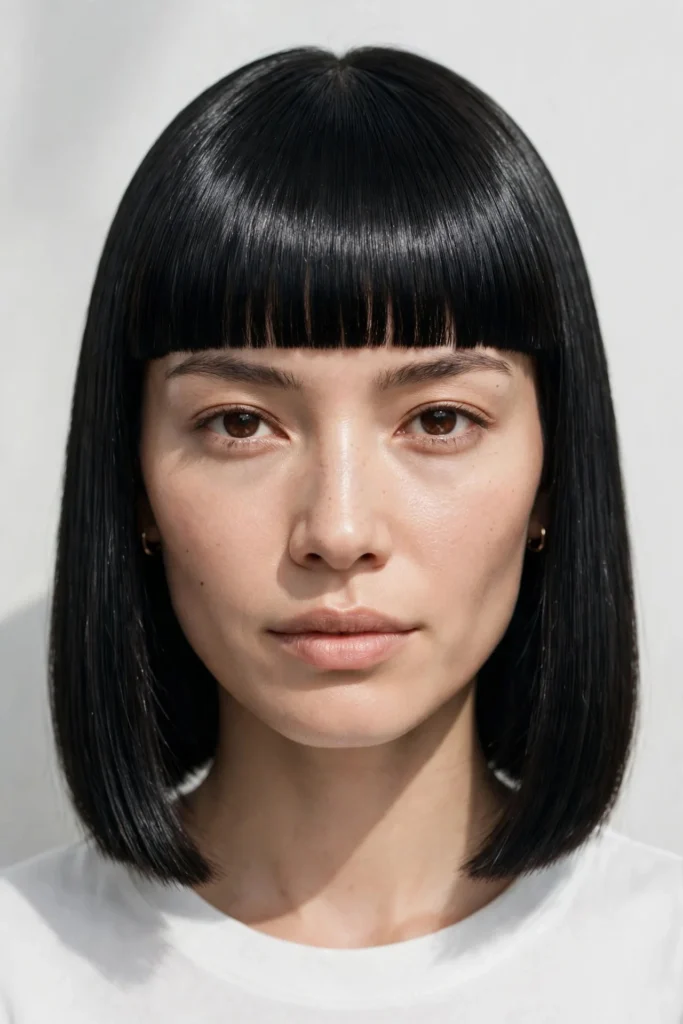
There’s something about a bob with a razor-clean bottom edge and a strong fringe that reads instantly confident. The blunt bob with bangs doesn’t try to be soft or blend in. It frames the eyes, sharpens the jawline, and somehow makes even a plain t-shirt look intentional. Whether you go chin-skimming or neck-grazing, these ten ideas cover every version worth booking, with the real salon language you need to walk out with the cut you pictured.
1Chin-Length Blunt Bob With Straight-Across Bangs
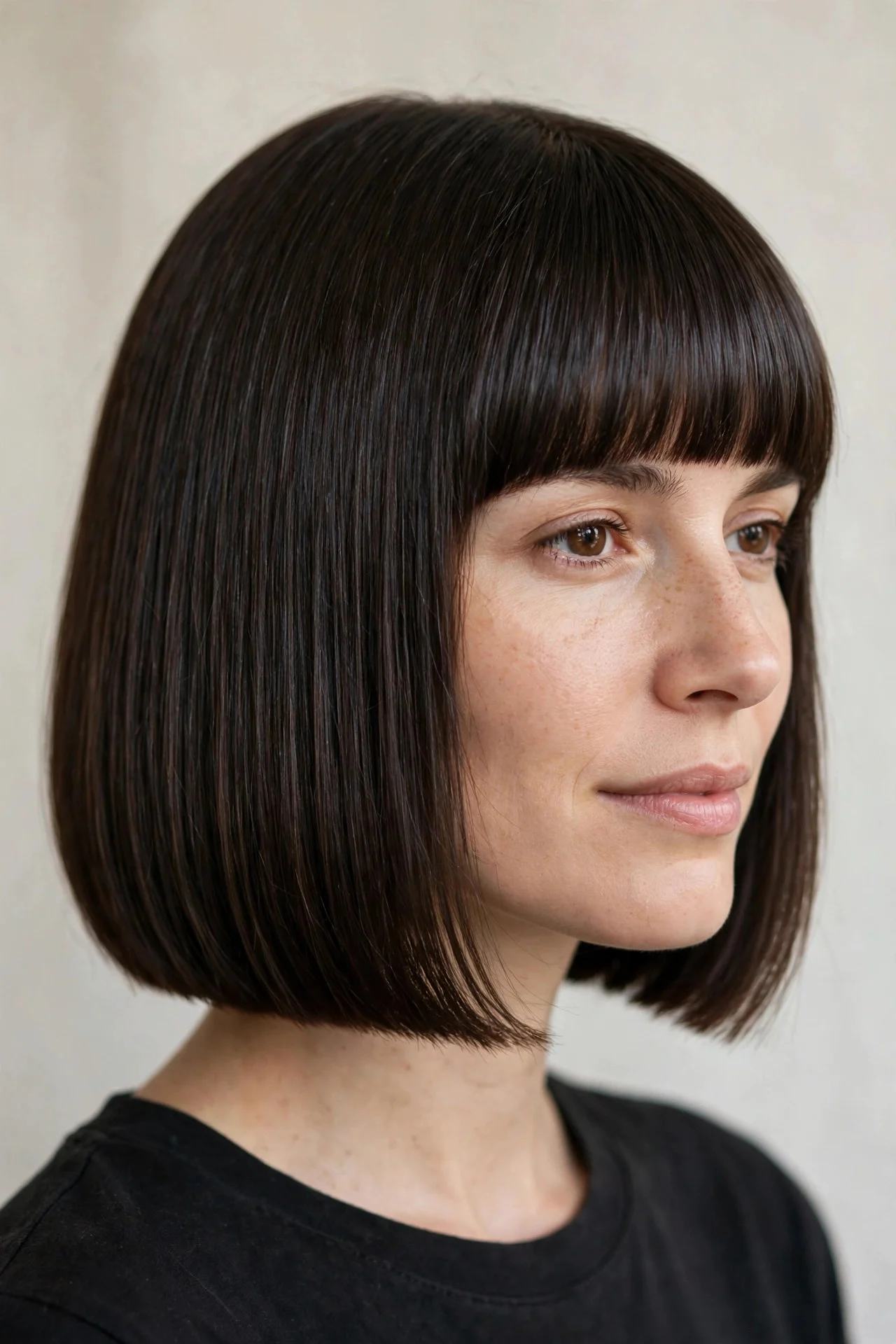
The classic. Ask your stylist for a chin-grazing bob with a perfectly level perimeter and bangs cut straight across just above the brows, no thinning at the ends. This shape suits oval, long, and heart-shaped faces best, and it works beautifully on fine to medium hair because the blunt edge creates the illusion of thickness. Plan on trims every 6 to 8 weeks, since even a quarter inch of growth rounds out that crisp line. Drawback: the daily bang upkeep is real. You’ll want a quick morning pass with a flat iron or round brush, and humidity will test your patience.
2Neck-Grazing Blunt Bob With Curtain Bangs

For bangs you don’t have to babysit, pair a neck-length blunt bob with soft curtain bangs that part in the middle and feather toward the cheekbones. Tell your stylist you want the bob ends thick and heavy, with the bangs long enough to tuck behind the ears when you want them gone. This is a kind draw for round and square faces, and it flatters wavy or thick hair types since the longer fringe blends naturally. Trims can stretch to 8 to 10 weeks because curtain bangs grow out gracefully. The honest downside is styling time: a blowout with a round brush takes 10 to 15 minutes to get the shape right.
3Blunt French Bob With Wispy Micro Bangs
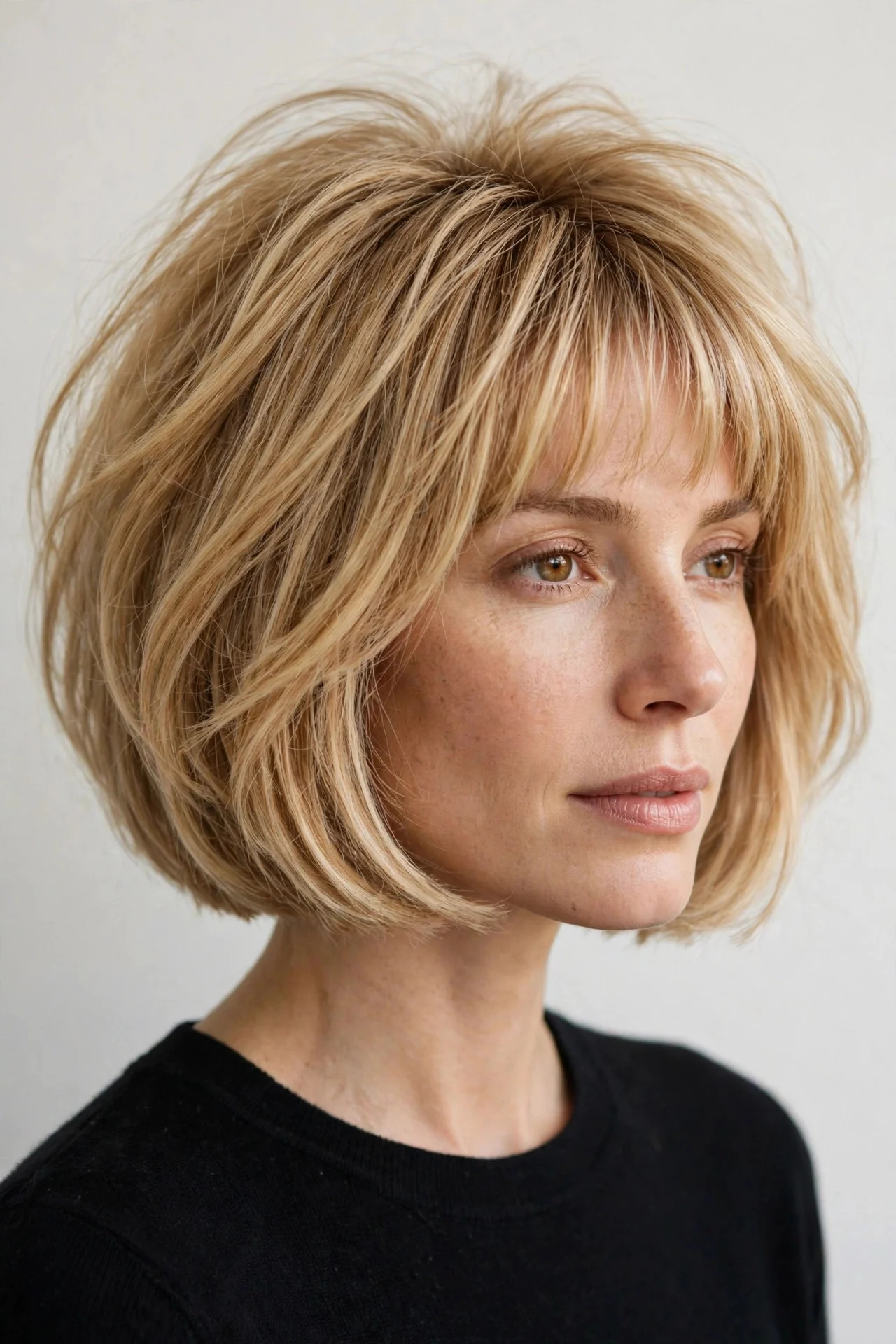
Parisian, slightly rebellious. Ask for a jaw-length French bob with volume at the crown and a micro bang that sits about an inch above the brow, cut piecey rather than solid. Best on straight or slightly wavy hair; curly textures will fight the micro length. Oval and heart faces carry this one effortlessly, and it reads fresh on women in their 20s through 40s. Maintenance is moderate, trims every 6 weeks to keep the fringe from falling into the eyes. Cost-wise it’s a straightforward single-process cut, no color needed. The catch: micro bangs highlight a high forehead or strong brow line, so they’re not for everyone, and they need nightly reshaping.
4One-Length Blunt Bob With Side-Swept Bangs
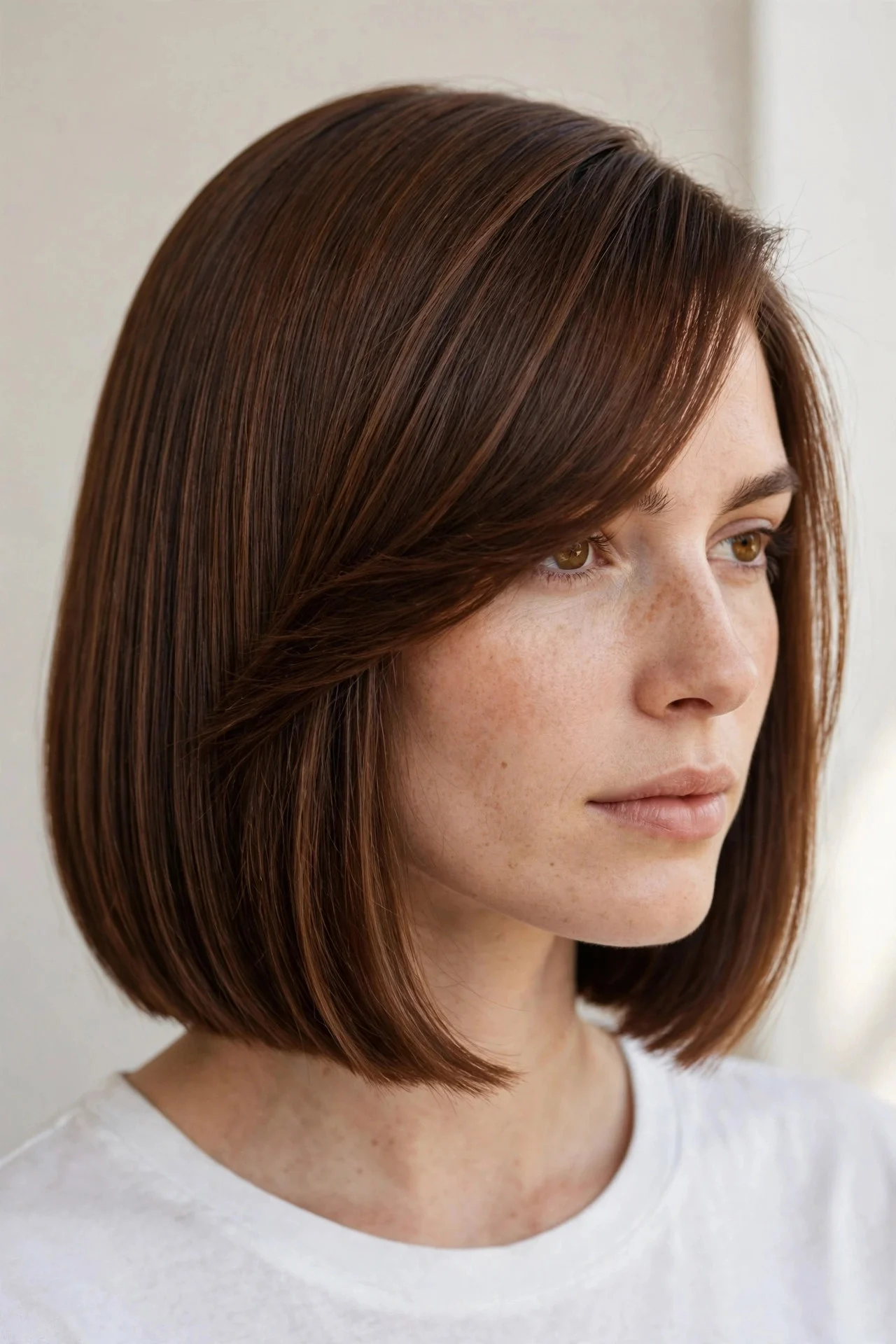
If straight-across bangs feel too committed, the side-swept version is the compromise that still looks sharp. Ask for a one-length bob cut to the jawline or slightly below, with bangs cut long and angled from a deep side part so they sweep across the forehead. This works on nearly every face shape, especially round faces that benefit from the diagonal line, and it’s forgiving on fine hair because the weight stays at the bottom. Trim the bob every 7 to 9 weeks; the bangs can grow out for months without looking wrong. Downside: the side sweep needs to be trained with product for the first two weeks, and on very thick hair the sweep can look heavy without texturizing.
5Blunt Lob With Full Heavy Bangs
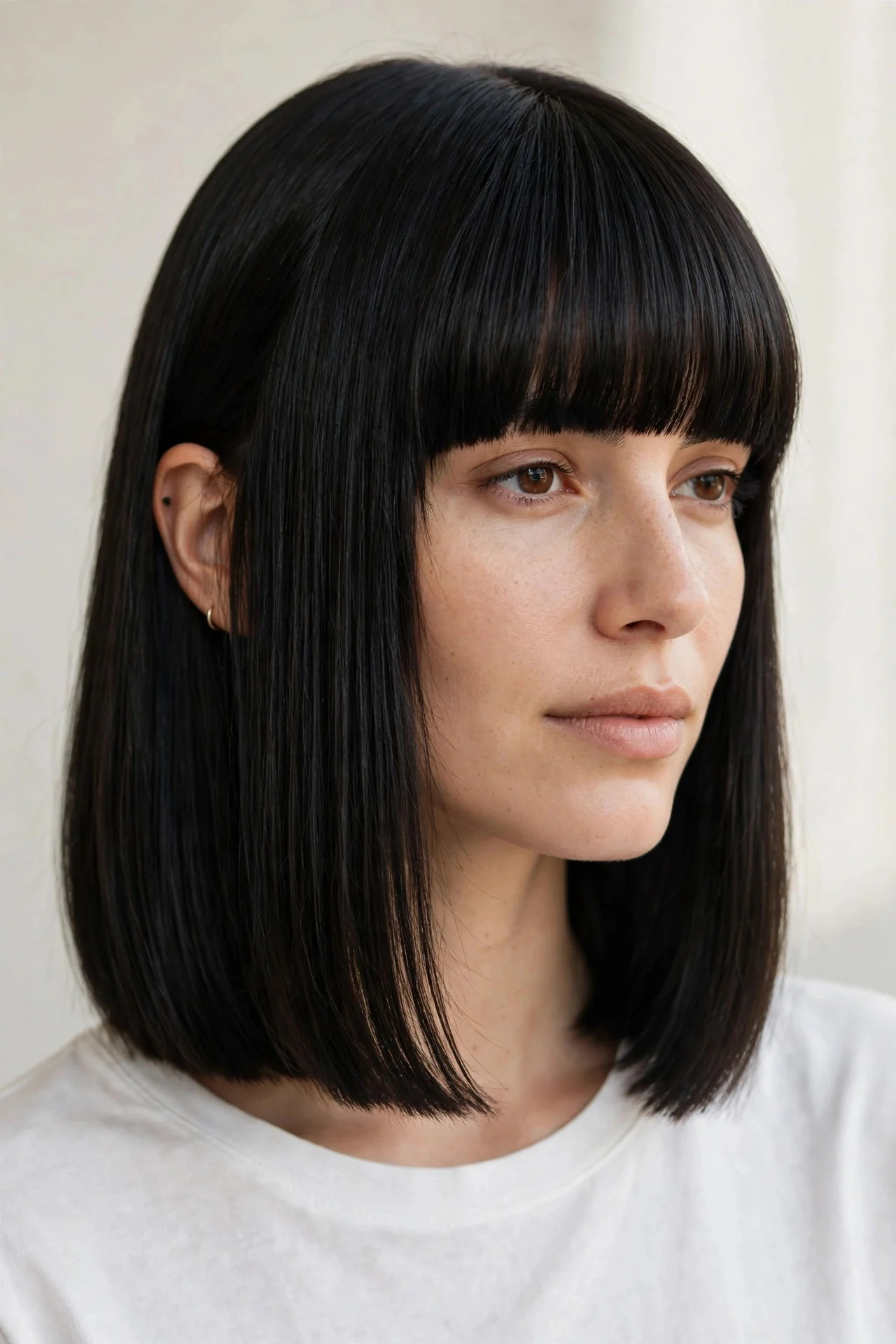
The lob version gives you the blunt look with more styling room. Ask for a collarbone-skimming lob with a dead-even bottom edge and full, dense bangs cut right at the brow line. This is a star pick for thick, straight, or coarse hair, and it balances long or oblong faces by shortening them visually. Trims every 8 weeks keep the hemline crisp, and the bangs need a touch-up every 4 to 5 weeks, which many salons do free between full appointments. The honest tradeoff is weight: full bangs on thick hair can feel hot in summer and need dry shampoo at the roots by day two.
6Asymmetric Blunt Bob With Choppy Bangs
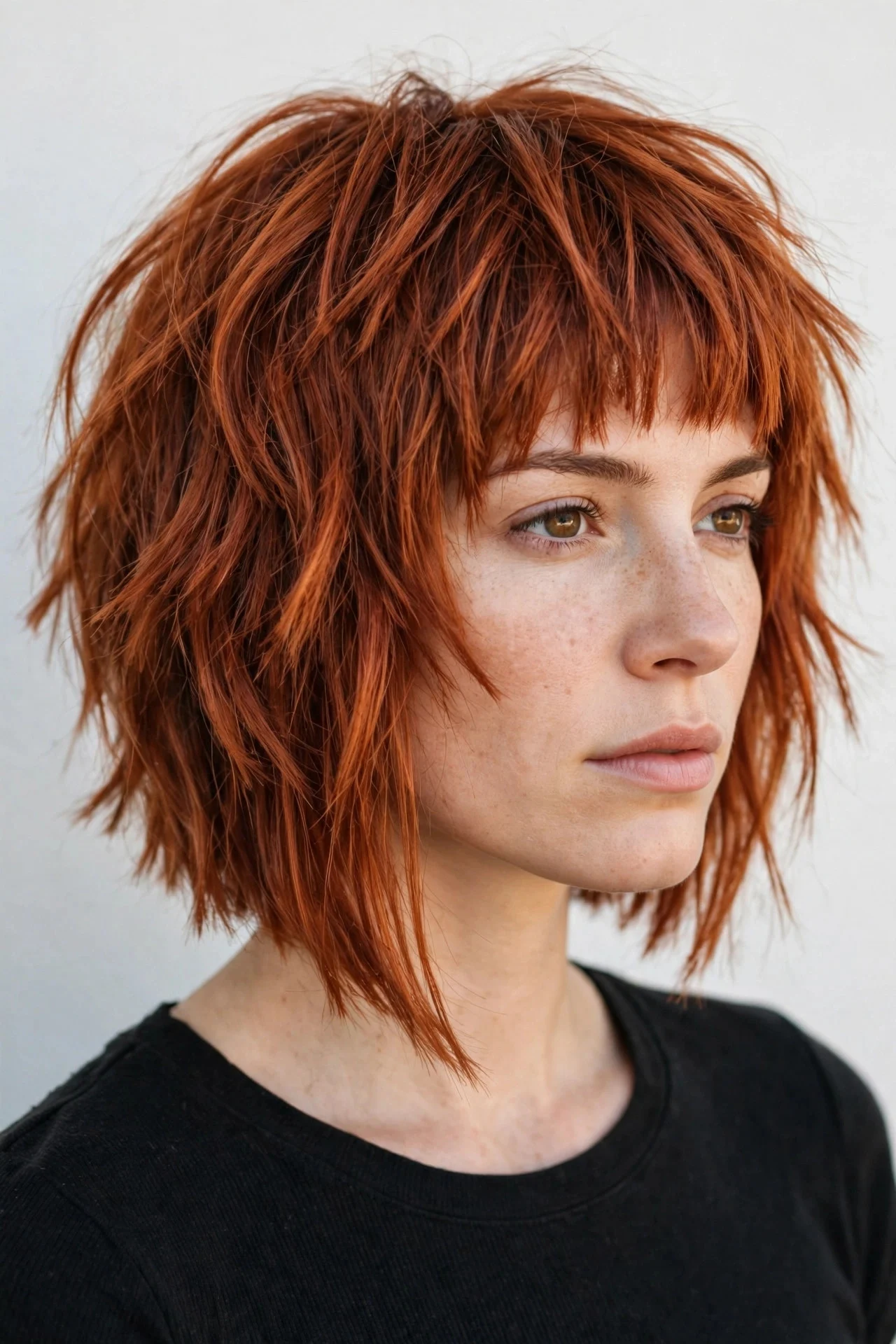
A little edge without going wild. Ask your stylist for a blunt bob that runs about an inch longer on one side, paired with choppy, textured bangs cut unevenly across the forehead. Best on straight to wavy hair and oval or square faces; the asymmetry softens strong jawlines. Choppy bangs grow out with less drama than straight ones, so you can push trims to 8 to 10 weeks. Styling is low-effort: a bit of texture spray and finger-combing. The drawback is the asymmetry itself. It only works if the line stays sharp, so if you tend to stretch appointments past 10 weeks, skip this one.
7Blunt Bob With Baby Bangs on Textured Hair
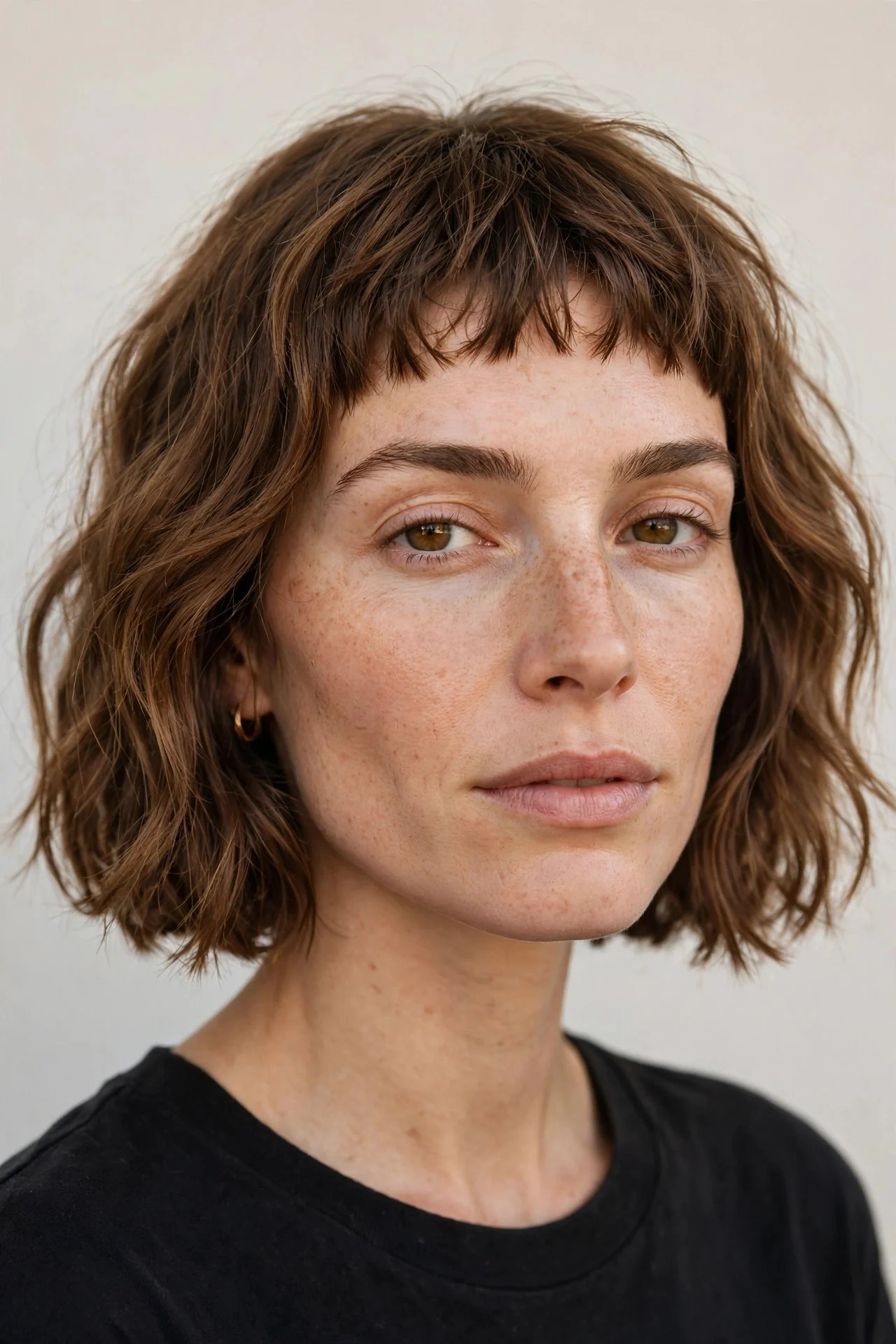
Short, bold, and surprisingly wearable. Ask for a blunt chin-length bob with textured, piecey baby bangs cut well above the brow. On naturally textured or wavy hair, tell your stylist to cut the bangs dry so the spring factor is accounted for. This flatters small or delicate features and oval faces, and it looks fantastic on younger faces and anyone who wants a fashion-forward cut without color. Maintenance: trims every 6 weeks, and the baby bangs need reshaping often because they grow straight into your vision line. Dry-cut bangs can also cost a little more if the salon charges separately for dry finishing.
8Sleek Glass-Hair Blunt Bob With Blunt Bangs

Maximum polish. Ask for a precision blunt bob with a glossy, one-length finish and matching blunt bangs cut in a single clean line. Request a smoothing treatment or keratin service if your hair has any frizz, because this cut shows everything. It suits straight hair best and looks striking on oval, square, and diamond faces. The upkeep is the highest on this list: trims every 5 to 6 weeks, plus regular glossing or keratin, which can run $150 to $300 per session. The payoff is a mirror-shine finish that photographs beautifully. Downside: any wave or cowlick will ruin the line, so it’s a no for wavy or curly textures.
9Blunt Bob With Bardot Bangs
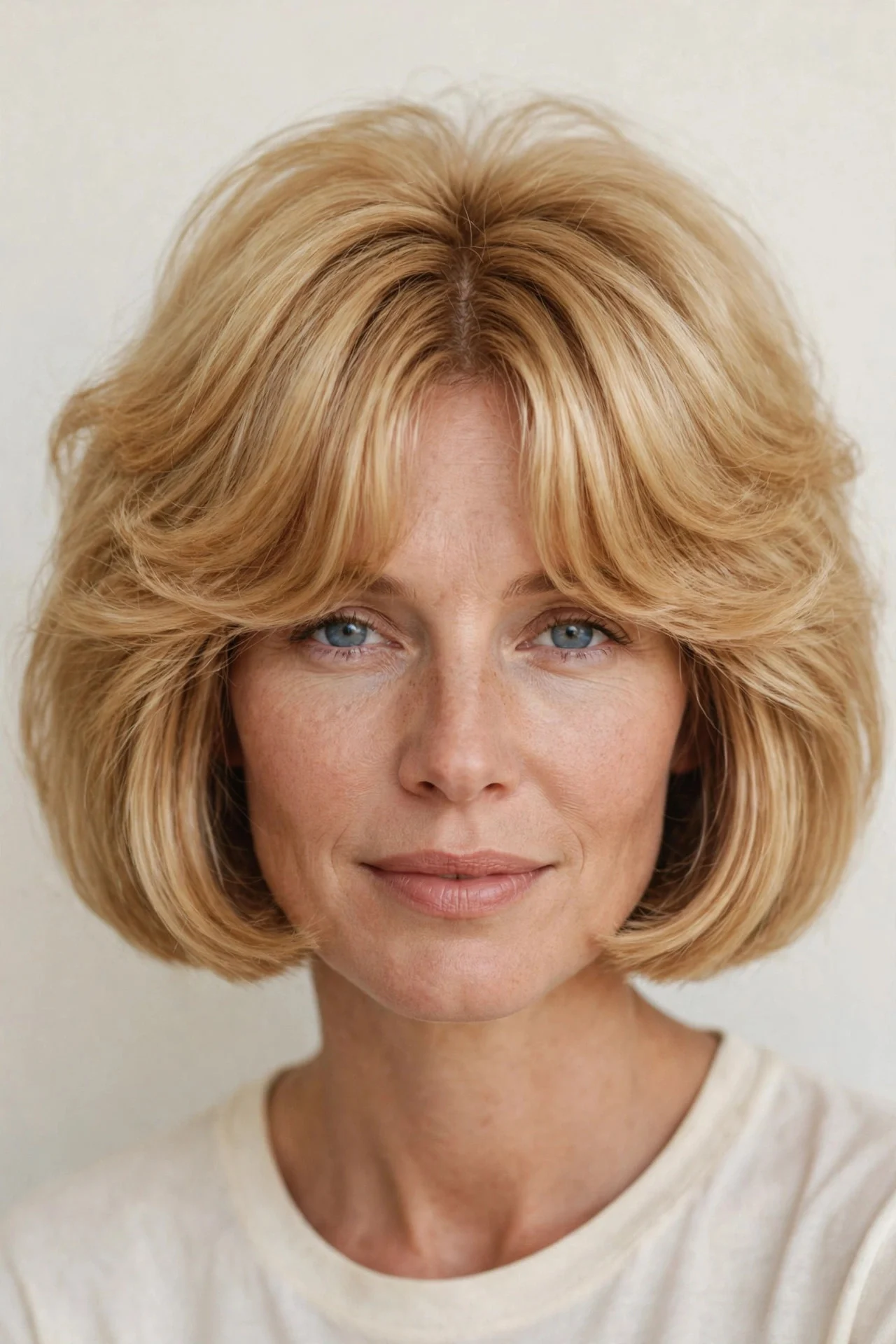
Seventies softness on a sharp frame. Ask for a chin-to-neck blunt bob with Bardot-style bangs, full and parted loosely in the center so they sweep open across the forehead. This combination flatters round and heart-shaped faces, and it’s a natural fit for medium to thick hair with a little wave. Trims every 7 to 8 weeks; the bangs blend into the sides as they grow, so there’s no awkward stage. Styling takes a large round brush or a velcro roller set, which is a weekend-morning commitment but looks incredible. The drawback: Bardot bangs need length to work, so if you cut them too short on the first visit, the whole look falls flat.
10Chin-Length Blunt Bob With Arched Bangs

An arched bang adds a subtle lift that straight bangs can’t. Ask your stylist for a chin-length blunt bob with bangs cut slightly shorter in the center and longer at the temples, following the brow shape. This is a lovely choice for round faces and wide foreheads, and it works on fine to medium hair in straight or wavy textures. Trim frequency is standard: every 6 to 8 weeks for the bob, with quick bang trims in between. The arched shape is forgiving as it grows, since the center stays out of the eyes longer. Honest downside: the arch needs to be recut precisely each time, so find a stylist you trust and stick with them.
How to Style and Care for a Blunt Bob With Bangs
The secret to this cut is that the shape does most of the work, so your routine should protect the line, not fight it. Start with a smoothing or volumizing shampoo matched to your hair type, and always use a heat protectant before any hot tool. For straight-across or blunt bangs, blow-dry the fringe first while it’s dampest, directing it down with a paddle brush; letting bangs air-dry is what causes that dreaded split. A flat iron pass over the ends once or twice a week keeps the perimeter sharp between trims. If you have the wavy version, scrunch in a light mousse and let the texture do its thing. Wash bangs more often than the rest of your hair; they sit on your forehead and get oily fast, and a puff of dry shampoo at the roots buys you a second day. Sleep on a silk pillowcase to keep the fringe smooth overnight, and book your trim before the line goes, not after. A blunt cut that loses its edge just looks like a grown-out bob, and nobody wants that.
How often do bangs need trimming on a blunt bob?
Plan on a bang trim every 3 to 5 weeks, depending on the style. Straight-across and baby bangs need it most often, while curtain and Bardot bangs can go 6 to 8 weeks. Many salons offer complimentary bang trims between full appointments, so ask at your next visit.
Does a blunt bob with bangs work on thin hair?
Yes, and it’s actually one of the best cuts for fine hair. The blunt perimeter creates maximum density at the ends instead of thinning them out. Just avoid heavy layering on top, which can make fine hair look sparser, and ask for bangs with some texture so they don’t separate.
Will bangs make my face look rounder?
Straight-across, full bangs can visually widen a round face, but that doesn’t rule the cut out. Side-swept, curtain, or arched bangs break up the roundness with diagonal lines. A slightly longer bob that grazes the neck also draws the eye downward.
Can I style a blunt bob with bangs if I have wavy hair?
Absolutely, if you pick the right version. Curtain bangs, Bardot bangs, and choppy bangs all work with natural wave. Skip glass-hair and micro bang versions, which need straight hair to hold their lines. A smoothing cream on the ends keeps the bottom edge from puffing out.
How do I grow out bangs from a blunt bob?
The easiest path is to transition into curtain or side-swept bangs as they lengthen, since those styles are designed to be long. Bobby pins, a deep side part, and headbands get you through the in-between weeks. It typically takes 3 to 4 months to grow bangs out to chin length.
Keep exploring
If the sharp lines of this cut have you hooked, a [jaw-length bob](https://hairtrendly.com/10-jaw-length-bob-haircuts/) is the shorter, bolder cousin worth a look, and it pairs well with the same bang styles. For something with a little more European flair, these [Italian bob ideas](https://hairtrendly.com/12-italian-bob-haircut-ideas/) show how a touch of movement softens the blunt edge. And if you want to see how shaping changes the whole feel, browse the [sculpted bob haircuts](https://hairtrendly.com/15-sculpted-bob-haircuts/) for versions with more contour around the face.