
I had wispy bangs cut into my hair on a Tuesday afternoon and spent the following three days alternating between genuinely loving the change and quietly googling “how fast do bangs grow back” at midnight, just in case. That contradiction, I’ve since learned, is an almost universal experience among people who get bangs for the first time, wispy or otherwise. There’s a real adjustment period, and a real possibility of regret, that nobody quite prepares you for ahead of the appointment.
A year and several trims later, I genuinely love my wispy bangs and have zero regrets. But getting to that point required understanding a few things I wish someone had explained clearly before I sat down in that chair, both about the cut itself and about managing the emotional rollercoaster that can come with a significant change to how your face is framed. This is the honest, detailed breakdown I wish I’d had going in.
What Exactly Are Wispy Bangs?

Before diving into the how-to and the regret-prevention strategies, it’s worth clearly defining what separates wispy bangs from other fringe styles, since the term gets used somewhat loosely.
Wispy bangs are characterized by their light, airy, slightly uneven texture rather than a thick, blunt, uniform line across the forehead. They’re typically cut with a razor or point-cutting technique to create soft, feathered ends, and they’re usually less dense than a full, heavy fringe, often leaving visible gaps or thinner sections rather than one solid block of hair.
This lighter, more textured quality is exactly what makes wispy bangs feel like a gentler introduction to bangs for a lot of people, since the softer, more gradual framing effect tends to feel less dramatic and less committed than a thick, blunt fringe.
Why People End Up Regretting Bangs (And How Wispy Specifically Helps Avoid This)

Understanding the common reasons people regret getting bangs in general helps explain why the wispy variation specifically tends to have a better track record for satisfaction.
Full, blunt bangs can feel overwhelming on the face immediately. A thick, heavy fringe creates a dramatic, immediate change to how your face appears, which can feel jarring even when the cut is objectively well executed. Wispy bangs, with their lighter density and softer line, create a more gradual visual transition that tends to feel less shocking in the mirror.
Styling demands can become a source of regret over time. Some bang styles require daily blow-drying and precise styling to look intentional rather than awkward. Wispy bangs tend to be more forgiving, since their inherently undone, textured quality means they can look reasonably good even with minimal styling effort on busier days.
The growing-out phase can feel especially frustrating with certain bang styles. Thick, blunt bangs often go through a distinctly awkward stage as they grow, since the heavy, uniform line becomes increasingly difficult to style as length increases unevenly. Wispy bangs, due to their already textured, less uniform starting point, tend to transition more gracefully through the growing-out process.
Face shape mismatches contribute significantly to regret. Certain bang styles genuinely don’t suit certain face shapes well, and committing to a style that doesn’t complement your specific features is a common source of post-appointment regret. Wispy bangs happen to be one of the most universally flattering bang styles precisely because their lighter, more adjustable nature allows for customization across a wide range of face shapes.
Who Wispy Bangs Actually Suit

While wispy bangs are genuinely more universally flattering than some other bang styles, it’s still worth understanding the nuances of how to customize them for your specific face shape to maximize your chances of loving the result.
Round faces typically benefit from wispy bangs with a bit more length and a side-swept direction, rather than bangs cut straight across, since the angled line helps elongate the face rather than emphasizing its width.
Oval faces are widely considered the most versatile for wispy bangs in almost any configuration, since the balanced proportions of this face shape accommodate nearly any styling direction without significant adjustment needed.
Square faces tend to look particularly good with wispy bangs that have soft, rounded ends rather than sharp, geometric lines, since the gentle texture helps balance a more angular jawline.
Heart-shaped faces often benefit from wispy bangs with a bit more volume and width at the forehead, helping balance the proportions of a face that’s typically wider at the top and narrower at the chin.
Long or oblong faces generally do well with fuller, slightly more substantial wispy bangs that create more visual width across the forehead, helping break up the overall length of the face.
Diamond-shaped faces tend to suit wispy bangs that add softness and width specifically at the narrower forehead area, balancing the more prominent cheekbones characteristic of this face shape.
How to Communicate Exactly What You Want to Your Stylist

This is genuinely one of the most important factors in avoiding regret, since “wispy bangs” can still be interpreted somewhat differently depending on a stylist’s specific technique and aesthetic preferences.
Bring multiple reference photos, not just one. A single photo leaves significant room for interpretation. Showing several images that share a consistent wispy quality helps your stylist understand the specific texture and density you’re hoping for.
Discuss the specific length you want explicitly. Wispy bangs can range from very short, sitting well above the eyebrows, to quite long, blending into face-framing layers near the cheekbones. Be specific about where you want the bangs to fall.
Talk about density honestly. Some wispy bang styles are extremely sparse and light, while others have a bit more substance while still maintaining that soft, textured quality. Clarify where on that spectrum you’re hoping to land.
Ask your stylist how they plan to cut the texture. A skilled stylist will typically use point cutting, razor cutting, or a combination of both to create the soft, feathered effect that defines wispy bangs. Understanding their specific technique can help set accurate expectations.
Discuss your hair’s natural texture and how it might affect the result. Wispy bangs can behave quite differently depending on whether your hair is naturally straight, wavy, or curly, and a good stylist will factor this into both the cutting technique and the styling advice they give you.
The Trial-Cutting Approach: A Genuine Regret-Prevention Strategy
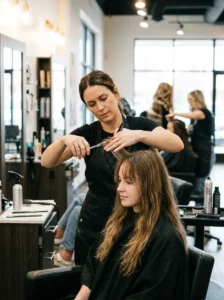
This is something I wish I’d known about before my own first appointment, and it’s become my go-to recommendation for anyone nervous about committing to bangs for the first time.
Many stylists are willing to do an initial, more conservative cut, leaving the bangs slightly longer than your ultimate goal, with the understanding that you’ll come back for a follow-up trim once you’ve had a chance to live with the initial length for a few days. This approach allows you to gradually work toward your desired length and texture rather than committing fully in a single appointment, significantly reducing the risk of immediate, irreversible regret if the initial result feels more dramatic than expected.
If this option is available and you’re feeling any hesitation, I’d genuinely recommend asking about it directly. Most experienced stylists who work frequently with first-time bang clients are familiar with this approach and happy to accommodate it.
What to Expect in the First Few Days

Based on my own experience and conversations with friends who’ve gone through this same transition, here’s an honest breakdown of what the adjustment period actually feels like.
The first day often feels the most jarring. Your face will look different to you than you’re used to seeing in the mirror, and this unfamiliarity can sometimes be mistaken for genuine dislike of the cut itself, when really it’s just the natural process of adjusting to a visual change.
Styling technique improves significantly with practice. The first attempt at styling new wispy bangs yourself, away from the salon’s professional blow-dry, often looks noticeably different and can contribute to early uncertainty. Give yourself genuine practice time before judging the final styled result too harshly.
Other people’s reactions can influence your own feelings more than you might expect. Compliments tend to boost confidence in the new style quickly, while neutral or hesitant reactions from others, even when not intended negatively, can sometimes amplify any uncertainty you were already feeling. Try to give yourself a few days of living with the change before weighing outside opinions too heavily.
The “regret window” tends to be temporary for most people. Based on both my own experience and a fair amount of anecdotal research into this exact topic, the period of uncertainty or mild regret that many people experience with new bangs tends to resolve within one to two weeks as the styling routine becomes more natural and the new look becomes more visually familiar.
How to Style Wispy Bangs So They Look Intentional
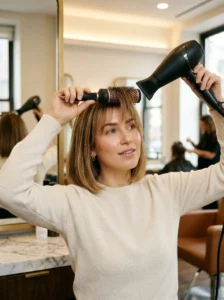
Getting the cut right is half the equation. Styling technique is what determines whether wispy bangs look deliberately soft and textured or simply unstyled and flat. Here’s the routine that’s worked consistently for me.
Blow-dry bangs separately from the rest of your hair. Using a small round brush, I dry my bangs first, directing them slightly to one side or the other depending on my desired finish, rather than letting them air dry alongside the rest of my hair, which often results in a flatter, less defined shape.
Use a lightweight texturizing product, not a heavy one. A small amount of texturizing spray or a light pomade worked through with fingertips enhances the wispy, piece-y quality without weighing the bangs down into a flat, heavy section.
Consider a small round brush specifically for bangs. A mini round brush, smaller than what you’d use for the rest of your hair, allows for more precise control when shaping the bend and direction of just the bang section.
Avoid brushing wispy bangs flat with a regular brush once styled. Regular brushing tends to smooth out the textured, separated quality that defines this particular bang style. Light finger-styling throughout the day maintains the look better than repeated brushing.
Use dry shampoo strategically at the roots of your bangs. Bangs tend to show oil buildup faster than the rest of your hair due to their proximity to the forehead. A small amount of dry shampoo at the roots, even between full washes, helps maintain volume and texture throughout the day.
Managing the Maintenance Schedule
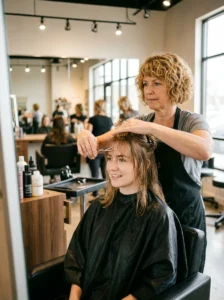
Wispy bangs, despite their generally lower-maintenance reputation compared to thicker, blunt fringe styles, still require regular trims to maintain their shape and length.
I get my bangs trimmed every three to four weeks, which is more frequent than the rest of my hair, but many salons offer a quick, lower-cost bang trim service specifically for this purpose, separate from a full haircut appointment. If your salon offers this, it makes maintaining the style significantly more manageable both in terms of time and cost.
Between professional trims, it’s possible to do very minor at-home touch-ups if a few pieces grow noticeably longer than the rest, though I’d genuinely recommend caution here. Cutting your own bangs, even small touch-ups, carries real risk of an uneven result, and I’d suggest sticking to professional trims unless you have specific experience and confidence in doing this yourself.
What If You Do End Up Regretting Them?

Despite all of the strategies above, it’s worth acknowledging honestly that some people do try wispy bangs and ultimately decide they’re not for them, and that’s a completely valid outcome too.
Growing them out is entirely possible, just gradual. Wispy bangs, due to their already textured, layered quality, tend to grow out more gracefully than thicker, blunt bangs, often blending into face-framing layers relatively comfortably during the transition period.
Styling techniques can help bridge the growing-out phase. Bobby pins, headbands, and various sweeping or pinning techniques can help manage bangs at awkward in-between lengths while they grow toward blending with the rest of your hair.
A consultation with your stylist about the growing-out process can help. Many stylists are happy to suggest specific layering adjustments during this transition period to help the bangs blend more comfortably as they lengthen, rather than leaving you to navigate the awkward stages entirely on your own.
Remember that hair regret, while frustrating, is genuinely temporary. Even in a true regret scenario, the situation resolves itself naturally over time, which is worth keeping in perspective if you do find yourself unhappy with the result.
My Honest Year-Long Reflection

A year out from that initial Tuesday afternoon appointment and my subsequent late-night search history, I can say with genuine confidence that wispy bangs were the right choice for me, though I want to be honest that the first week was harder than I expected.
What ultimately shifted my feelings from uncertainty to genuine love was a combination of factors: getting more comfortable with the styling technique through practice, receiving consistently positive feedback once I’d had them for a week or two, and simply adjusting to seeing my own face framed differently in the mirror. None of those things happened immediately, but all of them happened within roughly the timeframe I mentioned earlier, about one to two weeks.
I’ve maintained this style consistently since then, with only minor adjustments to length and styling technique as I’ve continued to refine what works best for my specific hair texture and face shape.
Final Thoughts

If you’re considering wispy bangs and feeling some genuine hesitation about potential regret, I want to validate that hesitation as completely normal rather than a sign you shouldn’t proceed. Nearly everyone I’ve talked to who has gotten bangs, wispy or otherwise, describes some version of the same adjustment period I went through.
What I’d genuinely encourage, based on my own experience and everything I’ve since learned, is approaching the decision with realistic expectations about that adjustment period, clear communication with your stylist about exactly what you’re hoping for, and consideration of the trial-cutting approach if you’re feeling particularly uncertain. With those pieces in place, your odds of ending up genuinely happy with the result, the way I ultimately was, go up significantly.
Bangs are, after all, just hair. They grow. They can be adjusted. And in my own experience, the regret, if it comes at all, tends to be far more temporary than the anxiety beforehand might lead you to believe.