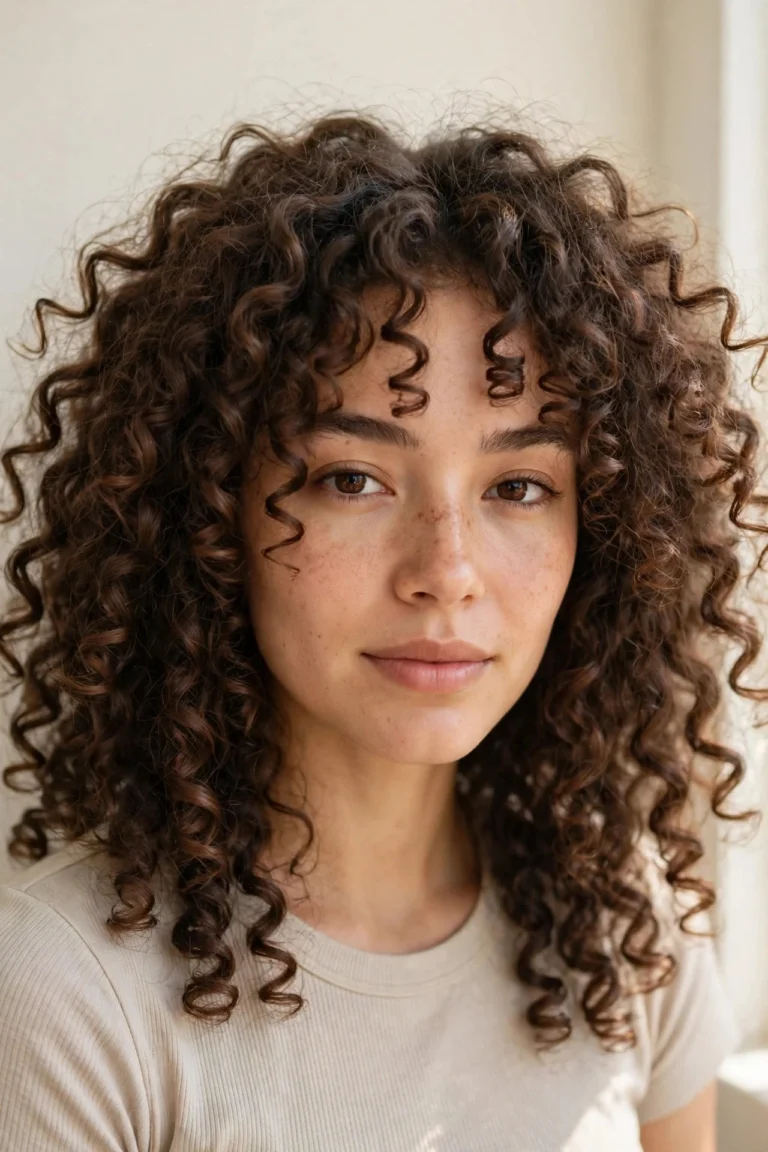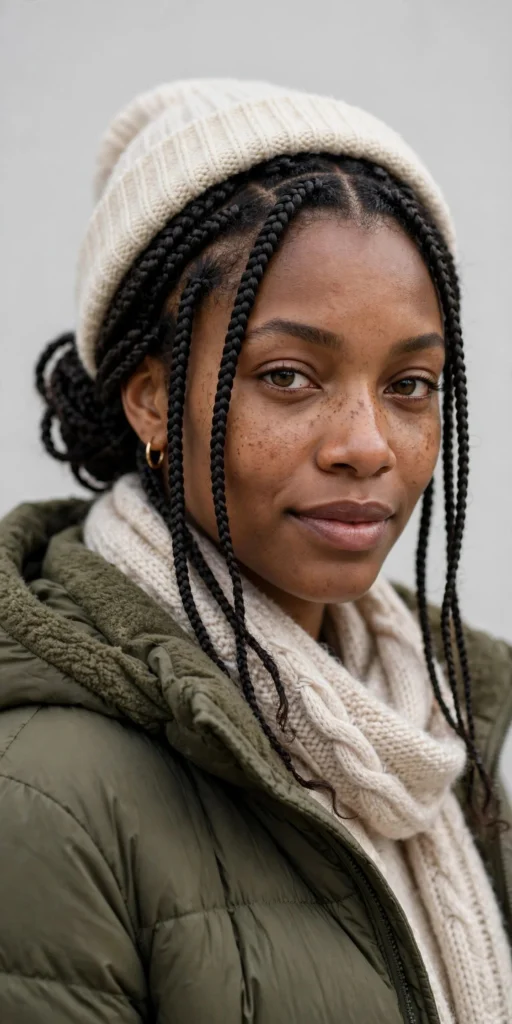
Winter is hard on hair. Cold air outside pulls moisture out, heated rooms dry it further, and wool scarves rub against ends all day. The result is often breakage, split ends, and hair that feels rough by February.
The styles below keep your ends tucked away and reduce daily handling. Pick one that fits your hair type, your schedule, and how much upkeep you honestly want to do. A good protective style should save you time, not create a new chore.
1Classic Box Braids with a Silk-Lined Hood
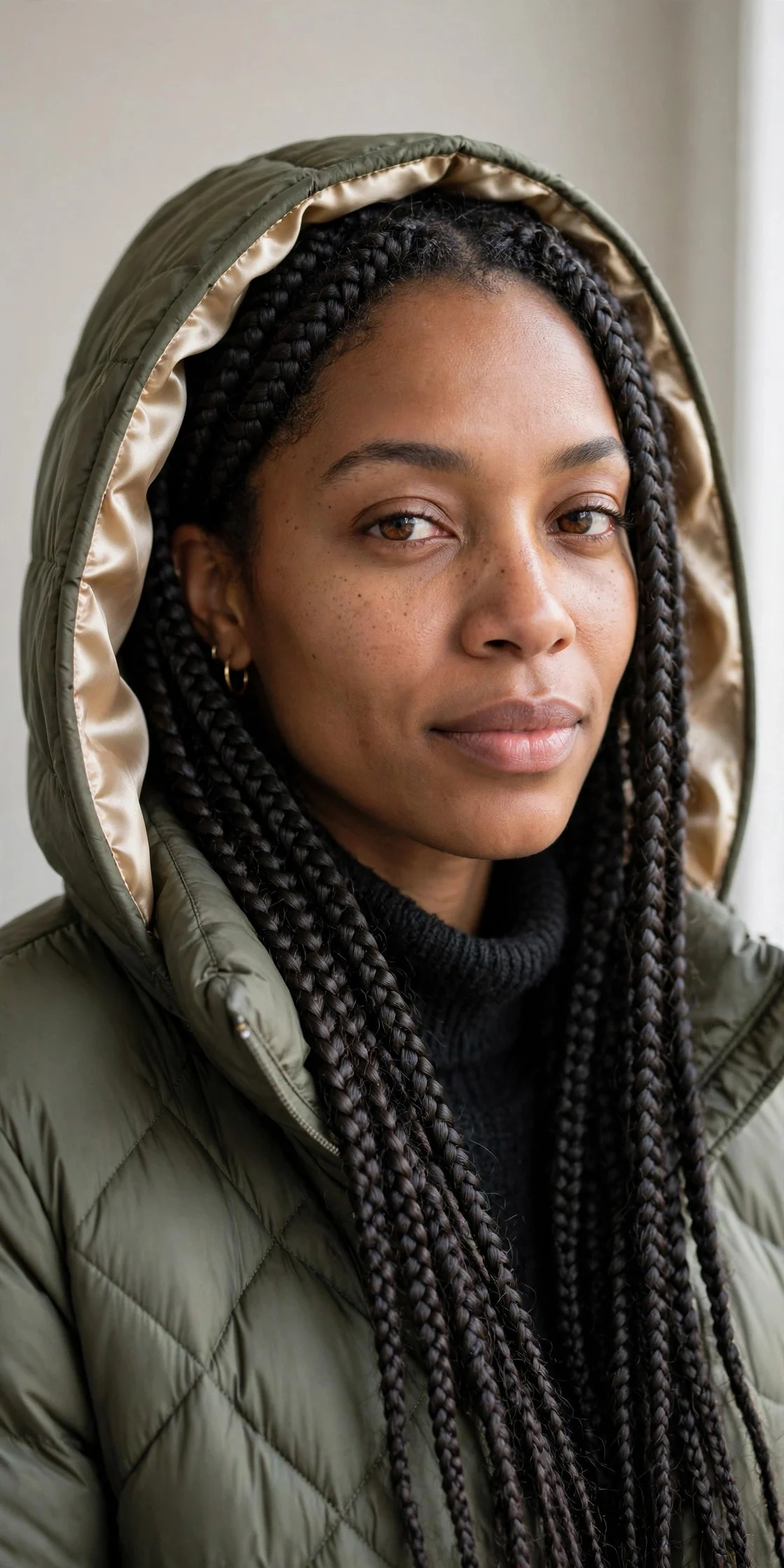
Ask your stylist for medium box braids, not too tight at the hairline, with the ends sealed and tucked under. A silk-lined hood or a satin scarf worn under your winter hat stops wool from roughing up the braids. This style suits most hair types, especially thick or coily hair that needs a long break from daily styling. Wash your scalp with diluted shampoo once a week and oil it lightly. The honest drawback is time. A full head can take four to six hours in the chair, and braids that are too tight can cause soreness or thinning at the edges.
2Low Sleek Bun with Tucked Ends
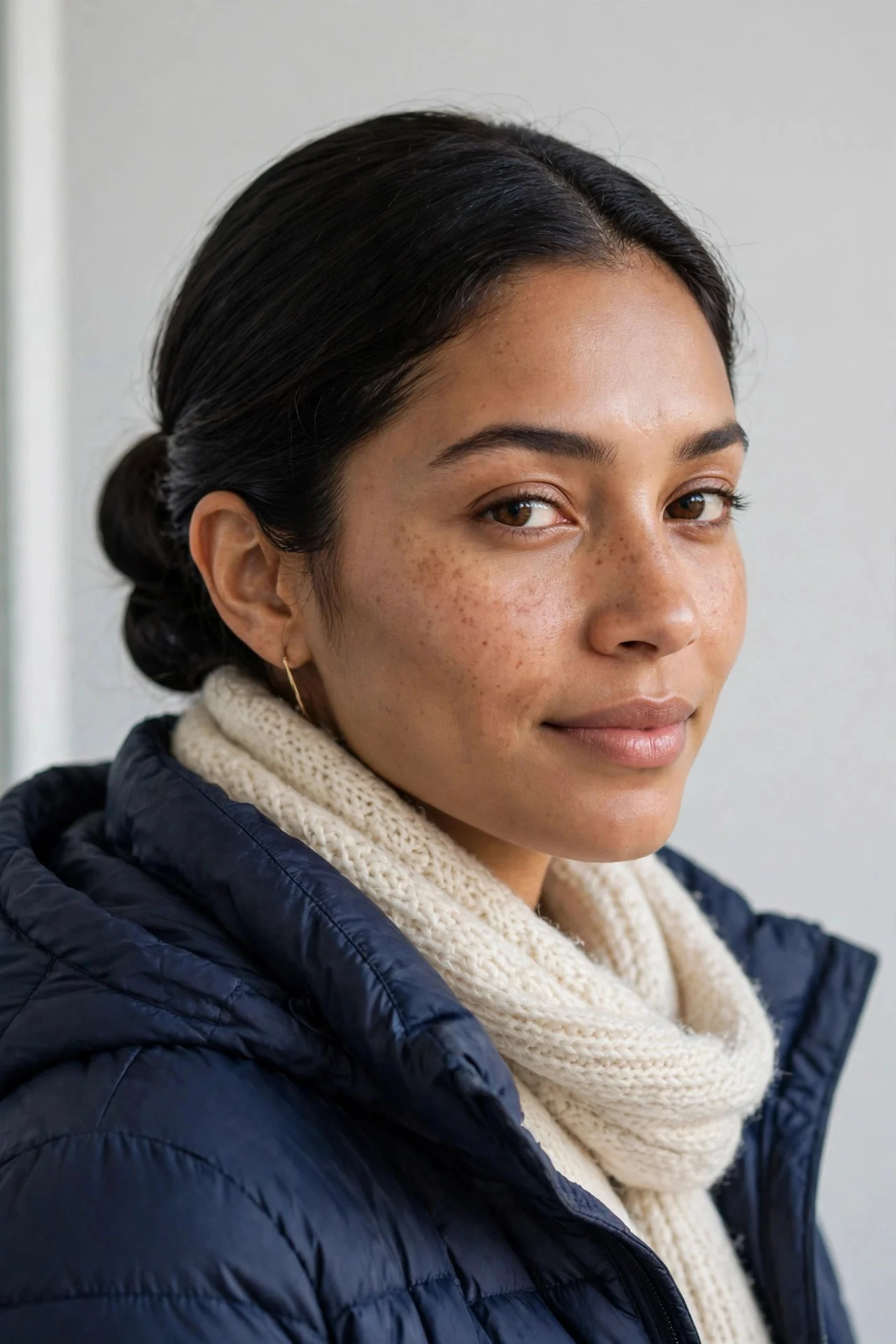
Part your hair down the middle or to the side, smooth it back with a light gel or edge control, and twist it into a low bun at the nape. Tuck the ends fully inside so they never touch your coat collar. This is a strong choice for straight, wavy, or relaxed hair, and it works well for office days when you want a clean finish. Refresh it each morning with a soft brush and a drop of oil on the ends. The drawback is repetition. Wearing the same tight bun every day can stress one area, so vary the part and loosen the tension on alternate days.
3Two-Strand Twists Under a Beanie
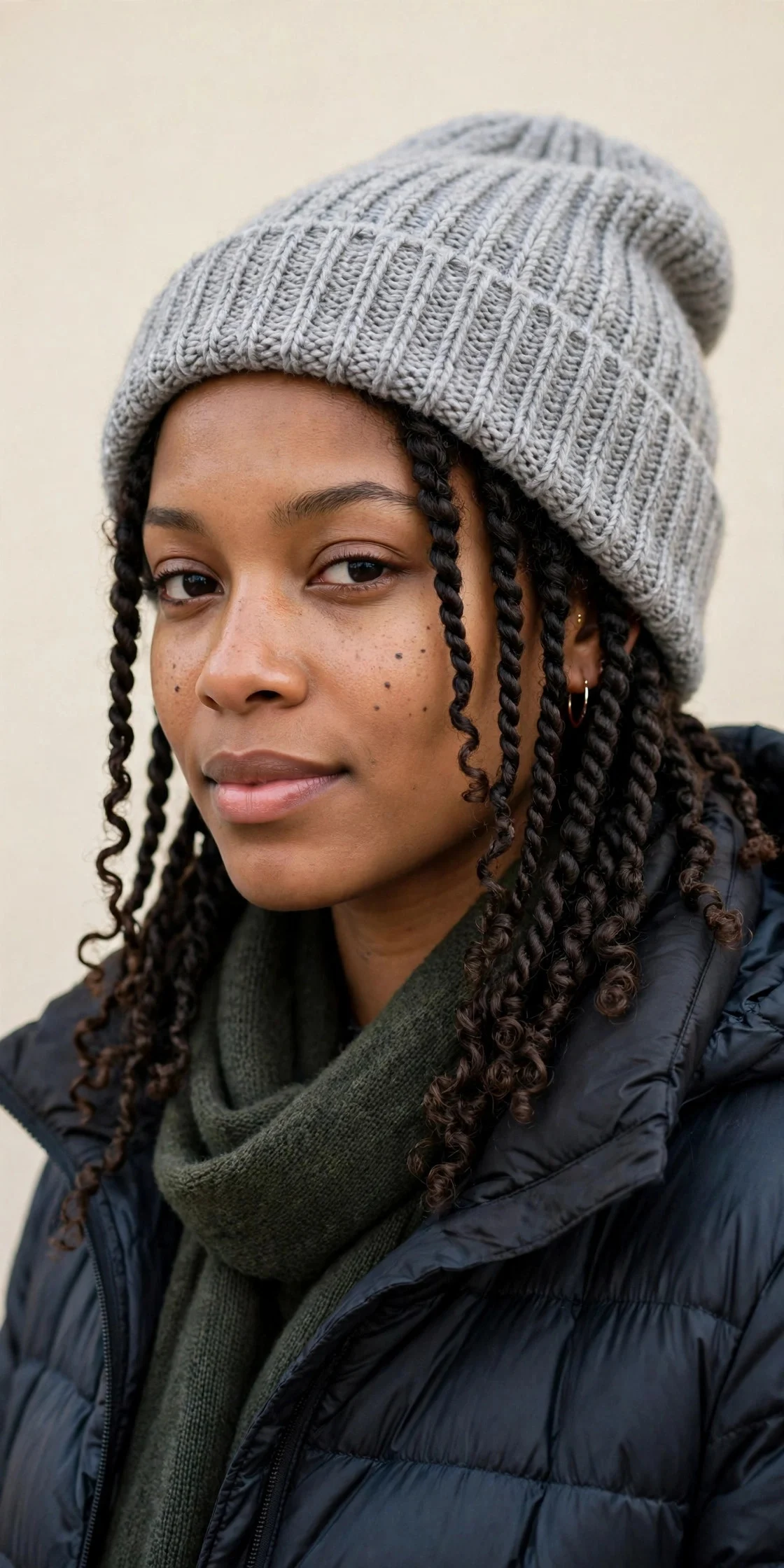
Two-strand twists are gentler than braids and easier to install at home. Section damp, moisturized hair into even parts, twist each section from root to tip, and seal the ends with a small amount of butter or cream. A satin-lined beanie protects the twists from wind and friction on cold mornings. This style suits natural and textured hair, and it doubles as a twist-out base later. Re-twist frizzy sections every few days to keep it neat. The drawback is longevity. Twists unravel faster than braids, especially in snow or rain, so expect about two weeks of wear.
4Crochet Faux Locs
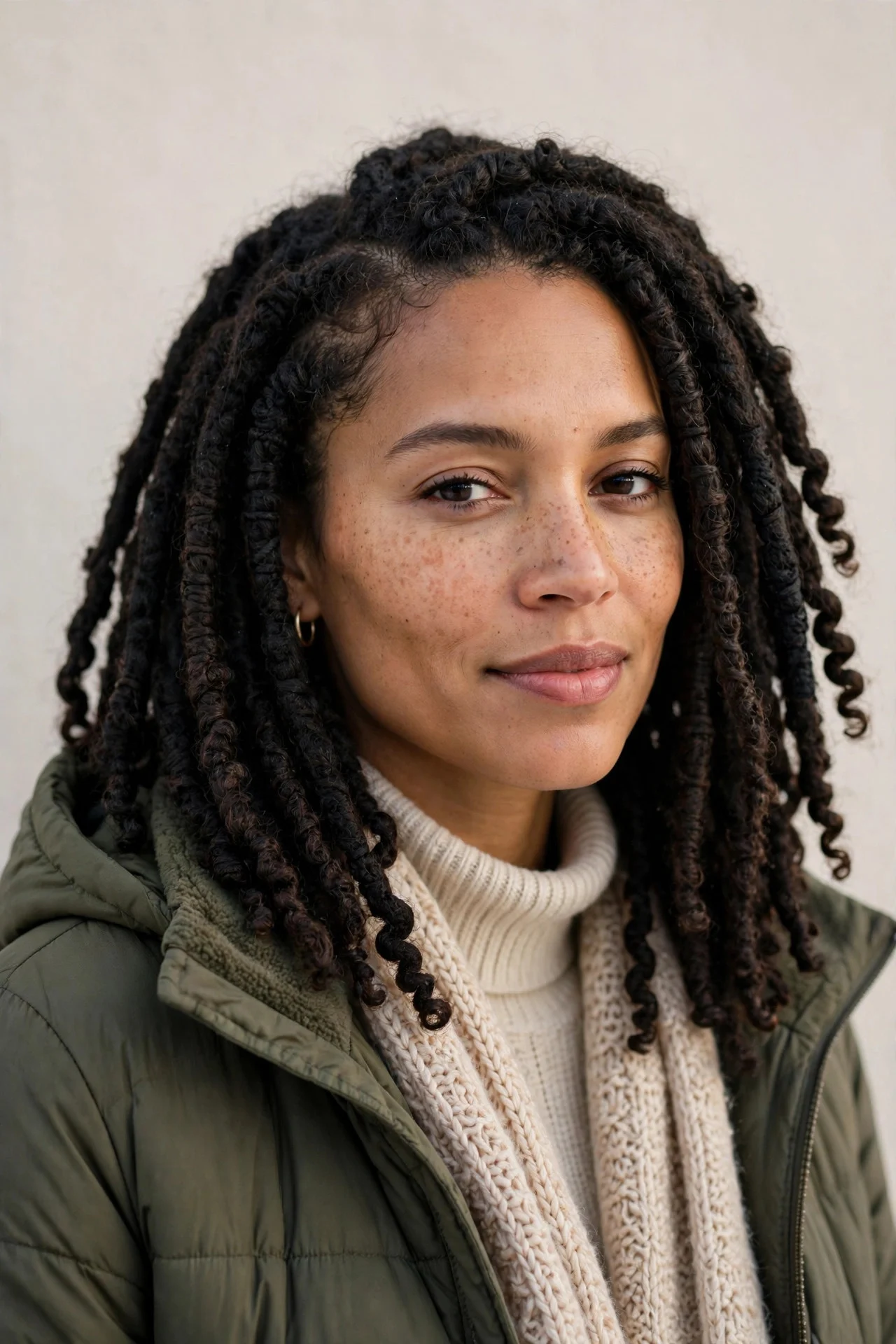
Crochet faux locs give the look of locs without the long-term commitment. Your own hair is cornrowed flat first, then pre-looped locs are crocheted through the braids with a latch hook. Ask for a lightweight brand, because heavy locs pull on the scalp and neck. This style suits anyone who wants instant length and a low-manipulation routine through winter. Scalp care is simple, with a light oil and a diluted rinse between washes. The drawback is removal. Taking out dozens of crochet locs takes patience, and rushing it can cause tangles and breakage.
5Flat Twists into a Low Ponytail
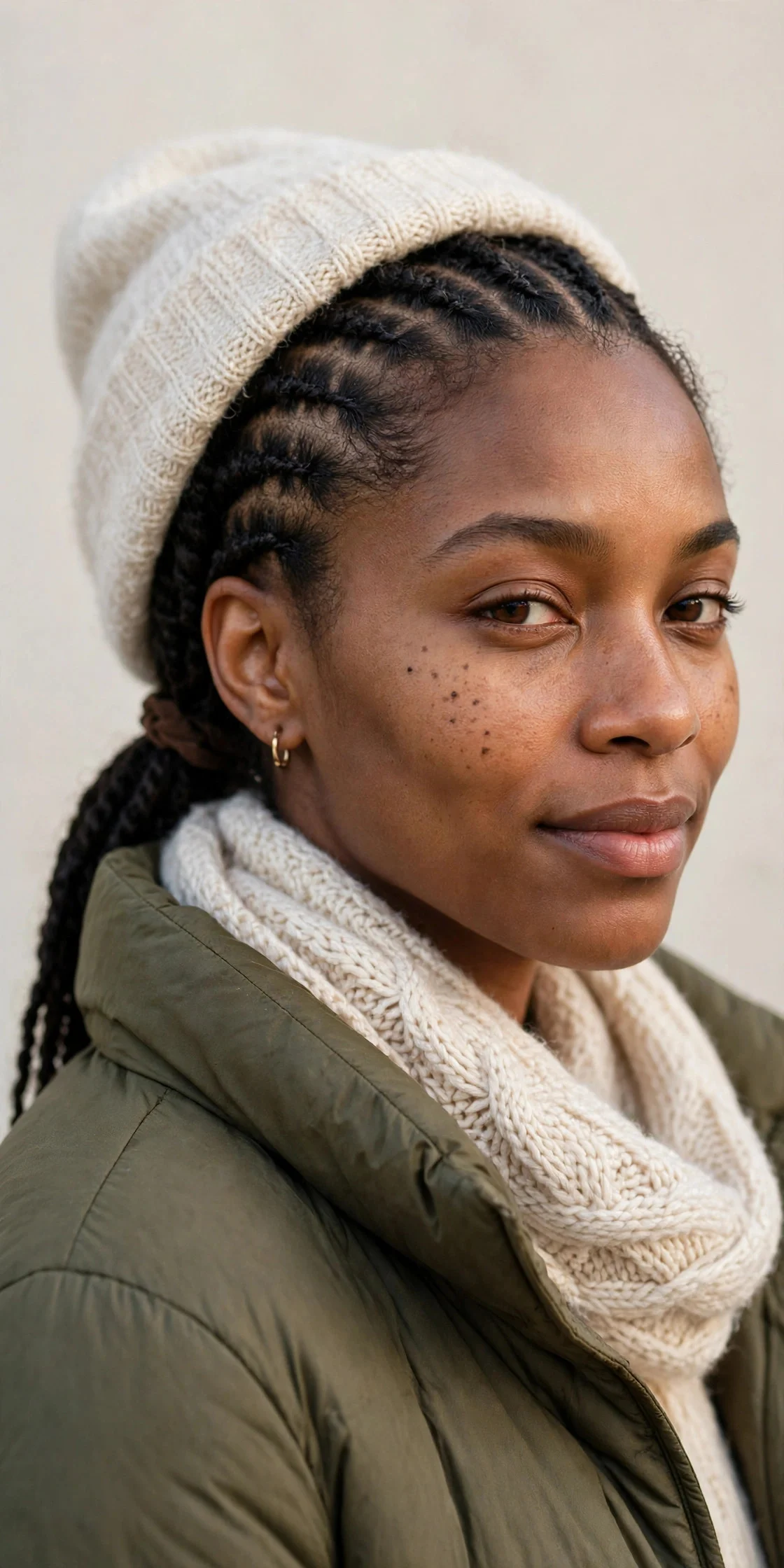
Flat twists lie close to the scalp and create a neat pattern that holds well under hats. Twist two sections along the scalp toward the back, then gather the remaining length into a low ponytail and wrap the ends in a silk scrunchie. This suits medium to long hair and works nicely for workouts or busy weekdays. Moisturize the scalp every two or three days and sleep in a satin bonnet. The drawback is the learning curve. Flat twists take practice to keep even, and uneven tension can leave parts looking messy after just a few days.
6Wig with a Braided Base
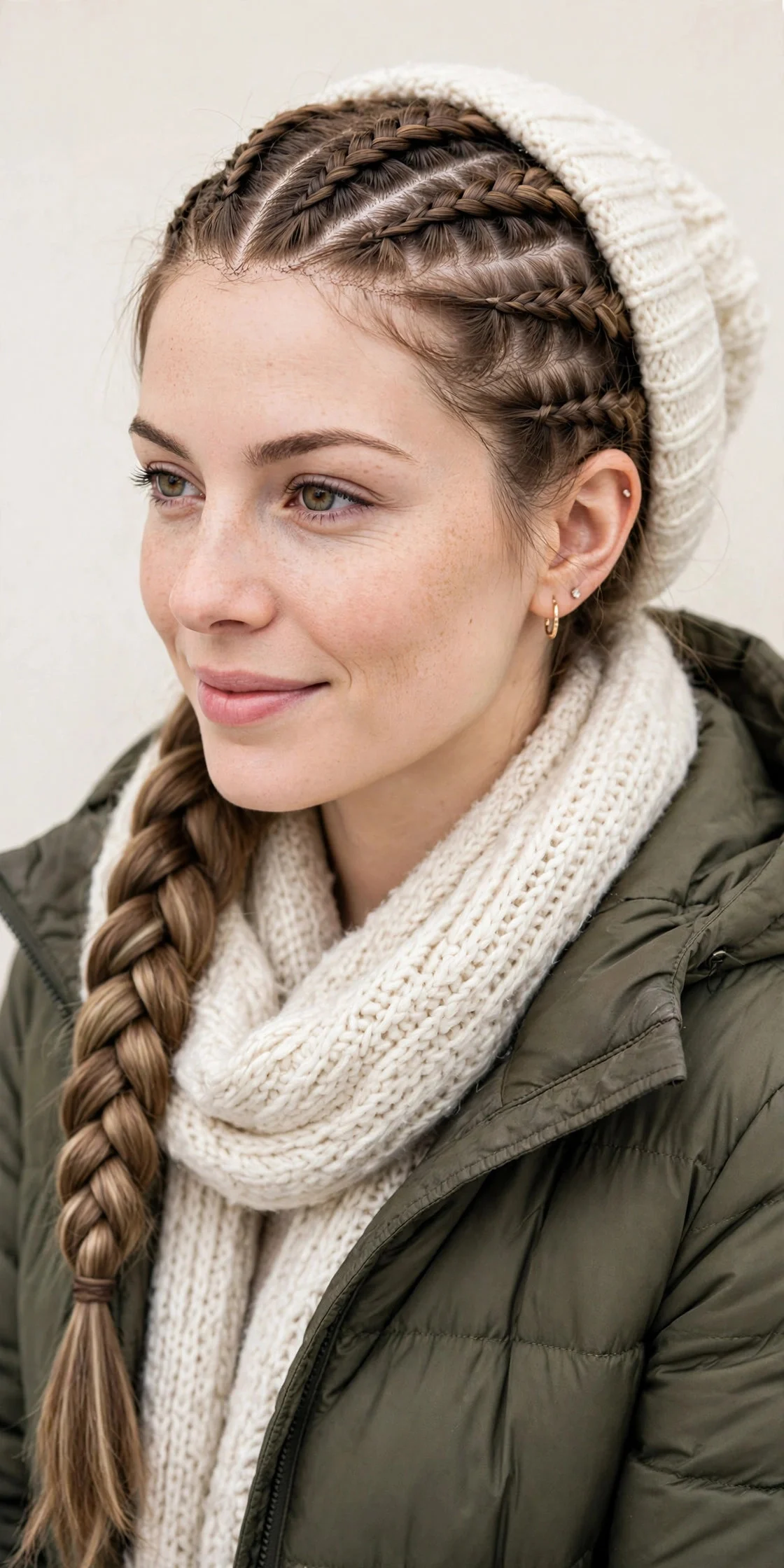
A wig is one of the simplest ways to protect your own hair all winter. Braid your natural hair flat underneath, wear a breathable wig cap, and choose a wig with a secure fit that does not need glue every day. Straight, curly, or bob styles all work, and you can change your look without heat on your real hair. Wash and condition your braids every one to two weeks and let your scalp breathe overnight. The drawback is cost and care. A good-quality wig is an investment, and a cheap one can look stiff, tangle fast, and need replacing mid-season.
7Cornrows with a Satin Scarf Wrap
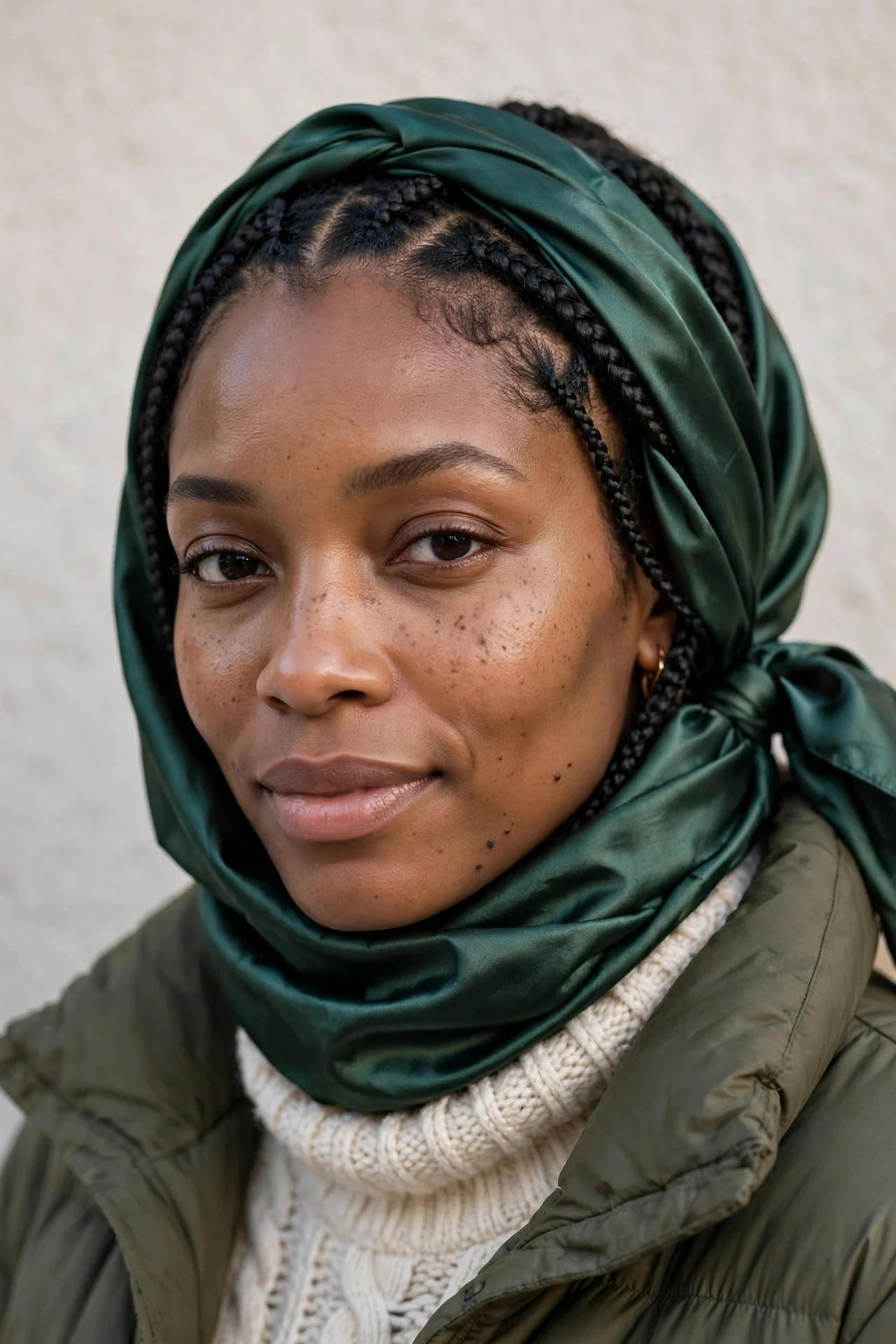
Cornrows keep hair fully controlled through wind, snow, and hat weather. Ask for straight-back or curved cornrows with comfortable, even tension and no pulling at the hairline. At night, wrap them in a satin scarf, and during the day, layer a satin-lined hat over them. This style suits coily and curly hair best and lasts two to four weeks with care. Keep the scalp clean with a gentle rinse and avoid scratching with sharp objects. The drawback is regrowth. As new growth appears, the style loosens and can look untidy, so plan a take-down date before it starts pulling.
8Chunky Rope Braid
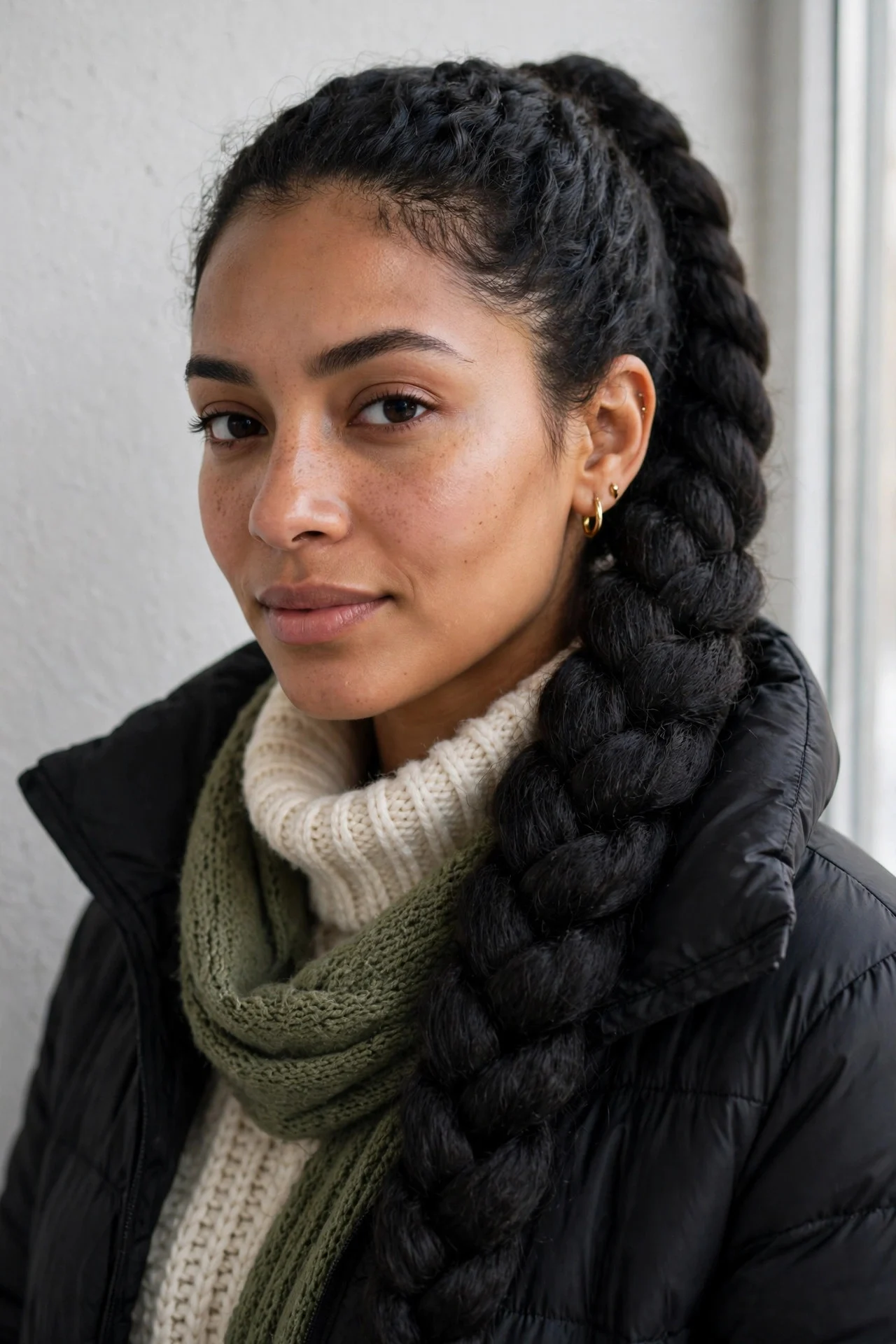
A chunky rope braid is quick, pretty, and kind to fragile ends. Divide hair into two sections, twist each section in the same direction, then wrap them around each other in the opposite direction and secure with a soft tie. This works well for long hair and for anyone who wants a protective style without a salon visit. A little oil on the length keeps it smooth, and the braid sits neatly under a coat hood. The drawback is hold. Fine or silky hair may slip out of a rope braid, so use a light styling cream and re-braid the bottom section every couple of days.
9Bantu Knots for Short to Medium Hair
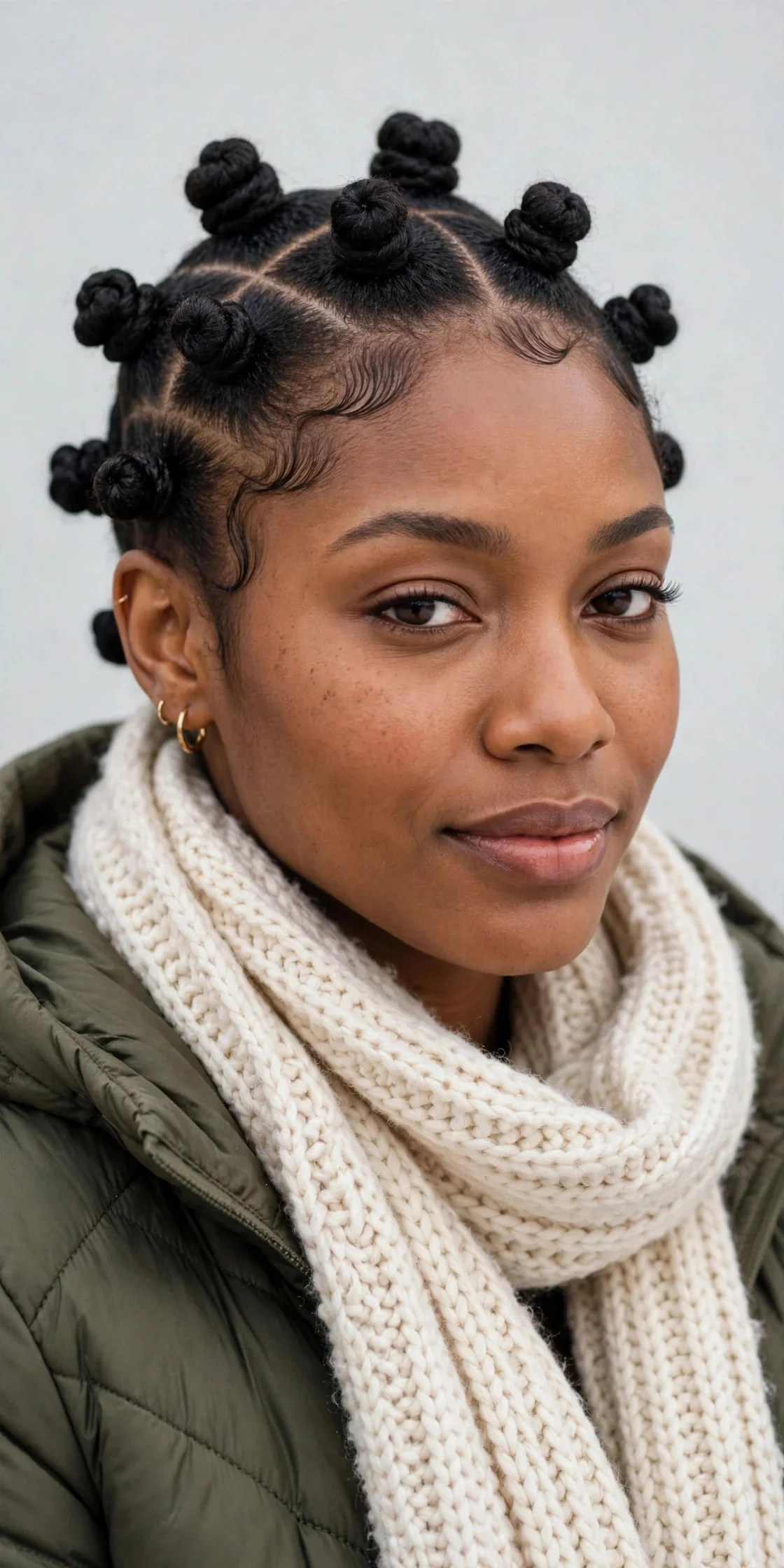
Bantu knots are small coiled buns that protect the ends completely and look striking on their own. Section hair into small squares, twist each section, then coil it into a knot and tuck the end underneath. This style suits short to medium hair and creates a defined curl pattern when taken down later. Sleep in a satin bonnet and refresh the scalp with a light mist. The drawback is comfort. Knots that are wound too tightly can ache, especially overnight, so keep them medium-sized and avoid pulling the roots taut.
10Halo Braid Crown
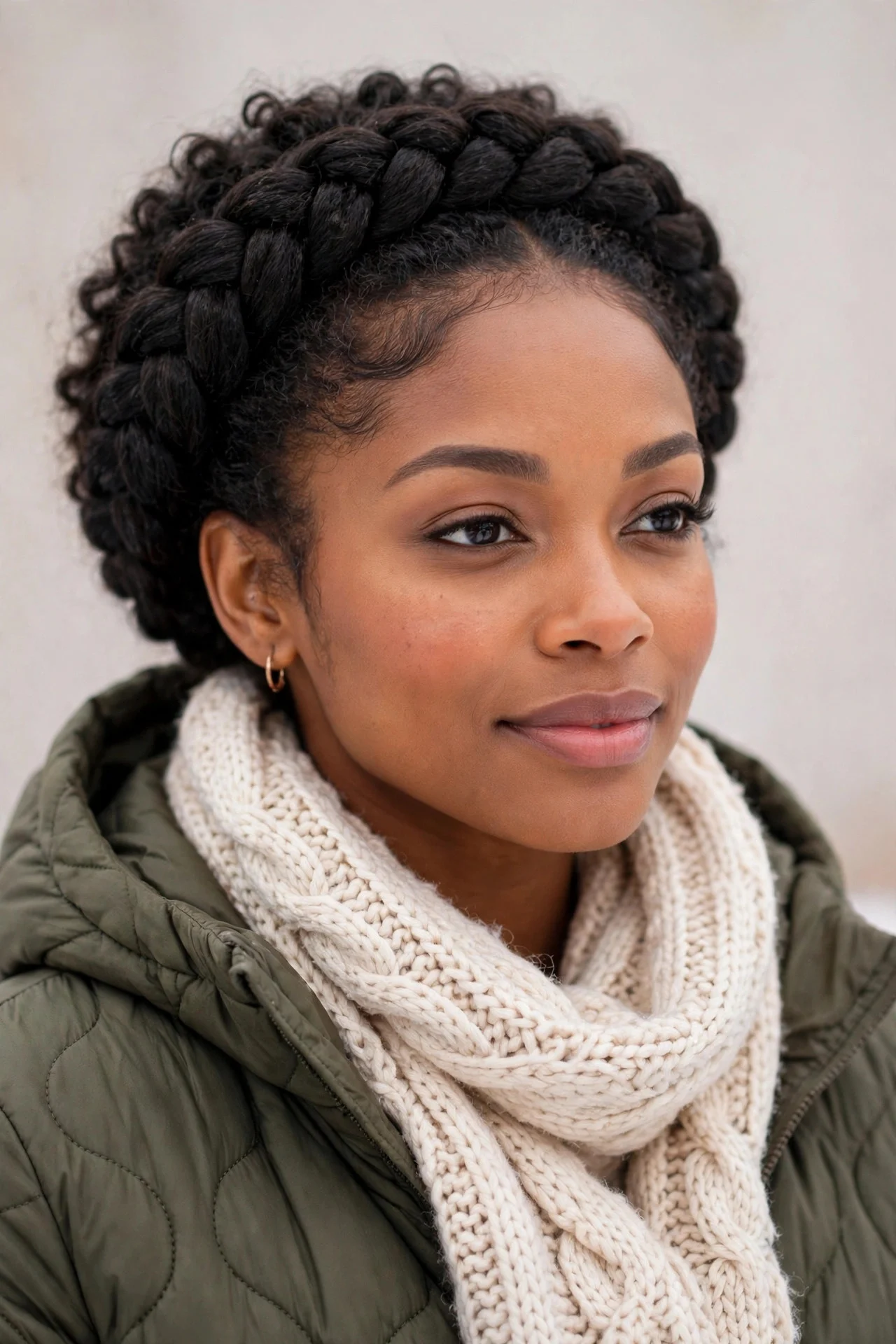
A halo braid wraps around the head like a crown and keeps every strand off your neck and shoulders. Ask your stylist for a Dutch or French braid that circles the head, with the tail tucked and pinned at the back. This suits medium to long hair and looks polished for events, weddings, and holiday gatherings. A light hold spray keeps flyaways down without making the braid stiff. The drawback is durability. A halo braid is a one-to-three-day style for most people, so it is best saved for occasions rather than a full winter routine.
11Fishtail Braid with Oiled Ends

A fishtail braid looks detailed but uses a simple repeating pattern. Split hair into two sections, take a thin piece from the outside of one side, cross it to the inside of the other, and repeat down the length. Oil the ends before you start so they stay sealed inside the braid. This suits long, straight, or wavy hair and works well as a weekend style. Sleep with the braid loose to avoid dents and frizz. The drawback is time. A neat fishtail takes longer than a regular braid, and rushing it leaves uneven sections that unravel by evening.
12Low Chignon with a Knit Headband
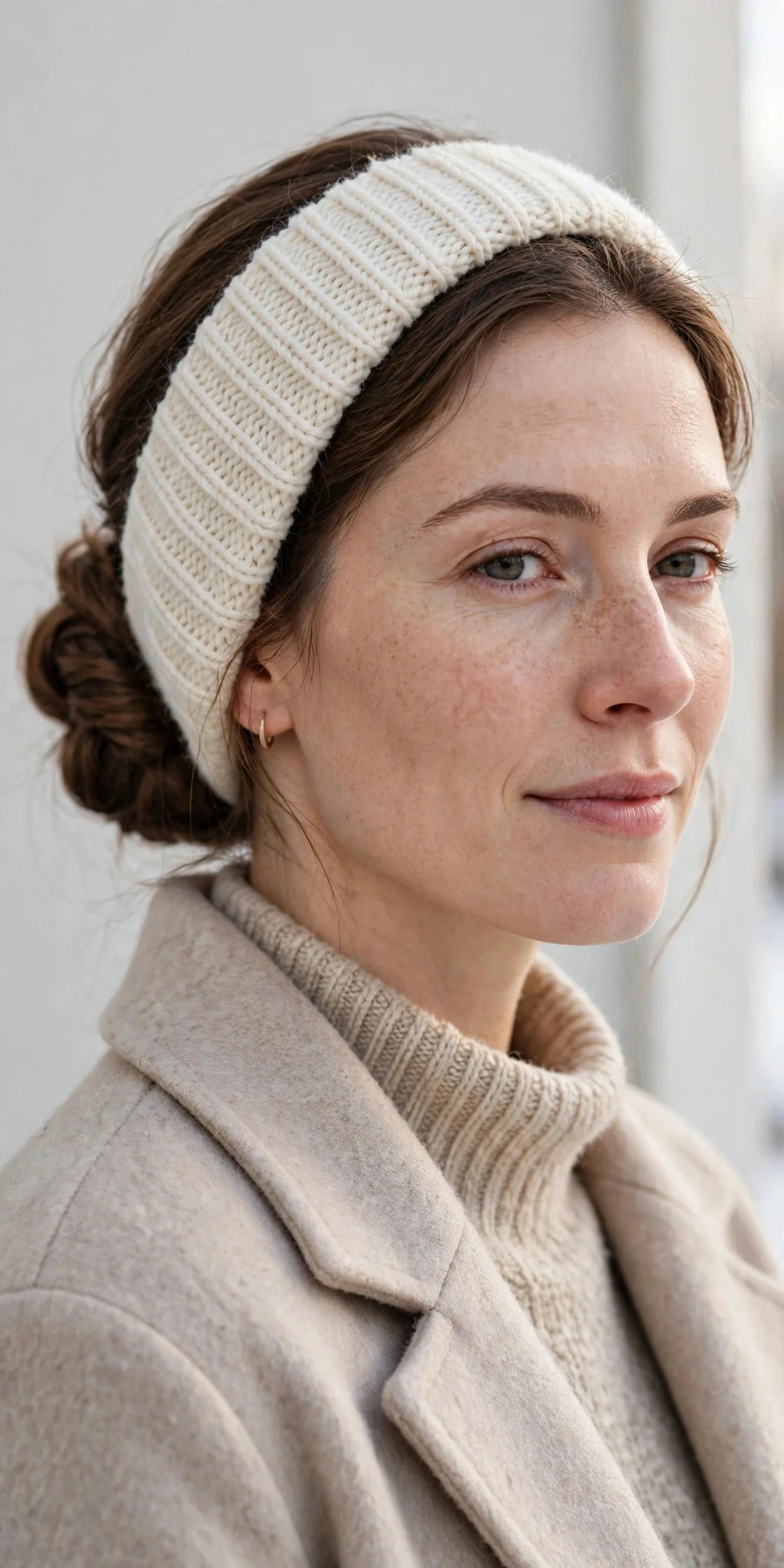
A low chignon is a soft, rolled bun that sits at the nape and pairs well with winter layers. Gather hair low, twist it gently, coil it into a bun, and pin it securely with bobby pins that match your hair color. A wide knit headband worn over the ears keeps the style neat and adds warmth on cold walks. This suits straight and wavy hair and flatters most face shapes. The drawback is staying power. Fine hair may slip out of a chignon during a long day, so use pins generously and carry two spares in your bag.
13Passion Twists with a Middle Part
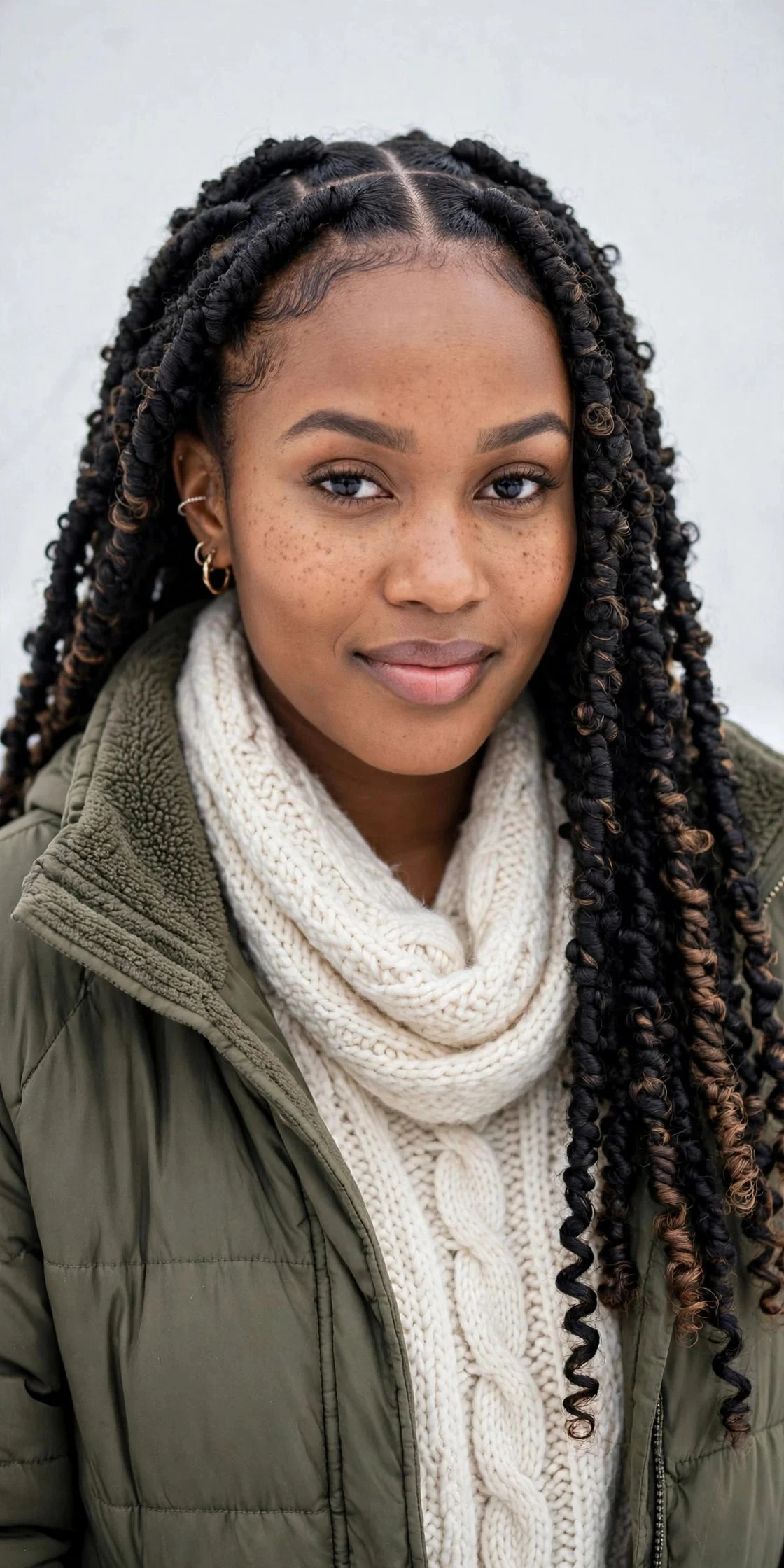
Passion twists are soft, bohemian twists with a slightly wavy texture that looks natural and full. They are usually installed over cornrows or individual twists, using lightweight water-wave hair for movement. Ask for a middle part and a length that does not weigh down your neck. This style suits textured hair and anyone who wants a relaxed, romantic winter look. Keep the scalp moisturized and avoid heavy products that cause buildup. The drawback is frizz. Passion twists can look fuzzy after two weeks, especially under hats, so a satin lining is almost essential.
14Silk Press with Ends Sealed and Pinned
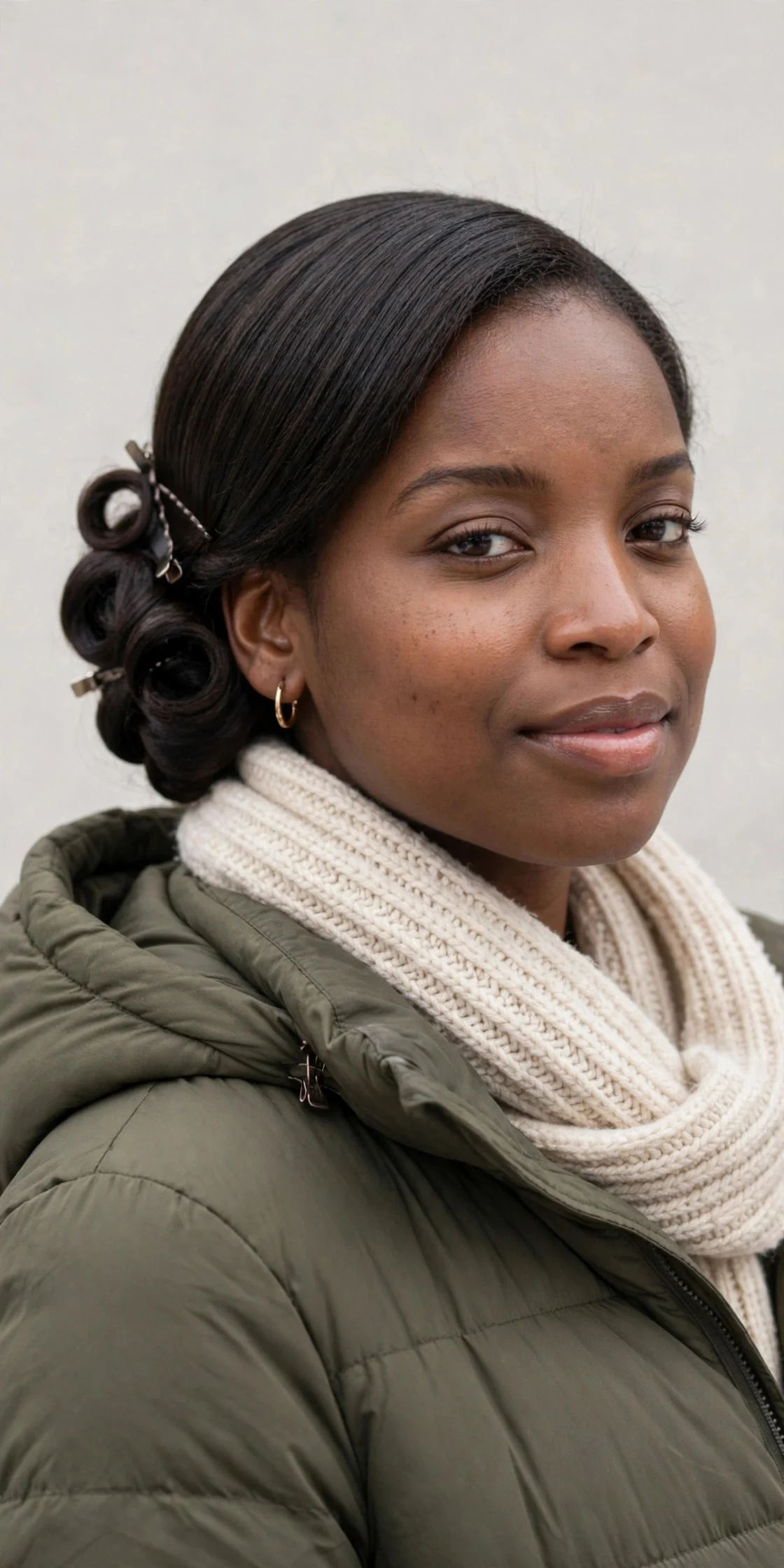
A silk press is not a classic long-term protective style, but with the right care it can carry you through a cold spell. Ask your stylist for a gentle press, a heat protectant, and ends that are trimmed and sealed. At night, wrap hair in silk and pin the ends under so they never rub against cotton. This suits natural hair that is heat-trained or straight hair that wants a smooth finish. The drawback is weather risk. Snow, rain, or steam can revert the press quickly, so check the forecast and keep a backup style ready for wet days.
Hair care and styling tips
Start every protective style with clean, deep-conditioned hair, because dry hair breaks faster once it is braided or twisted. Seal in moisture with a cream or butter, then an oil, and repeat that layering on your scalp between washes. Line every winter hat, beanie, and hood with satin or silk, since wool and cotton pull moisture and rough up the hair surface. Avoid installing any style too tightly, and take it down on time rather than stretching it an extra month. Finally, give your hair a rest week between installs with gentle washing, conditioning, and a trim if the ends look thin.
How long can I keep a protective style in during winter?
Most braids, twists, and crochet styles last two to six weeks, depending on the style and your growth rate. Take it down when the roots look fuzzy, the scalp feels itchy, or the style starts pulling. Keeping a style in too long causes matting at the roots and breakage during removal.
Should I wash my hair while it is in braids or twists?
Yes, but gently. Use diluted shampoo on the scalp, rinse carefully, and let the style air dry fully before covering it with a hat. Washing every one to two weeks keeps buildup down. Never go to bed with soaking wet braids, since trapped dampness can cause odor and scalp irritation.
What is the best way to stop winter hat frizz?
Line your hats with satin or wear a satin bonnet underneath. Smooth a small amount of oil or cream over the surface before putting a hat on, and avoid taking the hat on and off repeatedly. When you come indoors, pat the style back into place rather than brushing it aggressively.
Can fine or thin hair wear protective styles?
Yes, with lighter options. Choose loose twists, a low bun, a wig with a flat base, or a soft braid rather than heavy extensions or tight cornrows. Keep the tension gentle at the hairline, and avoid styles that add a lot of weight, since that is what causes thinning over time.
How do I protect my ends if I do not want extensions?
Keep the ends tucked in a bun, chignon, or braid, and seal them with a drop of oil or butter each morning. Trim split ends before winter starts, sleep in satin, and avoid letting your ends rub against coat collars and scarves. Even a simple low bun counts as protection if the ends stay hidden.
Keep exploring
If you liked these protective hairstyles for winter, check out winter hairstyles for cold weather, braids for short hair, french curl braids for more ideas.