If you have a bob or a pixie and someone tells you braids aren't an option, they haven't tried the right ones. The truth is simpler than most styling guides admit: you don't need long hair to braid, you need the right braid. The techniques that work on a bob are different from the ones that work on waist-length hair, and once you know the difference, a whole world of styles opens up.
Short hair braids are less about long rope-like plaits and more about placement. A braid along the crown, a twist pinned at the temple, a mini plait woven into the side of a pixie. These are the styles that actually hold on shorter lengths, and each one below includes how to ask for it, who it suits, and what the daily reality of wearing it looks like.
1Crown Micro-Braids
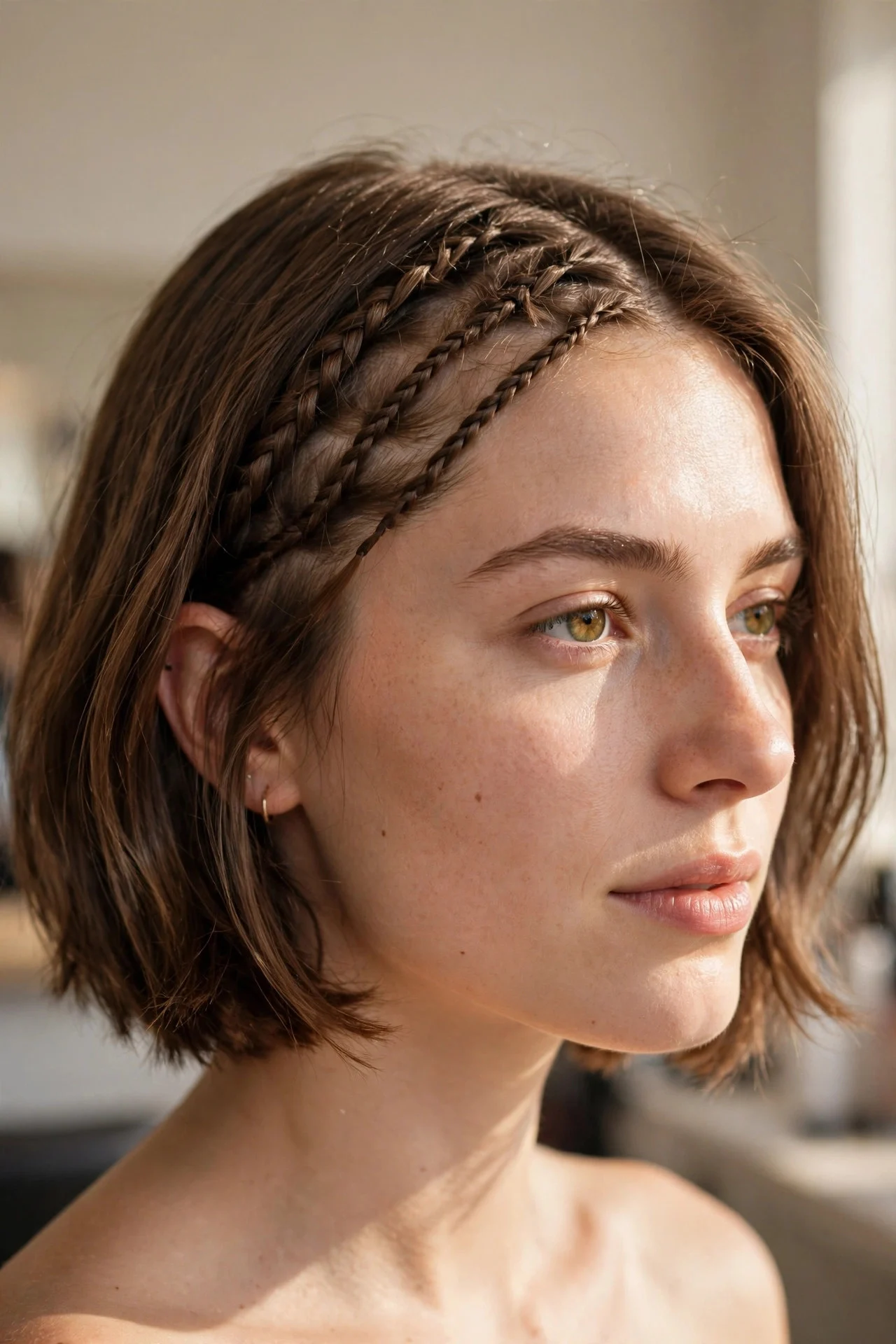
The most reliable braid for short hair, full stop. Tiny pencil-thin braids worked into the front section of a bob, starting at one temple and traveling across the forehead to the opposite ear. Ask your stylist for a sectioned micro-braid using only the top two inches of hair. It suits oval, round, and heart-shaped faces because it opens up the face while adding interest at the hairline. Sleep with a silk scarf to keep them smooth, and undo them every two or three days so the hairline doesn't get stressed. The honest drawback is time: even small, these take 15 to 20 minutes to braid neatly, so they aren't a rushed-morning style.
2Side-Swept Dutch Braid
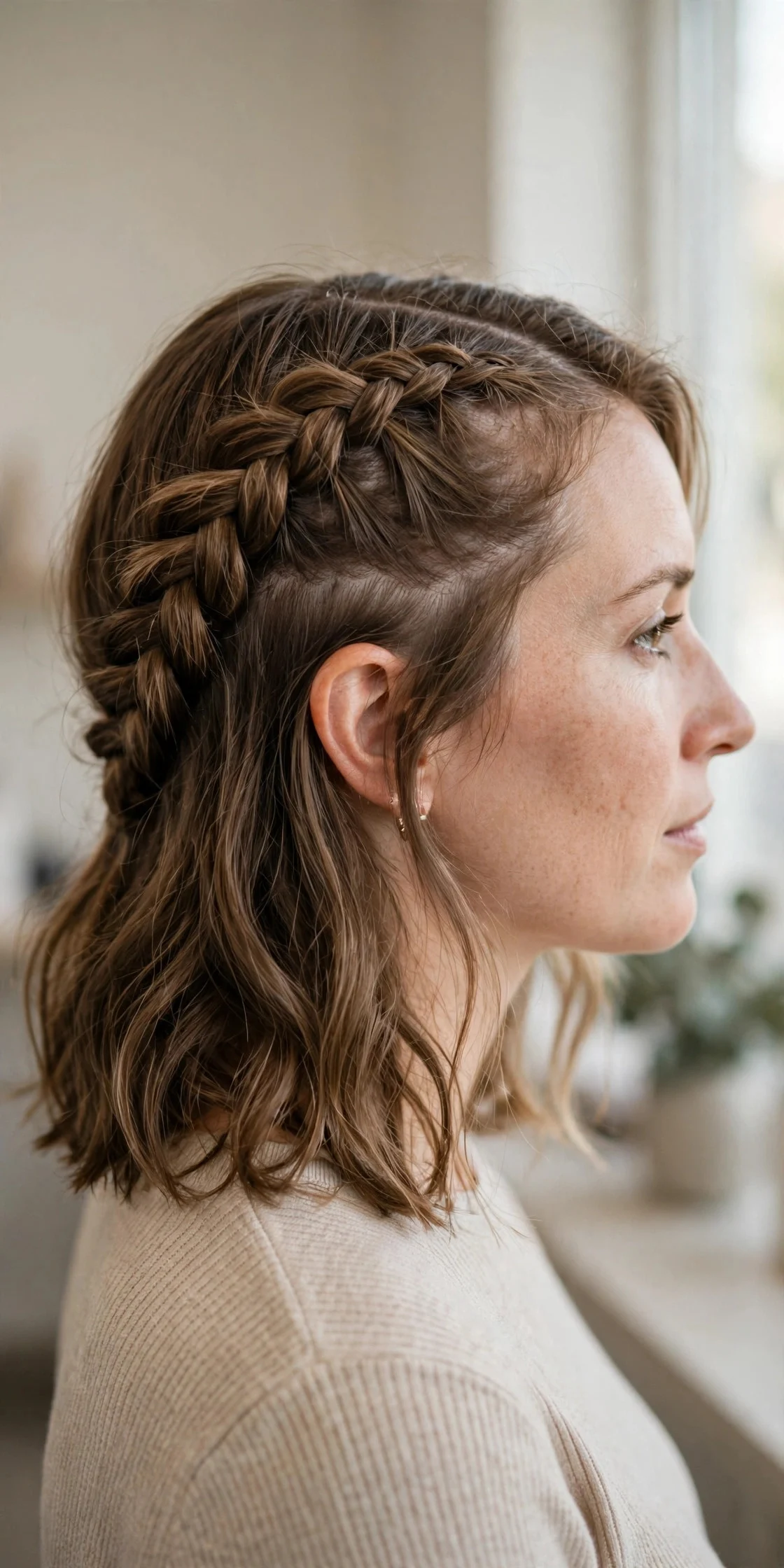
A Dutch braid sits on top of the hair instead of tucked inside it, which means it grabs as it goes and needs almost no tail length. Part deeply on one side, start the braid above the ear on the fuller side, and work it back toward the nape, feeding hair in from the part as you travel. It suits thick and medium hair best, since fine hair slips out within hours. Ask your stylist to show you the grip technique: small sections, even tension. It lasts a full day with light-hold spray. The catch is that it unravels at the ends on fine or freshly washed hair, so day-two hair or dry shampoo genuinely works better for this one.
3Front Twist Braid
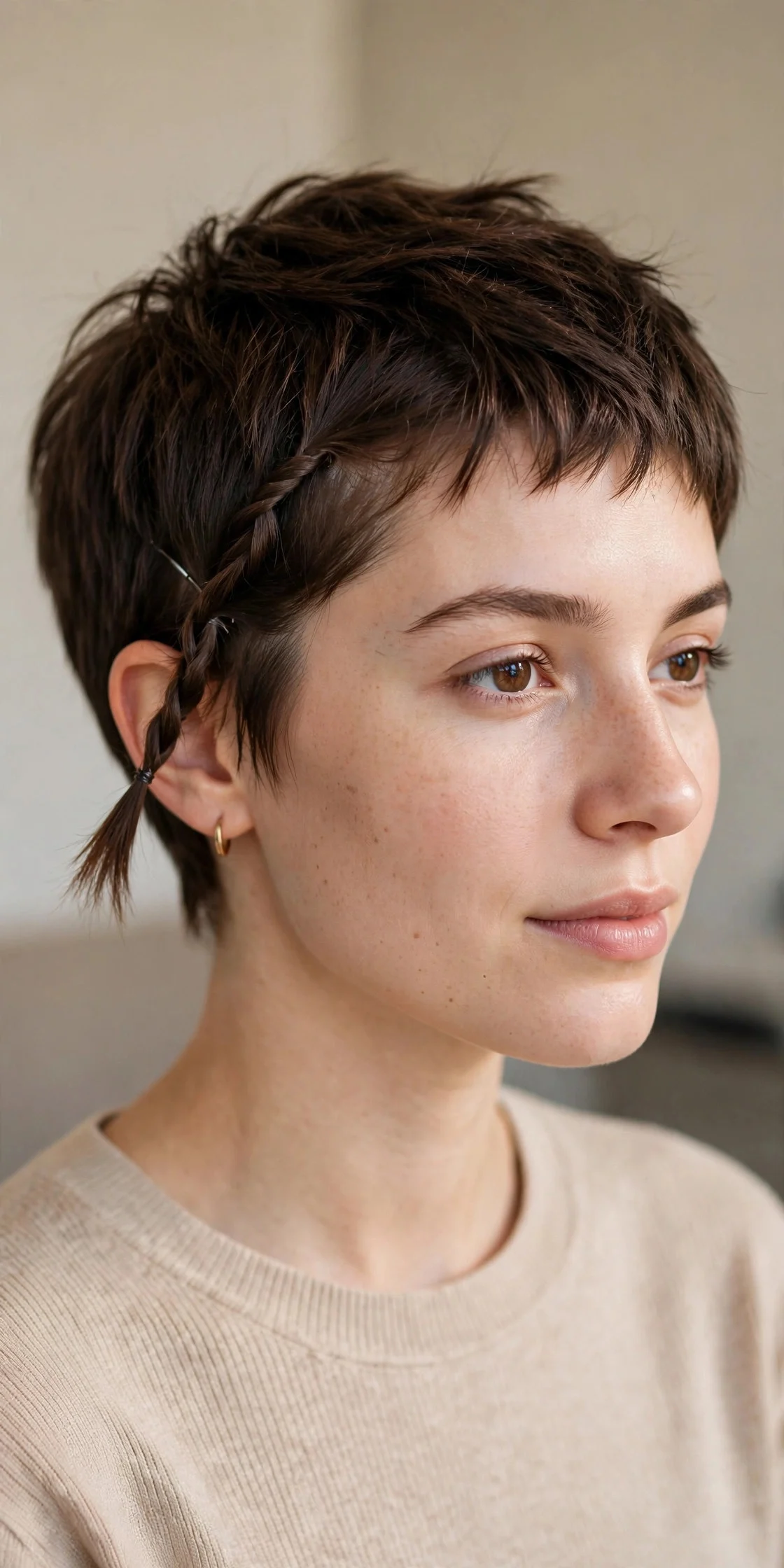
Technically a twist rather than a true braid, but it earns its place because it works on hair too short for almost anything else, including some pixies. Take a front section about two inches wide, split it in two, twist each strand one direction, then wrap them around each other the opposite way and pin behind the ear. That two-direction trick is what locks it. It suits pixies and short bobs that need a little styling without heat. A couple of bobby pins crossed in an X hold it all day. The drawback is fragility. It's the least secure style here, so save it for evenings and events, not workouts or windy commutes.
4Halo Braid for Bobs
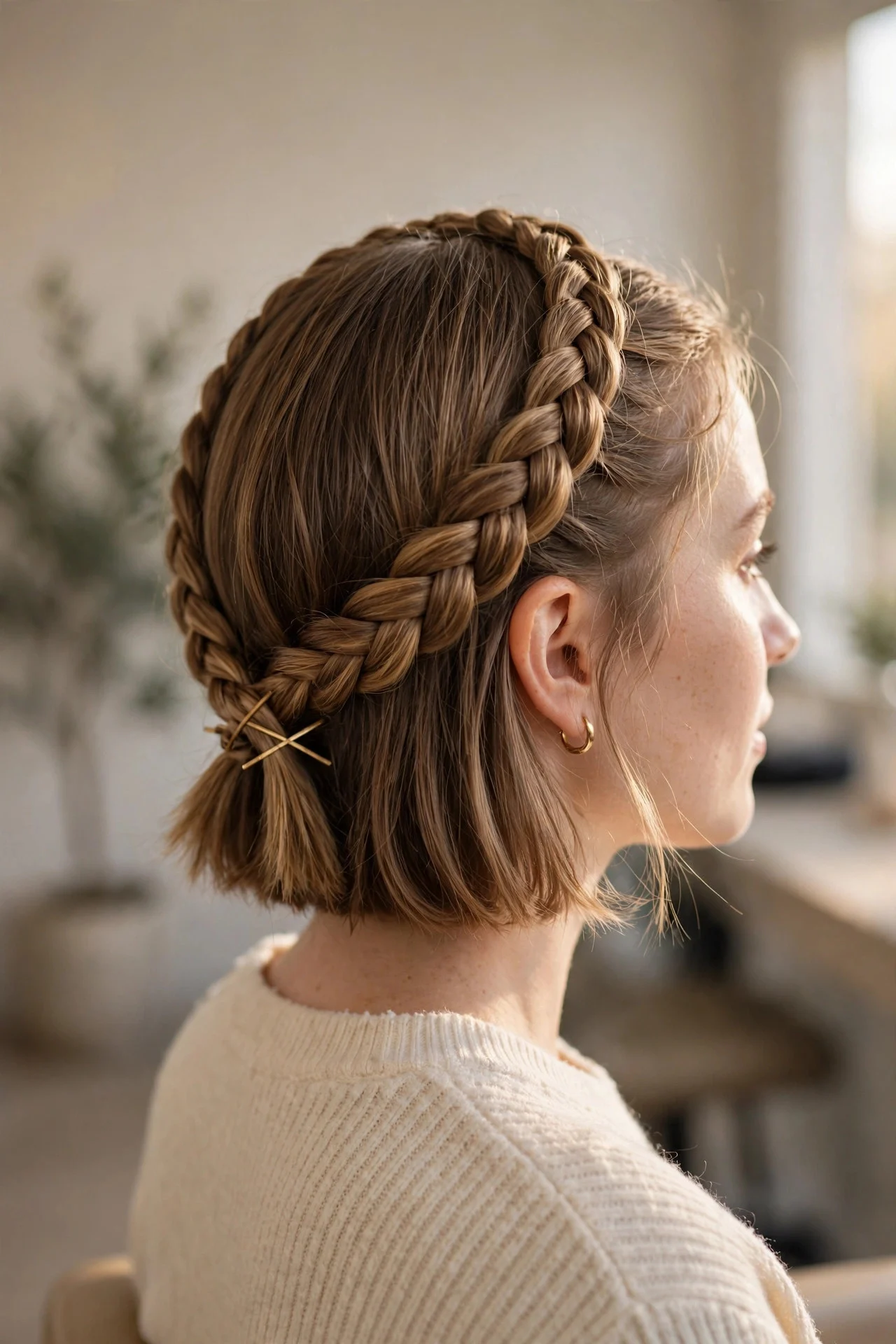
A halo braid circles the head like a headband, and on a bob it's one of the most romantic looks available. The trick for short hair: two Dutch braids, one per side, traveling from the temples around to the back, then the tails crossed and pinned flat into each other. Ask for a braided halo kept close to the head so nothing sticks out. It suits round and square faces well because the horizontal line breaks up the face shape. Upkeep is moderate; it stays neat one day, maybe two with pinning touch-ups. The reality check is that it's hard to do on yourself the first few times, so budget a practice session or a salon visit.
5Accent Waterfall Braid
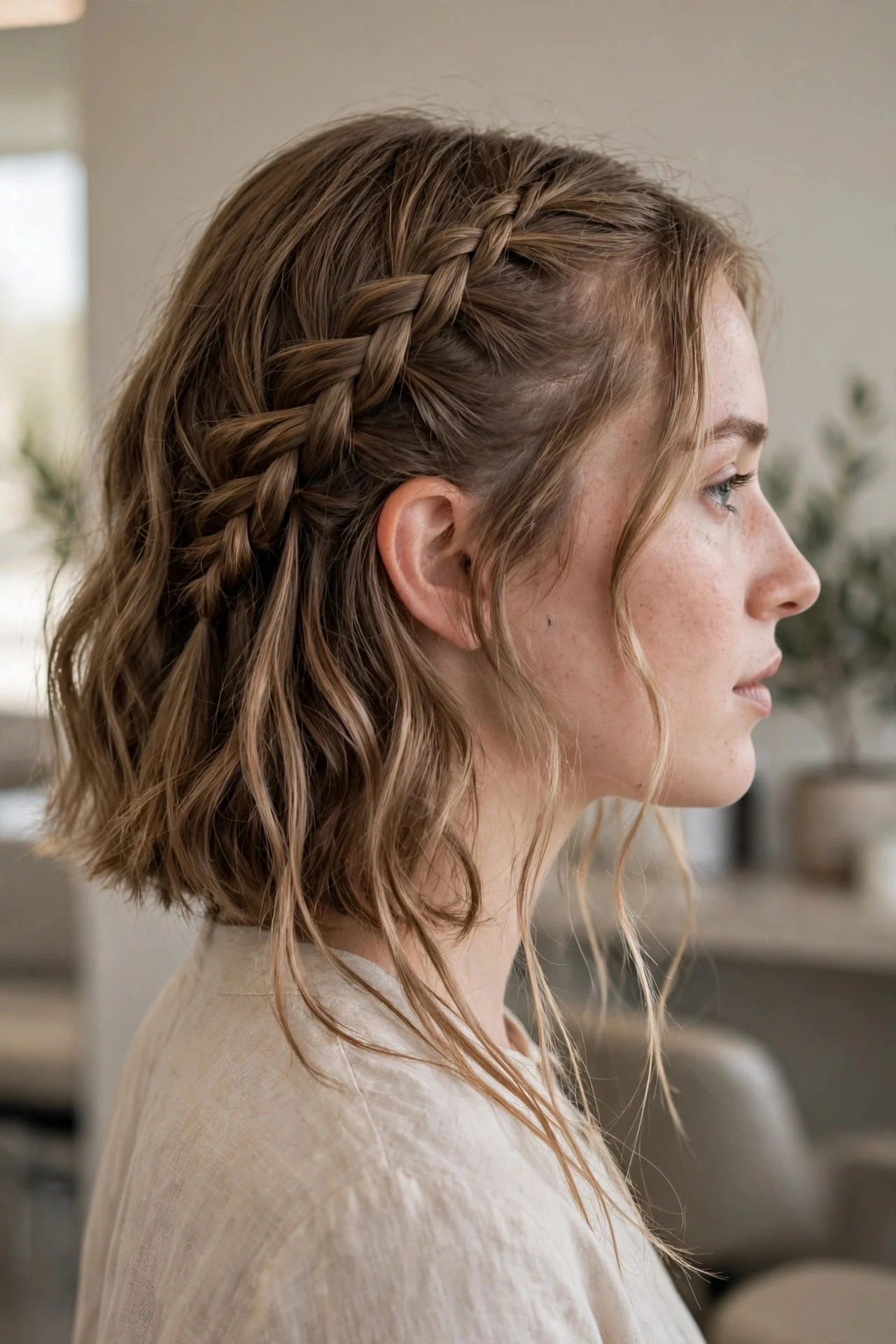
The waterfall braid drops a strand each time you cross over, which means it needs very little length to look intentional. On a bob, work it from one temple back toward the nape, slightly downward, letting short pieces fall out as the design demands. It suits fine and medium hair, and it's beautiful on textured or wavy bobs because the dropped strands blend into the natural wave. Ask for a loose waterfall with the drops left soft rather than pulled tight. It holds through a workday with texture spray but won't survive serious activity. Honest verdict: a pretty-hours style, perfect for dinner or photos, not for the gym.
6Mini French Braid Pigtails
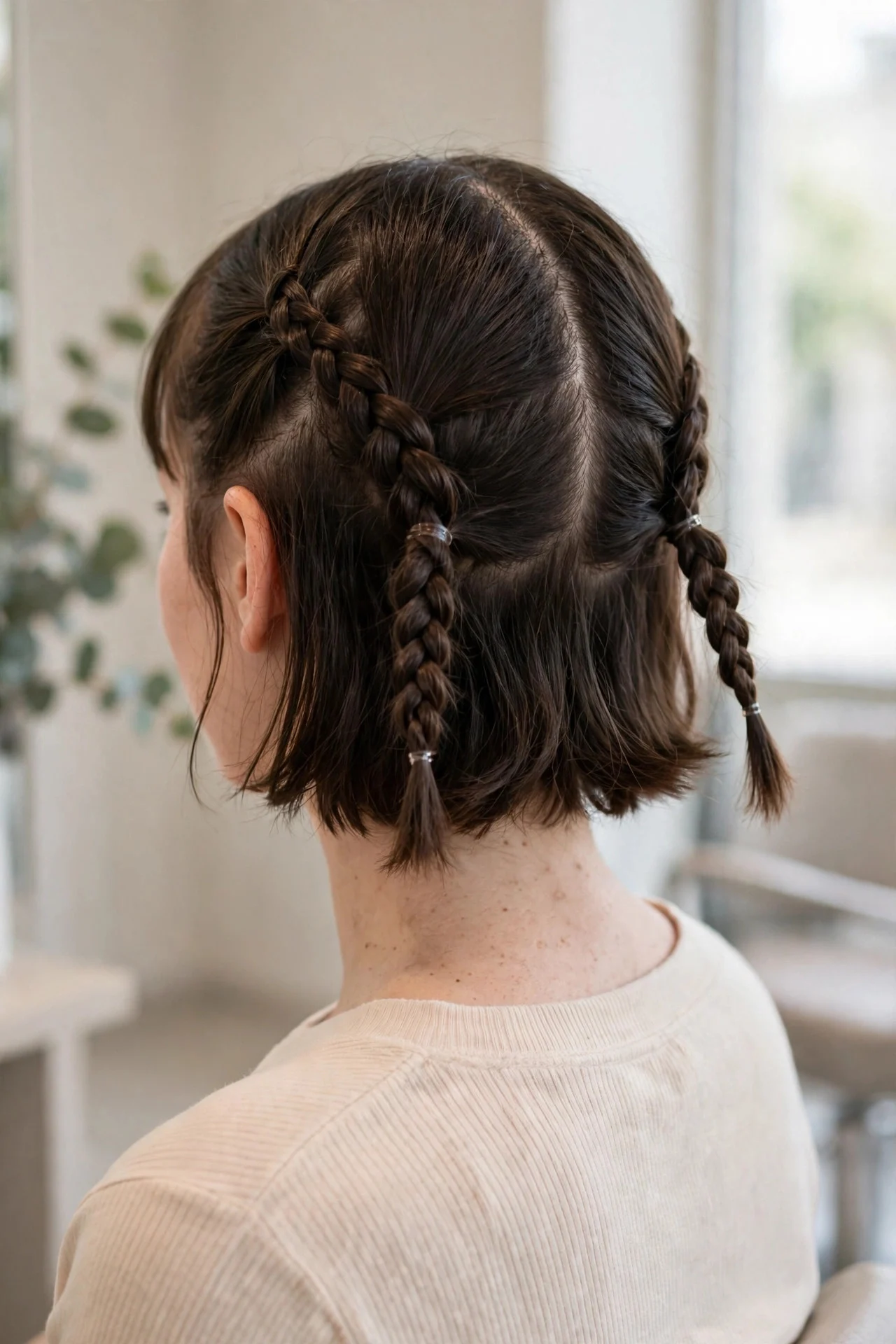
Two small French braids worn as low pigtails give short hair a playful energy that one central braid can't match. Part down the middle, French braid each side from the hairline back, and tie off low at the nape or behind the ears depending on length. It suits straight and slightly wavy hair; very curly hair needs smoothing first or the braids frizz out fast. The style holds well because the weight splits between two braids, and it lasts a full day easily. Ask your stylist for a practice run if the middle part is new to you. The drawback is the mirror-image issue: two even braids take real practice, and the first attempts will look lopsided.
7Bubble Braid Ponytail
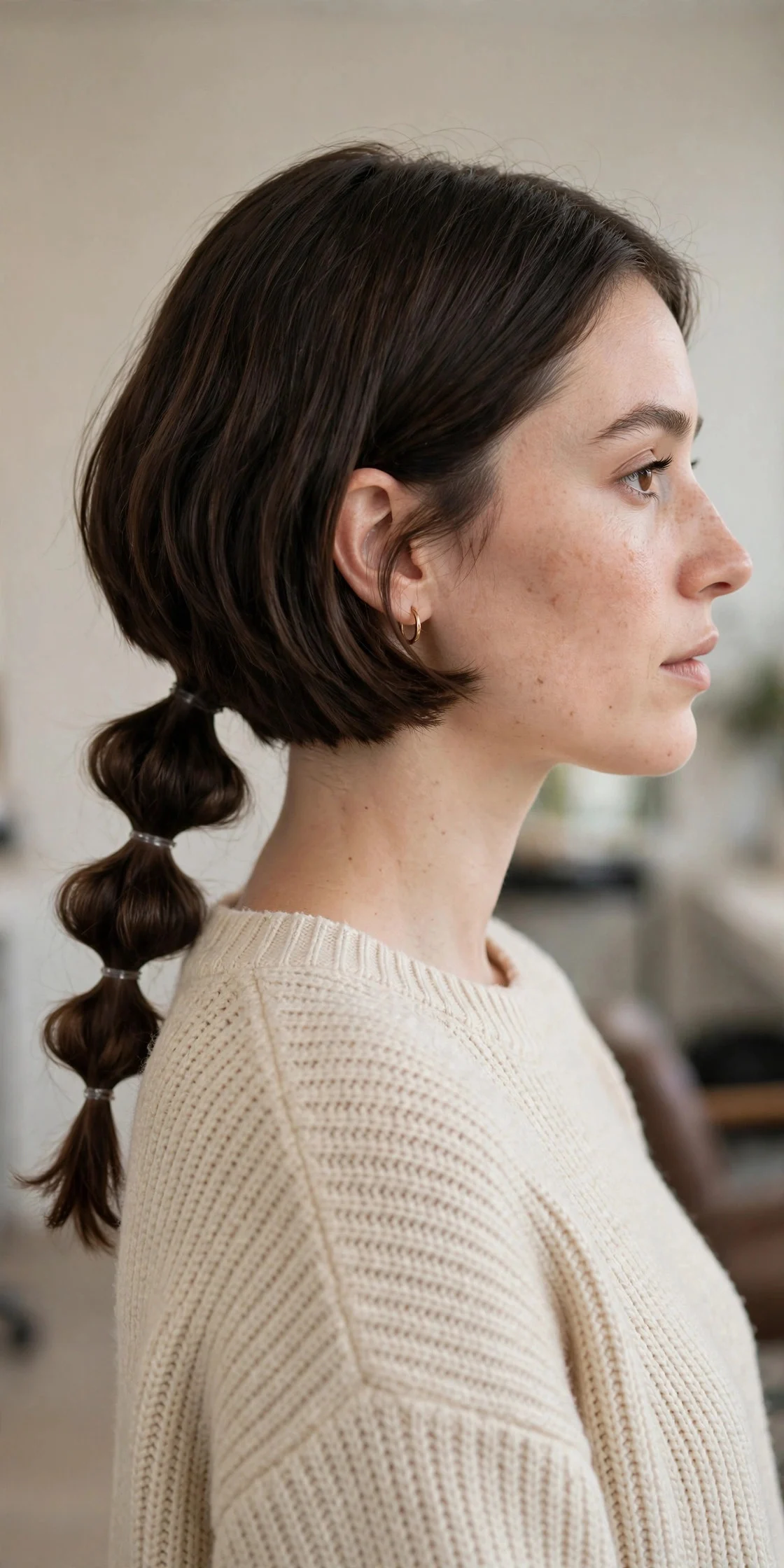
The bubble braid isn't a braid at all, which is exactly why it's short-hair friendly. Pull hair into a small ponytail or half-ponytail, add elastic bands every inch or so, and gently puff out each section between elastics. On a bob the bubbles sit close to the head and look polished rather than costume-y. Ask for elastic spacing matched to your length, usually three to four bubbles total. It suits thick hair best since you need density for full puffs, though backcombing helps finer hair. It's a ten-minute style. The drawback is elastic damage: repeated tight elastics on the same spots cause breakage over time, so vary placement and never sleep in them.
8Side Headband Braid

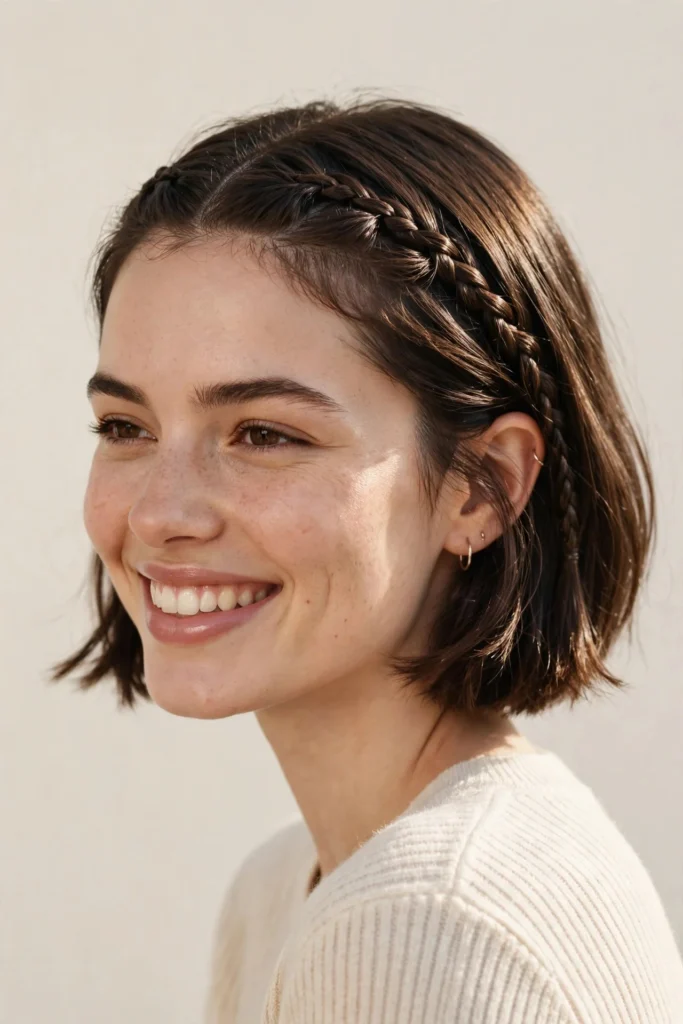
This one frames a bob like jewelry. Starting above one ear, braid a small three-strand plait forward along the hairline toward the other ear, gathering tiny sections as you go, and pin it behind the far ear. The result reads as a delicate braided headband across the forehead. Ask your stylist to keep it tight to the scalp so it doesn't lift or gap. It suits heart and oval faces beautifully, and it's one of the best picks for fine hair because the braid uses so little hair that thin sections don't look sparse. It holds all day with two crossed pins. The drawback is scalp visibility: on very short bobs the parting lines behind the braid can look stark, so keep dry shampoo handy.
9Fishtail Accent Braid
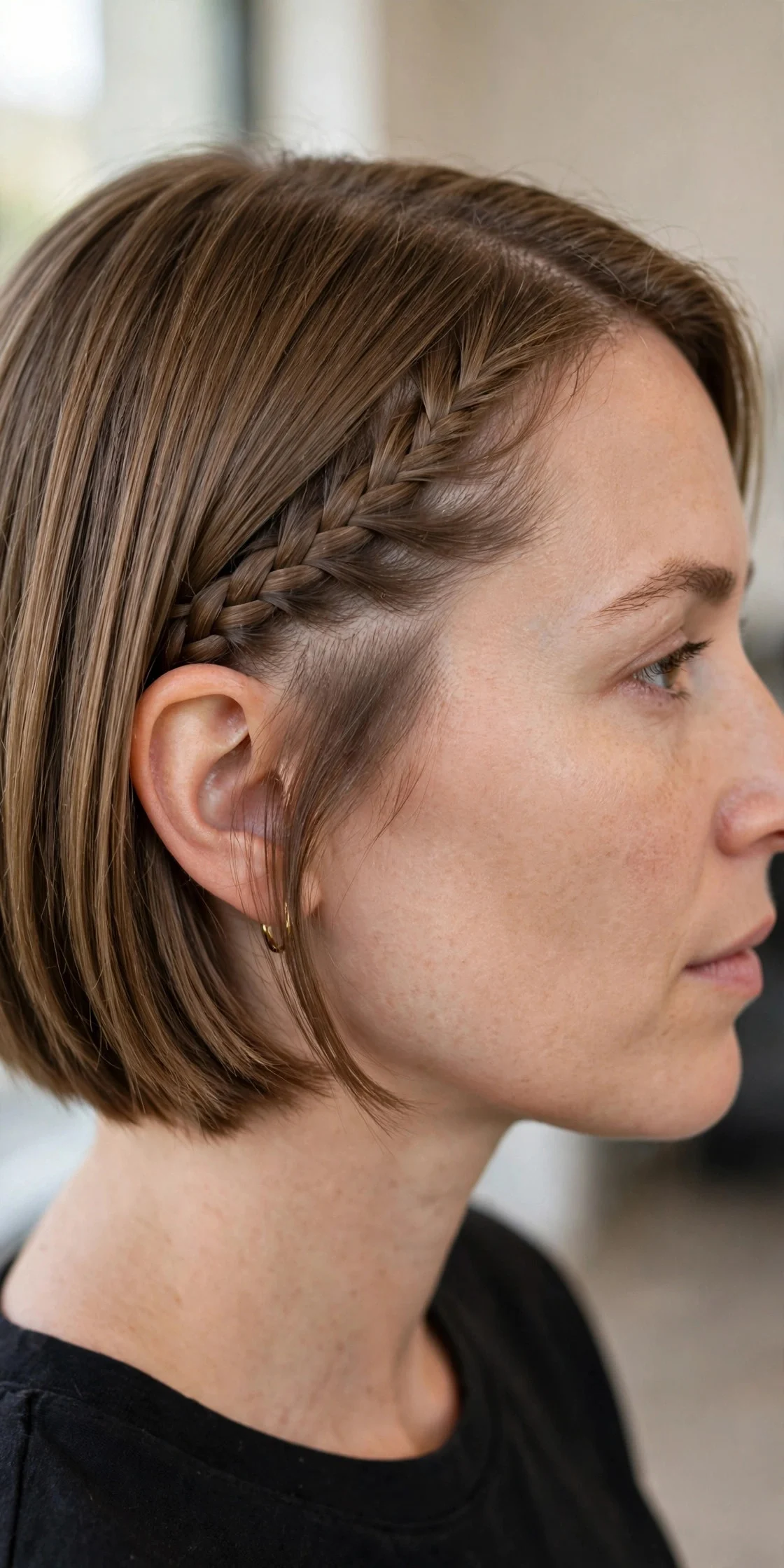
A full fishtail needs length, but a fishtail accent woven into the side of a bob is one of the prettiest details you can add. Braid a slim two-strand fishtail starting at the temple and ending behind the ear. Ask for a fishtail accent with the strands kept flat and wide, which makes it look fuller on short lengths. It suits straight hair most because the pattern shows up crisply on smooth strands. It works for everyday and for wedding-guest hair with the right accessories. Maintenance is low; it holds for the day and comes out without fuss. The drawback is the learning curve: fishtails feel awkward the first five times, so practice before the day you need it.
10Pull-Through Braid Crown
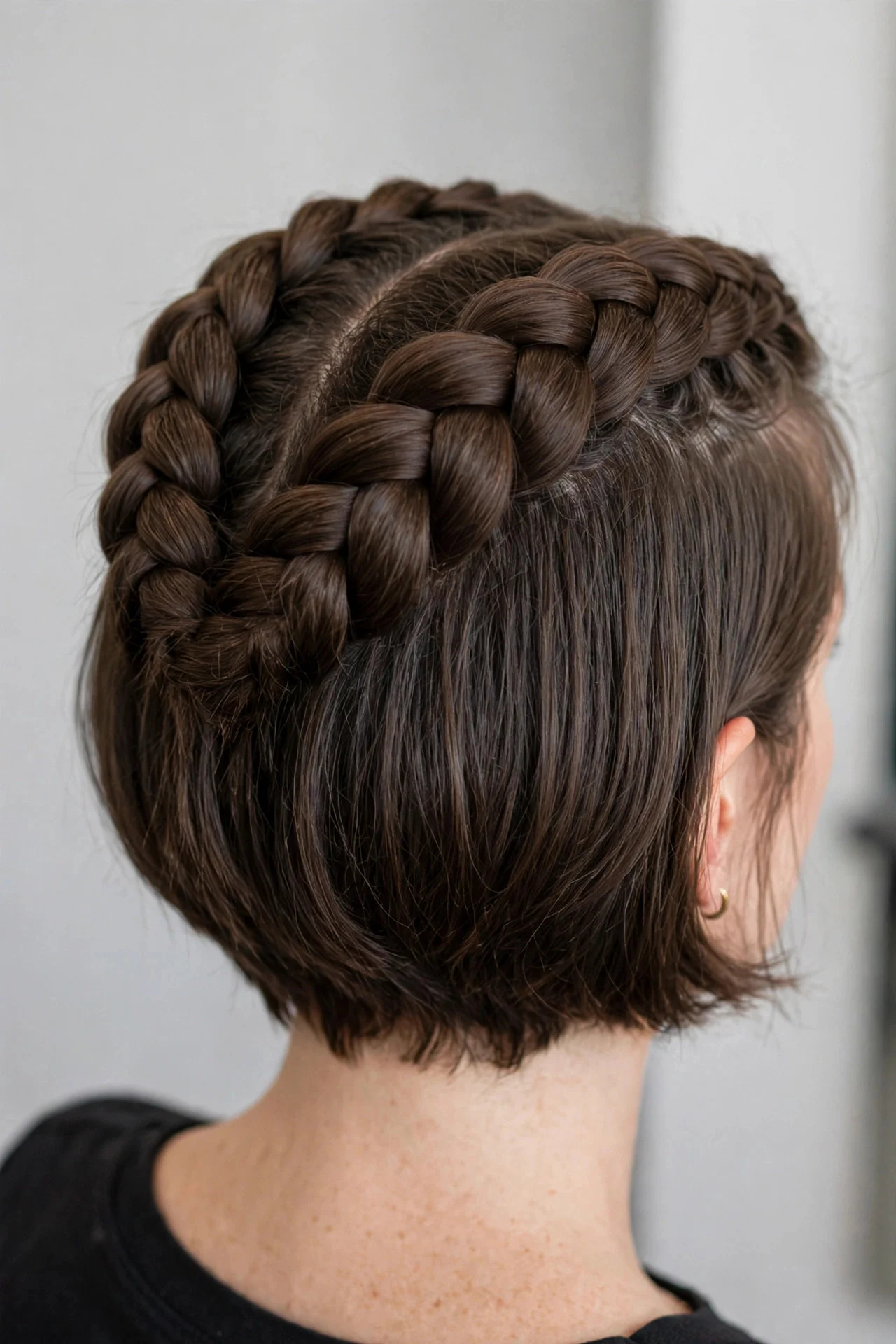
The pull-through braid creates a thick, rope-like look using only elastics, no actual braiding, so it works on surprisingly short hair. Divide the crown into a small ponytail, split the next section around it, and keep feeding ponytail halves forward through each section. The result looks like a lush, voluminous braid across the top of the head. Ask for a pull-through crown with pancaked sections, meaning each loop gets gently pulled wider for fullness. It suits thick and medium hair, and it's a standout for fine hair because the technique adds visible volume real braiding can't. It holds all day. The drawback is the elastic count; cut them out with thread snips rather than pulling.
11Braided Bangs
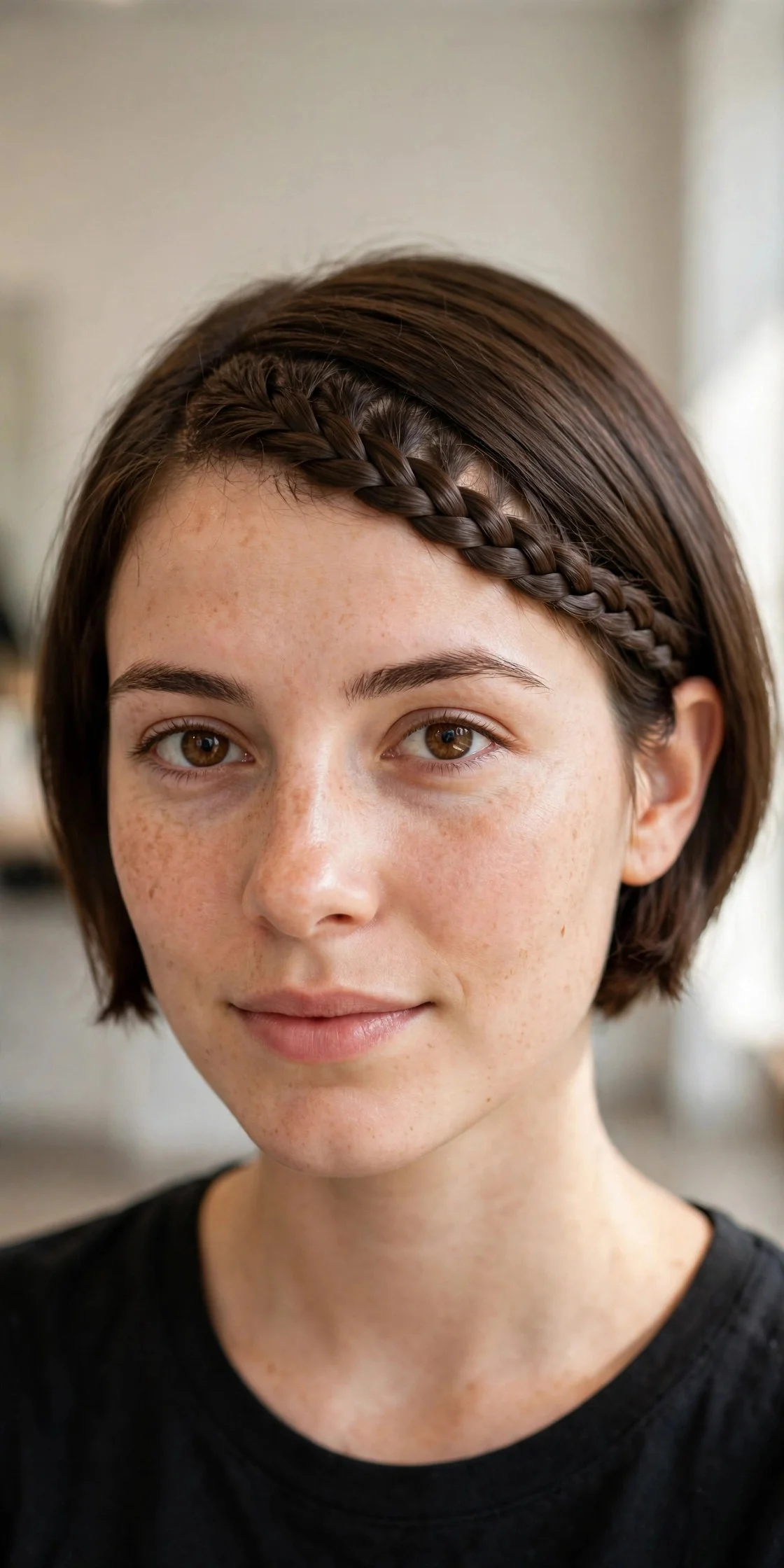
If you have bangs with a bob, braiding them to one side is a five-minute transformation that keeps them off your face without a single visible pin. Sweep the fringe to one side, do a tight three-strand braid incorporating tiny pieces of the fringe as you go back, and tuck the end under the hair behind the ear. It suits straight and wavy bangs; curly bangs need smoothing first. Ask your stylist how to angle the braid so it lies flat against the forehead. It holds through a full day and survives moderate activity. The maintenance reality is regrowth: as bangs grow out the braid loosens, so this one needs a trim every three to four weeks, an ongoing appointment cost.
12Milkmaid Twist Updo
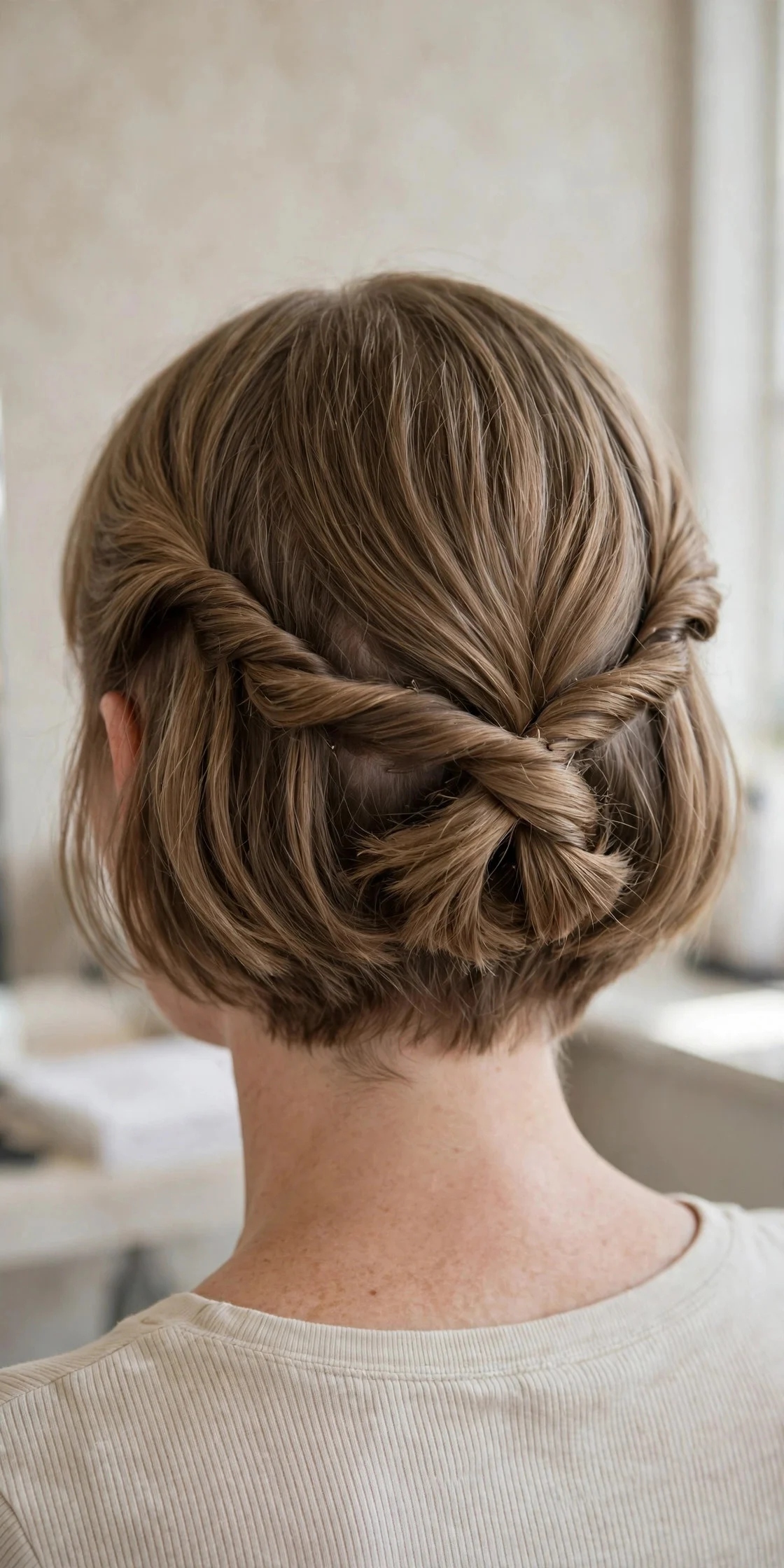
A milkmaid style on short hair usually works better as twists than true braids, and the result is just as lovely. Twist two sections from each temple back toward the crown, cross them over each other at the back, and pin everything flat, tucking escaping ends underneath. Ask for a twisted milkmaid with the ends pinned under rather than braided, since short ends won't wrap cleanly. It suits oval and long faces because the width at the sides balances length. It's one of the best short-hair updos for events, and it genuinely stays put all evening. The drawback is the pin count: you'll need more pins than you expect, and placing them correctly is the whole skill.
Styling and Care Tips
Grip is everything with short braids, and product choice makes the difference between a braid that holds and one that slides out by noon. Start with dry shampoo or a light texture spray on clean hair before braiding, because freshly washed hair is too slippery. Work a small amount of pomade through your fingertips, not the hair itself, so your hands have traction while the hair stays clean-looking.
Bobby pins are structural tools on short hair, not afterthoughts. Place them in X shapes over braid ends, wavy side down against the scalp for the strongest hold. For ends that pop out of a bob-length braid, slide the pin into the braid itself, angled upward, so it anchors the tail to the hair above. Spray pins with hairspray before placing; the extra tack helps.
Be honest about extensions when you want a look your length can't deliver. A clip-in weft or two can give a bob enough length for a chunky side braid, and there's no shame in it. What causes problems is wearing clip-ins daily under braids, because the tension concentrates at the clips and causes breakage. Treat extensions as occasion tools and rotate their placement.
Frequently Asked Questions
Can you really braid a pixie cut?
Yes, with the right style. You won't do rope braids on a pixie, but front twist braids, braided bangs, and tiny accent braids along the hairline all work on pixie lengths. The key is choosing styles that only need the front two to three inches of hair. Anything that tries to braid the full head will fail on a pixie because there isn't enough hair to feed the pattern. Work with your length instead of fighting it.
What is the easiest braid to learn on short hair?
The front twist braid, hands down. Two strands, done in front where you can see the mirror, three minutes once you've done it twice. The bubble braid is the other beginner pick: just elastics and puffing, no real braiding skill needed. Start with those two, then work up to Dutch braids once your hands know the motions.
How do I stop braids from slipping out of short hair?
Four things, in order of impact: braid day-old hair instead of freshly washed hair, prep with dry shampoo or texture spray, keep sections small with even tension, and pin the ends instead of relying on elastics alone. Small sections matter most. On long hair you can get away with loose, chunky sections. On a bob, a loose section is a braid that unravels in an hour.
Will braids damage short hair?
Any tight style can cause breakage or traction issues if worn too often, and short hair shows damage faster because there's nowhere to hide it. Keep tension moderate, don't sleep in tight braids nightly, and vary styles so the same hairline sections aren't stressed daily. Micro-braids along the front are the ones to watch. Two to three days on, a few days off is a safe rhythm.
How long does a short-hair braid last?
Most styles here hold one full day comfortably. Dutch braids, mini French pigtails, and pull-through crowns can stretch to a second day with pinning touch-ups and a silk scarf overnight. Waterfall braids and front twists are single-occasion styles. Plan around the event rather than hoping a delicate style survives a long day.
Keep Exploring
If you loved these short-hair techniques, you'll find plenty more braid inspiration in our french braid hairstyles for every occasion guide, which covers the foundational braid every style here builds on. For statement looks, our bubble braid hairstyles collection shows how far elastics and patience can take you. And if you're ready to tackle something more intricate, the dragon braid tutorials for beginners walk through the technique step by step.