I have a confession. I spent about three weeks saving photos of the same haircut before I finally walked into a salon and asked for it. The cut? The old money bob. And the moment my stylist finished blowing it out and turned me toward the mirror, I understood immediately why this style has taken over social media, Pinterest boards, and high-end salon appointment books all at once.
There is something about this cut that feels different from other trends. It doesn’t shout. It doesn’t try hard. It just looks quietly, effortlessly expensive — like the kind of hair you’d see on a woman stepping out of a black car in front of a hotel in Paris. It has that quality that is very hard to describe but instantly recognizable: old money.
If you’ve been seeing this cut everywhere and wondering what exactly it is, why it looks so good, and whether it would work for you — I’m going to answer all of that. I’ve worn this cut, researched it obsessively, and talked to my stylist about what makes it work. Here’s everything you need to know.
What Exactly Is the Old Money Bob?

Let’s start with the basics because “old money bob” is more of a vibe descriptor than a single specific cut. It refers to a family of bob haircuts that share certain qualities — qualities that evoke the polished, understated elegance associated with generational wealth and classic European style.
Generally speaking, the old money bob has these characteristics:
Length: It sits somewhere between the chin and the collarbone. Not micro-short, not a lob that approaches medium length. It’s a proper bob — purposeful in its brevity.
Texture: Smooth and polished, or with soft, controlled waves. Never frizzy, never overly tousled. The old money bob does not look like it happened by accident.
Ends: Either blunt-cut for a sharp, editorial effect, or very slightly beveled to curve gently inward. No choppy, uneven ends. No exaggerated texture at the tips.
Parting: Usually a middle part or a soft, slightly off-center part. Deep side parts can work but they lean more old Hollywood than old money.
Color: Natural-looking. Think rich brunette, warm golden blonde, or natural grey worn with confidence. Heavy highlights or overly processed color breaks the old money illusion immediately.
The overall effect is a cut that looks like it cost a lot, takes very little effort to maintain (even if that’s not entirely true), and suits every occasion from a board meeting to a weekend brunch.
The History Behind the Look
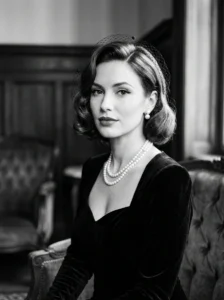
The old money bob didn’t come from nowhere. Its aesthetic roots go back decades, and understanding that history makes the style feel even more intentional.
The bob itself has been a symbol of a certain kind of independence and sophistication since the 1920s, when women like Coco Chanel and Louise Brooks made short hair a statement. But the specific “old money” quality of today’s version draws more from the 1960s and 1970s — the era of Jackie Kennedy, Carolyn Bessette-Kennedy, and the women of the European aristocracy who wore their hair in simple, well-cut styles that needed no embellishment.
These women didn’t follow trends. They had a signature style and wore it with absolute conviction. That’s the energy the old money bob carries today.
In 2026, there’s also a cultural reaction happening. After years of maximalist hair — heavy balayage, dramatic curtain bangs, vivid fashion colors, elaborate styling — a lot of people are craving simplicity. The old money bob is the answer to that craving. It’s a return to refinement.
Why Is Everyone Suddenly Wanting This Cut?
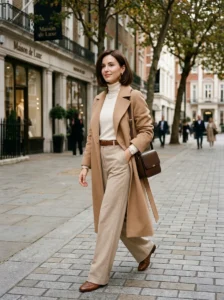
I’ve thought about this a lot because the old money bob isn’t new. Versions of this cut have existed for decades. So why is it having such a massive cultural moment right now?
The “quiet luxury” fashion movement. If you’ve been paying attention to fashion trends over the past year or two, you’ve probably heard the phrase “quiet luxury” — the aesthetic built around expensive basics, neutral colors, and the absence of obvious logos or branding. The old money bob is the hair equivalent of that philosophy. It signals taste and wealth through restraint, not extravagance.
Social media’s role. Pinterest and Instagram are flooded with old money aesthetic boards, and hair is a central part of that visual world. When millions of people are curating the same kind of images, the hair cut that appears in all of them becomes aspirational by association.
It photographs beautifully. I noticed this immediately when I got mine. The old money bob has a structure that looks clean and intentional in photos without requiring perfect lighting or angles. For a generation that documents its life constantly, a reliably photogenic haircut is no small thing.
Celebrity influence. Actresses, models, and public figures known for their timeless style have been wearing this cut or variations of it — and every time one of them steps out in a polished, chin-length bob, the salon appointment requests spike.
It’s genuinely low-maintenance. Once you get the cut right, the daily styling is simple. A good blow-dry, a touch of serum, and you’re done. In a world where everyone is busy and overscheduled, a hairstyle that looks this polished with minimal effort is genuinely appealing.
The Different Variations of the Old Money Bob
One of the reasons this cut works for so many people is that it comes in several versions. Here are the main ones I’ve seen and tried:
The Classic Blunt Old Money Bob
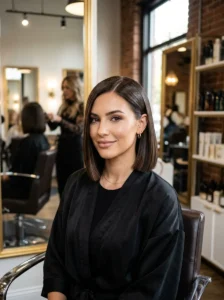
This is the most striking version. All one length, ending at the jaw or just below it, with a perfectly straight, blunt edge. No layers, minimal graduation. It looks incredibly sharp and geometric.
I wore this version for about two months after my initial cut. The bluntness of the ends gave it a very clean, architectural quality that I loved for more formal settings.
Best for: Fine to medium hair, oval and oblong face shapes.
The Soft Beveled Bob

This variation has a slight graduation or bevel at the ends that causes them to turn gently inward toward the face. It’s softer than the blunt bob and slightly more forgiving. The interior bevel adds movement without any visible layering.
My stylist actually suggested this version when I came back for my first trim. She said my hair type — medium thickness with a slight natural bend — would hold the bevel beautifully, and she was right.
Best for: Medium to thick hair. Works well with most face shapes.
The Old Money Bob With Subtle Layers
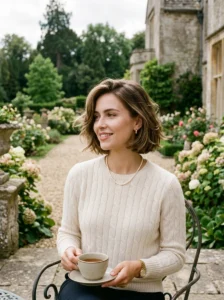
A few carefully placed internal layers to reduce bulk and add movement, but no visible texture or choppy ends. From the outside, it still reads as a clean, polished bob — the layers just make it easier to style and more comfortable to wear.
Best for: Thick or heavy hair that would otherwise sit flat and heavy without any layering.
The Wavy Old Money Bob
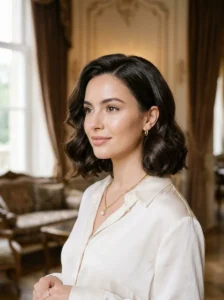
The same clean cut, but worn with soft, controlled waves rather than blown out straight. The waves need to be uniform and polished — think Carolyn Bessette-Kennedy’s natural wave, not beach waves. The key is that even the waves look intentional.
Best for: Naturally wavy hair or anyone willing to use a large-barrel wand and finish with a smoothing spray.
Who Does the Old Money Bob Suit?
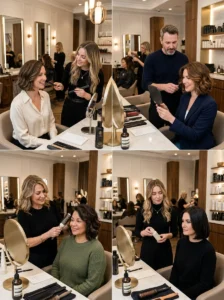
Here’s something I want to be honest about: not every cut suits every person equally, and it’s worth being realistic before committing.
Face shapes: The old money bob is most naturally flattering on oval, oblong, and heart-shaped faces. The clean lines and jaw-length to collarbone-length range complement these shapes well. For round faces, a slightly longer bob that extends below the chin helps elongate the face. For square faces, soft waves or the beveled version softens the jawline beautifully.
Hair types: The classic old money bob looks most polished on straight and slightly wavy hair. Curly hair can absolutely wear a bob, but the length will appear shorter when dry due to shrinkage, so adjustments are needed. Very thick hair may require internal layers to achieve the sleek finish.
Lifestyle: This cut suits people who are willing to blow-dry their hair at least a few times a week. It’s not the wash-and-go style that a wolf cut or a shag might be. If you absolutely never style your hair, the old money bob may not show up the way you want it to.
That said — I’m someone who used to throw my hair in a ponytail every day and avoid the blow dryer entirely, and this cut motivated me to change that routine. Sometimes the right haircut changes your habits in the best possible way.
How to Ask for This Cut at the Salon
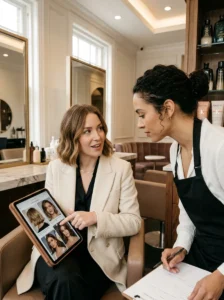
One of the things I wish someone had told me before my first appointment: be specific. “Old money bob” is a vibe, not a technical term your stylist will necessarily use. Here’s how to communicate what you want clearly:
Bring photos. Multiple photos. Show three to five images of the bob you want — not all from one person but from different angles, hair types similar to yours, and different styling options. This gives your stylist a complete picture.
Describe the length you want. Say “I want it to hit right at my jawline” or “I want it to sit about an inch below my chin.” Vague length descriptions lead to misunderstandings.
Tell them the texture you’re going for. “Very smooth and blunt” is different from “soft wave with slight bevel.” Say it out loud rather than assuming they’ll interpret the photos the same way you do.
Ask about maintenance. Have an honest conversation with your stylist about how often you style your hair and what tools you actually use. A good stylist will adjust the cut to suit your real life, not an idealized version of your styling routine.
Discuss color. If you’re planning to color your hair alongside the cut, have that conversation at the same appointment. The old money bob looks best with natural-looking, single-process color or a very subtle balayage — not heavy highlighting.
How to Style the Old Money Bob at Home
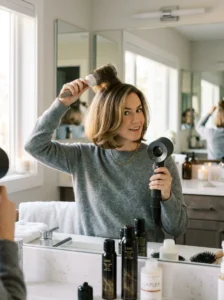
Getting the cut is step one. Styling it well at home is what keeps it looking like it cost a fortune every single day.
Here’s my actual routine:
After washing: I apply a small amount of heat protectant and a few drops of smoothing serum to damp hair before blow-drying. Don’t skip the heat protectant — the old money bob depends on smooth, healthy-looking ends, and damage shows immediately.
Blow-drying: I use a medium-barrel round brush and work in sections from the nape upward. I roll the brush under at the ends on each section to encourage that soft, inward bend. It takes about ten minutes once you get the hang of it.
Finishing: A tiny amount of shine serum or a light mist of a glossing spray gives the old money bob its signature reflective quality. Use sparingly — too much product makes hair look oily rather than glossy.
Waves option: On days when I want the wavy version, I use a large-barrel wand (1.5 inch), wrap each section away from my face, hold for about eight seconds, and let it cool completely before touching. Then I brush through very lightly with a paddle brush to soften the waves and finish with a flexible hold spray.
The secret weapon: A good quality satin pillowcase. I switched to one when I got this cut and the reduction in frizz and creasing overnight was immediate. Your blow-dry will last longer, and your ends will stay smoother.
Products I Actually Use
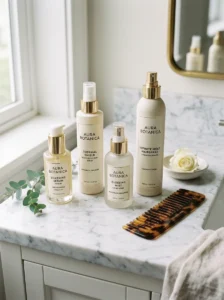
These are the products that have become genuinely essential to maintaining my old money bob:
A smoothing heat protectant spray — applied to damp hair before any heat styling. This is non-negotiable.
A lightweight smoothing serum — just two or three drops worked through damp hair before blow-drying. I look for ones with ingredients like argan oil or keratin.
A shine-enhancing finishing spray — misted lightly over styled hair for that glass-like reflective quality.
A good flexible hold hairspray — for days when I want the style to hold without feeling stiff or looking sprayed.
A wide-tooth comb — for detangling wet hair gently without disrupting the cut’s shape.
How Often Do You Need a Trim?
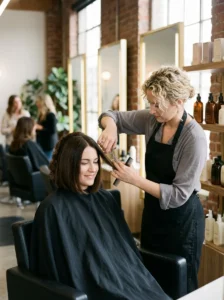
This is important information that nobody mentions enough. The old money bob depends on its shape staying crisp. That means trims every six to eight weeks — more frequently than longer styles that can grow out gracefully.
I book my trim appointments while I’m still in the salon chair. That way I don’t let it slide to ten or twelve weeks, at which point the clean lines start to look grown-out and shapeless rather than intentional.
If budget is a concern, ask your stylist if a maintenance trim — just the ends and shape, no full restyle — is available at a lower price point. Many salons offer this.
My Honest Review After Wearing This Cut
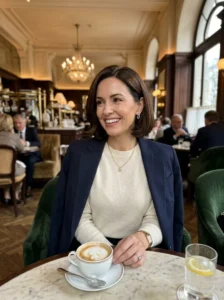
I’ve had the old money bob for several months now and here is my completely honest assessment.
The compliments started immediately. Not in an over-the-top way, but in the quiet, specific way that tells you something is working — coworkers saying my hair looks great, friends asking if I’d done something different, a stranger in a coffee shop asking who cuts my hair. It’s that kind of compliment magnet.
The maintenance is real. I blow-dry more than I used to. I schedule trims on time. I use more products than I did with longer, lower-maintenance styles. But none of it feels like a burden because the result is so consistently good.
The versatility surprised me. I expected this to be a formal, occasion-specific look. Instead, I’ve worn it to the gym, to lazy weekends, to important meetings, and everywhere in between. It adapts to the situation in a way I didn’t anticipate.
The one honest downside: there are days — when I’ve slept on it wrong and the ends are doing something unpredictable — when I miss being able to throw long hair into a ponytail. The old money bob doesn’t have a great “bad hair day” escape route. You’re going to need to style it, or wear a chic headband and own it.
Overall? It’s one of the best haircut decisions I’ve ever made.
Is the Old Money Bob a Trend or a Classic?
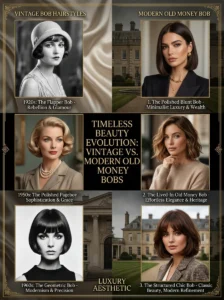
This is the question I keep coming back to. Is this a moment, or is it here to stay?
My honest answer: it’s both, and that’s exactly what makes it worth getting.
As a trend, it’s absolutely at its peak right now. The timing is perfect for getting this cut while it has cultural momentum — your stylist knows how to execute it well, reference images are everywhere, and the beauty community is producing excellent tutorials and product recommendations around it.
But as a classic, the clean bob has existed for over a century and isn’t going anywhere. Even when the “old money” aesthetic moment fades, a well-cut, polished bob will always look sophisticated. You’re not going to look at photos of yourself in five years and cringe. That’s the difference between a trend cut and a timeless cut with a trendy moment.
The old money bob is the latter.
Final Thoughts
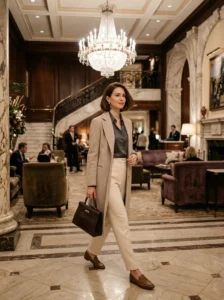
If you’ve been going back and forth on whether to get this cut, I want to tell you what I wish someone had told me: stop saving the photos and make the appointment.
The old money bob has a way of making you carry yourself differently. There’s something about knowing your hair looks polished and intentional that changes how you walk into a room. It’s a quiet confidence, which is very much in the spirit of the whole aesthetic.
And if it doesn’t work exactly the way you imagined? Hair grows back. But in my experience, this is one of those cuts that tends to exceed expectations rather than disappoint.