
The jellyfish haircut is one of those styles that looks wild in photos but can actually work in real life, if you get the proportions right. It is a two-tier cut: a short, rounded bob-like layer on top and a longer, thinner layer underneath that peeks out below it. The contrast is the whole point, so the top needs to look intentional, not like a haircut that was left half finished.
Before you book, it helps to know what you are signing up for. This cut needs regular trims to keep the two layers distinct, and most versions need a few minutes of styling each morning. The ideas below range from soft and subtle to bold and graphic, so you can pick the version that fits your hair type, your routine and your workplace.
1Classic Jellyfish Bob

This is the version most people picture first: a neat, chin-length bob on top with long, straight strands falling well past the shoulders underneath. Ask your stylist for a blunt, rounded bob that ends at the jaw or chin, with the bottom layer left long and cut with very little layering so it reads as a separate tier. A clear disconnection is essential, otherwise it just looks like a grown-out bob. It suits straight or slightly wavy hair best, and works well on oval and heart-shaped faces because the bob frames the cheeks. Maintenance is moderate. You will need to smooth the top layer with a brush and dryer most days, and trim the bob every four to six weeks to stop it blending into the longer layer.
2Jellyfish with Curtain Bangs

Adding curtain bangs softens the whole cut and makes the top layer feel less severe. Ask for a bob that sits just below the chin, plus long curtain bangs that part in the middle and sweep past the cheekbones, with the bottom layer kept at chest length or longer. The bangs help the short layer blend into your face instead of sitting like a cap on top of your head. This version suits wavy hair and rounder faces especially well, since the sweeping fringe breaks up width around the cheeks. Styling takes a little patience. You will need to blow dry the bangs forward and outward, and they can fall flat in humidity, so keep a small round brush handy and expect a trim every five weeks.
3Soft Wavy Jellyfish

If your hair has a natural wave, this softer take is the easiest way into the trend. Ask your stylist for a loose, textured bob that ends around the chin, with the underneath layer left long and lightly layered at the very ends so it moves rather than hanging in a solid sheet. The disconnection should be gentle here, with the top layer feathered slightly so the two tiers melt together a little. It suits medium to thick wavy hair and anyone who does not want a harsh, graphic line. The drawback is frizz control. On damp or humid days the top layer can puff up while the bottom layer stays flat, so a smoothing cream and a quick scrunch with salt spray will become part of your routine.
4Jellyfish with Choppy Ends

This edgier version swaps the neat bob for a choppy, piecey top layer full of texture. Ask for a chin-length bob cut with a razor or point cutting for jagged ends, and a long bottom layer with uneven, textured tips that stop around mid-back. The choppy finish stops the cut looking too polished and gives it a lived-in, rock-inspired feel. It suits straight to wavy hair with medium density, and it flatters angular jawlines because the broken ends soften strong angles. Upkeep is lower than the classic version in one way, since messy texture hides regrowth, but higher in another: you will need texturising spray or wax to define the pieces daily, and the razor-cut ends can split faster, so plan trims every six weeks.
5Curly Jellyfish Cut

A curly jellyfish cut can look fantastic, but only if your stylist cuts it dry and respects your curl pattern. Ask for a rounded, bob-shaped top layer cut curl by curl so it sits at cheek or chin level once dry, with the bottom layer left long and shaped lightly to keep the curls defined rather than triangular. The disconnection should be subtle, because tight curls spring up and blur the tiers anyway. This suits naturally curly and coily hair with enough density for the top layer to hold its shape. Be honest about styling time. You will need curl cream, diffusing and regular refreshing, and the top layer will shrink noticeably as it dries, so bring reference photos of curly versions, not straight ones, to your appointment.
6Jellyfish with Bold Colour Contrast
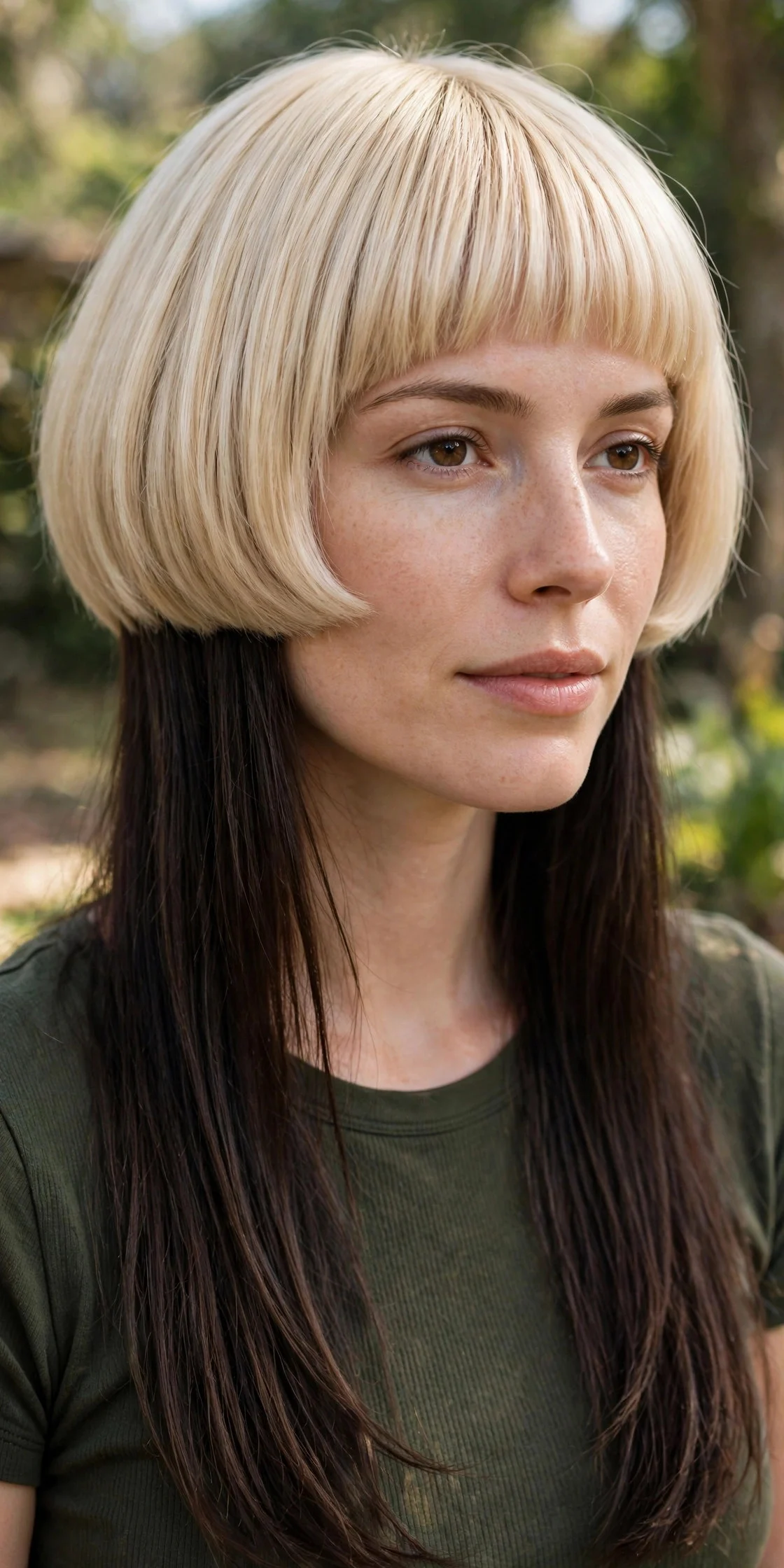
Colour is what makes this version stand out, because it highlights the two tiers instead of letting them blur together. A popular choice is a light blonde or copper top layer with a darker natural colour underneath, or the reverse. Ask your stylist to colour the top bob separately from the bottom layer, keeping a clean separation at the disconnect, and to cut the bob at chin length with the bottom layer at least six inches longer. It suits anyone confident about standing out, and works on straight or wavy hair that can hold a smooth finish. The drawback is cost and upkeep. Two-tone colour needs root touch-ups every four to six weeks, plus toning to stop blonde going brassy, so budget for regular salon visits, not just one appointment.
7Sleek Straight Jellyfish
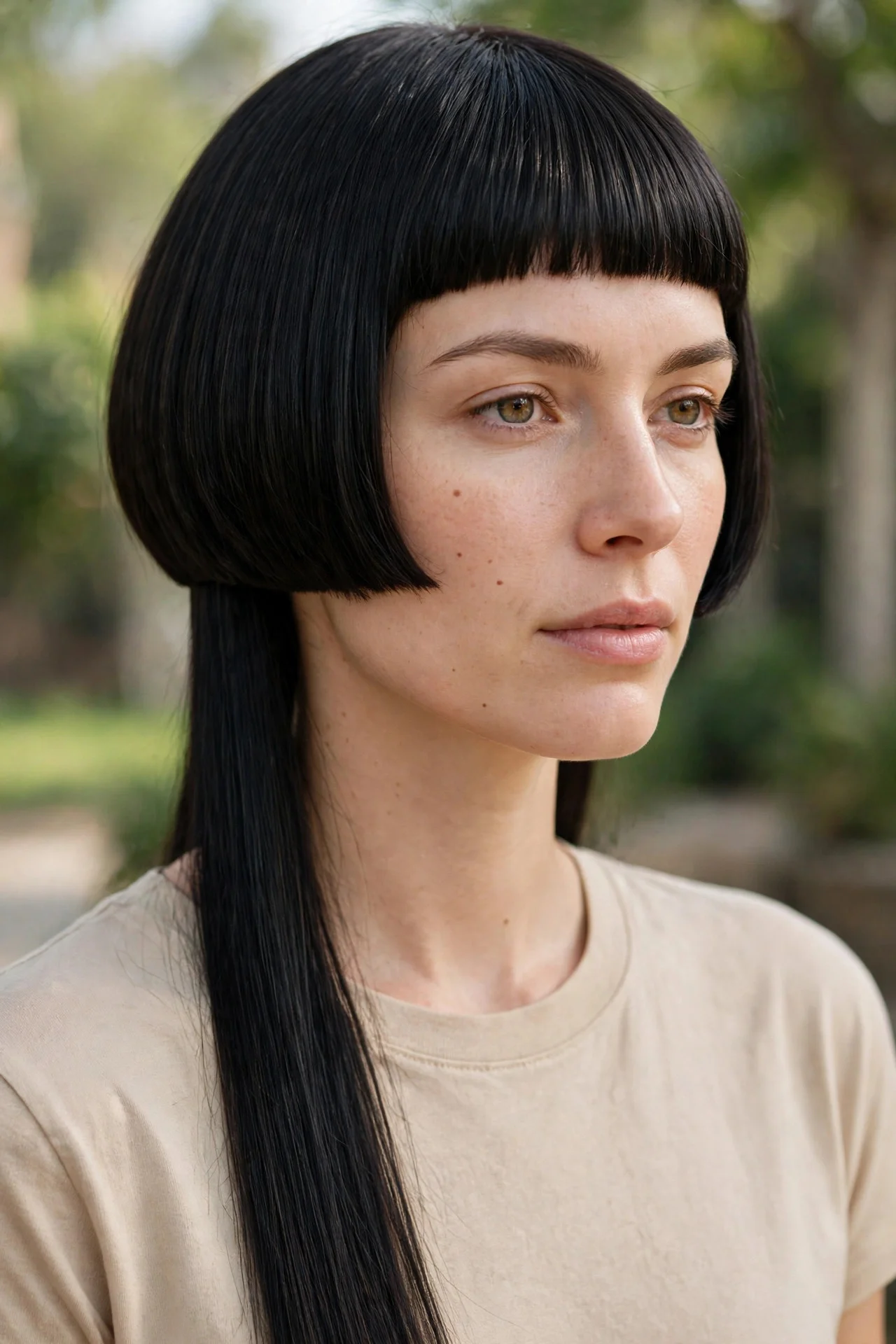
This is the sharpest, most polished version, and it relies entirely on a smooth finish. Ask for a precise, blunt bob that ends at the jawline, with the bottom layer cut dead straight and left long, ideally past the shoulder blades, with no layers to break the line. The disconnection must be crisp and visible, especially from the side. It suits fine to medium straight hair best, because thicker hair can make the top layer look bulky, and it looks striking on oval faces. Daily styling is non-negotiable here. You will need to straighten both layers every morning and use a shine serum to keep the finish glassy, and any humidity or rain will undo the look fast, so this is a high-commitment choice.
8Shaggy Jellyfish with Texture

The shaggy version borrows from the wolf cut: lots of movement, feathered ends and a deliberately undone finish. Ask for a shaggy bob with short, choppy layers through the crown, plus face-framing pieces, and a long bottom layer with razored, wispy ends. The disconnection is softer than in the classic version, more of a gradual step than a hard line. It suits thick or wavy hair that needs weight removed, and it is forgiving on most face shapes because the layers create movement around the face. Styling is refreshingly simple: air dry with texture spray or rough dry with your fingers. The trade-off is grow-out. Shaggy layers grow out unevenly, so you will need shaping trims every six to eight weeks to stop it turning shapeless.
9Jellyfish with Micro Bangs

Micro bangs push this cut firmly into statement territory, so it is best for people who enjoy attention. Ask for very short, straight-across bangs that sit well above the eyebrows, paired with a rounded chin-length bob and a long, fine bottom layer. The tiny fringe opens up the face and makes the whole shape look more graphic and fashion-forward. It suits straight hair and oval or long faces, since the short fringe can make round faces look wider. Maintenance is the catch. Micro bangs need trimming every two to three weeks to stay at the right length, and they show every cowlick, so you will be styling them with a small brush and dryer most mornings. It is not a low-effort choice, even if it looks simple.
10Low-Maintenance Grown-Out Jellyfish

If you love the idea but not the daily styling, this softer, grown-out version is the practical compromise. Ask for a longer top layer that sits at the shoulders rather than the chin, with the bottom layer only a few inches longer, so the contrast is gentle and the cut grows out gracefully. A soft disconnection keeps it wearable at work and easy to tie back. It suits almost every hair type, especially busy people, and it is a good first step if you are unsure about the full look. The drawback is that it reads less like a jellyfish cut and more like a layered cut, so if you want the dramatic two-tier effect, this will feel too tame. Trims every eight weeks are usually enough.
Hair care and styling tips
The secret to a good jellyfish cut is keeping the two layers looking deliberate. That means regular trims for the top layer, which loses its shape fastest, and gentle care for the bottom layer, which is usually older hair and more prone to split ends. Use a lightweight conditioner on the lengths and avoid heavy oils near the roots, or the top bob will fall flat. When you wash, let the bottom layer air dry if you can, and focus your heat styling on the top layer, where shape matters most.
For daily styling, work in two steps rather than treating your hair as one mass. Dry and shape the bob first, using a round brush or straightener to get the curve or sleekness you want, then smooth or scrunch the bottom layer separately. A light hold spray will keep the layers separate without making them stiff. If your hair is fine, a volumising mousse at the crown stops the top layer collapsing, and if it is thick, ask your stylist to thin the underneath slightly so the bob does not sit on a bulky base.
Is the jellyfish haircut suitable for work?
It depends on the version you choose and your workplace. The softer, grown-out jellyfish and the wavy version usually pass in most offices, especially if the colour is natural and the top layer is neat. The bold colour contrast version and micro bangs are harder to hide and may clash with strict dress codes. If you are unsure, start with the low-maintenance version, keep the disconnection gentle, and ask your stylist how to style it more conservatively for workdays.
How often should I trim a jellyfish haircut?
The top layer needs trimming every four to six weeks to keep its shape and to stop it merging into the bottom layer. The bottom layer can go longer between cuts, usually eight to ten weeks, unless the ends are splitting. Micro bangs are the exception and need attention every two to three weeks. Booking the top-layer trim on a regular cycle is the single best way to keep the cut looking intentional rather than grown out.
Will a jellyfish cut work on thin hair?
Yes, with the right adjustments. A shorter, fuller bob on top can actually make thin hair look thicker, because the blunt ends create the illusion of density. Keep the bottom layer fine and light rather than thick, since a heavy underneath layer will drag the whole style down. Your stylist may suggest subtle internal layering in the top section for lift. Avoid the sleek straight version if your hair is very fine, as it can highlight thinness instead of hiding it.
How do I style a jellyfish haircut at home?
Start by drying the top bob first, since that layer sets the shape of the whole cut. Use a round brush for a curved bob, a straightener for a sleek finish, or your fingers and texture spray for a shaggy look. Then deal with the bottom layer separately: smooth it, wave it or leave it natural, depending on your version. Finish with a light spray to hold the separation. The whole routine takes about ten minutes once you are used to it, though sleek versions take longer.
How long does it take to grow out a jellyfish haircut?
Growing it out takes patience, because the two layers grow at the same rate and the gap between them stays visible for months. Most people need six to twelve months to blend the top layer into a shoulder-length cut, with regular shaping trims along the way to soften the disconnect. If you want to grow it out faster, your stylist can gradually lengthen the bob and add layers to bridge the two tiers. Avoid cutting the bottom layer short in frustration, as that resets your progress.
Keep exploring
If you liked these jellyfish haircut ideas, check out pageboy bob haircuts, micro bob haircut ideas, sculpted bob haircuts for more ideas.