
Cornrows are one of the oldest and most significant hairstyling traditions in the world, with roots tracing back thousands of years across various African cultures, where specific braiding patterns historically communicated information about a person’s community, age, marital status, and social standing. Goddess braids, a thicker, more raised variation of traditional cornrows, have become an especially popular contemporary expression of this tradition, known for their dramatic, sculptural quality and versatility across countless styling occasions.
This guide is intended as a genuine resource for anyone wanting to understand and explore goddess cornrow styling, whether you’re someone within the culture looking for fresh styling inspiration, or someone wanting to learn more about this rich braiding tradition before booking an appointment with a skilled braider. Throughout, the goal is to highlight the artistry and skill involved in this hairstyling tradition, and to point toward the kind of professional expertise that genuinely does this style justice.
A Brief Look at the History and Significance of Cornrows
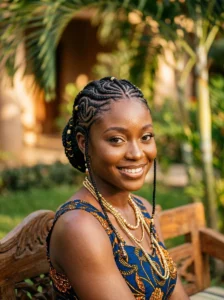
Understanding the background of this hairstyling tradition adds real depth to appreciating the craft involved in goddess cornrow styles specifically.
Cornrow braiding has documented history dating back thousands of years, with evidence found in various African cultures across the continent. The specific patterns, partings, and styles often carried meaning within their originating communities, sometimes indicating a person’s village, family lineage, religion, or social status. This wasn’t simply decorative styling. It was, and in many communities continues to be, a meaningful cultural practice passed down through generations, often within families, with skilled braiders developing significant expertise over years of practice.
The term “goddess braids” specifically refers to thicker, more pronounced cornrows, often styled with a raised, three-dimensional quality rather than lying completely flat against the scalp. This particular variation has become especially popular in contemporary styling for its dramatic visual impact and the way it showcases intricate parting patterns more prominently than thinner, flatter traditional cornrows.
Given this rich history, finding a braider who genuinely understands and respects the techniques involved, ideally someone trained within this specific tradition, matters significantly for both the quality of the final result and for honoring the cultural significance of the craft itself.
What Makes Goddess Braids Different From Standard Cornrows
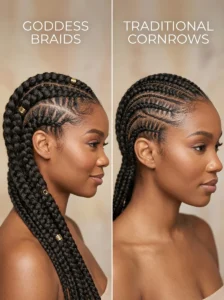
Before exploring specific styles, it helps to understand the technical distinctions that define this particular variation within the broader category of cornrow braiding.
Thickness and visibility. Goddess braids are typically braided thicker than standard, everyday cornrows, making each individual braid more visually prominent and the overall parting pattern more dramatic and visible.
Raised, dimensional styling. Rather than lying completely flat, goddess braids are often styled with a slightly raised, three-dimensional quality, achieved through specific braiding tension and technique, creating more visual texture and depth.
Pattern complexity. Goddess braid styles frequently incorporate more elaborate parting patterns, curves, and geometric designs than basic straight-back cornrows, turning the braiding pattern itself into a significant visual feature of the overall style.
Styling versatility. The thicker, more defined nature of goddess braids allows for various styling options afterward, updos, half-up styles, or simply wearing the braids down, expanding how the style can be worn for different occasions.
1. Classic Straight-Back Goddess Braids
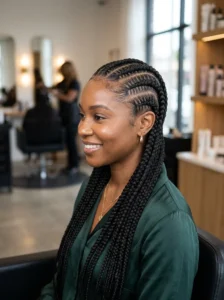
Thick, evenly spaced braids running straight back from the hairline to the nape of the neck, showcasing clean, precise parting lines. This foundational style highlights the skill involved in maintaining perfectly even sections and consistent tension throughout.
Best for: Everyday wear, professional settings, a versatile base for further styling.
2. Curved Goddess Braids
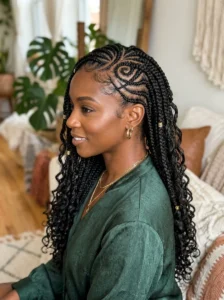
Rather than straight lines, this style incorporates deliberate curves and arcs in the parting pattern, creating a more dynamic, artistic visual effect across the scalp. This technique requires significant skill to execute with clean, consistent curves throughout.
Best for: Special occasions, those wanting a more elaborate visual statement.
3. Goddess Braids With a Side Part
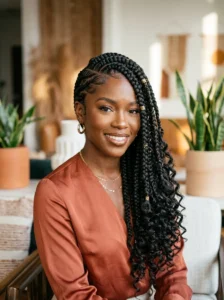
A dramatic side part combined with thick goddess braids creates an asymmetrical, striking silhouette, with braids flowing in a single direction from the deep side part across the head.
Best for: Formal events, photoshoots, those wanting an elegant asymmetrical look.
4. Half-Up Goddess Braids With Loose Ends
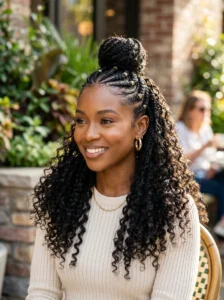
The top section of hair is braided into goddess braids, while the lower section is left loose or in natural curl pattern, creating a style that combines the structured artistry of braiding with the texture of natural hair.
Best for: Those wanting to showcase natural curl texture alongside braided detail.
5. Goddess Braids Into a Bun
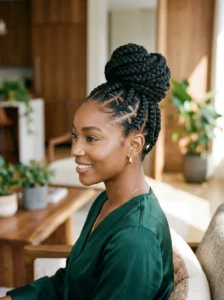
The braids are styled straight back and then gathered into a bun at the crown or nape, combining the visual interest of the braiding pattern with the practicality and elegance of an updo.
Best for: Formal occasions, professional settings, warm weather practicality.
6. Goddess Braids With Geometric Patterns
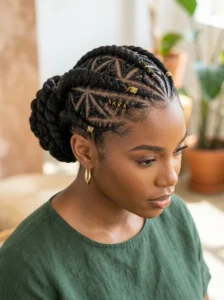
Intricate, deliberately geometric designs, triangles, diamonds, or other shapes, created through precise parting before braiding begins. This style requires advanced planning and significant technical skill from the braider.
Best for: Special occasions, those wanting a bold, artistic statement.
7. Goddess Braids With Beaded Ends
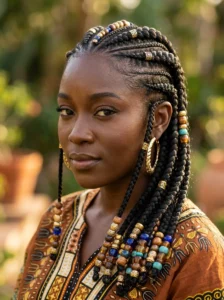
Traditional and decorative beads added to the ends of each braid, adding movement, sound, and visual interest, a styling detail with significant historical and cultural roots within braiding traditions.
Best for: Celebrations, cultural events, those wanting to honor traditional styling elements.
8. Stitch Braids (Goddess Style)
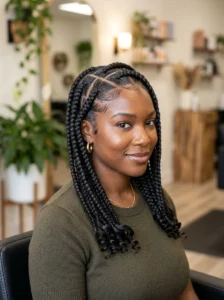
A technique using a single, continuous braiding motion that creates an exceptionally smooth, raised, almost stitched appearance along each part line. This technique demonstrates particularly advanced braiding skill and creates one of the cleanest, most polished goddess braid finishes.
Best for: Those wanting maximum precision and a particularly sleek finish.
9. Goddess Braids With a Bold Color
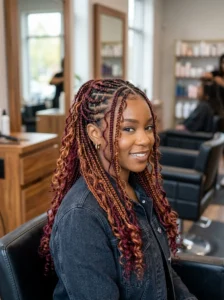
The same braiding technique applied to hair that has been colored, whether through extensions, dye, or both, adding a vibrant or unexpected color element to the overall style.
Best for: Those wanting to incorporate a bold color statement into their braided style.
10. Mohawk-Style Goddess Braids
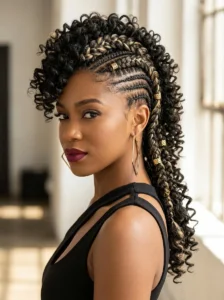
Braids concentrated specifically down the center of the head in a mohawk pattern, with the sides either shaved, closely cropped, or styled separately, creating a particularly bold, edgy variation on the traditional style.
Best for: Those wanting a dramatic, fashion-forward statement.
11. Goddess Braids With a Crown Braid Detail
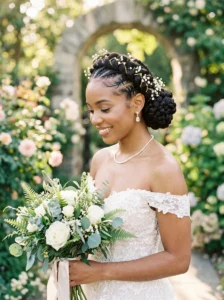
An additional braided element wrapped around the crown of the head like a halo, combined with the main goddess braids flowing down or gathered at the back, adding an extra layer of intricate detail to the overall style.
Best for: Formal events, bridal styling, special celebrations.
12. Jumbo Goddess Braids
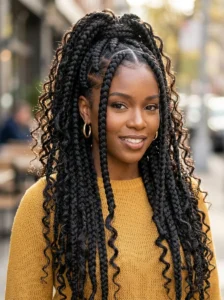
An especially thick variation of goddess braids, using larger sections than typical, resulting in fewer, more visually dramatic individual braids covering the head. This style emphasizes boldness and visual impact through scale.
Best for: Those wanting maximum visual drama with fewer individual braids.
13. Goddess Braids With an Undercut Detail
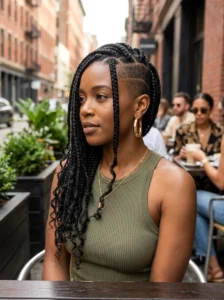
A subtle or more dramatic undercut section incorporated beneath the main braided pattern, visible when the braids are styled up or to one side, adding an unexpected modern edge to the traditional technique.
Best for: Those wanting a bold, contemporary twist on traditional braiding.
14. Two-Toned Goddess Braids
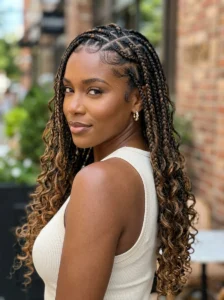
Braids incorporating two distinct, complementary colors throughout the pattern, whether through colored extensions or natural color variation, creating additional visual dimension and interest.
Best for: Those wanting a multidimensional, eye-catching color element.
15. Goddess Braids With Decorative Wrap Details
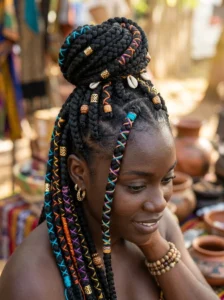
Sections of the braids wrapped with colorful thread, ribbon, or fabric, a decorative technique with significant roots in various African braiding traditions, adding texture, color, and cultural depth to the overall style.
Best for: Cultural celebrations, special occasions, those wanting to honor traditional decorative techniques.
The Skill and Time Involved in Goddess Braiding
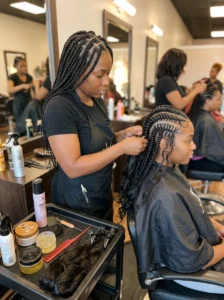
It’s worth being genuinely transparent about what this styling process actually involves, both to set realistic expectations and to underscore the real expertise required from a skilled braider.
Appointments are typically lengthy. Depending on the specific style, thickness, and complexity of the pattern, a full head of goddess braids can take anywhere from two to six hours or more to complete. Intricate geometric patterns or styles incorporating beads and additional decorative elements tend toward the longer end of that range.
Precision matters enormously throughout the process. Maintaining consistent tension, even sectioning, and clean parting lines throughout a multi-hour appointment requires significant skill, patience, and physical stamina from the braider.
Hair preparation affects the final result significantly. Properly detangled, moisturized hair, sectioned correctly before braiding begins, contributes enormously to both how the braids look initially and how well they hold up over the following weeks.
Finding a Skilled Braider
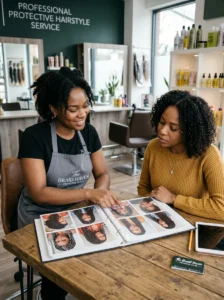
Given the technical skill and cultural knowledge this styling tradition involves, finding the right braider matters significantly for both the quality of your result and for ensuring the style is executed with genuine understanding of the technique.
Look for braiders with specific experience and training in this tradition. A stylist’s portfolio should clearly demonstrate experience with goddess braids and cornrow techniques specifically, including examples of the particular style or pattern complexity you’re hoping for.
Ask about their experience with your specific hair type. Goddess braids work across a range of natural hair textures, but a braider’s technique may need adjustment depending on your hair’s specific density, length, and curl pattern.
Discuss realistic timing and pricing upfront. Given the time and skill involved, goddess braids are often a more significant investment than many other hairstyling services, and a transparent conversation about cost and appointment length before booking helps set accurate expectations.
Read reviews and ask to see examples of the braider’s work on hair similar to yours. This helps ensure the specific style and pattern complexity you’re hoping for aligns with what the braider has demonstrated experience executing well.
Caring for Goddess Braids After Your Appointment
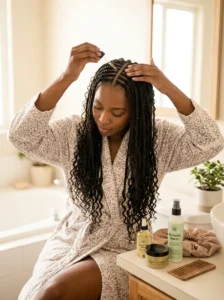
Proper care significantly affects both how long the style lasts and how healthy your hair remains underneath the braids throughout the wear period.
Keep your scalp clean and moisturized. A lightweight, water-based scalp oil or spray applied regularly helps prevent dryness and itchiness, which can become uncomfortable if neglected over the several weeks goddess braids are typically worn.
Wrap your hair at night. Using a satin or silk scarf or bonnet helps protect the braids from friction against regular pillowcases, which can cause frizz and reduce how neat the style looks over time.
Avoid excessive tension or pulling. Be gentle when styling the braids into updos or other variations during the wearing period, since repeated tension on the same areas can contribute to hairline stress over time.
Plan for an appropriate wearing period. Most goddess braid styles are designed to be worn for several weeks, typically four to eight depending on hair growth rate and how well the style is maintained, before requiring removal and a break for the natural hair underneath.
Take proper care during removal. Careful, patient removal, ideally with a detangling product to ease the process, helps protect hair health and minimize breakage compared to rushed or rough removal.
Styling Versatility Throughout the Wearing Period
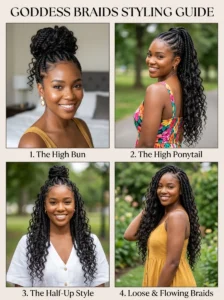
One of the genuine practical benefits of goddess braids is how many different looks can be achieved from the same initial braiding, simply through different styling choices throughout the weeks you wear them.
Wearing them down showcases the full pattern and length, often the go-to choice for the first several days when the braids look their freshest and most precisely defined.
Gathering into various ponytail positions, high, low, or to one side, offers practical variation for different occasions or simply for switching up the daily look without any additional braiding work.
Creating an updo or bun combines the braided texture with a more formal, polished silhouette, useful for professional settings or special events during the wearing period.
Incorporating additional accessories, scarves, clips, or wraps, allows for further customization and styling variety throughout the weeks the braids are worn.
Respecting the Cultural Significance of This Style
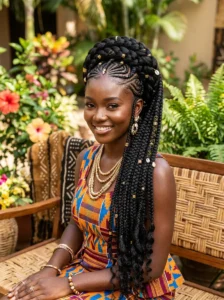
As this styling tradition has gained broader popularity, it’s worth acknowledging directly the importance of approaching it with genuine respect and understanding of its cultural roots.
For those within the cultures where cornrow and goddess braiding traditions originate, this is far more than a passing style trend. It carries deep historical, cultural, and often personal significance, connected to community, heritage, and identity in ways that deserve genuine acknowledgment and respect.
For those outside these originating cultures interested in this styling tradition, taking time to understand and appreciate this history, supporting and properly compensating skilled braiders within the culture, and approaching the style with genuine respect rather than treating it as a disconnected trend, matters significantly. Researching the tradition, as this guide aims to encourage, and seeking out braiders with genuine training and connection to this craft, are meaningful ways to engage with this styling tradition respectfully.
Final Thoughts
Goddess cornrow styles represent a genuinely rich, skilled, and historically significant hairstyling tradition, one that continues to evolve through contemporary variations while maintaining deep connections to its cultural origins. Whether you’re drawn to the classic straight-back style, an elaborate geometric pattern, or a style incorporating traditional decorative elements like beads and wraps, the artistry and skill involved in achieving these looks well deserves genuine appreciation.
If you’re considering this style for an upcoming occasion, I’d genuinely encourage taking the time to find a braider with real skill and experience in this specific tradition, having an honest conversation about the style, timing, and care involved, and approaching the process with the respect this rich hairstyling history deserves.