
I asked my stylist for a “fluffy bob” using exactly that phrase, fully aware it wasn’t a precise technical term, and braced myself for some clarifying questions. She didn’t need any. She immediately understood the soft, rounded, voluminous silhouette I was picturing, the kind of bob that looks like it has a life of its own rather than lying flat and obedient against the head. That appointment turned out to be one of the better haircut decisions I’ve made, and it sent me down a genuine research path afterward to understand exactly what separates a fluffy bob from a standard one, and why this particular variation has become so popular.
Months later, with a solid understanding of both the technique behind this style and a real routine for maintaining that signature fluffiness day to day, I want to share everything I’ve learned for anyone considering this same request at their next salon appointment.
What Exactly Is a Fluffy Bob?
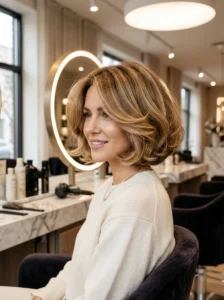
The term has become genuinely popular in recent style conversations, but it’s worth defining clearly, since “fluffy” is more of a descriptive feeling than a strict technical category.
A fluffy bob is characterized by significant volume and roundness throughout the shape, rather than the sleek, smooth silhouette of a classic blunt bob. The ends typically curve inward or have a soft, rounded quality rather than lying flat, and the overall style has a deliberately full, slightly tousled, three-dimensional appearance. Think of it as the opposite of a flat-ironed, glass-like bob. The fluffy bob embraces body, texture, and a cloud-like softness as its defining visual quality.
This style relies heavily on both the cutting technique and a specific styling approach to achieve, which is exactly why understanding both pieces matters if you’re hoping to recreate this look successfully and consistently.
The Cutting Techniques That Create Fluffiness
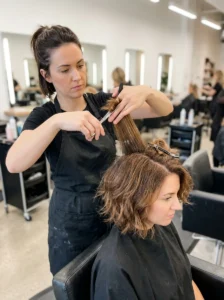
This was the part of my own research and salon conversation that genuinely surprised me, since I’d assumed volume was purely a styling outcome rather than something built into the cut itself.
Internal layering for built-in lift. Rather than a single, uniform length throughout, a fluffy bob typically incorporates layers cut within the interior of the hair, removing weight specifically in a way that allows the remaining hair to spring up and outward rather than hanging flat under its own weight.
Graduated, rounded perimeter shaping. The outer edge of a fluffy bob is usually cut with a slight, deliberate roundness rather than a perfectly straight, blunt line, which contributes significantly to the soft, three-dimensional quality that defines this style.
Point cutting or razor work at the ends. Rather than blunt scissor-cut ends, many fluffy bobs incorporate point cutting or light razor work specifically at the ends, creating a softer, more textured finish that catches and holds volume differently than a sharp, blunt edge.
Strategic length choice. Fluffy bobs tend to work best at a chin-length to just-below-chin length, since this specific range allows enough hair to create real volume and roundness while remaining short enough that the weight of longer hair doesn’t pull the style flat.
Why This Style Has Become So Popular

Understanding the broader appeal helps explain why so many people, myself included, have specifically sought out this particular bob variation recently.
It offers volume without requiring extensive daily styling effort. Unlike some voluminous styles that depend entirely on lengthy blow-drying sessions to achieve fullness, a well-cut fluffy bob has volume built into its actual structure, meaning even a relatively quick styling routine can achieve a genuinely full, bouncy result.
It suits a wide range of hair types reasonably well. While the technique can be adjusted for different hair textures, the fundamental concept of internal layering and rounded shaping translates across fine, medium, and even some thicker hair types with appropriate adjustments.
It photographs with genuine dimension and life. A flat, sleek bob, while elegant, can sometimes look one-dimensional in photos. The inherent volume and texture of a fluffy bob creates visible depth and movement that tends to photograph in a more dynamic, lively way.
It feels like a deliberate departure from the sleek, polished aesthetic that’s dominated for years. After a long stretch of beauty trends favoring glass-like, perfectly smooth hair, the fluffy bob offers a genuinely different energy, one that embraces texture and body rather than fighting against it.
1. The Classic Rounded Fluffy Bob
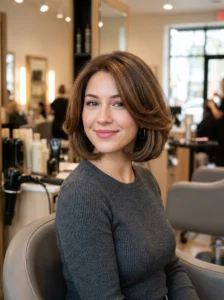
A chin-length bob with significant internal layering and a deliberately rounded perimeter, creating the quintessential fluffy silhouette. This is the most foundational version and the one most people picture when they hear the term.
This is essentially the cut I have now, and the rounded shape genuinely holds its fullness throughout the day in a way my previous, more uniform bob never did.
Best for: Fine to medium hair, oval and heart-shaped faces.
2. The Fluffy Bob With Curtain Bangs

The signature voluminous bob shape paired with soft, face-framing curtain bangs, adding an extra layer of texture and movement specifically around the face.
Best for: All hair types, most face shapes.
3. The Wavy Fluffy Bob

The same internal layering and rounded shaping technique applied to naturally wavy hair, where the existing texture enhances the overall fluffy, dimensional quality even further.
Best for: Naturally wavy hair, those wanting maximum textural interest.
4. The Curly Fluffy Bob
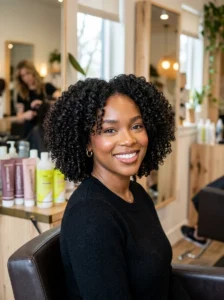
A version specifically adapted for curly hair, where the natural curl pattern itself provides much of the volume, with cutting technique focused on shaping the overall silhouette to enhance rather than fight against the natural texture.
Best for: Medium to loose curl patterns.
5. The Asymmetrical Fluffy Bob

A slight length variation from one side to the other, adding a modern, slightly edgier quality to the otherwise soft, rounded fluffy bob silhouette.
Best for: Those wanting a bolder, more fashion-forward take on the style.
6. The Fluffy Lob

A slightly longer version, extending past the chin toward the shoulders, while maintaining the same internal layering and volume-building technique. This offers a bit more length and versatility while still capturing the signature fluffy quality.
Best for: Those wanting more length than a classic chin-length bob.
7. The Fluffy Bob With Money Piece
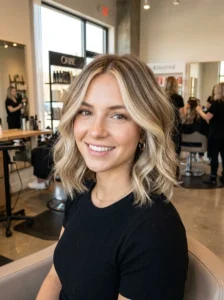
The voluminous bob shape combined with subtle, well-blended face-framing highlights, adding dimension and brightness that complements the textural volume of the cut itself.
Best for: All hair colors, those wanting added dimension.
8. The Fluffy Stacked Bob
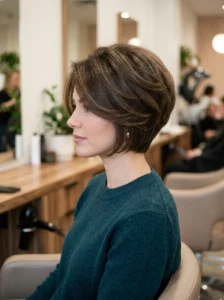
Extra layering and shaping concentrated specifically at the back of the head, creating a particularly dramatic, rounded silhouette when viewed from the side or back.
Best for: Fine to medium hair needing extra volume at the crown and back.
9. The Fluffy Bob With Bangs and Side Sweep

A fuller, more substantial fringe combined with the rounded bob shape, with the bangs styled with a slight side sweep rather than falling straight down, adding asymmetry to the overall soft silhouette.
Best for: Oval and square face shapes.
10. The Color-Enhanced Fluffy Bob
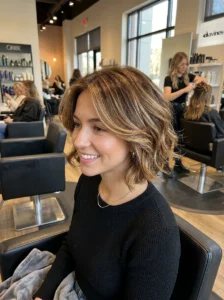
The same voluminous cutting technique paired with strategic color placement, lighter pieces woven throughout to enhance the appearance of movement and dimension as the hair catches light differently throughout the rounded shape.
Best for: Those wanting to maximize the visual dimension of the cut through color as well as cutting technique.
How to Style a Fluffy Bob for Maximum Volume
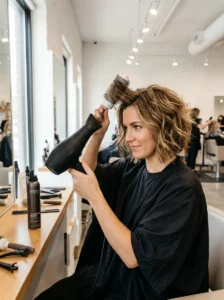
Getting the right cut is the essential foundation, but styling technique makes a significant additional difference in how voluminous and bouncy a fluffy bob actually looks day to day. Here’s the routine that’s worked consistently for me.
Apply a volumizing mousse to damp hair before blow-drying. I work this through evenly, focusing slightly more product at the roots, since this is where lift and volume need to be established first before the rest of the style comes together.
Blow-dry with a round brush, rolling the ends under and slightly outward. This technique, rather than simply drying the hair flat, is what encourages the signature rounded, full shape that defines this style. I work in sections, starting at the nape and moving upward.
Use a medium-barrel round brush, not an oversized one. A very large brush can actually smooth the hair too much for this particular style, reducing the textured fullness you’re trying to achieve. A medium brush creates more lift and a slightly more textured finish.
Finish with a light texturizing spray, scrunched gently through the ends. Rather than smoothing everything down after blow-drying, a light texturizing product worked through with scrunching motions enhances the soft, piece-y volume that gives this style its signature fluffy quality.
Consider a diffuser if your hair has any natural wave or texture. Diffusing on low heat, rather than blow-drying completely smooth, can actually enhance the fluffy effect for those with some natural texture to work with.
Avoid heavy, flat-ironing or excessive smoothing. While a fluffy bob can absolutely be styled relatively smooth at the surface, avoid completely flat-ironing the style, since this directly works against the volume and roundness that defines the entire concept.
Common Mistakes That Flatten a Fluffy Bob
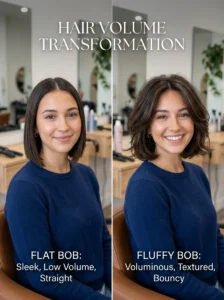
Through trial and error in my own styling routine, here are mistakes that consistently undermine the volume this cut is specifically designed to create.
Using too much heavy, oil-based product. Products popular for smoothing or adding shine to other hair types can genuinely weigh down the volume a fluffy bob depends on. Lightweight, volumizing formulas work significantly better for this specific style.
Brushing thoroughly after styling. A regular brush pulled through after the round-brush blow-dry smooths out exactly the texture and lift you worked to create. Light finger-styling maintains the fluffy quality far better than a full brush-through.
Skipping the root-focused volumizing step. It’s tempting to focus styling effort on the ends and overall shape, but the roots are where the foundational lift for this entire style comes from. Skipping this step undermines the volume from the very start of the styling process.
Letting hair air dry without any styling intervention. While some hair types can achieve nice natural texture through air drying, a fluffy bob specifically relies on the rounded, lifted shape created through intentional blow-drying technique. Air drying alone typically won’t achieve the same defined, voluminous silhouette.
Adapting This Cut for Different Hair Types
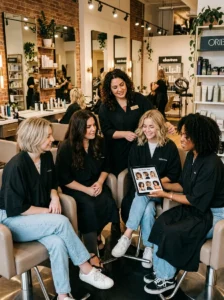
The fundamental fluffy bob concept can work across a genuinely wide range of hair types, but the specific technique and styling approach benefit from some adjustment depending on your starting texture and density.
Fine hair benefits enormously from this cut’s internal layering technique, since the strategic weight removal creates an illusion of fullness that fine hair often struggles to achieve through other styling methods alone. Focus extra attention on root-lifting products and techniques specifically.
Thick hair can achieve a particularly dramatic, full version of this style, though it’s worth discussing with your stylist whether some additional thinning might be needed to prevent the cut from looking overly heavy or bulky rather than fluffy and light.
Curly or wavy hair often achieves significant natural volume with minimal additional styling effort, since the existing texture does much of the volumizing work that straight hair needs more intentional technique to achieve.
Color-treated or chemically processed hair may have slightly different texture and porosity than virgin hair, which can affect how readily it holds the rounded, voluminous shape. A good stylist will factor your hair’s specific condition and history into the cutting and styling recommendations.
Maintenance Schedule for a Fluffy Bob
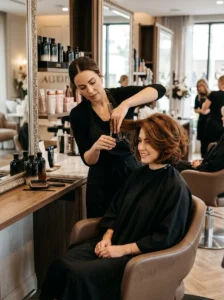
Because this style depends significantly on its precise internal layering and rounded perimeter shape, regular trims matter more than they might for a more loosely defined style.
I get a trim every six to eight weeks, which keeps the internal layering structure fresh and the perimeter shape appropriately rounded. Letting the cut grow out significantly longer between appointments tends to soften the dramatic volume and shape that makes this style work, as the layers grow out and the overall silhouette becomes more uniform and less deliberately fluffy.
How to Communicate This Cut to Your Stylist

Since “fluffy bob” is a descriptive rather than strictly technical term, clear communication helps ensure you and your stylist are picturing the same result.
Bring multiple reference photos showing the volume and roundness you want. This visual reference helps communicate the specific degree of fullness and texture you’re picturing far more effectively than the word “fluffy” alone.
Discuss the specific length you want explicitly. Fluffy bobs can range from a shorter, more dramatic version to a slightly longer lob-length variation. Be clear about exactly where you want the length to fall.
Ask about their internal layering approach. A stylist who can clearly explain how they plan to create volume through layering technique demonstrates the kind of technical understanding likely to produce the result you’re hoping for.
Talk honestly about your hair’s natural texture and density. This information helps your stylist adjust their specific technique to ensure the cut works with your hair’s natural characteristics rather than fighting against them.
My Honest Experience Months Later
Several months into wearing this cut, I can say it’s genuinely become one of my favorite haircuts, both for how it looks and for how much less daily styling effort it requires compared to some of my previous, more demanding style choices.
The volume genuinely holds throughout most of the day, even on days when my morning styling routine is rushed and imperfect. The cut itself does enough of the structural work that even a slightly hurried blow-dry still results in a reasonably full, bouncy shape, which has been a genuinely welcome change from styles that demanded much more precise daily technique to look intentional rather than flat.
Final Thoughts
If you’ve been drawn to the soft, voluminous, effortlessly full quality of a fluffy bob, I genuinely think it’s worth bringing this specific request, along with clear reference photos and an honest conversation about your hair’s natural texture, to your next salon consultation. The technique behind this style does real work that products and styling alone often can’t fully replicate, and the result, when executed well, delivers exactly the kind of soft, dimensional volume that makes this particular bob variation so consistently popular.