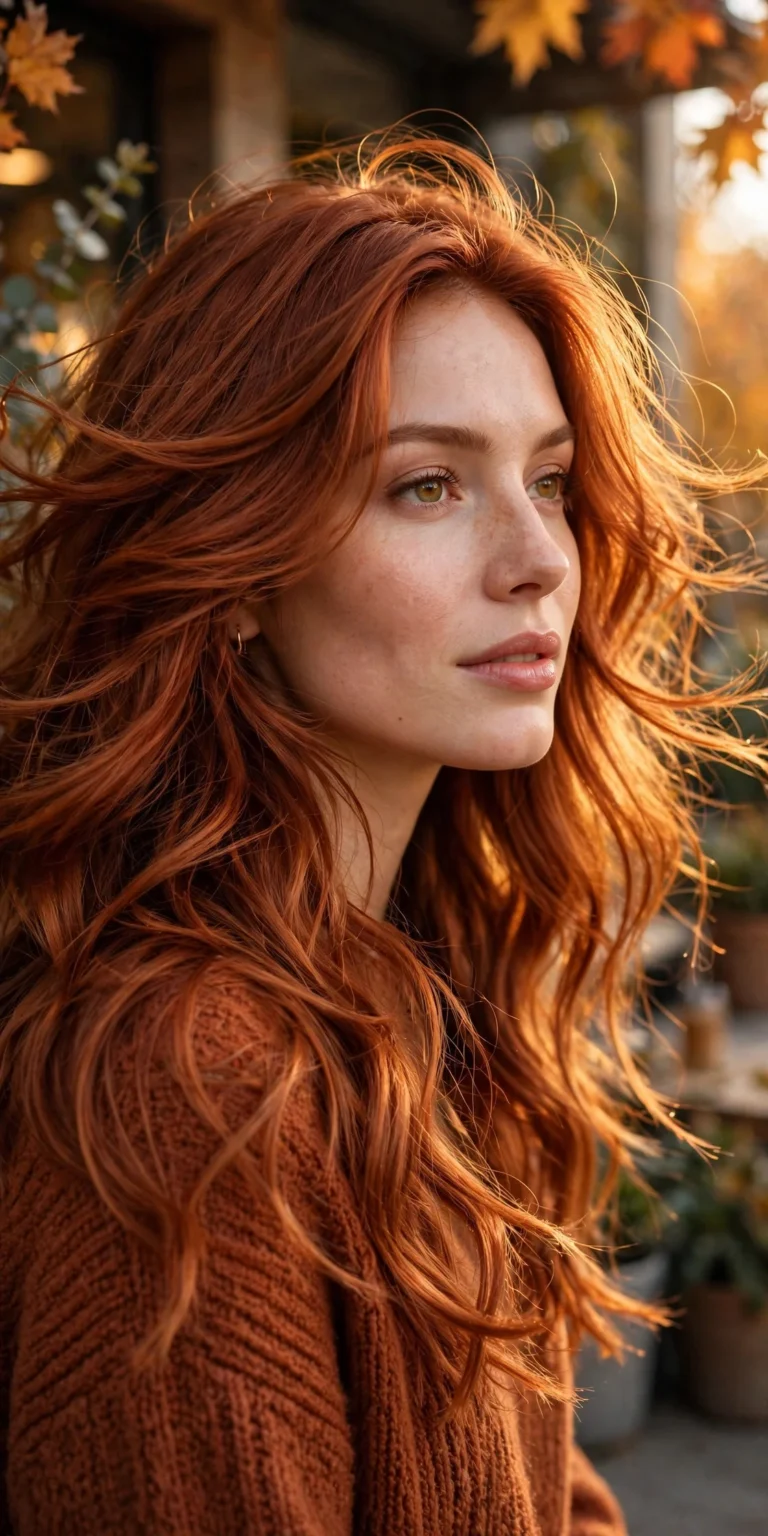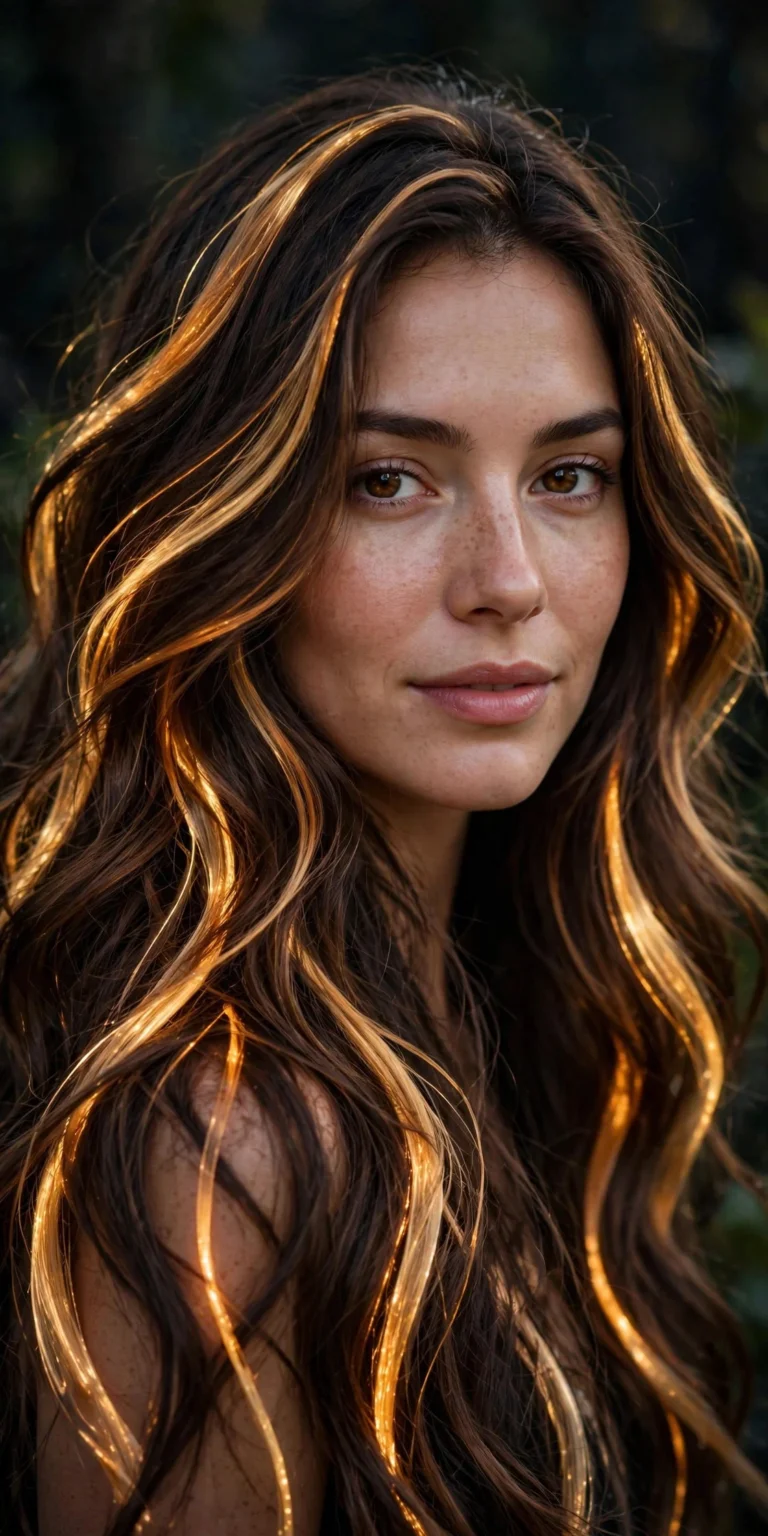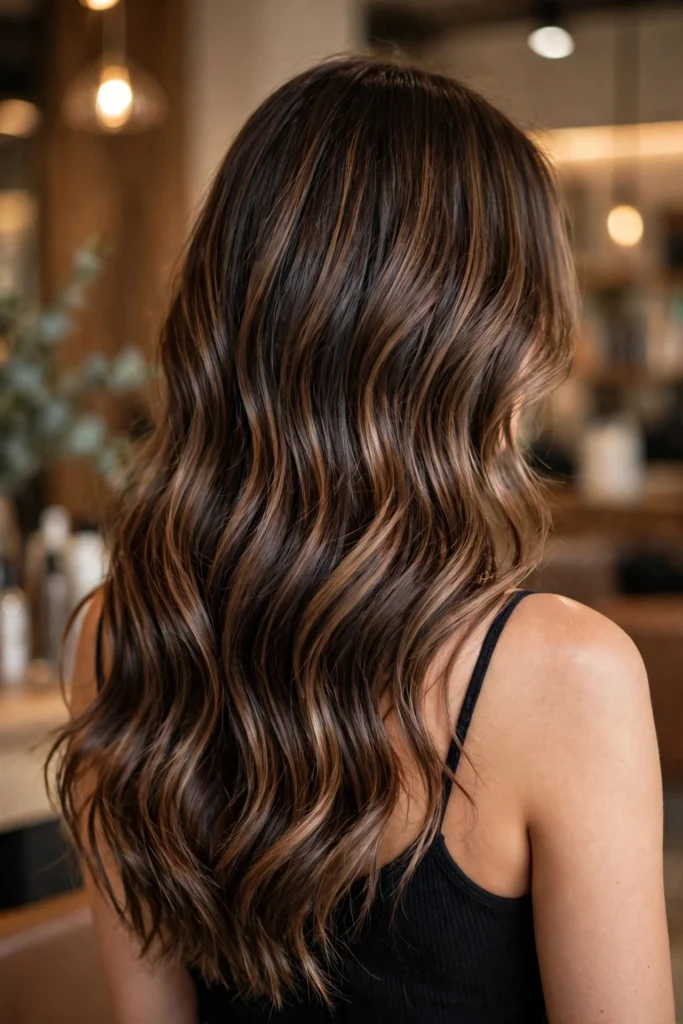
If you have dark hair and have ever walked out of a salon feeling like your color looks… flat, this one is for you. Espresso mocha balayage is the warm, low-maintenance answer to dark hair that needs depth. Think deep espresso brown as your base, with hand-painted mocha ribbons melting through the mid-lengths and ends. No harsh blonde, no fried ends, no six-week root appointments. Just rich, expensive-looking dimension that moves when you do. Here are 10 ways to wear it in 2026.
1Midnight Espresso Melt
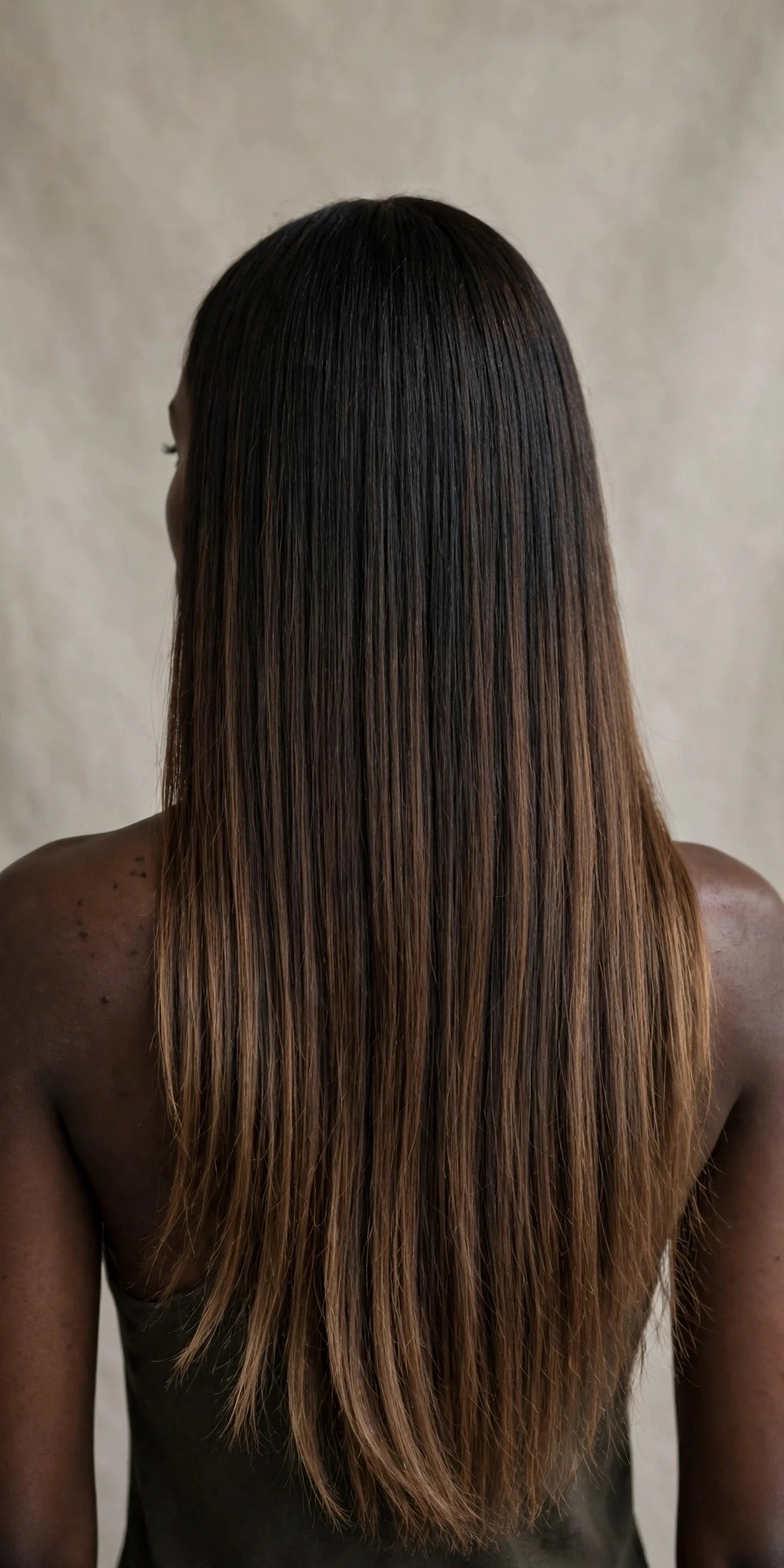
This is the subtlest version on the list, and honestly one of the prettiest. Your near-black or dark brown base stays untouched at the roots, then espresso tones melt into a slightly warmer mocha through the ends. It reads as one seamless color until light hits it, then the dimension shows up. Ask your colorist for a root melt with hand-painted mocha lowlights two levels warmer than your base, feathered from the mid-shaft down. It suits deep skin tones and olive undertones beautifully, and works on straight or wavy hair past the chin. Wash twice a week max with sulfate-free shampoo, refresh with a clear or mocha gloss every 10 to 12 weeks. Drawback: the subtlety means the effect fades fast in bright sun, and at $180 to $260 a session, you are paying for nuance that not everyone will notice.
2Mocha Ribbon Weave
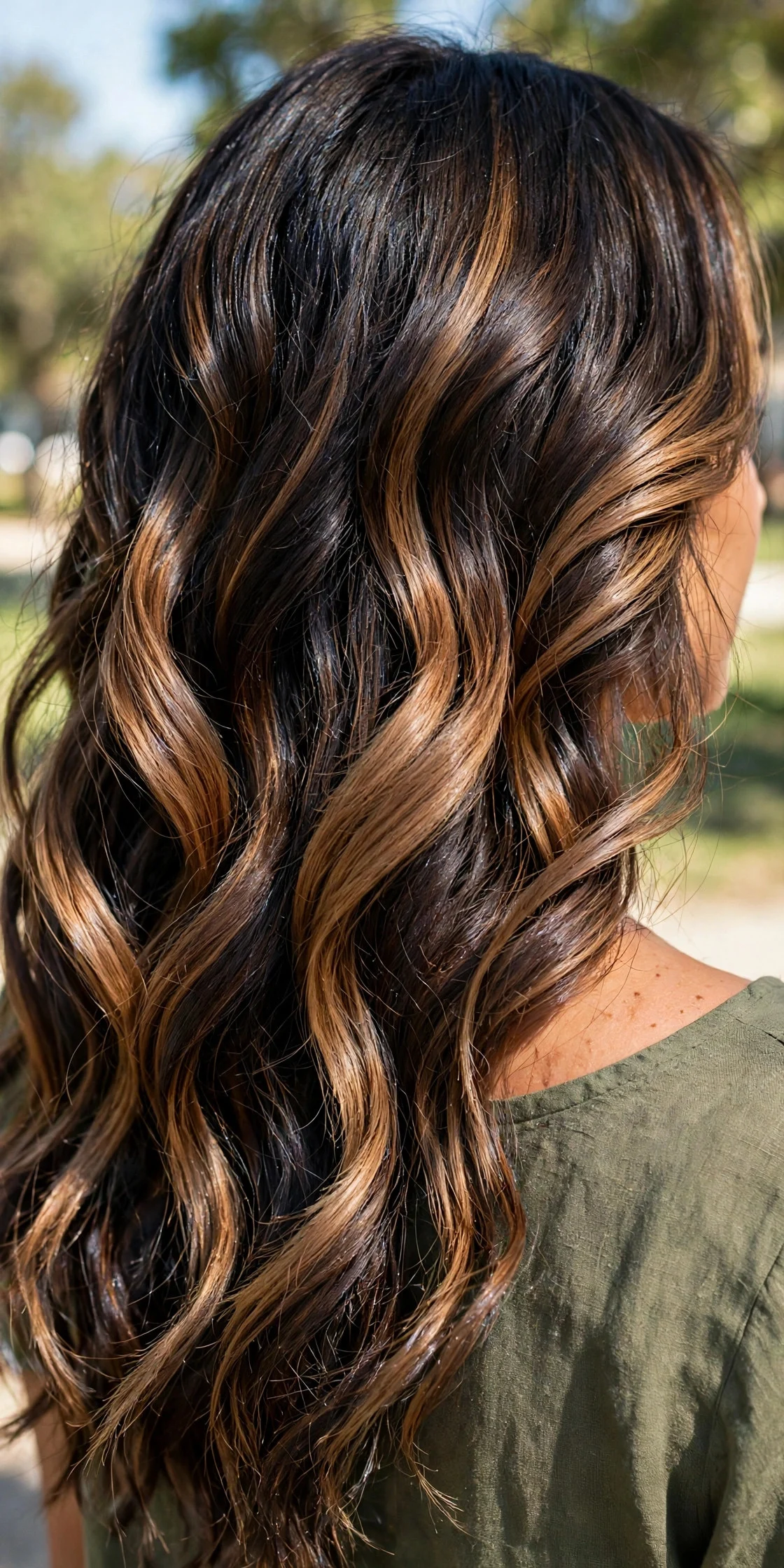
If you want the balayage to actually show, this is your pick. Wide, ribbon-like sections of warm mocha are painted through a dark espresso base in a woven pattern, so you get clear ribbons of caramel-mocha running through the lengths. Ask your colorist for chunky balayage weaves in a level 6 warm mocha over a level 3 to 4 base, kept away from the root by about two inches. This suits medium skin tones, oval and round faces, and thick hair that can carry bold pieces without looking sparse. Shampoo every three to four days, use a color-depositing mocha conditioner once a week, and re-gloss every 8 weeks. Drawback: ribbon balayage needs lifting, so expect $220 to $300 and some dryness at the lightened pieces, which will need regular trims and masks.
3Toasted Coffee Money Pieces
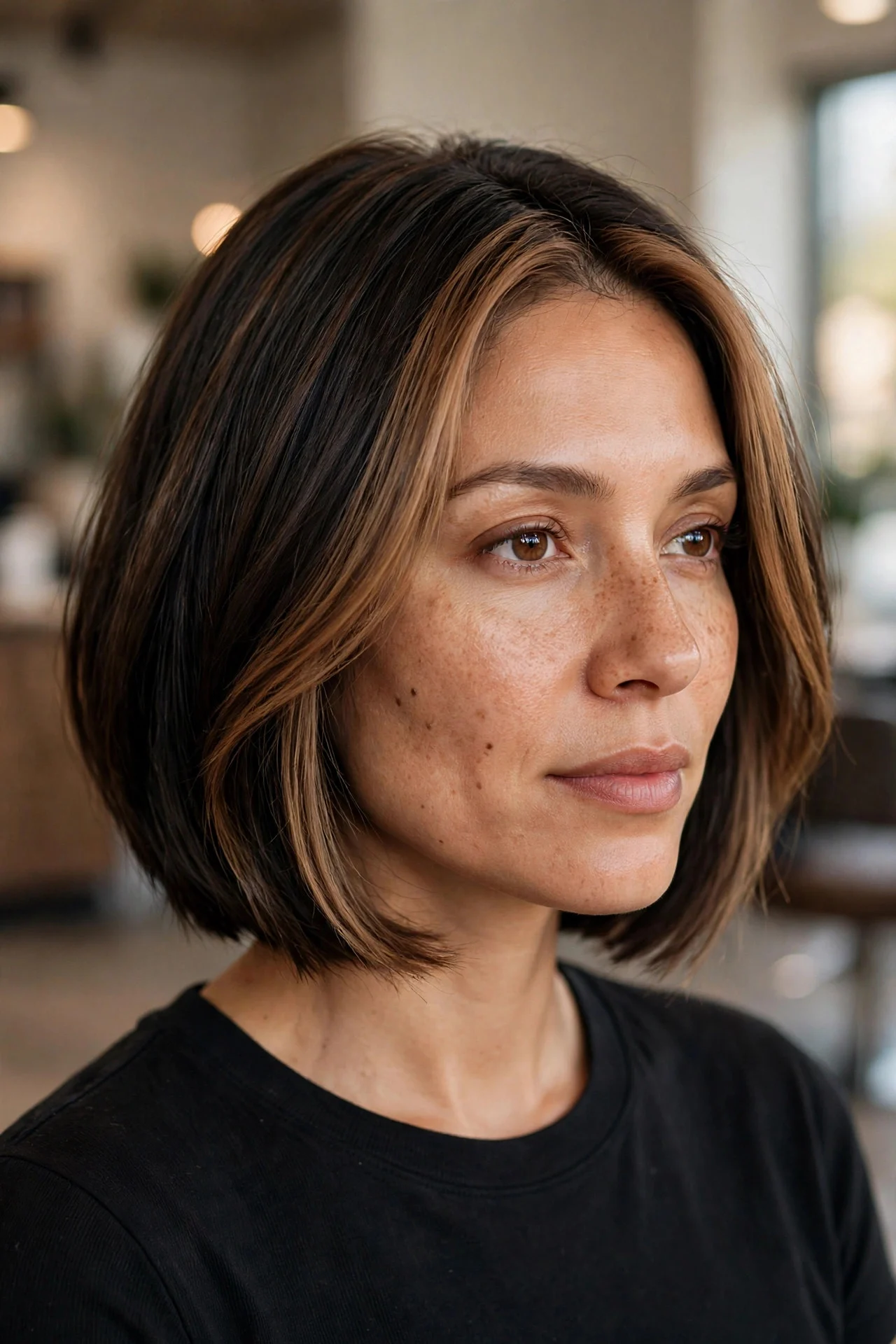
The money piece is that bright, face-framing section at the front, and in toasted coffee tones it is pure glow. The rest of your hair stays deep espresso, while two warm mocha panels around your face brighten your eyes and skin instantly. Ask your colorist for face-framing balayage pieces in warm mocha, starting about an inch from the root and sweeping back. This suits everyone, but it is magic on warm and neutral skin tones and square or heart-shaped faces, since the warmth softens sharp angles. It works on short bobs too, which most balayage cannot claim. Maintenance is easy: gloss just the front pieces every 6 to 8 weeks for $60 to $90. Drawback: those front pieces are the first to go brassy or fade from washing your face daily, so a blue shampoo or mini toner refresh is non-negotiable.
4Double-Shot Dimension
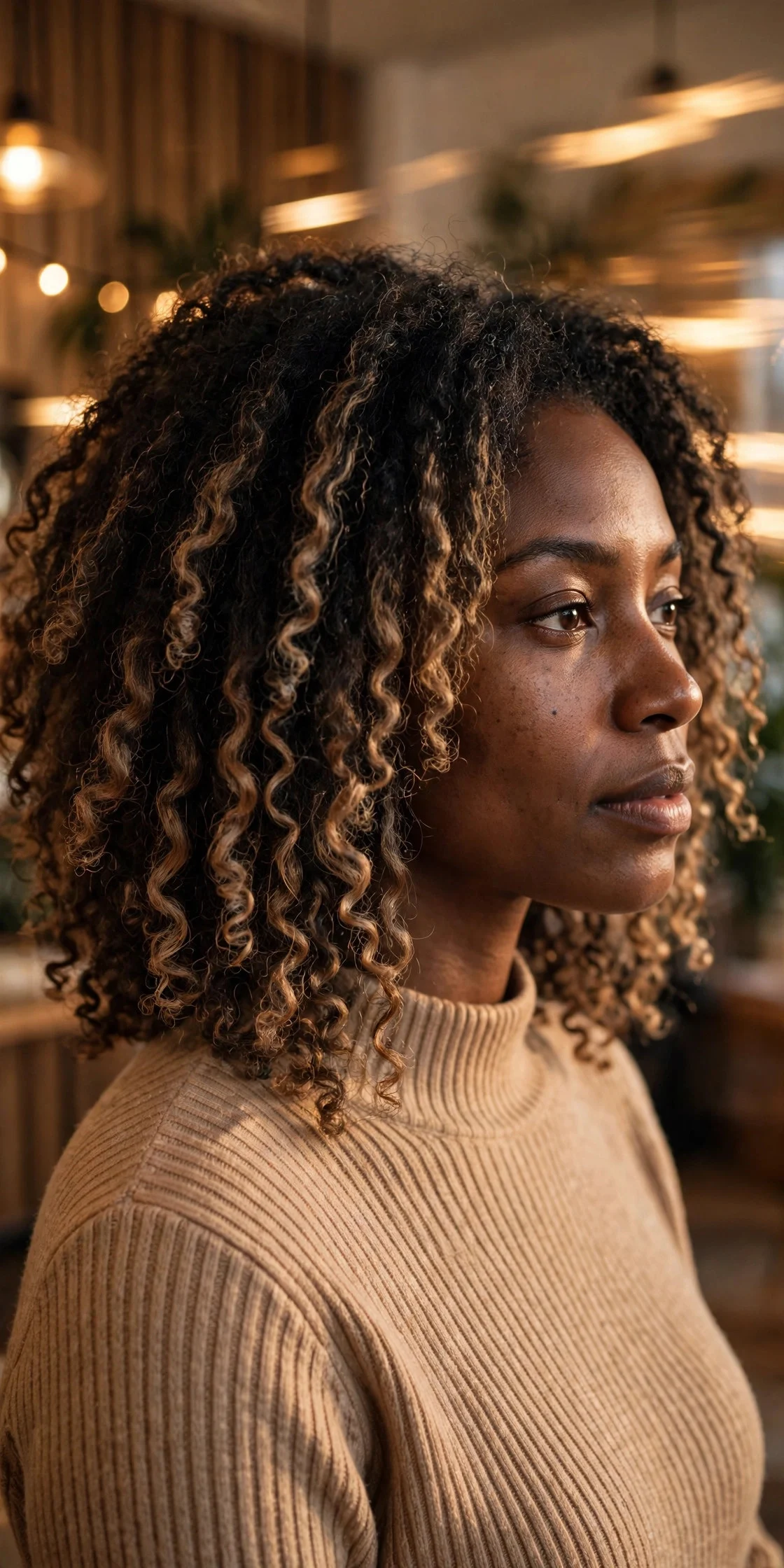
This one is for dark hair that refuses to show color. Two layers of mocha, one medium and one lighter, are painted in alternating sections so the dimension survives even indoors and in low light. It looks like coffee with a double shot poured through it: deep, dark, with visible warm movement. Ask your colorist for a dual-tone balayage, levels 5 and 7 warm mocha, on a level 2 to 3 base, with the lighter tone concentrated toward the ends. Best on coarse or very dark hair that eats single-process color for breakfast, and flattering on deep and medium skin tones. Maintenance: sulfate-free shampoo, cold final rinse, gloss every 10 weeks. Drawback: two rounds of lightener mean a longer appointment (three to four hours) and a $250 to $350 price tag, plus the ends will feel drier than your roots.
5Velvety Mocha Ombré Sweep
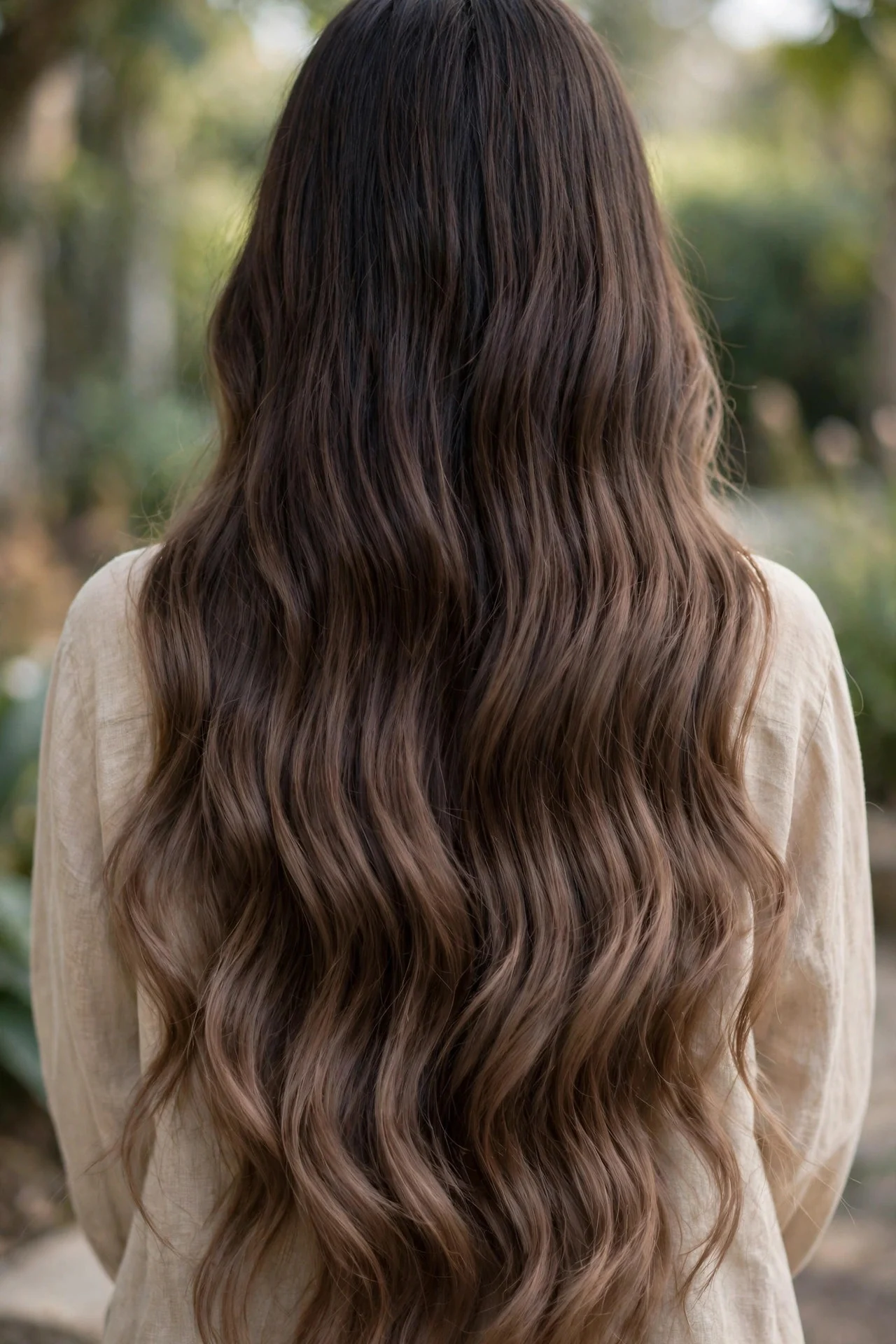
Part balayage, part ombré, all softness. The color sweeps from dark espresso roots into a velvety mocha through the last third of the hair, with a long, blurred transition instead of a line. It is the lowest-effort grow-out on this list because there is no root line to maintain. Ask your colorist for a balayage ombré with a melted transition, mocha ends no lighter than level 6, and a root shadow that matches your natural base. Suits long hair best (the transition needs length to blur), all skin tones, and anyone who wants six months between appointments. Gloss every 12 weeks, deep condition weekly. Drawback: on hair shorter than shoulder length the ombré can look blunt, and if the ends were already damaged, the lightening can push them over the edge. Budget $200 to $280.
6Cinnamon-Laced Espresso Balayage
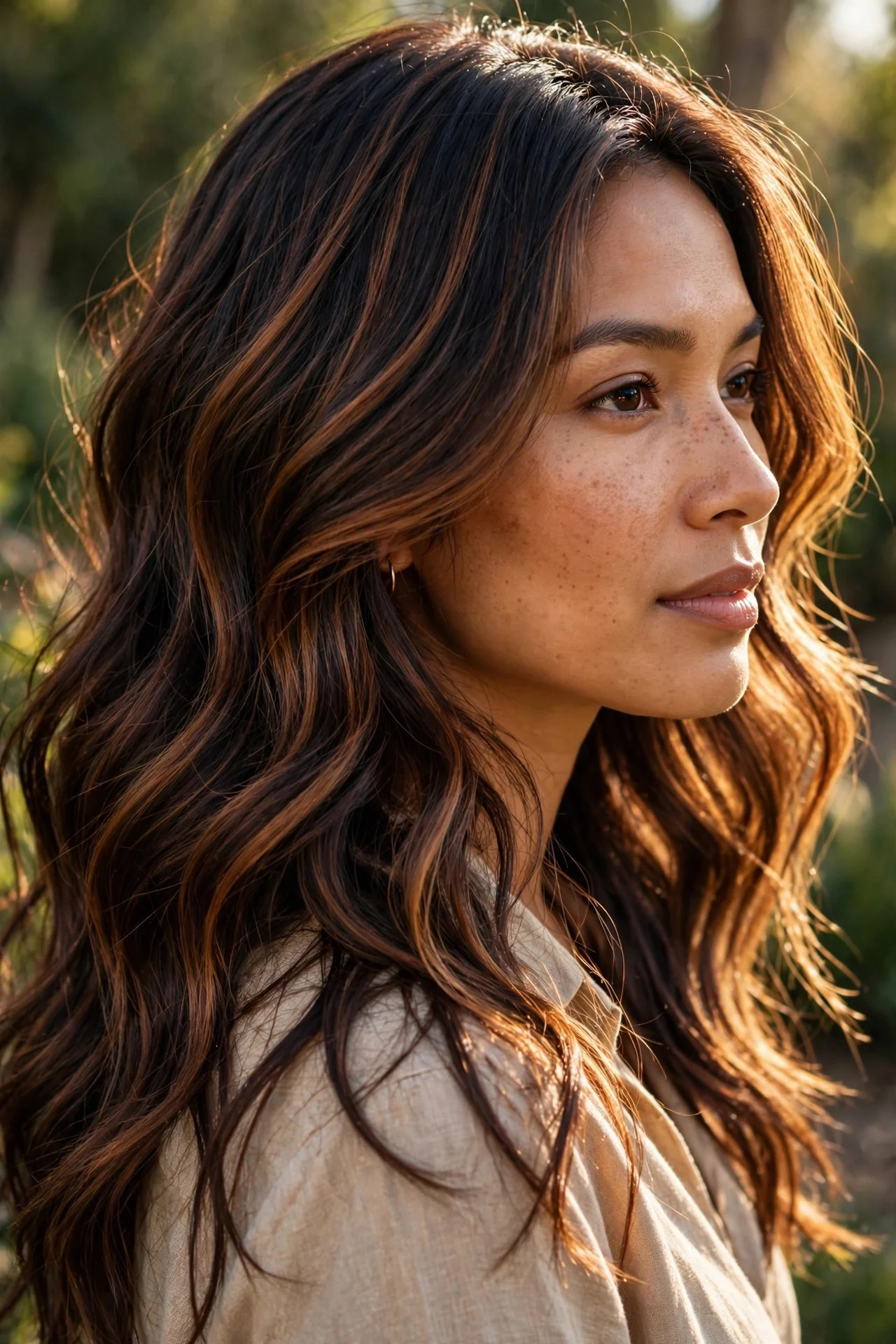
Mocha meets a whisper of cinnamon. Fine, spicy ribbons of cinnamon-mocha are woven through the espresso base, giving dark hair a warm, almost autumnal glow without going red. In sunlight it looks incredible. Ask your colorist for balayage in a cinnamon-mocha tone, about a level 6 with warm copper undertones, kept to fine sections so it reads as warmth rather than highlights. This suits warm skin tones, green and hazel eyes, and wavy or curly textures where the fine ribbons catch the light as you move. Wash with color-safe shampoo, refresh the warmth with a copper-mocha gloss every 8 to 10 weeks. Drawback: warm tones fade the fastest of any color family, so expect the cinnamon to wash toward plain brown by week six without toning, and the service runs $200 to $300.
7Dark Mocha Babylights Blend
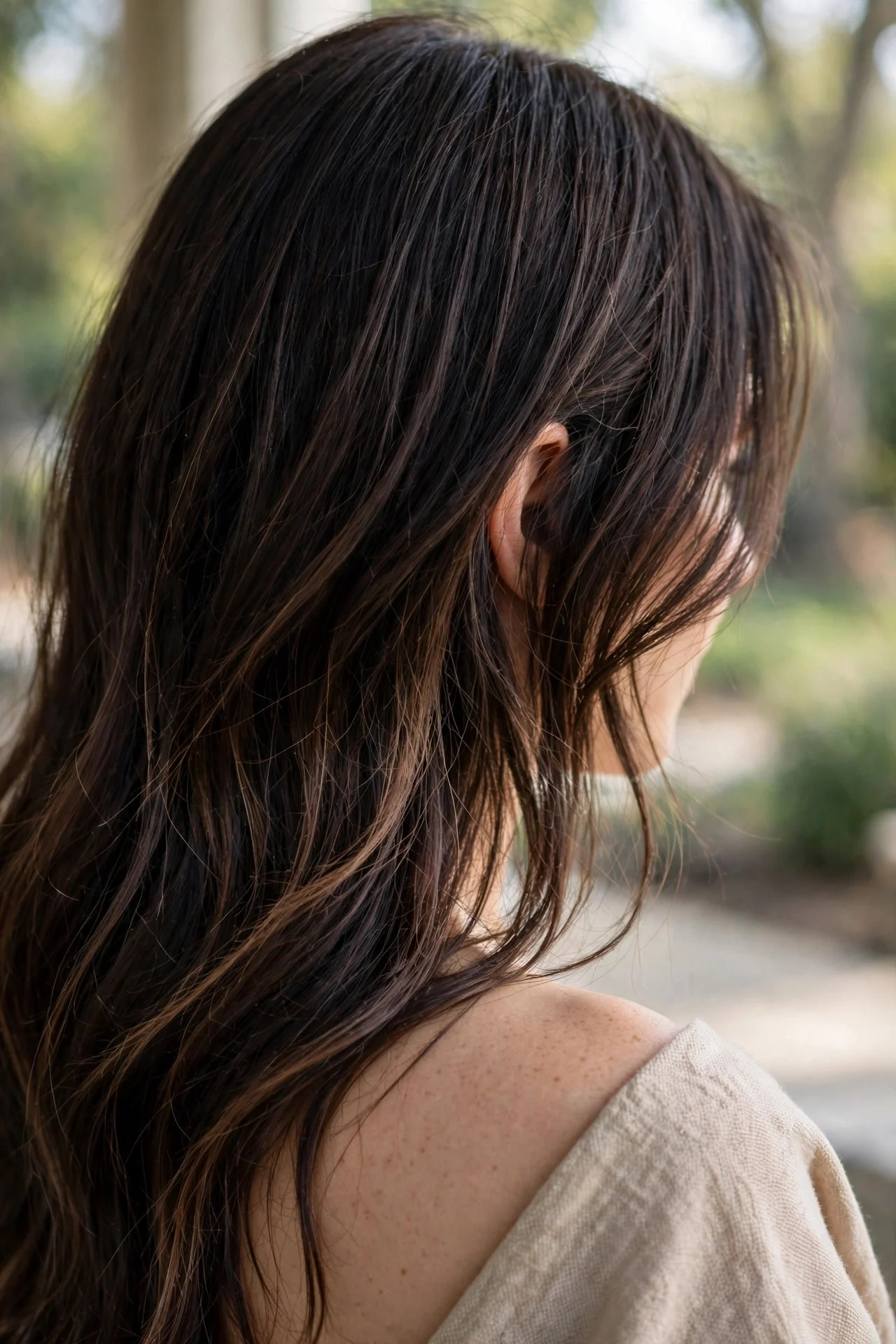
Babylights are ultra-fine highlights, and in mocha tones on dark hair they create the most natural dimension of all. From a distance your hair just looks like really healthy, shiny dark hair. Up close, you see dozens of tiny mocha threads. Ask your colorist for mocha babylights, one to two levels lighter than your base, concentrated from the ears down and around the face. Perfect for fine or thin hair, since the fine sections add visual fullness without chunky stripes, and for anyone in a conservative workplace. Suits all skin tones. Maintenance is simple: gloss every 12 weeks, minimal fading since the lift is so slight. Drawback: babylights take forever to paint (expect a three-hour appointment) at $220 to $320, and on very coarse hair the fine pieces can look frizzy if not smoothed.
8Smoked Mocha Face-Frame
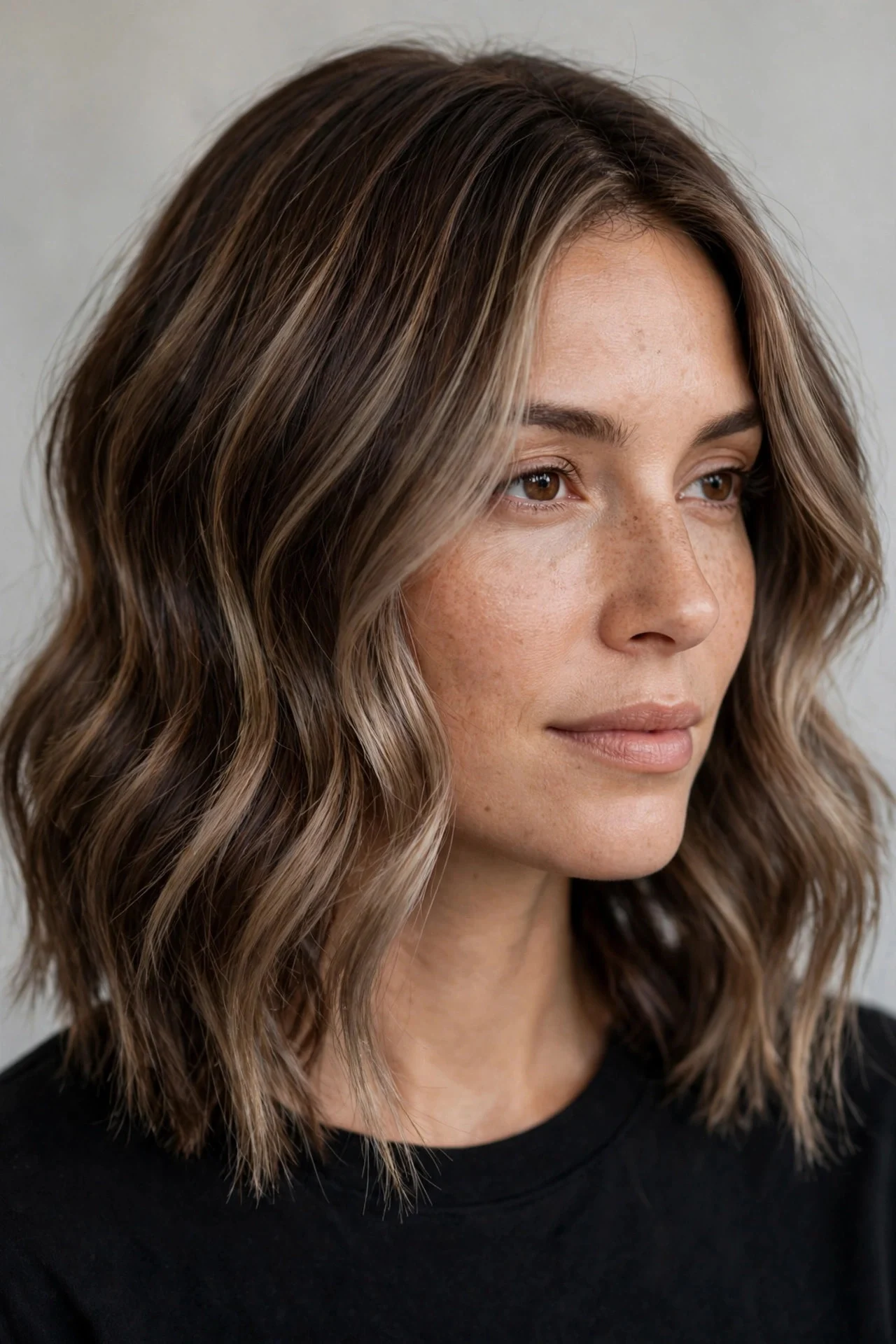
Edgier than the toasted money piece. This one frames the face with mocha that has a cooler, smoked finish, while the rest of the hair stays warm espresso. The contrast is subtle but modern, and it photographs beautifully. Ask your colorist for face-framing balayage in a neutral to cool mocha (level 6, beige-brown, not golden), blended back into warm espresso lengths. It suits cool and neutral skin tones, and angular face shapes, since the cooler tone adds definition. Works on lob to long lengths. Maintenance: a beige toner refresh every 8 weeks keeps the smoke from warming up, plus purple shampoo used sparingly (once every two weeks) if brassiness creeps in. Drawback: fighting warmth on dark hair is an uphill battle, so the smoked tone needs the most toning upkeep of any look here, and the front pieces run $80 to $120 per refresh.
9Cocoa Tip Dip
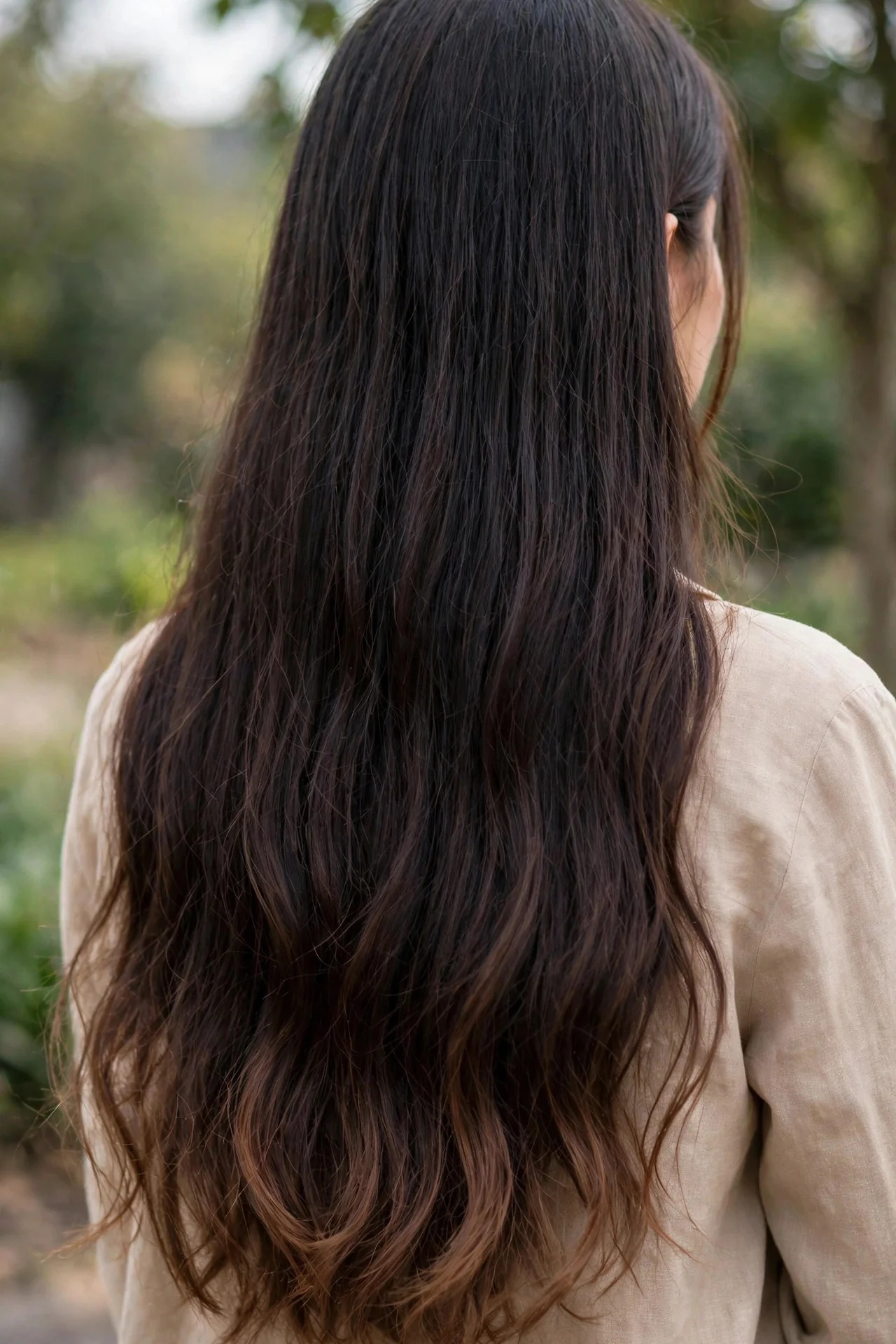
The most low-commitment option. Only the last two to three inches of the hair are lightened to a cocoa-mocha tone, like you dipped the ends in chocolate. Your roots and most of your length stay completely natural. Ask your colorist for balayage or hand-painted ends in a level 5 to 6 cocoa mocha, with a soft diffused line where the color starts. Ideal for anyone growing out damage, for very long hair, or for first-timers nervous about color. Suits all textures and skin tones. Grow-out is nearly invisible, so you can go six months or more between sessions. Drawback: the ends take the most abuse from lightener and daily wear, so they will need the most conditioning and regular dusting trims, and a full tip-dip service still costs $150 to $220 for what looks like a small change.
10Whipped Mocha Waves
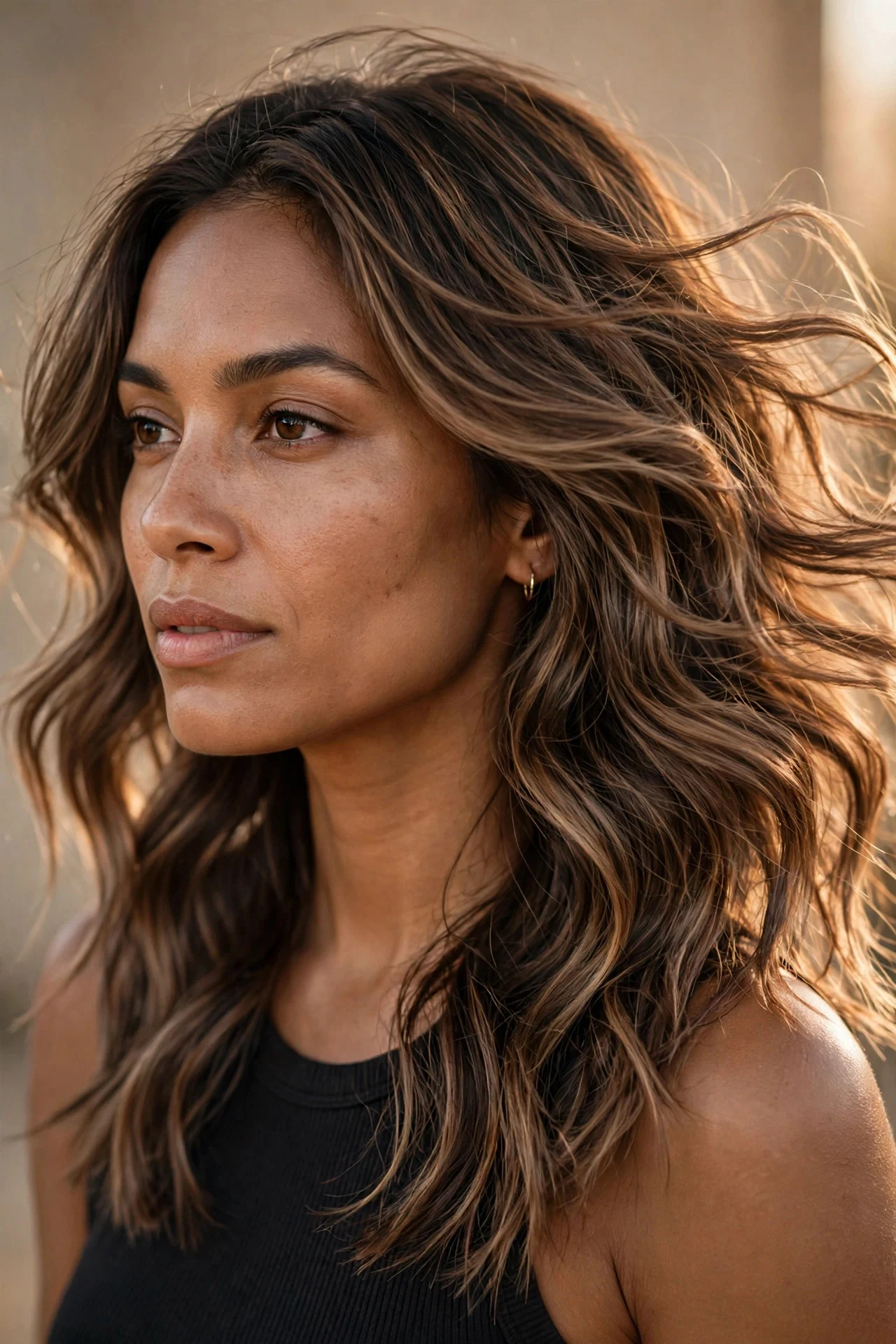
This is less a placement and more a finish, but it deserves its spot. Espresso mocha balayage is painted through the hair specifically to be worn in loose, whipped waves, with the mocha pieces placed to peak at the bends of each wave so the dimension pops with movement. Ask your colorist for balayage with the lightest mocha pieces placed at staggered heights, designed to show in waves and curls. Best on medium to long hair with natural wave or curl, and gorgeous on medium to deep skin tones. Styling is the maintenance here: heat protectant every time, loose waves with a 1.25-inch iron, and a flexible hold spray. Gloss every 10 weeks. Drawback: if you wear your hair straight most days, the strategic placement is wasted and the color looks random, so this only pays off if you actually style the waves. Service runs $220 to $300.
How to Care for Espresso Mocha Balayage
Mocha tones are warm, and warm tones are the first to fade. Wash with a sulfate-free, color-safe shampoo, and stretch washes to two or three times a week. Dry shampoo is your best friend on day three. Rinse with cool water at the end of every wash; hot water opens the cuticle and lets color slip out faster. Book a mocha or clear gloss every 8 to 12 weeks, depending on how fast your hair fades, because gloss is what keeps the richness alive between full color appointments. Always use a heat protectant before hot tools, since heat is brutal on warm tones and pushes mocha toward brassy orange. If brassiness shows up, a blue shampoo once a week (not daily) neutralizes orange without stripping the warmth you paid for. Deep condition weekly, get a dusting trim every 10 to 12 weeks, and wear a hat or UV spray in strong sun.
Frequently Asked Questions
Does espresso mocha balayage work on black hair?
Yes, and it is one of the best options for natural black or level 2 hair. Because the mocha pieces only go two to four levels lighter than your base, your colorist can usually achieve it with gentle lift rather than aggressive bleaching. The result is dimension that shows in sunlight and movement without the damage or upkeep of going blonde. Ask for a strand test first if your hair is very coarse or previously colored, since box dye or henna underneath can complicate the lift.
How long does mocha balayage last before it needs a refresh?
The balayage placement itself can last four to six months because there is no harsh root line growing out. But the tone is a different story: the warm mocha richness typically needs a gloss or toner refresh every 8 to 12 weeks to stop it fading dull or turning brassy. Think of it as two timelines. The shape of the color lasts half a year, while the tone needs a top-up every couple of months.
Will mocha balayage turn brassy on dark hair?
It can, because lifting dark hair exposes underlying orange and red pigment. That is normal, not a mistake. A skilled colorist neutralizes it with the right toner at the appointment, and your job is maintenance: cool rinses, sulfate-free shampoo, heat protectant, and a blue shampoo or gloss refresh when warmth creeps back. If your hair pulls very warm naturally, ask your colorist for a neutral mocha rather than a golden one, since neutral tones go brassy more slowly.
How much does espresso mocha balayage cost at a salon?
For a full head, expect $180 to $350 depending on your city, hair length, and how much lightening is involved. Partial or face-framing-only services run $80 to $150. The first appointment costs the most; follow-up gloss and toner refreshes every 8 to 12 weeks are usually $60 to $100. It is cheaper long-term than full highlights or root touch-ups because you are not in the chair every six weeks.
Can I get mocha balayage if my hair is already damaged?
It depends on how damaged. If your ends are stretchy, gummy, or breaking, lightening them further is a bad idea, and an honest colorist will say so. Options include a bond-building treatment series first, keeping the balayage to healthier mid-lengths only, or choosing the subtlest placements like the tip dip on virgin hair while you trim away damage. Get a consultation with a strand test before booking. Growing out damage while adding gentle mocha dimension is absolutely doable with patience.
Espresso mocha balayage is proof that dark hair does not need to go blonde to have dimension. Pick the placement that fits your lifestyle, be honest with your colorist about your maintenance habits, and keep up with the gloss appointments. Your hair will look rich, healthy, and expensive, which is really the whole point.
Keep exploring: Mocha Balayage, Chocolate Mocha Balayage, Balayage Wolf Cut.