
I went into a haircut consultation wanting “something shorter,” with no specific length in mind, and walked out with hair that hit right around my ear, a length I genuinely hadn’t considered before that appointment and had honestly never seen discussed much in any of the haircut articles or inspiration boards I’d browsed over the years. My stylist suggested it almost as an aside, mentioning that this particular length had become one of her favorite recommendations for clients wanting something bold but not as extreme as a full pixie or buzz cut.
Months later, I’ve become something of an evangelist for this specific length among my friends, mostly because so few of them had ever genuinely considered it as an option. Bobs get endless coverage. Pixies have their own dedicated corner of every hair trend article. But this particular in-between length, sitting right around or just above the ear, seems to exist in a strange blind spot in most mainstream hair content, despite being, in my own experience, one of the most striking and versatile short cuts available.
What Exactly Counts as an Ear-Length Haircut?
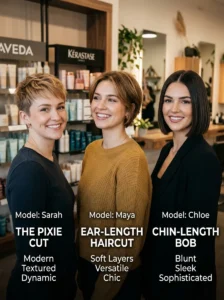
Before getting into specific styles and reasons this length deserves more attention, it’s worth defining the category clearly, since it occupies a somewhat narrow but genuinely distinct space between more commonly discussed short cuts.
Ear-length haircuts typically fall somewhere between a classic pixie, which is usually quite short and close to the head throughout, and a chin-length bob, which extends noticeably below the ear. This in-between length, hitting right at or just around the ear itself, creates a distinct silhouette that’s shorter and bolder than a bob but offers more length and styling versatility than a true pixie.
This specific length range tends to get overshadowed in most haircut content, likely because it doesn’t fit as neatly into the broader “bob” or “pixie” categories that dominate most coverage, despite being a genuinely distinct and often remarkably flattering option in its own right.
Why This Length Deserves More Attention

Having now lived with this specific haircut for several months, here’s what I’ve come to understand about why it works so well, and why I think it’s been genuinely underrepresented in broader hair trend conversations.
It offers a dramatic transformation without going to full pixie extremes. For those wanting a bold, noticeable change but feeling hesitant about an extremely short pixie or buzz cut, ear-length hair provides a meaningful middle ground, still dramatically shorter than a bob, but with slightly more length and a few more styling options than the shortest possible cuts.
It creates a genuinely striking, architectural silhouette. The specific proportion created when hair ends right around the ear has a distinct, almost sculptural quality that differs meaningfully from both the softer roundness often associated with bobs and the close-cropped simplicity of pixies.
It works well across a surprisingly wide range of hair types. Unlike some very short cuts that depend heavily on specific hair texture or density to look their best, this particular length seems to translate successfully across straight, wavy, and curly hair types with appropriate technique adjustments.
It offers genuine versatility for styling variation. Despite being quite short, there’s enough length at this specific cut point to allow for some real styling variety, sleek and tucked behind the ears one day, slightly tousled and textured the next, in a way that very short pixies sometimes can’t quite achieve.
1. The Classic Ear-Length Bob
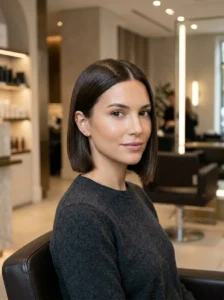
A straightforward, relatively blunt cut ending right at or just above the ear, with minimal layering throughout. This foundational version showcases the dramatic, architectural quality of the length itself without additional styling complexity.
This is close to what I have now, and the simplicity of the cut has been part of what makes it so genuinely easy to maintain and style day to day.
Best for: Straight to slightly wavy hair, oval and heart-shaped faces.
2. The Textured Ear-Length Crop

The same general length paired with significant internal layering and textured, piece-y ends, creating movement and a slightly more tousled, modern quality than the cleaner classic version.
Best for: Fine to medium hair density, those wanting added texture and volume.
3. The Asymmetrical Ear-Length Cut
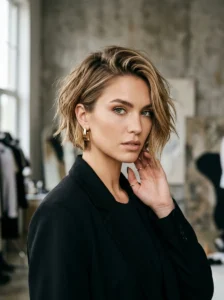
A deliberate length variation, slightly longer on one side, creating an asymmetrical silhouette that adds boldness and visual interest to the already striking ear-length proportion.
Best for: Those wanting a particularly fashion-forward, editorial statement.
4. The Curly Ear-Length Crop

A version specifically cut and shaped for curly or coily hair, allowing natural curl pattern and shrinkage to be factored into the cutting process, since curl texture significantly affects how this length actually sits and appears once dry.
Best for: Medium to tight curl patterns, those wanting to showcase natural texture at a shorter length.
5. The Ear-Length Cut With Curtain Bangs

The dramatic short length combined with soft, face-framing curtain bangs, adding a gentler, more romantic element to the otherwise bold, architectural silhouette.
Best for: Most face shapes, those wanting to soften the overall effect slightly.
6. The Sleek, Tucked Ear-Length Bob

A smooth, straight version of the cut specifically styled to be tucked behind the ears, emphasizing the clean lines and dramatic shortness of the length through a polished, minimalist styling approach.
Best for: Straight or easily straightened hair, those wanting a particularly polished daily look.
7. The Wavy Ear-Length Bob

The same length applied to naturally wavy hair, where the texture adds dimension and a slightly more relaxed, effortless quality to the otherwise structural cut.
Best for: Naturally wavy hair, those wanting texture alongside the dramatic length.
8. The Ear-Length Cut With Undercut Detail
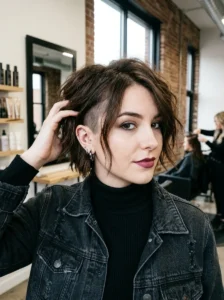
A subtle or more pronounced undercut section incorporated beneath the visible ear-length hair, adding an unexpected, modern edge that’s revealed when the hair is styled up or to one side.
Best for: Those wanting a bold, contemporary twist on the already striking length.
9. The Side-Parted Ear-Length Crop
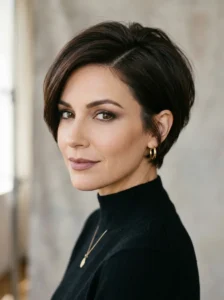
A deep side part combined with the ear-length cut, creating asymmetry and a slightly more dramatic, swept silhouette than a centered, symmetrical version of the same length.
Best for: Oval and square face shapes.
10. The Layered Ear-Length Shag

Heavier, more dramatic layering throughout the ear-length cut, creating a shaggier, more textured silhouette than the cleaner, more structured versions on this list, while maintaining the same overall dramatic length.
Best for: Medium to thick hair, those wanting maximum texture and movement.
Who This Length Tends to Suit Best
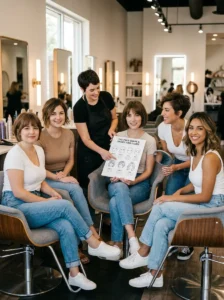
While I genuinely believe this cut deserves broader consideration than it typically receives, it’s worth being honest about the factors that affect how successfully it translates for different individuals.
Face shape considerations matter significantly at this particular length. Because ear-length hair sits so close to the face without the softening effect of additional length, face shape plays a notably important role in how the cut ultimately looks. Oval and heart-shaped faces tend to be particularly well suited to this length without requiring significant additional adjustment, while round or particularly angular face shapes may benefit from specific styling choices, like added height at the crown or strategic side-sweeping, to balance the proportions.
Ear shape and visibility become a genuine consideration that doesn’t come up with longer cuts. Since this length specifically showcases the ears rather than covering them, it’s worth honestly considering your own comfort level with this level of visibility before committing, something that simply isn’t a factor with most other haircut lengths.
Hair texture affects both the cutting technique and daily styling significantly. As mentioned in the style variations above, this length can absolutely work across straight, wavy, and curly textures, but the specific cutting approach and subsequent styling routine need real adjustment depending on your natural texture to achieve the best possible result.
How to Communicate This Specific Length to Your Stylist
Since this particular length category doesn’t have quite the same widespread recognition or standardized terminology as something like a classic bob or pixie, clear communication becomes especially important.
Use specific, measurable language rather than relative terms. Rather than simply saying “shorter than a bob, longer than a pixie,” specifically indicate that you want the length to hit right at or just above your ear, which gives your stylist a much clearer, more precise target than more general descriptive language.
Bring multiple reference photos showing the specific length you’re picturing. Given how this particular length sits in something of a blind spot in mainstream hair content, finding and sharing clear reference images becomes especially valuable for ensuring you and your stylist share the same vision.
Discuss whether you want your ears fully exposed or partially covered. Some versions of this cut fully expose the ears, while others use slightly longer pieces or specific layering to partially cover them while still maintaining the overall dramatic shortness. Clarifying this preference helps avoid a result that doesn’t match your comfort level with ear visibility.
Ask your stylist about their specific experience with this particular length. Given that it receives less mainstream attention and discussion than other common cuts, it’s worth directly asking whether your stylist has executed this specific length successfully before, rather than assuming general short-haircut experience automatically translates.
Styling Tips for Ear-Length Hair
Once you’ve committed to this length, here’s what I’ve learned about maintaining and styling it effectively day to day.
A small amount of product goes a long way at this length. Because there’s relatively little hair to work with compared to longer cuts, heavy product application can quickly look overdone or greasy. A small amount of lightweight texturizing paste or pomade, worked through with fingertips, is usually sufficient.
Blow-drying technique significantly affects the overall shape. Using a small round brush, even briefly, to direct the hair’s shape while blow-drying makes a meaningful difference in how polished or textured the final result appears, compared to simply air-drying without any directional styling.
Consider how the cut interacts with glasses, earrings, and other accessories. Since this length fully showcases the ear area, accessories like earrings become significantly more visually prominent than they would with longer hair that partially covers this area. This can be a fun styling opportunity or a consideration worth keeping in mind depending on your personal preference.
Regular trims matter more at this length than at longer lengths. Because the overall silhouette is so compact and precise, even small amounts of growth can noticeably shift the proportions and overall look. I get trims every four to six weeks to maintain the specific shape and length I want.
Addressing Common Hesitations About This Length
Based on conversations with friends who’ve expressed interest but hesitation about trying this particular cut, here are the concerns that come up most frequently, along with my honest perspective on each.
“I’m worried it will be too masculine or severe.” This concern often stems from limited visual reference for this length specifically, since it’s discussed so much less than other short cuts. In practice, the various styling approaches outlined above, from soft curtain bangs to gentle waves, can create results that feel just as soft and feminine as longer cuts, while still maintaining the dramatic length itself.
“I’m not sure my ears are ‘nice enough’ to show off this much.” This is a genuinely common worry, but I’d encourage reframing this concern. Ears, like any other feature, vary naturally in shape and size, and this length, in my own experience and observation, tends to look intentional and striking regardless of specific ear shape, rather than requiring some idealized standard to look good.
“I’m worried about the growing-out phase.” This is a legitimate practical consideration, since shorter cuts generally do have a more noticeable growing-out period than longer styles. However, because this length already sits in a versatile, in-between zone, growing it out toward a bob length tends to feel like a more natural, gradual progression than growing out a true pixie or buzz cut would.
How This Length Compares to More Commonly Discussed Short Cuts
Understanding how ear-length hair specifically differs from the more frequently covered pixie and bob categories helps clarify exactly where its unique appeal lies.
Compared to a classic pixie, ear-length hair offers somewhat more length and, as a result, slightly more daily styling versatility, while still delivering much of the same dramatic, bold transformation that draws people to very short cuts in the first place.
Compared to a chin-length bob, ear-length hair makes a noticeably bolder, more striking statement, with the shorter length creating a more architectural, attention-grabbing silhouette than the comparatively softer, more conventional bob shape.
The maintenance commitment sits between these two categories as well. Trims are needed more frequently than a bob would typically require, but the styling versatility and slightly longer length compared to a true pixie can make the day-to-day routine feel marginally less demanding than maintaining the most extremely short cuts.
My Honest Experience Since Making the Cut
Several months into wearing this length, I can genuinely say it’s been one of the more confidence-boosting haircut decisions I’ve made, partly because of how distinctly it stands out compared to more commonly seen short cuts in my everyday life.
The compliments I’ve received have frequently included some version of “I’ve never seen that length before” or “that’s such a unique cut,” which has been a genuinely fun departure from more standard reactions to more commonly chosen haircuts. There’s something satisfying about wearing a length that so few people seem to consider, despite how striking and versatile it’s proven to be in my own daily experience.
Final Thoughts
If you’ve been considering a dramatic haircut change but feel caught between the extremes of a classic bob and a true pixie, I’d genuinely encourage giving this specific ear-length option real consideration, even though it doesn’t receive nearly the same attention in most mainstream hair content. In my own experience, it offers a genuinely striking, versatile middle ground that deserves a much bigger spotlight than it typically gets.
Sometimes the best haircut decisions come from the options nobody’s really talking about, rather than the ones dominating every trend list.