
I sat in the salon chair for almost two hours before my stylist made the first cut. Not because the style itself takes that long, but because I kept asking questions, looking at reference photos, and generally stalling. The curly wolf cut is one of those styles that looks absolutely incredible in photos and videos, but it’s also a real commitment, and I wanted to know exactly what I was signing up for before any scissors touched my hair.
A year later, I’m glad I asked all those questions, because the curly wolf cut turned out to be both better and more complicated than I expected. If you’ve been considering this cut for your curls, I want to give you the honest version — not just the highlight reel you see on social media, but what it’s actually like to live with day to day.
What Is the Curly Wolf Cut, Exactly?
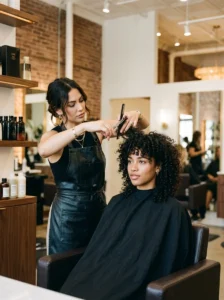
The wolf cut, in general, is a hybrid hairstyle that combines elements of a shag and a mullet — heavily layered throughout, with shorter pieces around the crown and face, and longer length maintained toward the back and ends. It originated as a style for straight hair but exploded in popularity once people with curly and wavy hair started adapting it.
The curly version takes that same heavy layering concept and applies it to natural curl patterns. Because curls shrink and behave differently than straight hair, the layers are usually cut while the hair is dry, allowing the stylist to see exactly how each curl will sit and bounce once finished.
The result, when done well, is an incredibly voluminous, textured, almost wild-looking style that makes the most of natural curl movement. It’s not a neat, polished cut. It’s meant to look a little untamed — but in a very intentional, styled way.
Why I Wanted It

I’d been wearing my curls in the same long, one-length style for years. It was fine. It worked. But it also felt a little flat — literally. All that length with no layering meant my natural curl pattern was getting weighed down instead of bouncing the way it does in photos of other curly girls I followed online.
I wanted volume. I wanted my curls to actually do something instead of just hanging there. And after watching probably forty different wolf cut transformation videos, I was convinced this was the answer.
It mostly was. But there were some surprises along the way that I wish someone had told me about first.
The Honest Pros

Let’s start with what genuinely worked, because there’s a lot to love about this cut when it’s done right.
The Volume Is Real
This is not an exaggeration for social media. Removing weight through heavy layering genuinely transforms how curls sit and bounce. My hair, which used to hang in a fairly flat, weighed-down shape, suddenly had life and movement it never had before. The curls at the crown spring upward instead of being pulled down by length, and the overall silhouette is dramatically fuller.
It Works With Curl Shrinkage Instead of Fighting It
One thing I appreciated about my stylist’s approach was that the layers were specifically planned around how my curls shrink when dry. Rather than fighting the natural shrinkage, the cut uses it — shorter layers shrink up more dramatically, creating that signature wolf cut volume and shape at the crown, while longer layers underneath provide structure and length.
Second and Third Day Hair Looks Even Better
This was a genuinely pleasant surprise. Unlike some curly styles that look best fresh out of the shower and gradually decline, the curly wolf cut tends to look even better as the days go on. The layers settle, the curls relax slightly into their pattern, and the overall texture becomes softer and more lived-in without losing shape.
It’s Genuinely Versatile
I’ve worn this cut completely natural and air-dried, diffused for extra volume, and even straightened on occasion (though I rarely do this anymore — more on that later). It adapts to different styling approaches better than I expected for such a specific, dramatic cut.
The Honest Cons
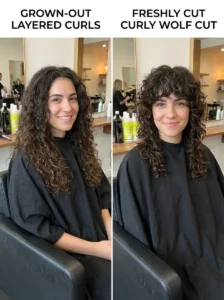
Now for the parts that nobody mentions in the glowing video transformations.
The Growing-Out Phase Is Genuinely Awkward
Heavy layering means there’s a significant difference in length between the shortest and longest pieces of hair. As everything grows out, that difference becomes less intentional-looking and more just uneven. Around the four-month mark, my hair started looking less “effortlessly wild” and more just messy in a way that wasn’t cute.
If you’re not committed to maintaining the cut with regular trims, be prepared for an awkward in-between phase that’s harder to manage than growing out a more uniform length.
Frequent Trims Are Necessary to Maintain the Shape
I get a trim every eight to ten weeks now, which is more frequent than I was used to with my old one-length style. The dramatic layering needs upkeep to keep the shape looking intentional. If budget or time is tight, this is a real factor to consider.
Styling Time Initially Increased, Not Decreased
I went into this expecting a wash-and-go style, and to some extent it is — but getting the technique right took practice. In the first month, my styling routine actually got longer because I was relearning how to apply product and scrunch in a way that worked with the new layers. It evened out eventually, but the adjustment period was real.
It Doesn’t Photograph the Same From Every Angle
The wolf cut is famously photogenic from the front and three-quarter angles, where the volume and layering are most visible. From directly behind or from certain side angles, especially when the hair is pulled back, the dramatic shaping is much less obvious and can honestly look a little uneven if you’re not used to it.
Straightening It Is a Different Story
This is something I learned the hard way. Because the cut is designed around how curls shrink and sit, straightening it reveals just how dramatic the layering really is — and not always in a flattering way. My one attempt at straightening resulted in a shape that looked far more choppy and uneven than I expected. If you like to switch between curly and straight styling regularly, this is worth discussing with your stylist before committing, since some adjustments to the cut can help it transition better between textures.
Who This Cut Actually Works Best For
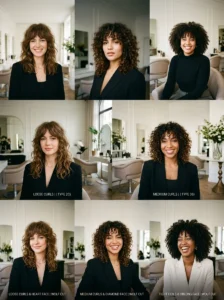
After a year of wearing this style and watching friends with different curl types try it too, here’s my honest assessment of who this cut suits best.
Curl pattern: Medium to tight curls tend to show off this cut’s volume and shape most dramatically. Looser waves can still work, but the dramatic layering effect is less pronounced and may require more styling effort to achieve the signature wolf cut look.
Hair density: This cut genuinely transforms thin to medium density curly hair by adding the appearance of volume and fullness. For very thick, dense curly hair, the heavy layering can sometimes create more bulk removal than volume, so it’s worth having a detailed conversation with your stylist about technique.
Hair length starting point: You’ll get the most dramatic version of this cut starting from medium to long hair, since there needs to be enough length to create the contrast between the short, voluminous top layers and the longer underlayers. Starting from short hair is possible but the wolf cut effect will be more subtle.
Lifestyle: This cut suits people willing to commit to regular trims and who don’t mind an adjustment period while relearning their styling routine. If you need a completely set-it-and-forget-it style, this might not be the best fit.
What I’d Tell My Past Self
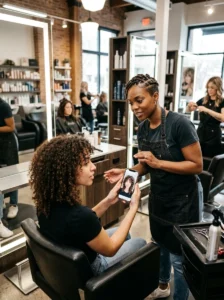
If I could go back to that two-hour consultation and give myself advice, here’s what I’d say:
Ask your stylist to start more conservatively than you think you want. You can always go back for more layers at your next appointment, but you can’t undo layers that turn out to be more dramatic than you expected.
Budget for trims every eight weeks, not just whenever you remember. This cut depends on its shape staying fresh.
Be patient with the first month. The adjustment period in learning to style it is real, and it gets significantly easier with practice.
Have an honest conversation about your curl density and pattern before committing. What looks incredible on someone with a completely different curl type may not translate exactly the same way to yours.
How I Style Mine Now

A year in, here’s my actual routine, which has become much simpler than it was initially:
I wash and condition with curl-specific products, then apply a lightweight curl cream to soaking wet hair, scrunching upward in sections. I add a small amount of gel on top for hold and definition, scrunch again, and either air dry or diffuse on low heat depending on how much time I have.
The key difference from my old routine is that I now scrunch more deliberately at the crown to encourage the shorter layers to spring up and create that signature volume, rather than just applying product evenly and letting everything fall the same way.
Once or twice a week, I’ll do a refresh on day two or three hair using a water and leave-in conditioner mix in a spray bottle, scrunching gently to revive any curls that have lost definition overnight.
Is It Worth It?

Here’s my honestly honest answer: yes, but go in with realistic expectations.
The curly wolf cut gave me volume and movement my hair never had before, and a year later I still get compliments on it regularly. But it required more maintenance, more styling adjustment, and more patience during the growing-out phases than the social media transformation videos let on.
If you’re someone who’s willing to commit to regular trims and doesn’t mind a learning curve with styling, I think this cut is absolutely worth trying. If you’re looking for a completely low-maintenance, set-it-and-forget-it style, you might want to consider a more subtly layered cut instead.
For me, the volume and bounce I gained were worth every awkward growing-out month and every slightly longer styling session. But I wanted you to know all of that going in, rather than finding out the hard way like I did.