
I want to start with something I told my stylist almost word for word at my last appointment: “I want texture, not chaos.” I’d been looking at shag haircuts for months, drawn to the movement and volume, but every time I searched for inspiration photos, half of what came up looked less like an intentional style and more like hair that hadn’t been brushed in a week. That’s not what I wanted. I wanted the controlled, layered, deliberately textured version — the kind that looks effortless because of skill, not neglect.
My stylist understood exactly what I meant, and the curly shag I walked out with that day struck precisely the balance I was after. It’s been almost a year now, and I still think it’s one of the smartest haircut decisions I’ve made for my curl type.
If you’ve felt the same hesitation — wanting the texture and movement of a shag without it tipping into looking unkempt — this is the breakdown I wish I’d had before my appointment.
What Separates a Good Curly Shag From a Chaotic One
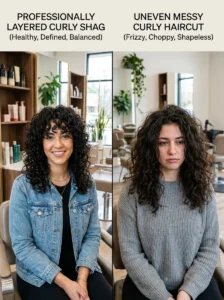
This distinction matters more than almost anything else when it comes to this particular cut, so let’s start here.
A chaotic curly shag usually happens when layers are cut too unevenly, without enough consideration for how the specific curl pattern will shrink and fall. The result is hair that looks more accidental than styled — uneven clumps, awkward shorter pieces sticking out at odd angles, and an overall silhouette that lacks intentional shape.
A well-executed curly shag, by contrast, still has plenty of movement and layering, but the layers are placed thoughtfully to create a cohesive overall shape. There’s a clear sense of where the volume sits, how the face-framing pieces fall, and how the ends move. It looks textured and alive, not random.
The difference almost always comes down to the stylist’s technique and experience with curly hair specifically, which is something I’ll get into in more detail later in this post.
1. The Classic Curly Shag
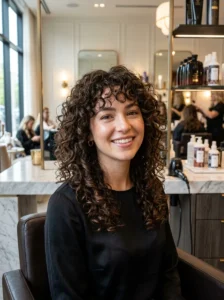
Even, well-distributed layers throughout the length of the hair, creating consistent volume and movement from crown to ends. This is the foundational version of the cut and the one most stylists will default to if you don’t specify a particular variation.
Best for: Medium curl patterns, medium to long hair lengths.
2. The Curtain Fringe Curly Shag

The classic shag layering combined with soft, curly curtain bangs that frame the face. This addition softens the overall look and adds an extra dimension of face-framing texture without disrupting the shag’s signature movement.
This is the version I have, and the curtain fringe has genuinely become my favorite feature of the whole cut.
Best for: All curl patterns, oval and heart-shaped faces especially.
3. The Short Curly Shag
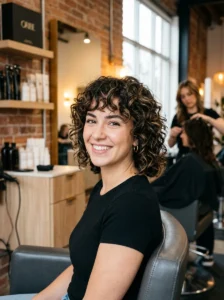
A more cropped version of the shag, typically falling between the chin and shoulders, with the same layering principles applied to a shorter overall length. This version tends to show off curl bounce and volume even more dramatically since there’s less weight pulling the curls down.
Best for: Tight to medium curls, those wanting lower maintenance length.
4. The Long Curly Shag

Layers extending through much longer hair, often past the shoulders, with face-framing pieces and movement throughout while still maintaining significant overall length. This version requires more careful layering to avoid looking stringy or thin at the ends.
Best for: Thick to medium density curls, those who want to keep length.
5. The Curly Mullet Shag
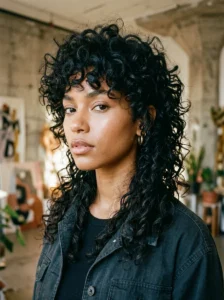
A shag with a slightly more dramatic length difference between the front and back sections, borrowing from mullet styling while maintaining the shag’s overall textured quality throughout. This version leans more editorial and bold.
Best for: Medium curls, those wanting a fashion-forward statement.
6. The Subtle Curly Shag
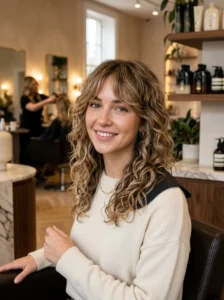
A toned-down version with fewer, more gently blended layers, creating soft texture and movement without the more dramatic volume of a classic shag. This works well for those who want a hint of the shag’s texture without a complete departure from a more uniform shape.
Best for: Loose curls and waves, those new to layered cuts.
7. The Voluminous Crown Shag
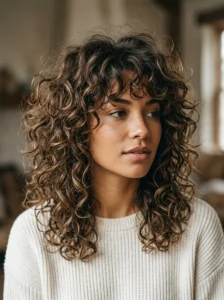
Layers concentrated more heavily at the crown to create maximum height and volume at the top of the head, while the lengths remain comparatively less layered. This creates a strong, voluminous silhouette from the front while keeping the rest of the cut more manageable.
Best for: Fine to medium density curls needing volume at the root.
8. The Curly Shag with Money Piece
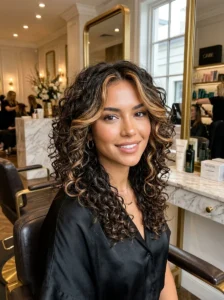
The classic shag layering paired with subtle, well-blended face-framing highlights. The combination of cut and color adds another dimension of brightness and movement around the face without overwhelming the overall look.
Best for: All curl patterns, those wanting a multidimensional finish.
9. The Tight Curl Shag
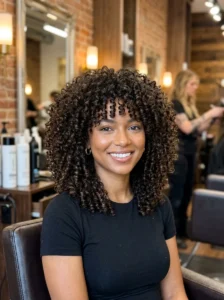
A version of the shag specifically tailored for tight curl and coil patterns, where the layering technique accounts for significant shrinkage and is often cut while completely dry to gauge true volume and shape.
Best for: Tight curls and coils, all face shapes.
10. The Wavy Shag

The same layering principles applied to looser, wavy hair rather than defined curls, creating a softer, beachier version of the texture. This variation tends to look slightly more relaxed and effortless than versions on tighter curl patterns.
Best for: Loose waves, medium to long lengths.
How to Communicate “Texture, Not Chaos” to Your Stylist

This phrase worked well for me, but here’s how to break it down even further so your stylist has a clear sense of what you’re picturing.
Bring photos, but be specific about what you like in each one. Instead of just showing a photo, point out specific elements: “I like the volume at the crown in this one” or “I like how controlled the layers look in this photo, not as wild as this other one.”
Mention if you want symmetry. A chaotic shag often comes from asymmetrical, random-feeling layers. If you want a more balanced, intentional look, say so directly.
Discuss your willingness to style it. A shag that’s meant to look “textured, not chaotic” sometimes requires more deliberate styling than a wash-and-go cut. Be honest about how much time you’re willing to spend.
Ask about layer placement, not just length. Length is only part of the equation. Ask your stylist where they’re planning to place the heaviest layering and why, so you understand the shape they’re building toward.
The Cutting Technique That Prevents Chaos
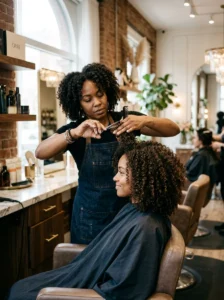
Through my own appointment and conversations with my stylist afterward, here’s what I learned makes the real difference in execution.
Dry cutting for accuracy. Just like other curly cuts on this blog, the curly shag benefits enormously from being cut dry, so the stylist can see exactly how the layers will sit once your curls have fully sprung up.
Strategic, not random, layer placement. A skilled stylist plans layer placement around your specific curl pattern, face shape, and hair density rather than applying a generic layering template. This planning is what separates a controlled, textured result from a chaotic one.
Checking the shape from multiple angles throughout the cut. A thoughtful stylist will frequently step back and check the overall silhouette from the front, sides, and back throughout the cutting process, rather than just cutting through sections mechanically.
Finishing with defined styling, not just a blow-dry. How a curly shag is finished in the chair matters too. A stylist who properly defines the curls before you leave gives you a much clearer picture of how the cut will look day to day, compared to one who just towel-dries and sends you on your way.
How to Style a Curly Shag for Controlled Texture

The right cut sets the foundation, but daily styling technique is what keeps a curly shag looking textured rather than chaotic. Here’s my actual routine.
Apply leave-in conditioner and curl cream to soaking wet hair. I work product through in sections, focusing on even distribution rather than just piling product on top.
Scrunch deliberately, especially around the face-framing pieces. I pay extra attention to my curtain fringe section, scrunching it slightly differently to encourage it to frame my face rather than blend in with the rest of the layers.
Diffuse on low heat, lifting at the roots. This adds volume without over-drying or creating frizz, which can quickly tip a controlled shag into looking unintentionally messy.
Use a light-hold gel for definition, especially on shorter layers. The shorter, face-framing layers benefit from a bit more hold to keep them defined throughout the day rather than frizzing out.
Avoid touching it too much once dry. This is true for most curly styles, but it’s especially important for a shag, where excessive touching can quickly undo the controlled layering and create the chaotic look you’re trying to avoid.
Maintenance Schedule
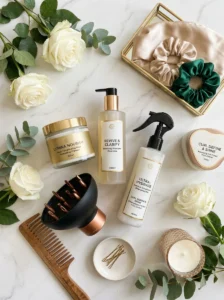
To keep a curly shag looking like “texture, not chaos” rather than just overgrown, here’s the maintenance routine that’s worked for me:
I get a trim every eight weeks. Because the layering is more complex than a simple one-length cut, allowing it to grow out too long between appointments lets individual layers lose their intended shape and start looking more random.
I do a deep conditioning treatment weekly, since the layered ends are more prone to dryness and frizz than longer, less-layered styles would be.
I use a clarifying shampoo about once a month to prevent product buildup, which can weigh down the layers and reduce the volume that makes this cut work in the first place.
Who This Cut Suits Best
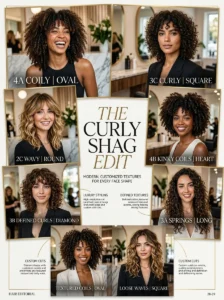
Curl pattern: Medium curls tend to show off the layering most clearly, though tight curls and looser waves can both work beautifully with adjustments to layer placement and styling technique.
Hair density: This cut works well across most densities, though very fine hair may need layers concentrated more at the crown to avoid looking thin at the ends, while very thick hair may need more aggressive layering throughout to avoid bulk.
Face shape: The shag, especially with curtain fringe, is one of the more universally flattering curly cuts because the face-framing layers can be adjusted to suit almost any face shape.
Lifestyle: This style suits those willing to maintain a regular trim schedule and put a little intention into daily styling, even if that styling routine is relatively quick once you’ve found your technique.
Final Thoughts
A year into this cut, I’m still glad I was specific about what I wanted at that consultation. “Texture, not chaos” turned out to be exactly the right way to describe the difference between a shag that looks deliberately styled and one that just looks unkempt.
If you’re drawn to the movement and volume of a shag but worried about it looking too wild or random, I’d encourage you to use that same phrase with your own stylist, and to have an honest conversation about layer placement and your willingness to style it day to day. The right curly shag really can give you all the texture you’re looking for, without ever tipping into chaos.