
I have never actually been to Coachella. I say that upfront because a lot of festival hair content assumes you’re standing in triple-digit heat for ten hours, which changes what actually matters in a hairstyle. What I have done is spent a few summers going to outdoor concerts, day-long events, and one genuinely brutal camping trip, all while borrowing heavily from the “festival hair” aesthetic that Coachella basically popularized — braids, texture, flowers, headscarves, the whole look. What I learned through that is most of what makes Coachella hair iconic isn’t really about the festival itself. It’s about hairstyles built to survive heat, movement, and hours without a mirror, which happens to describe a lot of regular life too.
So this isn’t really a festival-exclusive guide. It’s a breakdown of the styles that made Coachella’s hair aesthetic so recognizable, why they actually work practically (not just visually), and how to wear them for absolutely anything — a beach day, a long flight, a hot summer errand run, or yes, an actual festival if you ever make it there.
Why Coachella Became a Hair Trendsetter in the First Place
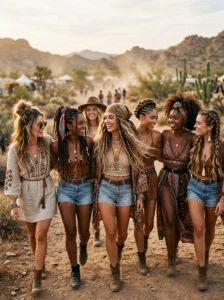
Before getting into specific styles, it’s worth understanding why this particular event became so associated with a certain hair aesthetic. Coachella takes place in the desert, over multiple days, with attendees spending long hours outdoors in heat, dust, and crowds, often camping or staying in accommodations without easy access to styling tools. That combination essentially forced a certain kind of practicality into festival hair — styles needed to survive heat and sweat, stay out of the face during hours of standing and dancing, and look good without a mirror check every twenty minutes.
What resulted, over the years, became its own aesthetic: braided styles, loose waves, hair accessories that double as practical hold (like headscarves and clips), and a generally undone, textured finish rather than anything sleek or polished. The practicality is really what makes these styles worth borrowing even if you’re nowhere near a festival.
Dutch Braid Crown
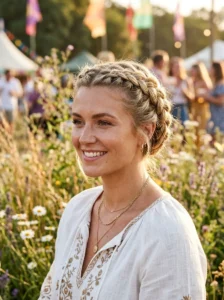
This has become almost synonymous with festival hair at this point — two Dutch braids starting at the front hairline and woven around the head like a crown, either meeting at the back or continuing down into a ponytail. I’ve worn a version of this on hikes and long outdoor days specifically because it does exactly what it needs to: keeps hair completely off the face and neck for hours, holds up through sweat, and doesn’t require a single touch-up.
Loose Fishtail Braids
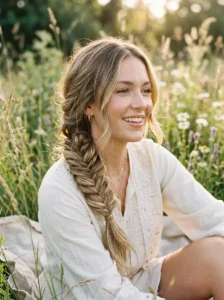
A single or double fishtail braid, left slightly loose and pulled apart gently at the edges for texture, reads as effortlessly boho without much actual effort. I find this one particularly useful on flights, since it takes a few minutes before boarding and looks intentional even after hours of sitting, unlike hair left down, which tends to flatten and tangle over a long trip.
Braided Space Buns
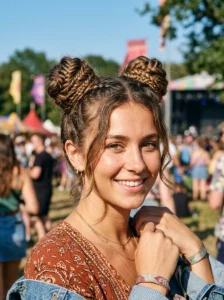
Two space buns, each with a small braid worked in before coiling into the bun, combine the practicality of buns — hair fully off the face and neck — with a bit more visual interest than a plain twisted version. I reach for this one specifically on hot days when I want hair completely up but don’t want a plain, boring bun.
Half-Up Braided Top Knot
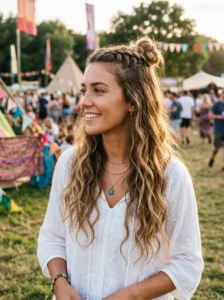
Only the top section is braided back and secured into a small knot or bun, with the rest of the hair left down. This gives some of the practicality of a full updo — hair out of the face — while still keeping length visible, which I’ve found works well for situations where you want something between a full updo and hair completely down.
Loose, Undone Waves
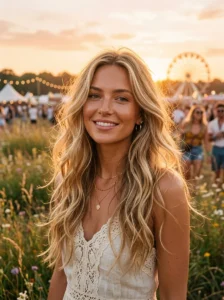
Rather than tight, defined curls, this is a looser, more textured wave pattern, often achieved by braiding damp hair and letting it air dry, then brushing out gently once dry. This has become one of my actual go-to overnight routines for any event where I want texture without heat styling — braid before bed, brush out in the morning, done.
Hair Accessories That Double as Function
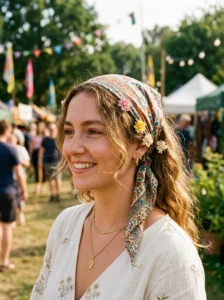
A big part of the Coachella aesthetic involves headscarves, bandanas, and flower clips, but what I didn’t appreciate until trying them myself is how functional these actually are, not just decorative. A headscarf tied at the crown or as a headband keeps flyaways and sweat off the hairline in a way that product alone often can’t manage through hours of heat. I now keep a lightweight bandana in my bag for exactly this purpose on hot summer days that have nothing to do with any festival.
Braided Ponytail With Face-Framing Pieces
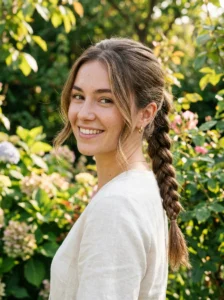
A simple, low or mid ponytail with the length braided and a couple of pieces left loose around the face softens what could otherwise be a purely practical style into something that photographs and feels a bit more finished. This is probably my single most-used festival-inspired style for regular life, since it takes minutes and holds up through an entire day without needing readjustment.
Micro Braids or Small Section Braids
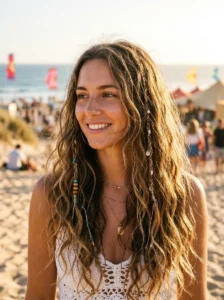
A handful of small, thin braids scattered through otherwise loose or wavy hair, sometimes finished with small beads or thread wraps. This is a more involved style to create — it genuinely takes time to section and braid multiple small pieces — but it holds up remarkably well over multiple days, which is part of why it became such a fixture of multi-day festival looks specifically. I’ve done a lighter version of this before a beach trip, with just a few micro braids mixed into otherwise down hair, and they survived days of ocean water and sun with barely any frizz.
Why These Styles Actually Work for Non-Festival Life
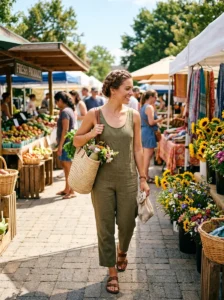
The honest reason I keep coming back to these styles outside of any festival context is that the problems they solve — heat, sweat, long hours without a mirror, hair falling in your face — aren’t unique to Coachella. A hot summer day running errands, a long outdoor wedding, a beach vacation, or even just a stretch of humid weather all present the same practical challenges these styles were originally built to handle.
The other honest reason is that they’re genuinely low-maintenance once actually in place. Braided styles in particular don’t need touch-ups the way loose, styled hair does, which makes them a smart choice for any day where you don’t want to think about your hair after the initial styling.
Tips for Making These Styles Last All Day
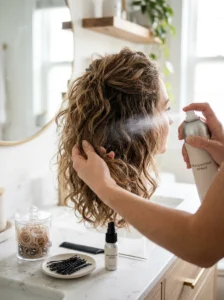
Start with second-day hair, not freshly washed. As with most braided or twisted styles, hair with a bit of natural texture and oil holds a braid significantly better and longer than freshly washed, slippery hair.
Use a texturizing spray before braiding. This gives the braid extra grip, particularly useful for anyone with fine or very smooth hair that tends to slip out of braids more easily than textured hair does.
Braid slightly tighter than feels necessary. Braids loosen naturally over the course of a day, especially with movement and sweat, so starting a bit tighter than your instinct suggests helps the style hold its shape for longer.
Bring a small emergency kit. A couple of bobby pins, a spare hair tie, and a small travel-size hairspray or texturizing spray tucked into a bag has saved more than one long day for me, letting me do a quick fix without needing a mirror or much time.
Consider your hair type when choosing between tight and loose braids. Very fine, slippery hair generally holds tighter braids better, while thicker or curlier hair can often get away with looser, more relaxed braiding without losing its shape as quickly.
What I’d Pack If I Were Actually Going
Since so much of this style category assumes limited access to mirrors, outlets, or styling tools, I’ve thought a lot about what a minimal, festival-ready kit would actually look like, based on what’s worked for my own long outdoor days. A travel-size texturizing spray, a handful of thin, no-slip elastics, six to eight bobby pins, a small clip for quick fixes, and a lightweight bandana cover nearly every style on this list without needing a single heat tool. That last part matters more than it sounds — most of these looks are specifically designed to be built on unwashed, textured, non-heat-styled hair, which means you genuinely don’t need a curling iron, straightener, or outlet access to pull any of them off convincingly.
I’d also add a small trial run before the actual day, if you’re new to any of these braiding techniques. Practicing a Dutch braid crown or space buns once or twice beforehand made a noticeable difference in how quickly and confidently I could do it later, without needing a mirror or extra time on the actual day.
Why These Looks Hold Up Season After Season
Unlike a lot of trend cycles that come and go within a year, this particular category of hairstyle has stayed remarkably consistent for over a decade now, which says something about how genuinely functional it is rather than purely aesthetic. Trends built purely on looks tend to fade once the next look takes over, but styles that solve a real, recurring problem — heat, sweat, hours without a mirror — tend to stick around because people keep needing that same solution, festival season or not.
Adjusting These Styles for Different Hair Types
Straight hair: Braided styles genuinely transform the day-to-day look of straight hair, since the texture created by undoing a braid later adds movement and interest that straight hair doesn’t have naturally.
Wavy hair: This hair type takes especially well to the loose, undone festival aesthetic, since the natural wave pattern already leans toward that textured, effortless look these styles are going for.
Curly hair: Braided crowns and space buns work beautifully on curly hair, and honestly require less effort than on straighter hair types, since curls already provide natural grip and hold for braiding.
Fine or thin hair: Smaller, tighter braids and a texturizing spray beforehand help combat the tendency for fine hair to slip out of looser braided styles throughout the day.
Frequently Asked Questions
Do these styles work for hair shorter than shoulder length? Many of them do, particularly the half-up braided top knot and small accent braids mixed into otherwise down hair. Full crown braids and larger buns typically need at least shoulder-length hair to have enough length to work with comfortably.
How long do braided festival-style looks typically last? With proper prep — texturizing spray, a slightly tighter braid, and second-day hair rather than freshly washed — most of these styles hold up well for a full day, and multi-day styles like micro braids can last several days with minimal upkeep.
Do I need special products for these styles, or will regular products work? Regular texturizing spray, a light-hold hairspray, and bobby pins are genuinely all that’s needed for most of these looks. Nothing here requires specialty festival-branded products, despite how they’re often marketed.
Can these styles work in humid weather, not just dry desert heat? Yes, and in some cases they hold up even better in humidity than loose, unstyled hair does, since braided and twisted styles are less prone to frizzing out completely the way hair left down often does in humid conditions.
Is it necessary to use flower clips or headscarves, or can these styles work without accessories? Accessories are optional and mostly aesthetic, though headscarves in particular do add genuine functional benefit by controlling flyaways and sweat at the hairline. The braided and buns styles themselves hold up completely fine without any added accessories.
Final Thoughts
What made me actually adopt this whole category of hairstyles into regular life, despite never setting foot at the festival that popularized them, is that they solve real, common problems — heat, movement, long hours, and hair that needs to look intentional without constant maintenance. Whether you’re headed to an actual festival, a beach day, or just a long, hot Tuesday, these braided and textured styles hold up in a way that a lot of more polished, product-heavy styles simply don’t.