
Bottleneck bangs get their name from the shape they make. They start short and narrow in the middle of the forehead, then sweep out longer and wider toward the cheekbones, like the neck of a bottle. The result is softer than a blunt fringe and easier to grow out than a full set of bangs.
They also happen to be one of the most forgiving fringe styles around. They flatter most face shapes, work with straight, wavy, and curly hair, and they do not demand a daily blowout to look intentional. If you have been curious about bangs but worried about commitment, this is a sensible place to start.
Below are ten versions of the cut, each with the exact wording to use at the salon so you walk out with the look you actually pictured.
1Classic Bottleneck Bangs
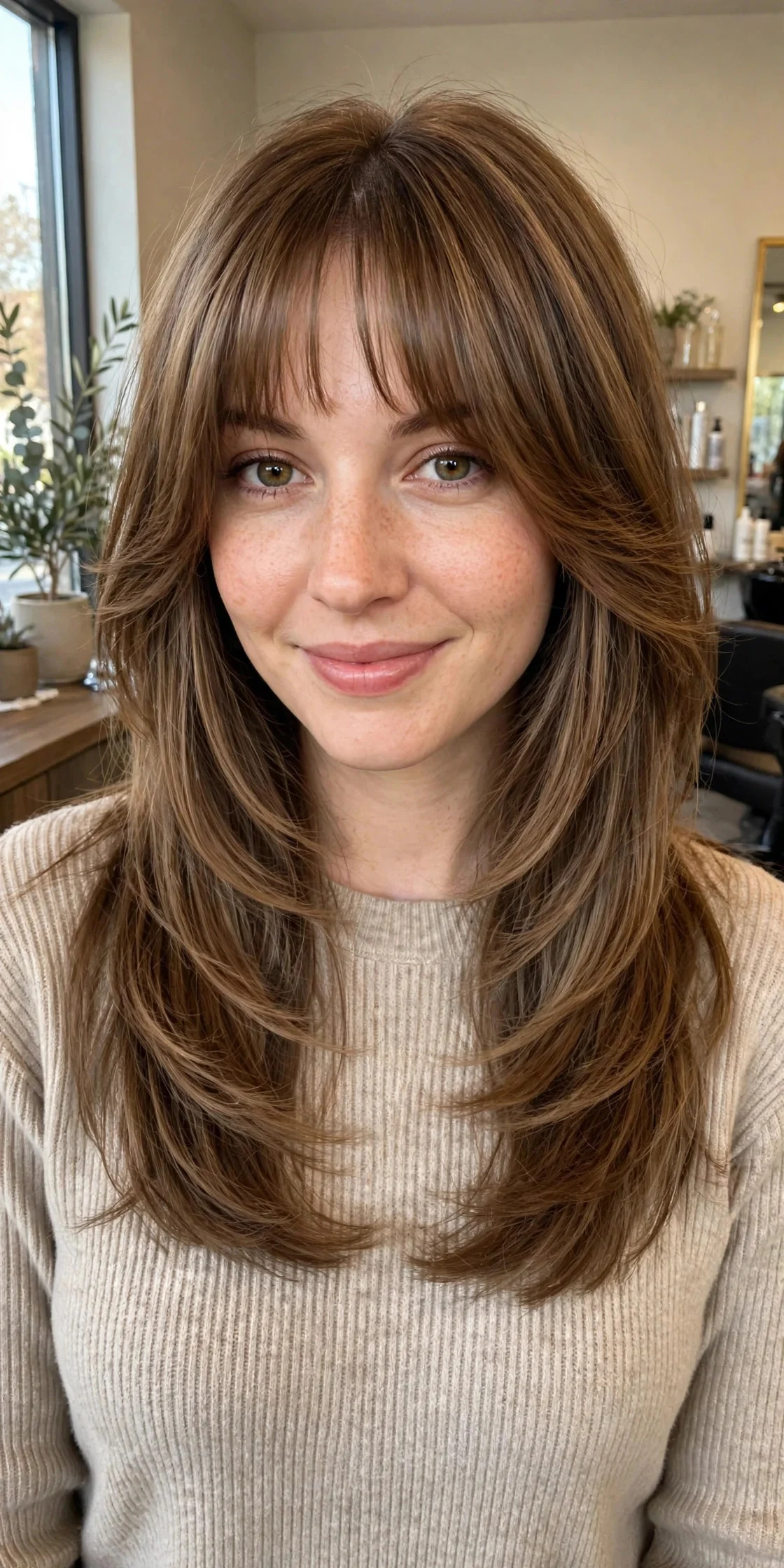
The classic version is the one you have probably seen all over your feed. The center pieces hit just above the brows, the sides angle down past the cheekbones, and the whole fringe curves gently away from the face. It frames the eyes without hiding them.
At the salon, ask for bottleneck bangs with a short center, longer sides, and soft, point-cut ends. Show a photo, because one stylist's "short" is another's "eyebrow grazing." This cut suits oval, heart, and long faces especially well, and it works best on straight to slightly wavy hair. Style it by blow drying with a small round brush, rolling the center forward and the sides outward. The drawback is upkeep: plan a trim every four to six weeks or the center pieces start poking your eyes.
2Bottleneck Bangs with Long Layers

Pairing bottleneck bangs with long layers gives the whole haircut a sense of movement. The fringe blends into the layers around the face instead of sitting apart from them, so nothing looks choppy or disconnected. It is a good choice if you want a change without losing length.
Ask for long layers through the mid-lengths and ends, plus bottleneck bangs that connect to the shortest face-framing layer. This suits thick hair particularly well, since the layers remove bulk and stop the fringe from looking heavy. At home, a quick blow dry with a paddle brush is usually enough, and a drop of smoothing cream keeps flyaways in check. The downside is that thick hair can make the bangs puff up in humidity, so keep a mini flat iron handy for damp days.
3Bottleneck Curtain Blend

This version leans further into curtain-bang territory. The center is a touch longer than the classic cut, and the sides open out like curtains, parting naturally in the middle. It is softer, breezier, and a little more low key.
Ask for curtain-style bottleneck bangs with a center part, keeping the shortest pieces at brow level and the sides reaching the jaw. This is a strong pick for round and square faces, because the longer sides draw the eye downward and slim the cheek area. Styling is simple: part the hair in the middle, blow dry each side away from the face, and let the natural part do the work. The trade-off is that a strong cowlick at the hairline can fight the center part, so mention it to your stylist before they start cutting.
4Bottleneck Bangs for Wavy Hair

Bottleneck bangs and natural waves are a natural match. The fringe follows the wave pattern instead of fighting it, which means less heat styling and a more relaxed finish. The key is cutting the bangs dry or nearly dry, so the stylist can see how each wave actually falls.
Ask for bottleneck bangs cut to your natural wave, with the center slightly longer than you think you need, since waves spring up as they dry. This suits wavy and loosely curly hair of almost any face shape. At home, scrunch in a light curl cream and let the fringe air dry, then separate the pieces gently with your fingers. The drawback is inconsistency: on some days the waves cooperate beautifully, and on others one piece will curl in a direction you did not plan. A quick dampen and reshape usually fixes it.
5Bottleneck Bangs with a Shag Cut

If you like texture and a bit of edge, bottleneck bangs with a shag cut deliver both. The shag's choppy layers echo the fringe's shape, and the whole style has a lived-in, rock-and-roll feel that still looks polished enough for work.
Ask for a modern shag with plenty of texture through the crown and ends, plus bottleneck bangs that blend into the top layers. This works beautifully on medium to thick hair and suits oval, heart, and long faces. Style it with a texture spray and rough dry with your fingers, no round brush required. The maintenance catch is that shags grow out unevenly, so you will need a shape-up every six to eight weeks to keep the layers from turning shapeless. It also uses more styling product than simpler cuts.
6Soft Bottleneck Bangs for Round Faces

Round faces benefit from bottleneck bangs that start a little higher and angle longer at the sides. The extra length on the sides creates a vertical line that balances fuller cheeks, while the shorter center opens up the forehead. It is a subtle shift, but it changes the whole effect.
Ask for bottleneck bangs with a slightly higher center and sides that reach at least to the cheekbones, with no blunt horizontal line across the forehead. This suits round and full faces best, and it works on straight and wavy hair alike. Blow dry the sides diagonally outward, away from the cheeks, to keep that slimming angle. The drawback is precision: if the sides are cut too short, the slimming effect disappears, so be clear about length and bring reference photos from a couple of angles.
7Bottleneck Bangs with a Bob

A bob and bottleneck bangs are a classic pairing for a reason. The fringe softens the bob's clean lines, and the bob gives the bangs a tidy frame to sit inside. Together they look intentional and chic without much daily effort.
Ask for a bob at chin or jaw length with bottleneck bangs that are slightly longer at the sides to connect with the bob's front pieces. This suits fine to medium hair and oval, heart, and square faces. Styling takes minutes: blow dry the bangs forward, then tuck the bob's ends under with a round brush or a quick pass of the flat iron. The upkeep is the catch, since both the bob and the bangs need regular trims, usually every four to five weeks, to hold their shape. Budget for that before you commit.
8Wispy Bottleneck Bangs for Fine Hair

Fine hair can make bangs look thin and stringy if they are cut too thick, so the wispy version is the safer route. Here the fringe is cut with lighter, feathered ends and less density, which gives the illusion of fullness without a heavy block of hair on the forehead.
Ask for wispy, point-cut bottleneck bangs, taking a smaller section than usual so the fringe stays airy. This suits fine and thin hair, and it flatters most face shapes because it never overwhelms the features. Style with a volumizing mousse at the roots and a quick blow dry, lifting the fringe up and forward for a bit of lift. The drawback is that wispy bangs show oil faster than thicker ones, so dry shampoo becomes a regular part of the routine, especially by day two.
9Bottleneck Bangs with Face-Framing Highlights

This version adds color to the equation. Face-framing highlights placed through the bottleneck bangs and the front layers brighten the face and make the fringe's shape more visible. It is a small color change with a big visual payoff.
Ask for soft, blended highlights around the face and through the bangs, a shade or two lighter than your base, with no harsh lines. This suits anyone who wants dimension without a full color service, and it works on all face shapes. At home, use a color-safe shampoo and a weekly mask to keep the highlighted pieces from turning brassy. The cost drawback is real: highlights need a touch-up every eight to twelve weeks, and the fringe pieces grow out faster than the rest, so the front may need attention sooner than the back.
10Grown-Out Bottleneck Bangs

Already growing out a fringe, or not ready for a full commitment? The grown-out version is bottleneck bangs at their longest and laziest. The center sits at or below the brows, the sides blend into the rest of the hair, and the whole thing can be swept to either side.
Ask for long bottleneck bangs with the center at brow level or just below, and sides that melt into your existing layers. This suits everyone, honestly, but it is especially good for first-time bang wearers and for anyone between haircuts. Styling is the easiest of all ten: tuck the fringe behind your ears, sweep it to the side, or pin it back on busy days. The drawback is the awkward phase that comes later, when the center pieces start falling into your eyes and no amount of sweeping keeps them put. That is your signal to book a trim.
Caring for Bottleneck Bangs at Home
Bottleneck bangs are lower maintenance than blunt bangs, but they still reward a little routine. Wash the fringe separately between full washes if it gets oily, since the forehead produces more oil than the rest of the scalp. A pea-sized amount of dry shampoo at the roots on day two keeps the shape fresh without a full restyle.
For styling, a small round brush and a hairdryer cover most situations. Dry the center pieces forward and down, then flick the sides outward for that signature bottle shape. If you use a flat iron, keep it on a low to medium heat and work in quick passes, since the fringe is the most heat-exposed part of your hair. Trim the center pieces yourself only if you are confident with point cutting; otherwise, many salons offer a free or cheap fringe trim between full appointments, and it is worth asking.
How long do bottleneck bangs take to grow out?
Expect roughly three to four months for the center pieces to reach chin length, depending on how fast your hair grows. Because the sides are already long, the grow-out phase looks intentional rather than awkward, which is one of the style's biggest advantages.
Can I get bottleneck bangs with curly hair?
Yes, with one condition: they should be cut dry, following your natural curl pattern. Curly bottleneck bangs look softer and more voluminous than straight versions, but the center pieces will spring up shorter than expected, so ask your stylist to leave extra length.
Do bottleneck bangs suit a high forehead?
They suit it very well. The shorter center pieces cover part of the forehead while the longer sides keep the look open and balanced, so the forehead appears smaller without the heaviness of a full blunt fringe.
How often should bottleneck bangs be trimmed?
Most people need a trim every four to six weeks to keep the center at the right length. If you have a longer, grown-out version, you can stretch that to eight weeks, but the shape will gradually drift toward face-framing layers.
Will bottleneck bangs work if I have a cowlick?
Often, yes, but tell your stylist about the cowlick before cutting. A cowlick near the hairline can push the fringe to one side, and your stylist may adjust the part or leave a little extra length to weigh it down.
Keep exploring
If you liked these bottleneck bangs ideas, check out bangs for big foreheads, hairstyles for small foreheads, hairstyles for long faces for more ideas.