
I got my first shag cut almost on a dare, honestly, after a friend bet me I wouldn’t actually go through with something that dramatic after months of only ever talking about wanting a change. I sat down in the chair fully expecting to regret it by the time I got home, mentally already rehearsing how I’d explain wanting to fix it at my next appointment. Instead, I left the salon that day genuinely unable to stop touching my own hair, amazed at how much movement and personality had shown up in a cut I’d spent years assuming would look messy or unintentional on someone like me. That was nearly four years ago now, and in that time I’ve watched this exact style come back around in salons and on social media more times than I can actually count, which eventually got me curious about why, specifically, this one particular cut keeps returning when so many other trends from the same era have stayed comfortably in the past.
If you’ve been noticing the shag showing up everywhere again yourself, or you’re considering your own first appointment the way I once was, here’s what actually makes this cut so durable across decades, plus everything I’ve learned about getting it right and living with it since that first dare-fueled appointment.
What Actually Defines a Shag Cut

Before getting into why it keeps coming back, it’s worth being specific about what separates a true shag from other layered or textured cuts, since the term gets applied loosely enough now that it doesn’t always mean the same thing. The defining features are heavy, choppy layering throughout, concentrated most dramatically at the crown, with face-framing pieces at the front and a generally undone, textured finish rather than a smooth, blended result.
Unlike a lot of softer, more subtle layered cuts, the shag deliberately embraces visible contrast between different layer lengths rather than smoothing that contrast away. My stylist described it to me during that first appointment as intentionally “unfinished” looking, in the best possible sense, where the visible technique of the cut itself becomes part of the overall style rather than something to disguise or blend into invisibility.
Why This Specific Cut Has Such Unusual Staying Power

Plenty of haircut trends emerge, dominate for a season or two, and then disappear almost entirely, sometimes for decades before a genuine resurgence. The shag has done something different, returning repeatedly and consistently rather than staying dormant for long stretches, and having watched this happen personally over the last several years, I think there are specific reasons this particular style keeps finding new audiences.
It’s genuinely versatile across a wide range of hair lengths, types, and textures in a way that a lot of more specific trends simply aren’t. Whether your hair is straight, wavy, or curly, short or long, thick or fine, some version of the shag concept can be adapted to work, which gives it a much larger potential audience than styles that only really succeed on one specific hair type.
It also photographs and performs exceptionally well on video and in movement specifically, which matters considerably more now than it did during the shag’s earlier eras of popularity, when static photography was the primary way haircut inspiration circulated. The dramatic layering creates visible movement whether hair is tossed, walked in, or simply caught by wind, which keeps it circulating heavily on video-first platforms in a way that flatter, more precisely controlled cuts often don’t benefit from as much.
Perhaps most significantly, it occupies a genuinely rare middle ground between low-maintenance and visually striking. A lot of dramatic, eye-catching haircuts require considerable daily styling effort to actually look intentional, while a lot of genuinely low-maintenance cuts sacrifice some visual drama in exchange for that ease. The shag manages to deliver both simultaneously, since its whole aesthetic is built around embracing texture and movement rather than fighting against natural tendencies, meaning it often looks its best with minimal styling intervention rather than requiring an elaborate daily routine.
How the Shag Has Evolved Across Different Eras

Something worth understanding if you’re drawing inspiration from specific decades is that the shag hasn’t stayed static across its various resurgences, even while sharing the same core layering philosophy. Earlier versions tended to feature more uniform, symmetrical layering and were frequently paired with very specific, era-defining bang styles cut straight across the forehead. More recent iterations have leaned into a somewhat more asymmetrical, deliberately imperfect approach, often incorporating curtain-style bangs rather than a completely blunt fringe, and generally embracing a slightly more textured, less uniformly styled finish than some earlier versions of this same basic concept.
Understanding which specific era’s interpretation you’re drawn to genuinely helps communicate more precisely with your stylist, since “shag” alone, much like other retro terms, leaves considerable room for interpretation depending on which decade’s version someone has in mind.
Which Hair Types Work Best With a Shag

Straight hair can absolutely wear a shag, though it typically requires more active styling, some texturizing product and technique, to encourage the kind of movement and separation between layers that comes more naturally with textured hair.
Wavy hair genuinely thrives with this cut, since the natural texture already provides much of the movement and separation the style depends on, often requiring considerably less daily styling effort to look finished than straighter hair would need.
Curly hair pairs beautifully with a shag specifically, since natural curl provides exactly the kind of dynamic, voluminous texture this style is built around, though the cutting technique needs to carefully account for curl shrinkage to avoid the layers ending up shorter and more dramatic than intended once fully dry.
Fine hair benefits significantly from a shag’s layering, since the varying lengths create the illusion of considerably more volume and density than fine hair typically has at a single, uniform length.
Thick, dense hair can carry the most dramatic versions of this cut beautifully, with the heavy layering helping to remove bulk and weight that a single-length cut on very thick hair can sometimes struggle with.
Getting the Cut Right at the Salon
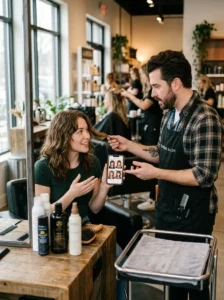
Bring specific reference photos, and be clear about which particular era or interpretation of the shag you’re drawn to, since the difference between a more classic, uniform version and a modern, asymmetrical take can be significant enough that vague references alone can lead to miscommunication.
Discuss how dramatic you want the layering contrast to be, since this single factor determines a lot about how bold or subtle the finished result actually looks, and stylists can dial this up or down considerably depending on your comfort level and hair type.
Ask specifically about bangs or a fringe, since many shag interpretations incorporate some version of face-framing pieces at the front, and deciding upfront whether you want a full, blunt fringe, a softer curtain-style option, or no bangs at all changes the whole character of the finished cut.
Mention your natural hair texture honestly, and ask how much daily styling will realistically be needed to achieve the specific look you’re picturing, since a shag cut for someone who blow-dries daily may need a slightly different technical approach than one intended to be worn mostly air-dried.
Styling a Shag Day to Day

For the most textured, voluminous version of the style, a texturizing spray or mousse applied to damp hair before diffusing or air drying encourages the layers to separate and create the kind of movement this cut is specifically known for.
A curling wand, used loosely and inconsistently rather than in a uniform pattern throughout, adds definition to individual layers without creating an overly polished, uniform curl that would work against the deliberately undone quality that defines this style.
Dry shampoo or a light texturizing powder, applied at the roots even on relatively fresh hair, adds grip and volume that helps the shag’s characteristic layering hold its shape and definition throughout a full day.
For anyone with natural wave or curl specifically, minimal intervention beyond a curl-defining cream applied to damp hair is often genuinely all that’s needed, letting the existing texture do most of the work that would otherwise require active styling effort on straighter hair.
Maintaining a Shag Cut Long-Term
Regular trims, generally every six to eight weeks, matter more with this cut than with a lot of softer, more subtle layered styles, since the dramatic contrast between the shortest and longest layers is precisely what defines the look, and that contrast softens noticeably as hair grows out between appointments.
Investing in a good texturizing product genuinely matters for daily maintenance, particularly for straighter hair types that don’t naturally provide the movement and separation this cut depends on without some added styling assistance.
If you’re growing the cut out eventually, expect a somewhat more gradual, forgiving transition than some more precisely shaped shorter styles, since the varying layer lengths already built into a shag tend to blend together reasonably well as everything grows out simultaneously.
How Face Shape Factors Into a Shag Cut
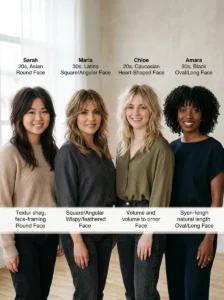
Round faces tend to benefit from a shag with layering concentrated slightly longer toward the jaw and chin, elongating the overall shape, rather than shorter layers positioned right at the widest part of the face, which can sometimes emphasize roundness.
Square or angular faces often look particularly striking with a shag, since the inherent softness and movement of the choppy layering helps break up strong, defined jaw and cheekbone structure without needing to fight against those features directly.
Heart-shaped faces, wider at the forehead and narrower at the chin, tend to benefit from a shag with a bit more volume and layering concentrated near the jaw specifically, helping to visually balance the proportions between a wider top and narrower bottom.
Long or oval faces generally have the most flexibility with this style, since there’s less specific correction needed, though many stylists recommend keeping some volume at the sides rather than an overly vertical, elongating silhouette that could make an already long face shape feel even longer.
Color Choices That Complement a Shag

Warm, dimensional color, whether balayage, subtle highlights, or a rich, multi-tonal brunette, tends to enhance the shag’s textured layering particularly well, since the varying tones catch light differently across the different layer lengths, adding even more visible depth and movement than a single, flat color would.
A solid, single-process color can also work beautifully, particularly for anyone wanting the cut itself, rather than the color, to be the primary visual statement, letting the dramatic layering speak for itself without additional dimensional color competing for attention.
Face-framing highlights specifically, concentrated around the front pieces that typically frame the face in a shag cut, can draw additional attention to that area, working similarly to how curtain bangs use face-framing length to create a focal point.
Common Mistakes to Avoid
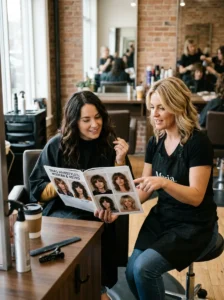
Not being specific enough about which era or interpretation of the shag you want can lead to a result that technically qualifies as “a shag” but doesn’t match the specific aesthetic you had in mind, given how much this general concept has shifted across its various resurgences.
Skipping the texturizing product and technique conversation, particularly for straighter hair types, can result in a cut that looks a bit flat and undefined rather than achieving the voluminous, dynamic movement that makes this style so distinctive when done well.
Underestimating the trim frequency needed to maintain the intended layering contrast is a common oversight, since letting the cut grow out too long between appointments gradually softens the dramatic effect that’s the whole point of choosing this particular style.
Frequently Asked Questions
How is a shag different from other heavily layered cuts like the wolf cut or butterfly cut? These styles all share some core layering principles, but the shag specifically tends to emphasize more uniform, all-over choppy texture rather than the more concentrated, dramatic contrast typical of a butterfly cut, or the specifically face-framing, curtain-bang-heavy approach that often defines a wolf cut.
Will a shag work on very short hair, or does it require some length? Shorter versions genuinely exist and work well, though the classic, most dramatic version of this style typically benefits from at least chin to shoulder length for the layering pattern to fully develop and show its intended movement and texture.
How often do I need trims to maintain the shag’s characteristic layering? Generally every six to eight weeks, somewhat more frequently than a softer, more subtle layered cut might need, since the dramatic contrast between layer lengths is central to the style and softens more noticeably as hair grows out.
Does a shag require a lot of daily styling effort? This depends considerably on your natural hair texture, with wavy or curly hair generally requiring far less daily effort than straight hair, which typically benefits from some texturizing product to encourage the separation and movement this cut depends on.
Can I add bangs to an existing shag cut later, or do they need to be part of the original cut? Bangs can generally be added at a later appointment if you decide you want them after initially going without, though discussing your overall hair length and how bangs will integrate with existing layering helps ensure a cohesive result rather than bangs that feel disconnected from the rest of the cut.
Is a shag a good choice for someone who’s never had a dramatically layered cut before? It can be, though discussing a slightly more conservative version with less dramatic layer contrast first, rather than jumping straight to the most extreme interpretation, gives you a chance to see how you feel about the overall aesthetic before committing to something more dramatic on a future visit.
Final Thoughts
Four years and multiple return trips to this same basic cut later, I understand a lot more clearly now why this particular style has managed to keep finding new audiences decade after decade rather than staying comfortably retired the way so many other equally era-defining cuts have. It hits a genuinely rare combination of low daily effort and real visual impact that’s difficult to replicate with a lot of other styles, and if a friend’s dare or an old photo has ever pulled you toward considering it yourself, there’s a good chance the same qualities that keep bringing this cut back around will work just as well for you as they have for me.