
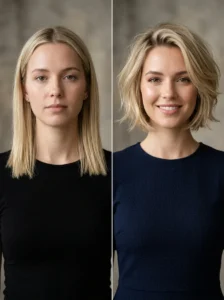
For most of my life, I’ve had what stylists politely call “fine, low-density hair.” Less politely, I’ve spent years frustrated by how flat and lifeless my hair looks by the end of the day, no matter how much volumizing mousse I pile on at the roots in the morning. I tried thickening shampoos. I tried sea salt sprays. I tried every root-clip trick the internet had to offer. Nothing made a lasting difference until I finally asked my stylist a different question: not “how do I make my hair look thicker,” but “what cut would actually work with the hair I have.”
Her answer was a razor cut bob, and it genuinely changed how I think about styling fine hair. I’d always assumed razor cutting was for thick, heavy hair that needed weight removed. It turns out the technique does something completely different — and arguably more valuable — for fine hair.
If you’ve got thin or fine hair and have been chasing the illusion of thickness through products alone, I want to walk you through why a razor cut bob might be the actual solution, along with the specific styles that work best.
Why Razor Cutting Works Differently for Fine Hair
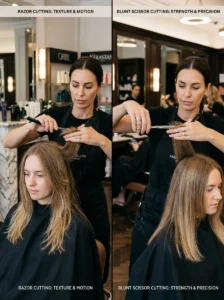
This was the part that genuinely surprised me, so let me explain it the way my stylist explained it to me.
A traditional scissor cut creates a blunt, even edge along each strand of hair. On thick hair, this can sometimes create a heavy, blocky look that benefits from thinning. But on fine hair, that same blunt edge actually works in your favor — it creates the illusion of density because all the ends line up to form a solid, weighted line.
Razor cutting, on the other hand, creates a slightly textured, feathered edge on each strand rather than a blunt line. For thick hair, this removes bulk and adds movement. For fine hair specifically, when used correctly and sparingly, it can add the appearance of texture and volume at the ends without removing the precious density fine hair already struggles to maintain.
The key word there is “sparingly.” A razor cut bob for fine hair isn’t about removing weight — there’s rarely excess weight to remove in fine hair to begin with. It’s about using the razor technique strategically at specific points to create movement, soft texture, and the illusion of fuller ends, while preserving as much overall density as possible.
1. The Blunt-Ish Razor Bob
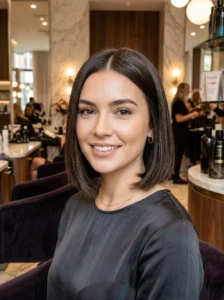
Despite the name, this version uses the razor primarily just at the very ends, creating a softened version of a blunt bob rather than the fully blunt scissor-cut line. The result looks dense and full, like a classic blunt bob, but with slightly softer, more natural-looking ends.
This is the version I have now, and it strikes exactly the balance I was hoping for — looking thick and intentional without any heavy thinning that would have made my hair look even sparser.
Best for: Very fine hair, those wanting maximum apparent density.
2. The Textured Razor Lob

A slightly longer bob, razor cut throughout the length with a lighter touch, creating soft texture and gentle movement without removing significant volume. This version works well for those who want a bit more visible texture than the blunt-ish option above.
Best for: Fine to medium-fine hair, those wanting some movement.
3. The Razor Cut A-Line Bob

An angled bob, longer in the front and shorter in the back, with razor texturing concentrated mainly at the front pieces. This creates dimension and visual interest at the face-framing sections while keeping the back compact and full-looking.
Best for: Fine hair, oval and heart-shaped faces.
4. The Soft Razor Pixie Bob
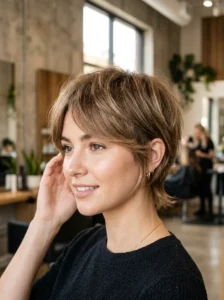
A shorter, chin-length bob with razor texturing throughout to create soft, piece-y definition rather than a single dense block of hair. This shorter length naturally appears fuller since there’s less hair weight pulling everything flat.
Best for: Very fine hair wanting a shorter, lower-maintenance length.
5. The Razor Cut Bob with Curtain Bangs

The softening effect of curtain bangs paired with light razor texturing throughout the bob. The bangs add an extra layer of face-framing softness and the overall combination creates a fuller-looking silhouette around the face specifically.
Best for: All fine hair types, most face shapes.
6. The Razor Cut Stacked Bob
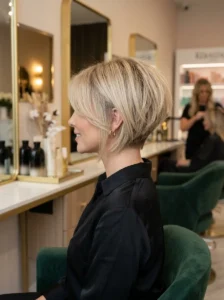
A bob with subtle internal layering at the back, creating a slightly stacked, voluminous shape from the side and back view, with razor texturing used to blend the layers softly rather than create harsh lines. This works particularly well for fine hair that tends to look flat from behind.
Best for: Fine hair with limited natural volume at the crown.
7. The Razor Cut Bob with Root Volume Focus
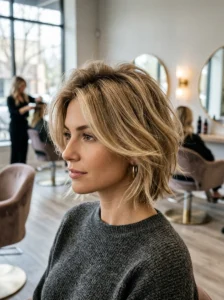
A cut specifically planned with shorter internal pieces near the crown to encourage natural lift, combined with razor-textured ends for softness. The cutting technique works in tandem with styling to maximize root volume, which is often the area fine hair struggles with most.
Best for: Fine hair lacking natural volume at the roots.
8. The Wavy Razor Bob

The same razor cutting technique applied to naturally wavy fine hair, where the texturing enhances the existing wave pattern rather than fighting against it. The result looks effortlessly tousled while still appearing full and dense.
Best for: Fine, wavy hair.
9. The Razor Cut Bob with Side-Swept Fringe

A side-swept fringe combined with a softly razor-textured bob, creating asymmetry and movement that draws the eye and creates the impression of more volume than a perfectly symmetrical cut might.
Best for: Fine hair, square and round face shapes.
10. The Sleek Razor Bob
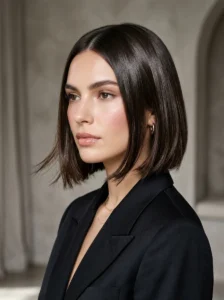
Despite the soft texturing technique, this version is styled completely smooth and sleek for a polished finish, proving that razor-cut bobs aren’t only for tousled, textured looks. The razor technique still provides the underlying fullness, even when the final style is sleek rather than textured.
Best for: Fine, straight hair, those who prefer a polished daily look.
What to Tell Your Stylist
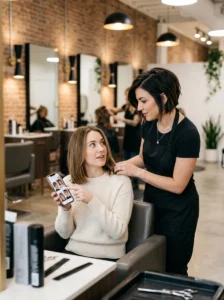
Getting this cut right depends heavily on clear communication, since “razor cut” can mean very different things depending on hair type and the stylist’s typical clientele. Here’s what I’ve learned to say clearly at appointments.
Specify that you have fine or thin hair and want to preserve density. Some stylists default to using a razor more aggressively because that’s their habit with thicker-haired clients. Be clear that you want a light touch.
Ask specifically where they plan to use the razor. A good stylist for fine hair will typically concentrate razor texturing at the ends rather than throughout the length, to avoid removing precious density.
Bring photos, but mention your hair type explicitly. A bob that looks one way on someone with thick hair will look quite different on fine hair, even with an identical cutting technique. Make sure your stylist understands your starting point.
Ask about blunt versus textured ends specifically. If you’re unsure which direction to go, ask your stylist to explain the visual difference and which they’d recommend based on your specific hair density and texture.
How to Style a Razor Cut Bob for Maximum Volume
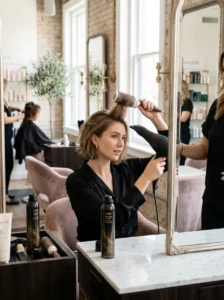
The cut creates the foundation, but styling technique makes a significant difference in how full a fine razor cut bob actually looks day to day. Here’s my current routine.
Use a volumizing shampoo and a lightweight conditioner. Heavy conditioners weigh down fine hair quickly. I apply conditioner only from mid-length to ends, avoiding the roots entirely.
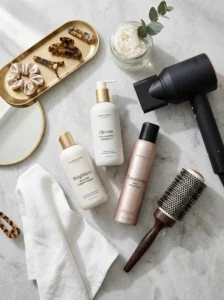
Apply a root-lifting product to damp hair before blow-drying. This is a non-negotiable step in my routine now. A small amount worked through at the roots makes a significant difference in how much lift I get.
Blow-dry upside down for the first few minutes. This encourages volume at the roots before I flip back over and finish styling with a round brush.
Use a medium round brush, not a large one. A large barrel brush can actually smooth fine hair too much, reducing volume. A medium brush creates more lift and movement.
Finish with a lightweight texturizing spray, not a heavy serum. Heavy, oil-based serums can weigh fine hair down quickly. A light texturizing or volumizing spray adds grip and fullness without the weight.
Consider dry shampoo even on freshly washed hair. This sounds counterintuitive, but a small amount of dry shampoo at the roots on freshly washed hair can absorb just enough oil to add texture and grip, helping styles hold their volume longer throughout the day.
Common Mistakes That Make Fine Hair Look Even Thinner
Through my own trial and error, here are mistakes I see often with fine hair bobs specifically.
Going too long. The longer fine hair gets, the more its own weight pulls it flat. A chin-length to just-below-chin bob tends to look notably fuller than anything past the shoulders.
Over-texturizing. Asking for “lots of texture” without specifying your hair type can result in a stylist removing more density than your fine hair can afford to lose.
Using heavy, oil-based products. These products are popular for thick or curly hair but can be disastrous for fine hair, weighing it down and making it look greasy and flat by midday.
Skipping root-focused products entirely. A lot of fine-haired people focus all their volumizing efforts on the mid-lengths and ends, when the roots are actually where most of the visual impact of volume comes from.
Brushing too much throughout the day. Excessive brushing can smooth out the texture a razor cut is specifically designed to create. A little intentional tousling with fingers often maintains volume better than repeated brushing.
Maintenance for a Razor Cut Bob
Fine hair bobs benefit from slightly more frequent trims than some other styles, since growing out even a small amount can shift the cut from looking full and intentional to looking limp and shapeless.
I get a trim every six weeks now, which is more frequent than I used to go, but the difference in how full my hair looks throughout the six weeks compared to letting it grow eight or ten weeks has been significant enough that I’ve made it a priority.
Final Thoughts
If you have fine or thin hair and have spent years trying to fix the problem entirely through products, I want to gently suggest what my stylist suggested to me: sometimes the most effective solution isn’t a product at all. It’s the right cut, executed with the right technique for your specific hair type.
A razor cut bob, done with a light, strategic touch rather than aggressive thinning, genuinely transformed how full and intentional my fine hair looks on a daily basis. It’s not magic, and I still use volumizing products as part of my routine. But the cut does the heavy lifting that products alone never could.
If you’ve been frustrated with flat, fine hair, I’d encourage you to bring this specific idea to your next salon appointment and see if it might work for you too.