Pink hair does not have to mean bleaching your whole head. One well-placed stripe gives you all the payoff of the trend with a fraction of the commitment. Hide it under your natural color, flash it only when you want to, and let it fade without an obvious regrowth line. The footprint is small but the visual punch is big.
1Classic Peekaboo Underlayer Stripe
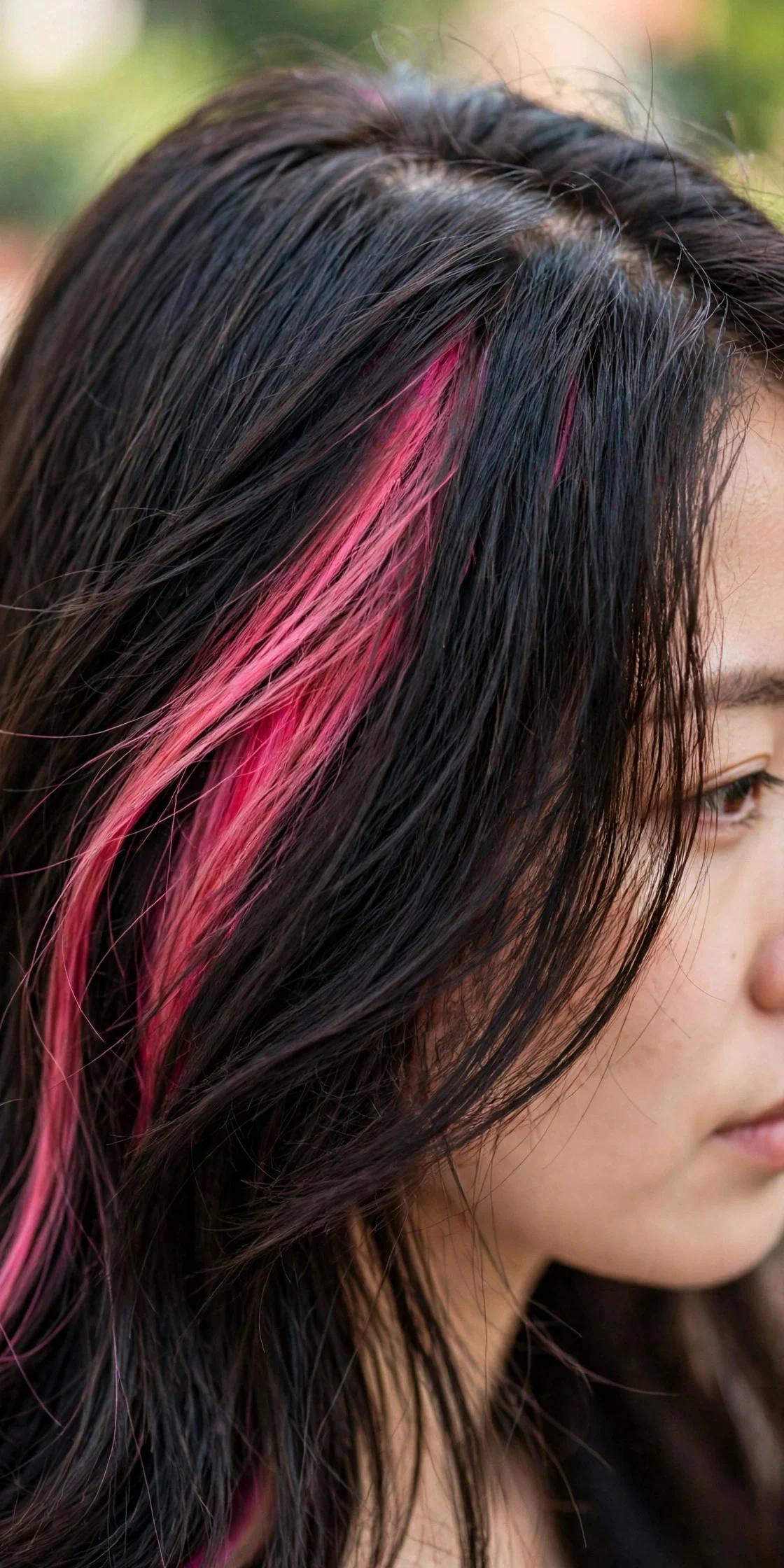
The gateway version, and honestly the one most people end up loving most. A band of pink runs through the hair underneath, visible only when you move, tuck your hair behind your ears, or style it up. Ask for "a two-inch underlayer panel, bleached and toned pink, hidden beneath my natural color." It suits everyone, since your visible hair barely changes. Maintenance is gentle: the stripe sits against your neck so sun fade is slower, and touch-ups stretch to eight weeks. The drawback is the appointment itself. Foiling the back of your head is fiddly, so expect two to three hours in the chair even though it looks simple.
2Chunky Face-Framing Stripe
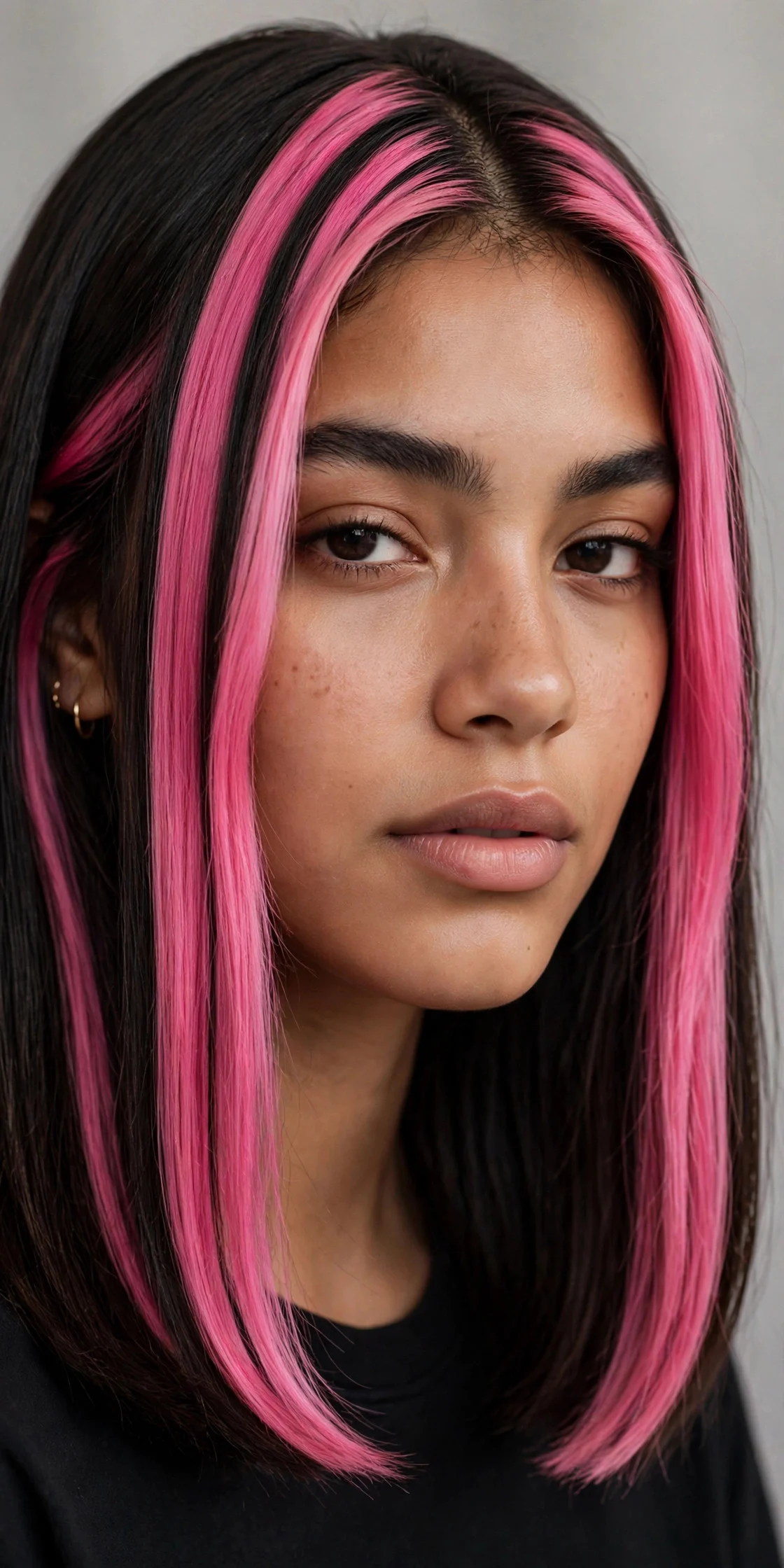
Early 2000s energy, but grown up. Two bold pink panels frame your face from the temples down, cut against your natural base. The salon phrasing: "chunky face-framing highlights in pink, about an inch wide, from the root." This flatters oval and round faces because the vertical lines visually lengthen the face, and it pops hardest against medium to dark bases. Fair skin pairs beautifully with hot pink, while deeper skin tones glow with a coral-leaning pink. Upkeep is the real consideration: regrowth shows within four weeks right at the hairline, so budget for monthly touch-ups or a headband phase between visits.
3Single Braid Stripe
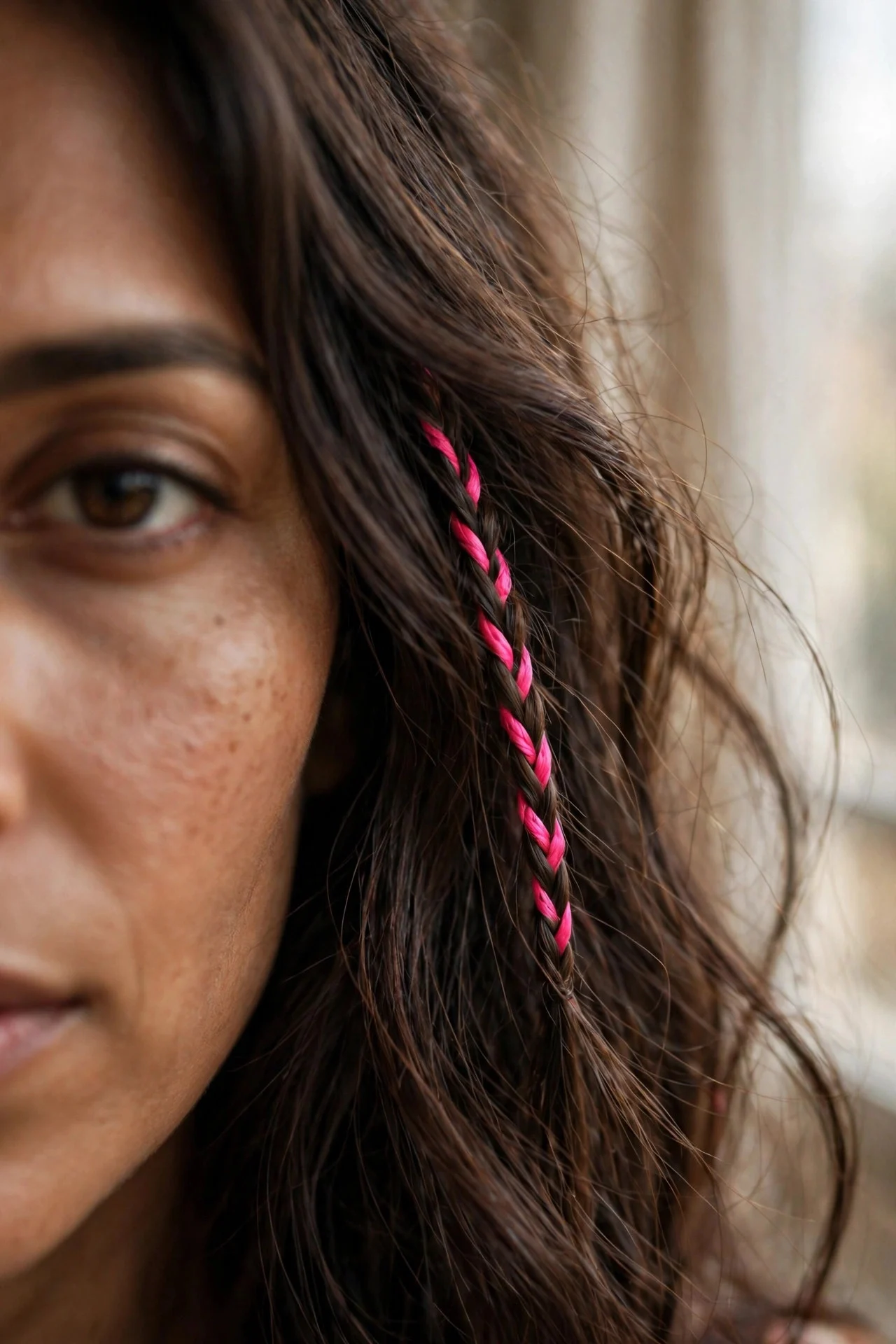
If you wear braids regularly, this one is for you. A single pink streak is woven as its own braid accent, running alongside your natural braids or worked into one thick plait. At the salon, say you want "a bleached pink panel braided in as an accent braid." It reads clearly against braid structure, so it suits long hair and textured hair in box braids especially well. Curly hair can wear it too, as one loose side braid. Maintenance is wonderfully low because the colored section is protected inside the braid from sun and heat. The downside: uneven fading cannot be blended out like loose hair, so plan a refresh every six to eight weeks.
4The Skunk-Stripe Revival
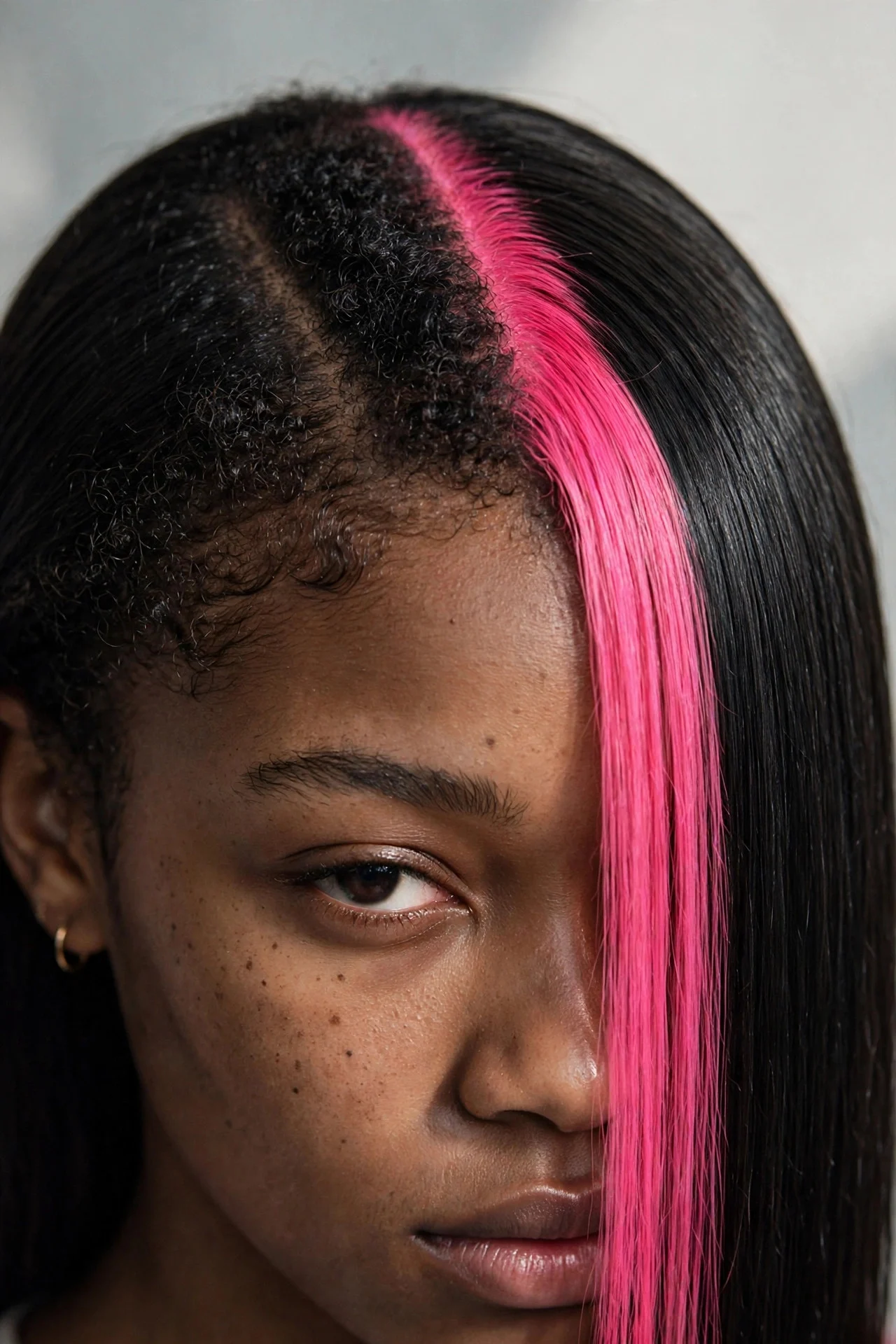
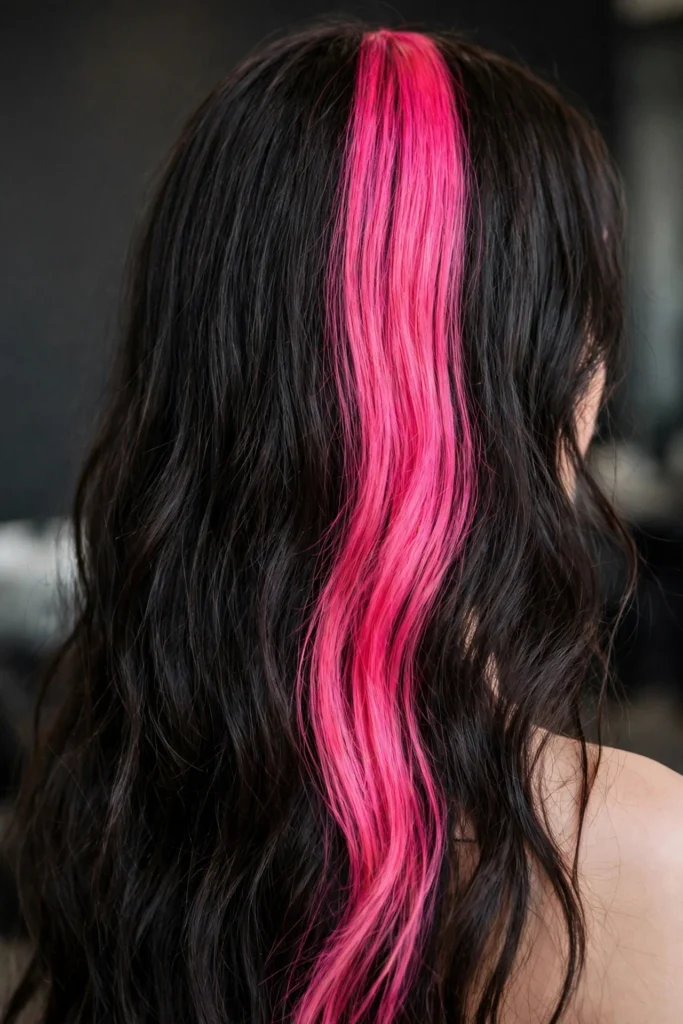
Yes, it is back, and this time it looks intentional. A wide pink panel runs from your part down through the front, worn against a darker base for maximum contrast. Ask for "a bold skunk stripe, one wide panel of pink on each side of my center part, or just one side." It suits strong personal style and works on straight or wavy hair where the panel lies clean. Round faces should start the panel a little behind the hairline to avoid visually widening the forehead. The honest truth: contrast this sharp grows out fast and obviously, so roots need touching up every three to four weeks. The bleached section is small, so each appointment stays quick and affordable.
5Pink Stripe on a Bob
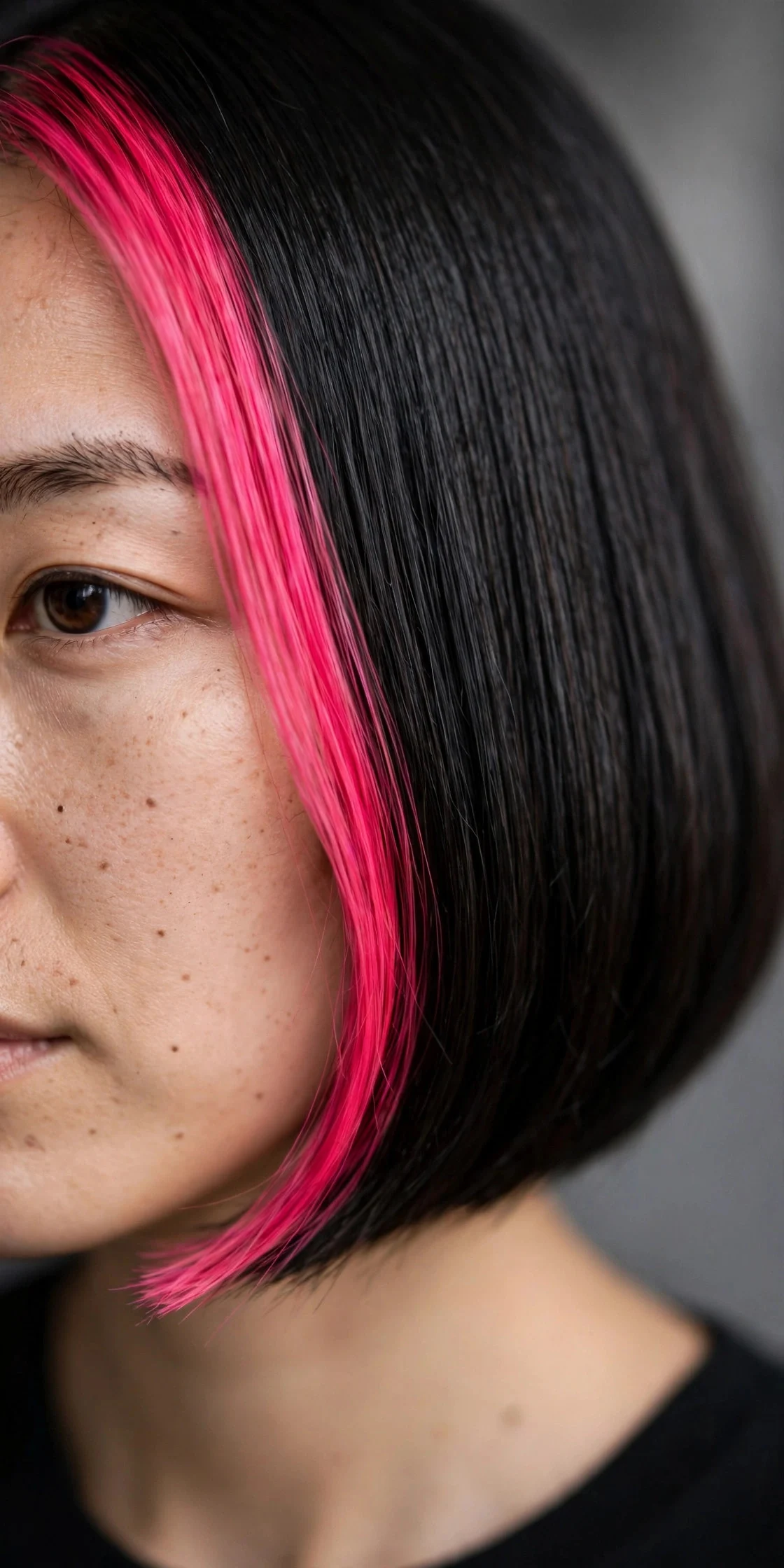
A blunt bob with one pink stripe tucked in is one of the chicest combinations here. The stripe usually sits just behind the ear or along the jawline, revealed when the hair swings. Tell your stylist: "a hidden pink panel in my bob, placed so it shows when the hair moves." The bob's clean geometry makes the stripe read like a design detail. It suits fine to medium hair best, since the panel must stay visible against the bob's density. Maintenance is easy; the section is tiny and a single process takes about an hour. The drawback is placement precision. On a bob there is nowhere to hide a sloppy section, so pick a stylist whose foil work is clean.
6Long Hair Money-Piece Stripe
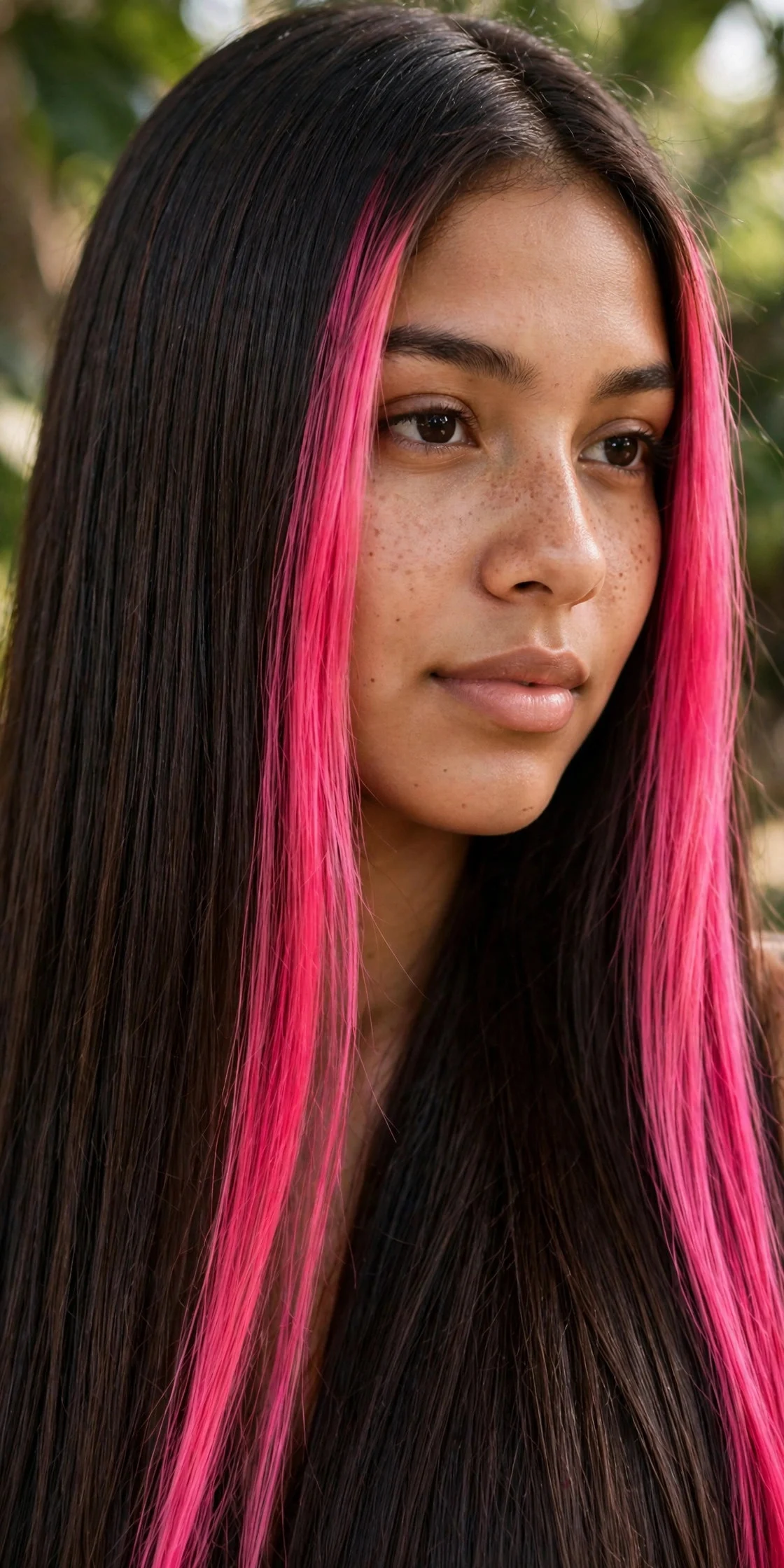
The subtler cousin of the chunky face frame. Instead of wide panels, you get one defined pink ribbon along each side of the face, wide enough to notice but slim enough to feel elegant. The salon ask: "a pink money piece, about half an inch wide, on long hair, kept sleek." Long straight or loosely waved hair carries this best, and it flatters heart-shaped faces by drawing the eye down past the chin. It is genuinely low maintenance for a face-frame look, since the narrow width grows out gracefully and touch-ups stretch to six weeks. The catch: on very long hair the pink needs enough saturation at the ends to survive washing, so the first application may need a double deposit.
7Bleached-and-Toned Blush Stripe
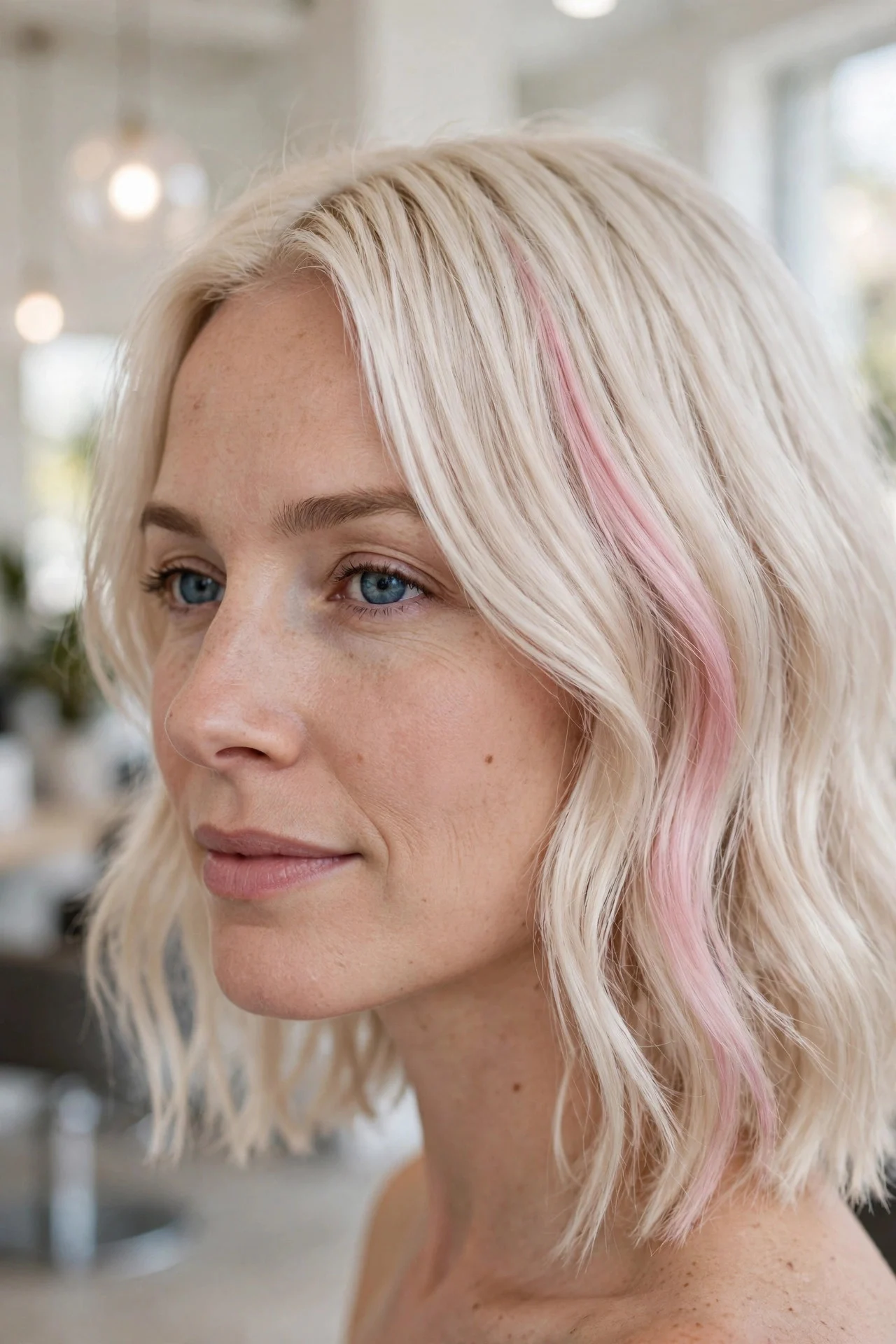
For pastel lovers, this is the method, not the placement. The stripe is lifted to pale blonde, then toned with a blush or rose shade rather than saturated pink. Ask for "a stripe lifted to level 10, toned with a blush pink." This is the only way pastel actually happens on darker hair, so know that bleach is non-negotiable. It suits fair and light-medium skin tones gorgeously, and looks dreamy on wavy textures where the soft color diffuses. The maintenance reality is the steepest here: pastels wash out in six to ten washes, so you need color-depositing conditioner between appointments and a refresh every three weeks. Budget accordingly; this is the priciest stripe to keep pretty.
8Magenta vs Pastel: Picking Your Pink
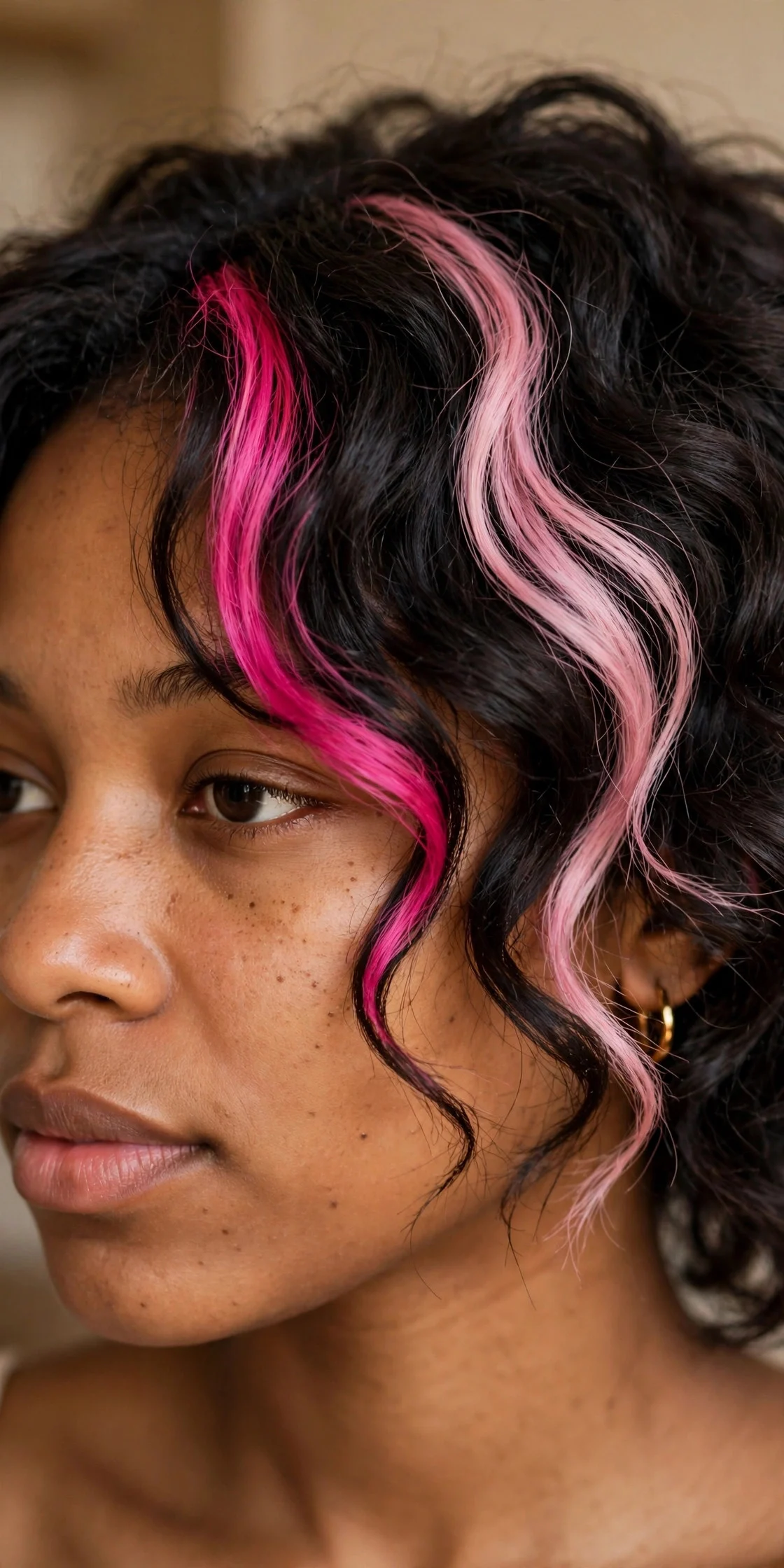
The decision that shapes everything else. Magenta and hot pink are saturated, forgiving, and fade gracefully through pretty rose stages. Pastel is ethereal but fussy, fading fast and needing constant topping up. At the consultation, ask: "show me how this shade will fade in three weeks, not just today." Saturated pinks suit deeper skin tones and darker bases beautifully, while pastels shine on light hair and fair skin. There is no wrong answer, only different upkeep contracts. Magenta costs less over time and tolerates longer gaps between visits. Pastel demands commitment and a color-depositing conditioner at home. Pick the one that matches your actual routine, not your fantasy one.
9Pink Stripe on Curly Hair
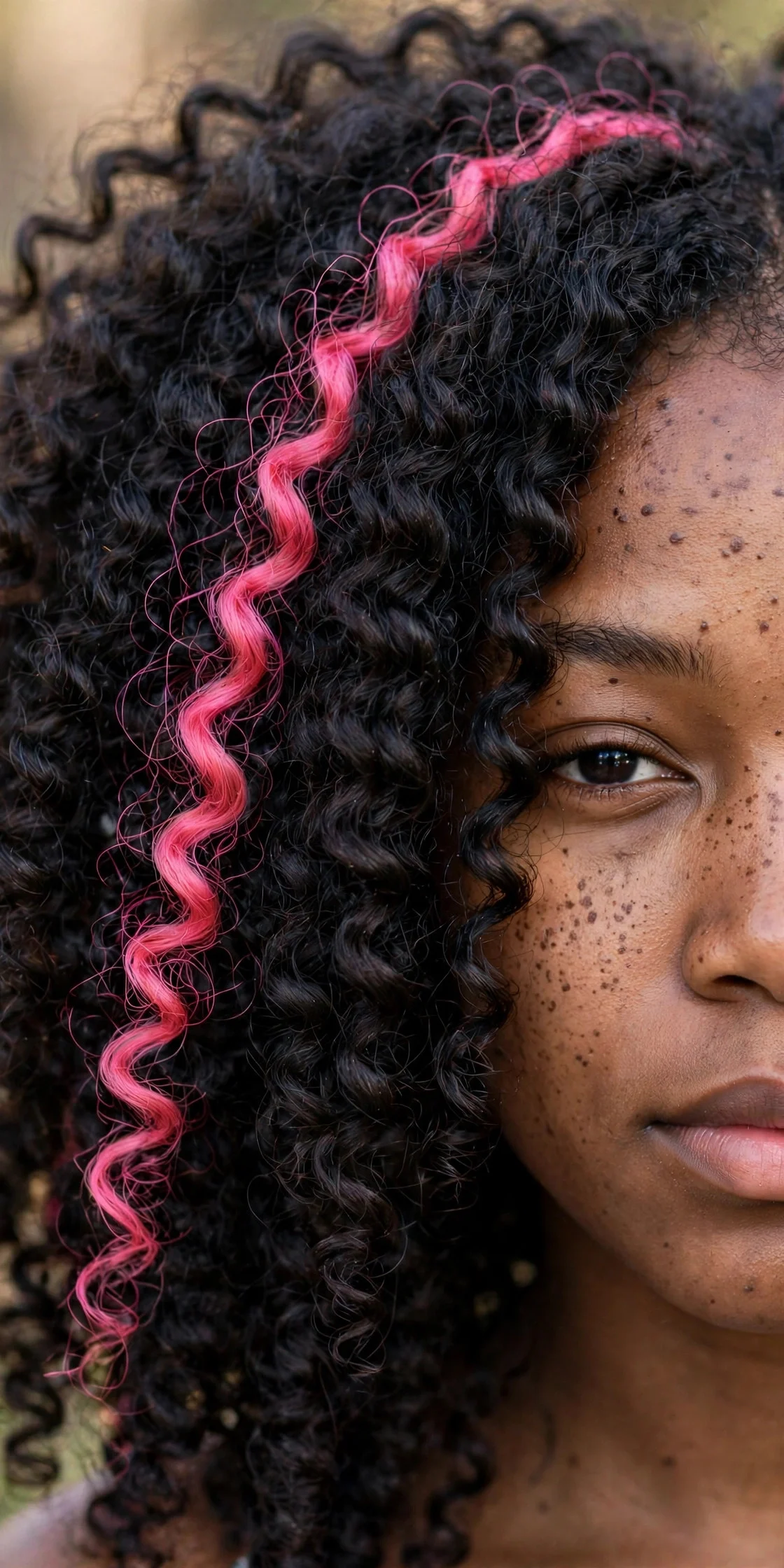
Curly hair takes a pink stripe to another level because the color wraps around each curl and catches light with every movement. The key detail: the stripe must be cut and colored on dry, styled curls so placement accounts for shrinkage. Ask for "a pink panel placed on my dry curls, cut in its natural fall." Type 3 curls show the stripe beautifully, while tighter coils benefit from a slightly wider panel so the color does not vanish into the texture. Maintenance is kind: curly hair is washed less often, which preserves fashion color longer, with refreshes every two months. The drawback is cost. A curl-specialist colorist charges a premium, and this is not a service to bargain-shop.
10Pink Stripe on Dark Brunette
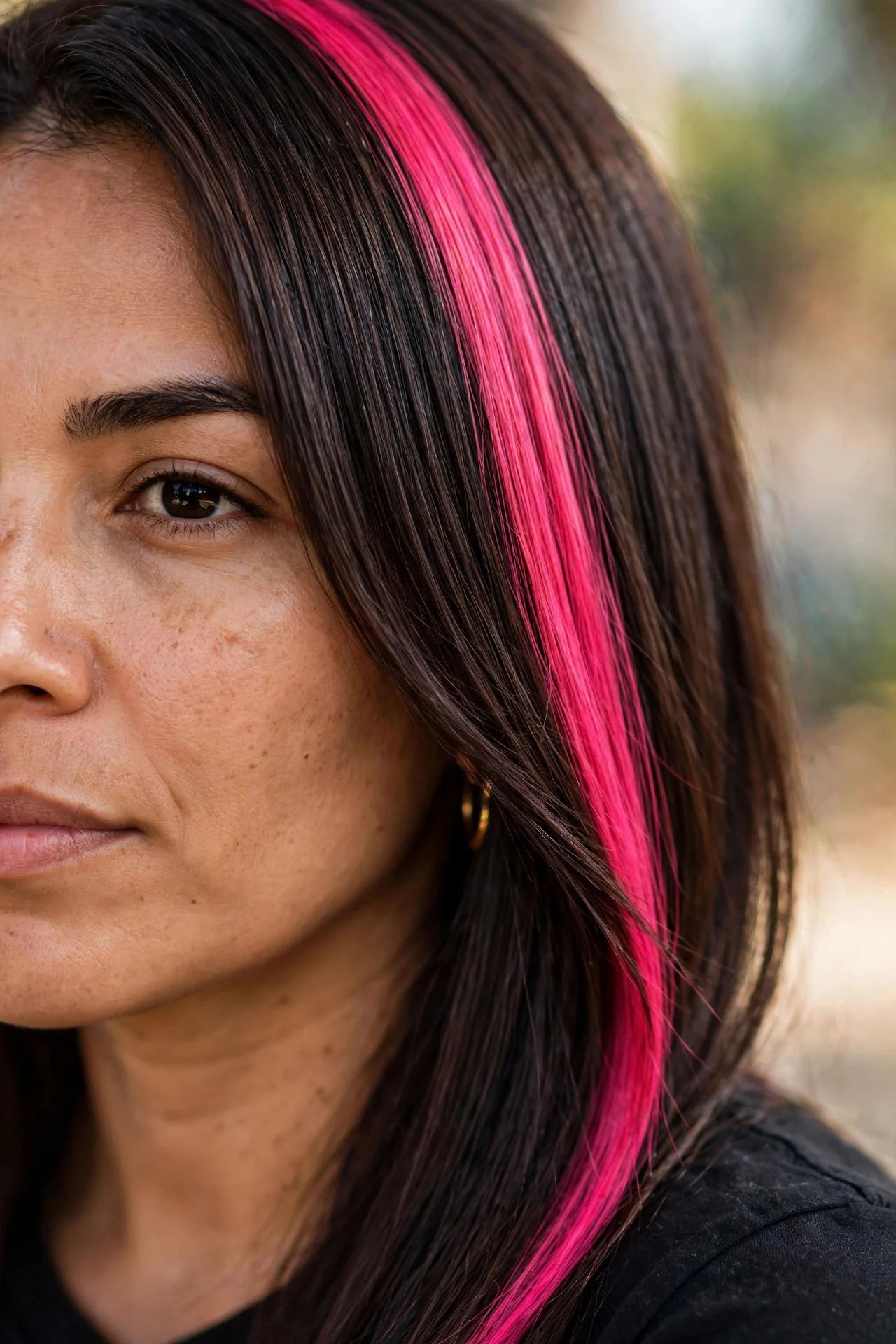
On near-black or deep brunette hair, a pink stripe does not blend, it declares itself. That contrast is the whole point, and it looks stunning. The salon reality: getting pink to show on dark hair means lifting the panel to light blonde first, usually two rounds of lightener. Say you want "a pink stripe on dark hair, lifted enough for the pink to read true." This suits anyone wanting drama without full-head bleach damage. Dark roots around the stripe make regrowth less noticeable than on light hair. The downside is the lift itself. Two rounds of bleach on one panel is not cheap, and that section will need bond-building treatments.
11Pink Stripe on Blonde
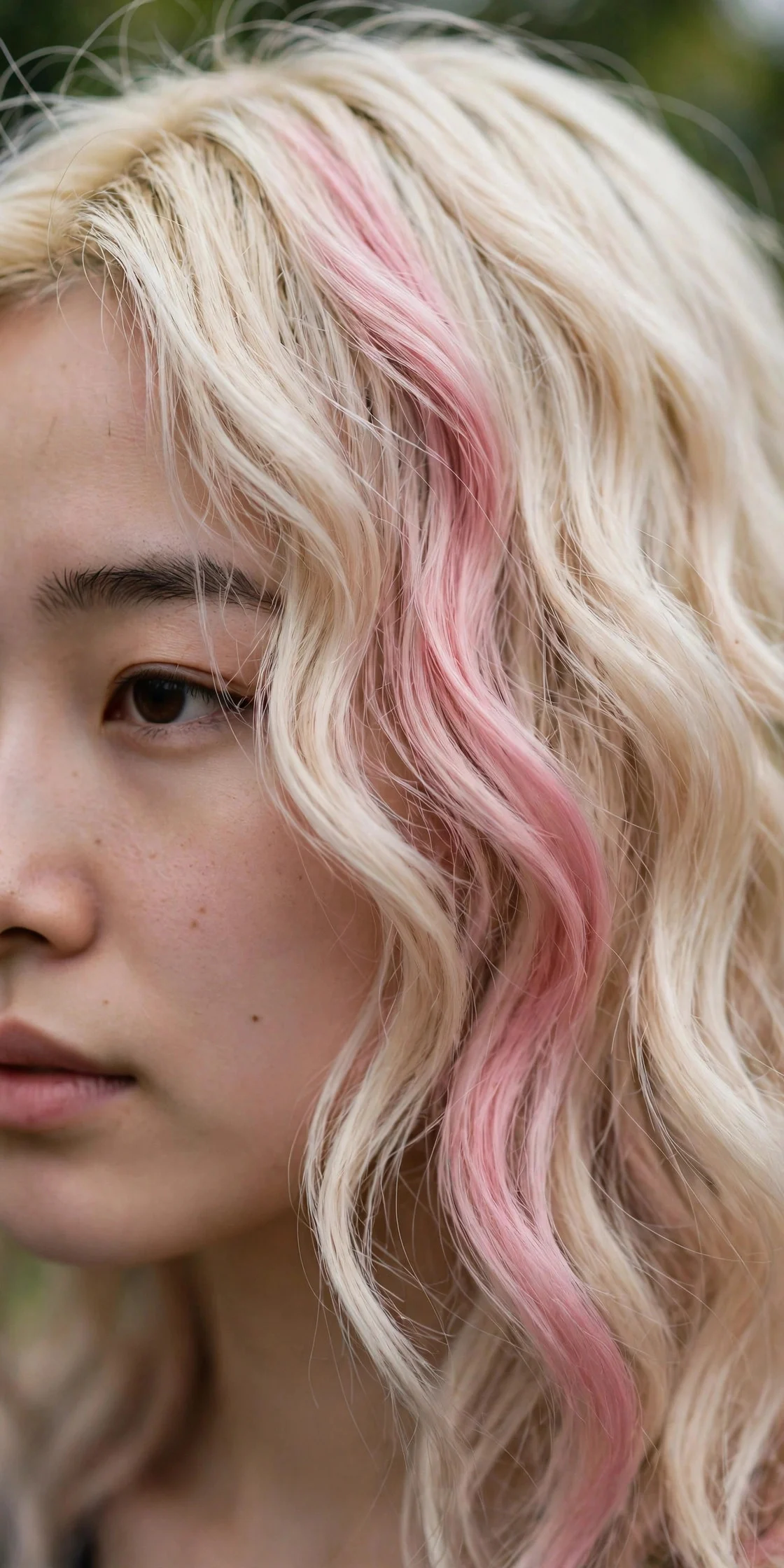
Blondes have it easiest here, and it is not close. If your hair is already light, a pink stripe often needs no bleach at all, just direct dye over your existing blonde. Ask for "a direct pink panel over my blonde, no lightener." This makes it the cheapest and least damaging option, and it is reversible: the pink washes out and you are back to blonde. It suits natural and dyed blondes alike, though the pink reads truest on level 9 and lighter hair. Maintenance is light, with touch-ups every four to six weeks. The one drawback is tonal. Pink over warm blonde leans peachy-coral, so say so explicitly if you want a cooler bubblegum instead.
12The Temporary Rinse-Out Stripe
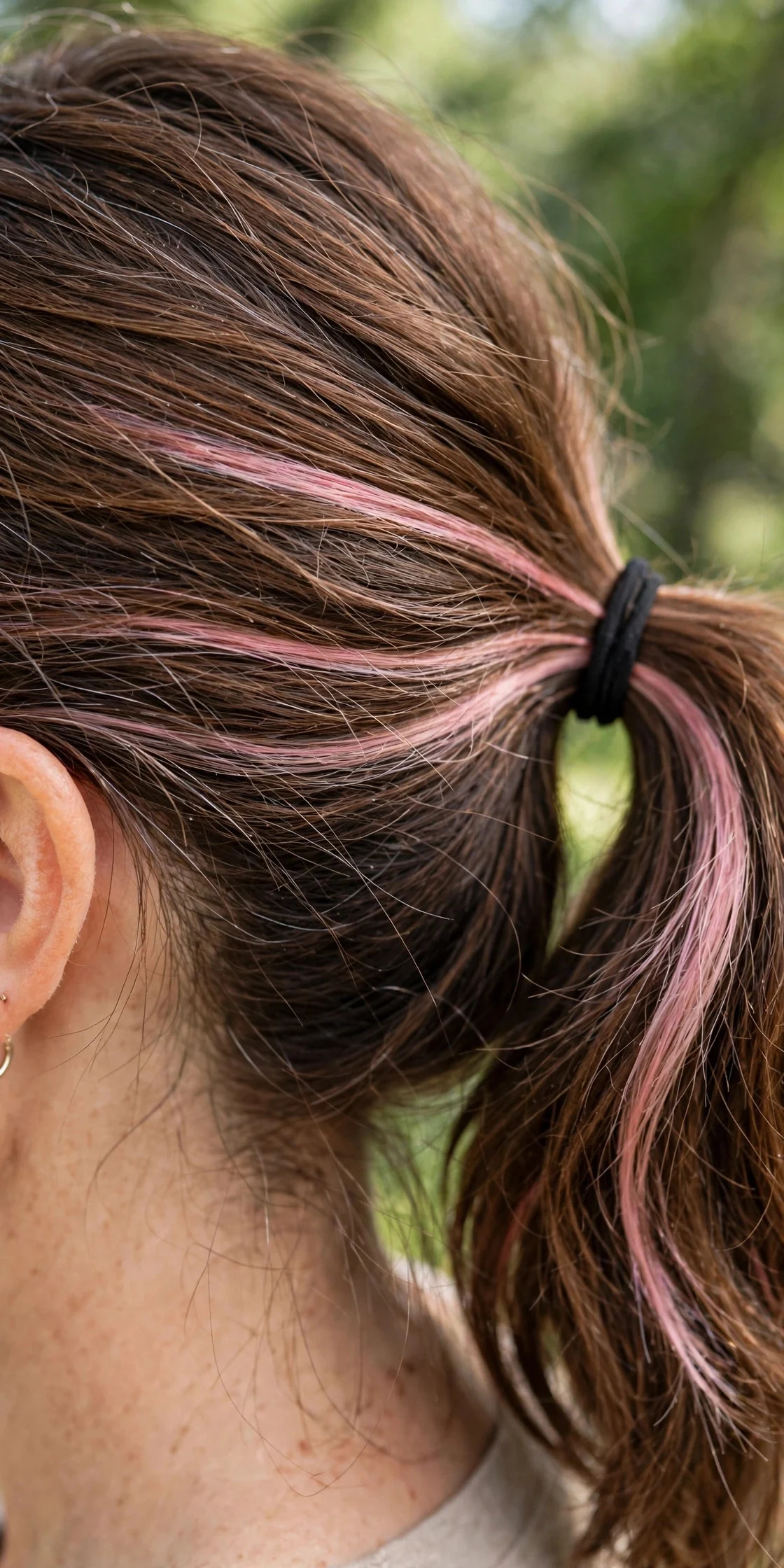
Not ready for bleach? A rinse-out or semi-permanent stripe gives you the look for a weekend, a party, or a trial run. Use a highly pigmented semi-permanent dye or a colored hair wax on one panel, no developer, no bleach. The method: section one panel, apply the pink, process, rinse. On light hair this lasts two to three weeks; on dark hair it is subtle, more of a tint in sunlight, unless you use a colored wax for one-day payoff. This suits commitment-phobes, teens with strict school rules, and anyone testing a shade before the salon. The drawback is transfer: semi-permanent pink bleeds onto pillowcases and white shirts for the first few days, so sleep on dark bedding.
How to Keep a Pink Hair Stripe Vibrant
Pink is a fashion color, which means it fades, so the goal is slowing the fade, not stopping it. Wash as little as you can get away with, ideally two to three times a week, always with cool or lukewarm water since heat opens the cuticle and lets color escape. Use a sulfate-free, color-safe shampoo, and once a week swap your regular conditioner for a pink color-depositing conditioner on the stripe. Heat styling is the fastest killer of pink after hot water, so keep irons at or below 350 degrees and always use a heat protectant. Plan a salon refresh every four to six weeks for saturated shades, every two to three for pastels.
Frequently Asked Questions
How fast does a pink hair stripe fade?
Faster than natural color, slower than you fear. Saturated hot pink on pre-lightened hair stays vivid for three to four weeks, then softens into a pretty rose for a few more. Pastels fade quickest, often noticeably within two weeks. Washing frequency matters most; daily washers see fading in half the time of twice-a-week washers.
Will bleaching just one stripe damage my hair?
One panel of bleach is far kinder than a full head, but it is still bleach. The stripe will be drier and more fragile than the rest, especially if your base is dark and needs two rounds of lightener. A good stylist will use a bond-building additive, and you should follow with a weekly deep-conditioning mask on that section. If your hair is already compromised from previous color, be honest at the consultation.
Is a pink hair stripe appropriate for work?
Usually, yes, and that is the beauty of the format. A peekaboo or underlayer stripe is invisible when your hair is down and neat, which is why it is office-friendly. Face-framing stripes are bolder and harder to hide, so check your workplace dress code before choosing that placement. When in doubt, start hidden; you can always move the stripe somewhere more visible next time.
Can I do a pink stripe at home?
You can, with caveats. Applying direct pink dye over already-light hair is genuinely beginner friendly: section the panel, apply, wait, rinse. The risky part is bleaching darker hair, where uneven application leads to patchy pink and breakage. If your hair is dark, get the lightening done professionally and do only the pink refreshes at home. Always strand-test first and wear gloves; pink dye stains everything it touches.
How long does a pink stripe last before it needs redoing?
The dye itself lasts four to eight weeks depending on shade and wash routine, but regrowth is usually what sends people back first. Face-framing placements show roots in three to four weeks. Hidden and underlayer stripes can go six to eight weeks before the grow-out bothers you. Semi-permanent at-home versions last two to three weeks. Budget for a refresh roughly every month and a half.
A pink stripe is proof that you do not need a dramatic transformation to feel different. One small panel of color does a lot of heavy lifting: a little rebellion and playfulness that is entirely yours. Pick the placement that fits your life, be honest about the upkeep you will actually do, and enjoy the phase where strangers keep asking about your hair.
Keep exploring: if the peekaboo idea caught your eye, you will love these 10 Dark Pink Peekaboo Hair Ideas for more hidden-color inspiration. For a deeper brunette base that makes pink pop even harder, browse these 14 Cherry Cola Brunette Hair Ideas. And if you are weighing pink against other bold shades, these 10 Rich Copper Hair Dye Ideas are worth a look too.