I had genuinely heavy, side-swept bangs and choppy, razor-cut layers throughout most of middle school, the kind of cut that required a flat iron, a specific brand of hair gel, and an almost religious commitment to keeping one eye perpetually covered. When I started seeing references to this exact aesthetic resurfacing recently, my first reaction was a strange mix of nostalgia and mild horror, remembering exactly how much time and product that look actually required to maintain.
Curiosity eventually won out over horror, and I found myself genuinely researching how this specific era’s signature haircut has been reinterpreted for today, talking to a stylist about what’s actually changed in the technique, and ultimately trying a modernized version myself. The result was something that captured the spirit of that distinctive 2000s aesthetic without requiring nearly the same level of daily maintenance or, frankly, the same amount of product that defined the original era.
What Defined the Original Emo Shag
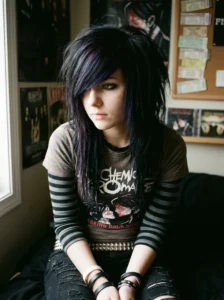
Before getting into the modern reinterpretation, it’s worth remembering what actually characterized this haircut during its original cultural moment, since understanding those defining features helps clarify exactly what’s been updated and what’s been preserved in current versions.
The original style typically featured choppy, heavily razor-cut layers throughout, significant volume and texture, and almost always a long, heavy, side-swept fringe section, often long enough to partially or fully cover one eye. Color was frequently dramatic as well, deep black, sometimes with vivid color streaks woven throughout. The overall styling relied heavily on flat-ironing for a sleek, straight finish combined with deliberately textured, separated pieces, along with significant product to achieve sharp, defined separation between sections.
This combination of straight sleekness with choppy texture, along with that signature heavy fringe, created an instantly recognizable silhouette closely associated with a specific subculture and musical era.
How the Modern Version Differs
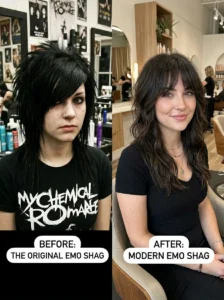
This was genuinely the most interesting part of my research and conversation with my stylist, understanding exactly what’s been preserved from the original aesthetic and what’s been thoughtfully updated for a more current, wearable result.
Less reliance on flat-ironing, more embrace of natural texture. While the original style depended heavily on straightening for its sleek, sharp quality, the modern version often works with natural texture, wave, or even curl pattern rather than fighting against it, creating a softer, more contemporary version of the same choppy, layered concept.
A softer, more wearable approach to the heavy fringe. Rather than a completely flat, sharply cut, eye-covering fringe, modern versions often soften this signature element somewhat, sometimes incorporating curtain-bang styling or slightly less severe length, while still nodding clearly to the original’s distinctive face-framing quality.
More refined color techniques rather than flat, uniform dark color. Where the original often relied on solid, uniform dark dye, sometimes with stark color streaks, modern versions frequently incorporate more dimensional coloring techniques, subtle highlights or lowlights that add depth and movement rather than flat, uniform color.
Reduced overall product dependency for daily styling. The original look often required significant daily product application and styling time to achieve and maintain its sharp, defined texture. Modern versions tend to be cut with more built-in texture and movement, requiring comparatively less daily product and styling effort to look intentional.
Why This Specific Aesthetic Is Resurfacing Now
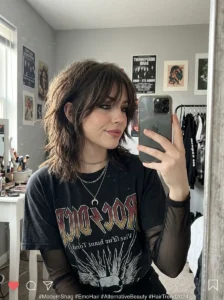
Understanding the broader cultural context helps explain why this particular nostalgic reference point has found new relevance recently, rather than other eras’ signature styles.
Broader 2000s nostalgia has been building across fashion and beauty more generally. Hair trends rarely emerge in isolation, and this particular resurgence coincides with a much wider cultural return to 2000s fashion references across clothing, makeup, and overall aesthetic sensibilities.
The original style’s emphasis on texture and individuality resonates with current trend directions. After years of trends favoring smooth, polished, somewhat uniform styling, there’s been a genuine cultural shift toward embracing more textured, individualistic, less conventionally polished hairstyling, which aligns naturally with the choppy, layered foundation of this particular era’s signature look.
Social media has created space for niche, specific aesthetic references to find renewed audiences. Unlike previous eras where trend information traveled through more centralized channels, current platforms allow specific, even niche nostalgic references to resurface and find genuine traction among audiences who may not have experienced the original era firsthand, alongside those reliving their own past styling choices.
1. The Soft Curtain Fringe Shag
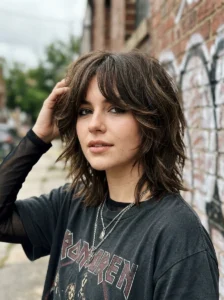
A modernized take incorporating the signature heavy fringe element, but softened into a curtain-bang style that frames rather than fully obscures the face, paired with choppy, layered length throughout the rest of the cut.
This is roughly the version I ended up trying, and the softer fringe approach made the overall look feel much more wearable for daily life than the original’s more severe, eye-covering version ever was.
Best for: Most face shapes, those wanting a wearable nod to the original aesthetic.
2. The Textured Shag With Natural Wave
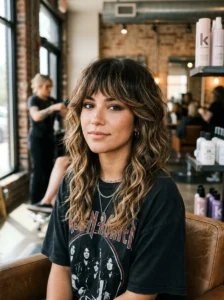
The same choppy, heavily layered foundation, but styled to embrace and enhance natural wave or texture rather than flat-ironed completely straight, creating a softer, more contemporary overall finish.
Best for: Naturally wavy hair, those wanting a low-maintenance, texture-forward version.
3. The Sleek, Straightened Modern Emo Shag
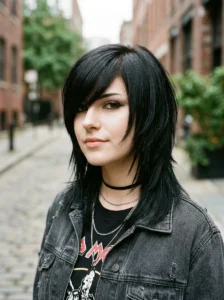
A version that maintains closer fidelity to the original’s sleek, straightened finish, while still incorporating somewhat softer fringe and slightly more refined layering technique than the most dramatic original-era cuts.
Best for: Naturally straight or easily straightened hair, those wanting a closer nod to the original aesthetic.
4. The Short Emo-Inspired Crop
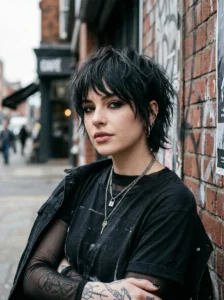
A shorter, more cropped interpretation of the signature choppy layering and heavy fringe concept, translating the overall aesthetic to a notably shorter length than most original-era versions.
Best for: Those wanting a bold, shorter take on this nostalgic reference.
5. The Long Layered Emo Shag
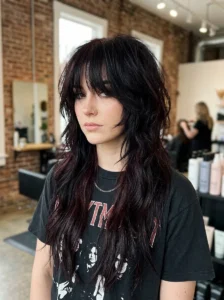
A longer version maintaining significant length throughout while still incorporating the dramatic, choppy layering and heavy fringe that define this aesthetic, offering a way to embrace the look without committing to a shorter overall length.
Best for: Those wanting to maintain longer hair while still nodding to this specific aesthetic.
6. The Curly Emo-Inspired Shag
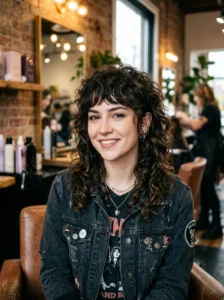
A version specifically adapted for curly or coily hair, where natural curl pattern provides much of the texture and movement that the original style achieved through choppy, razor-cut layering and styling technique.
Best for: Medium to tight curl patterns, those wanting to incorporate natural texture into this nostalgic reference.
7. The Two-Tone Emo Shag
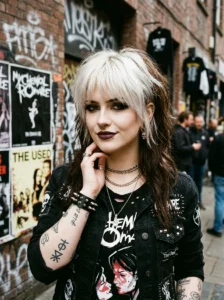
The signature choppy, layered cut paired with a modern, more refined take on the original’s tendency toward dramatic color contrast, incorporating two complementary but distinct tones throughout the layers rather than flat, uniform color.
Best for: Those wanting a more dimensional, contemporary color approach within this aesthetic reference.
8. The Asymmetrical Emo Shag
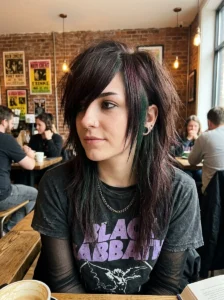
A deliberate length variation incorporated into the choppy layering, adding an additional layer of boldness and asymmetry to the already distinctive silhouette.
Best for: Those wanting a particularly fashion-forward, editorial take on this nostalgic reference.
9. The Emo Shag With Money Piece
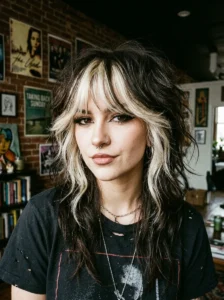
The choppy, layered foundation paired with a single, well-blended lighter section framing the face, nodding to the original’s tendency toward dramatic, eye-catching color placement while feeling more current and wearable than a full head of vivid color.
Best for: Those wanting a subtle nod to the original’s bold color tendencies.
10. The Undercut Emo Shag
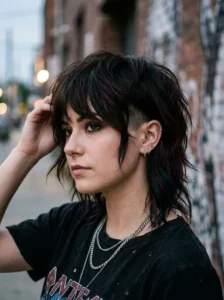
The signature choppy layering and fringe combined with a hidden or partially visible undercut section, adding an unexpected, modern edge to the nostalgic foundation.
Best for: Those wanting a bolder, more contemporary twist on the original aesthetic.
How to Communicate This Specific Style to Your Stylist
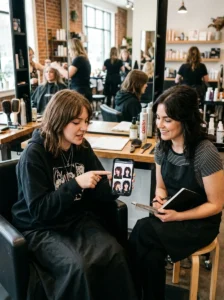
Given how specific and visually distinctive this particular nostalgic reference is, clear communication helps ensure you and your stylist share the same vision for the final result.
Bring clear reference photos from the original era, alongside modern reinterpretations. Showing both the original inspiration and examples of how it’s been updated helps your stylist understand exactly which elements you want preserved and which you’d prefer softened or modernized.
Discuss the fringe specifically and in detail. Since the heavy, face-framing fringe is such a defining element of this aesthetic, be especially clear about how dramatic or soft you want this particular section, whether you’re hoping for something closer to the original’s eye-covering severity or a gentler, more wearable curtain-bang approach.
Talk honestly about your daily styling capacity and preferences. If you’re drawn to this aesthetic but want to avoid the original’s demanding daily styling routine, communicate this clearly so your stylist can adjust the cutting technique to rely more on built-in texture and movement rather than requiring extensive daily flat-ironing and product application.
Ask about color alongside the cut. If you’re interested in incorporating some of the original’s tendency toward dramatic or dimensional color, discuss this as part of the same consultation, since the cutting and coloring approach often work together to achieve the most cohesive version of this particular aesthetic.
How to Style This Cut for Daily Wear
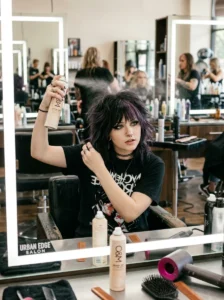
Based on my own experience with the modernized version, here’s what’s actually worked for incorporating this nostalgic style into a genuinely manageable daily routine.
Apply a lightweight texturizing product to damp hair before drying. This enhances the natural choppiness and separation of the layers without requiring the heavy, dramatic styling products the original era often depended on.
Consider air-drying or diffusing if you have natural texture, rather than flat-ironing daily. This was the single biggest shift from my own teenage routine, allowing natural wave or texture to do much of the styling work rather than requiring daily heat styling to achieve the desired choppy, textured effect.
Style the fringe separately with focused attention. Given how central this element is to the overall aesthetic, I spend a bit of extra time specifically on this section, even when the rest of my styling routine is relatively quick, since the fringe’s styling significantly affects how recognizable and intentional the overall look reads.
Use a small amount of pomade or wax for definition at the ends. Working a small amount through with fingertips, focused on the choppy ends specifically, enhances the textured, separated quality that’s central to this style without requiring heavy, all-over product application.
Avoid over-brushing once styled. Similar to other textured, layered cuts, excessive brushing after styling tends to smooth out exactly the separated, choppy quality that defines this particular aesthetic. Light finger-styling maintains the look more effectively throughout the day.
Who This Style Tends to Suit Best
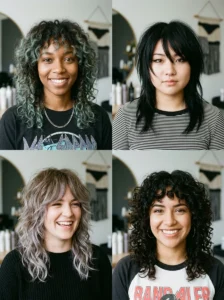
While this is ultimately a matter of personal aesthetic preference and confidence, a few practical factors are worth considering honestly before committing to this particular nostalgic reference.
Face shape affects how the heavy fringe element specifically translates. Since this style’s signature feature involves significant hair covering or framing the forehead and potentially part of the face, those with longer or oval face shapes often find this element particularly flattering, while those with already round or fuller face shapes may want to discuss a slightly softer, less severe fringe approach with their stylist.
Hair density and natural texture affect both the cutting technique and styling routine significantly. As outlined in the style variations above, this aesthetic can genuinely work across straight, wavy, and curly textures, but understanding how your specific hair type will be approached helps set realistic expectations for both the cut and the ongoing styling routine.
Personal comfort with a recognizably nostalgic, somewhat bold aesthetic matters. Unlike some more universally neutral haircut choices, this particular style carries clear, recognizable associations with a specific era and subculture. Being genuinely comfortable with that recognition and the conversations or reactions it might prompt is worth considering honestly before committing.
Addressing the Maintenance Question Honestly
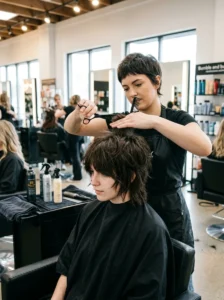
One of my biggest concerns going into this haircut was whether I’d be signing up for the same demanding daily routine that defined my original teenage version of this style. Based on several months of actually living with the modernized version, here’s my honest assessment.
The cutting technique itself does significantly more of the work than it did in my original cut, meaning the daily styling routine is genuinely less demanding than I remembered from my younger years. That said, the fringe section specifically still requires consistent attention, whether through air-drying with product, occasional flat-ironing, or careful finger-styling, to maintain its defining shape and position.
Overall, I’d characterize the modern version as moderate maintenance, more involved than a simple, low-effort cut, but genuinely less demanding than the original era’s styling routine, which often involved extensive flat-ironing and heavy product application on a near-daily basis.
My Honest Reflection on Revisiting This Style
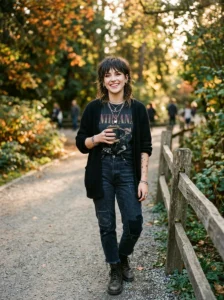
Trying this modernized version of a haircut so closely associated with a specific, somewhat intense period of my adolescence turned out to be a genuinely interesting experience, equal parts nostalgic and surprisingly fresh-feeling rather than simply a costume-like throwback.
What surprised me most was how naturally the modernized elements, the softer fringe, the embrace of natural texture, the more dimensional color approach, made the overall aesthetic feel current and intentional rather than like I was simply recreating a specific moment from the past. It managed to capture the spirit and energy of that original style while genuinely fitting into how I actually want to look and live today.
Final Thoughts
If you, like me, have some nostalgic connection to this particular era’s signature haircut, or if you’re simply drawn to the choppy, textured, dramatically fringed aesthetic without any personal history with the original trend, I’d genuinely encourage exploring one of these modernized versions with a stylist who understands both the original reference points and current cutting techniques.
The result, done thoughtfully, manages something genuinely difficult: honoring a specific, recognizable aesthetic moment while still feeling like a current, wearable choice rather than a costume. Sometimes the best way forward really is revisiting where we’ve already been, just with a few thoughtful updates along the way.