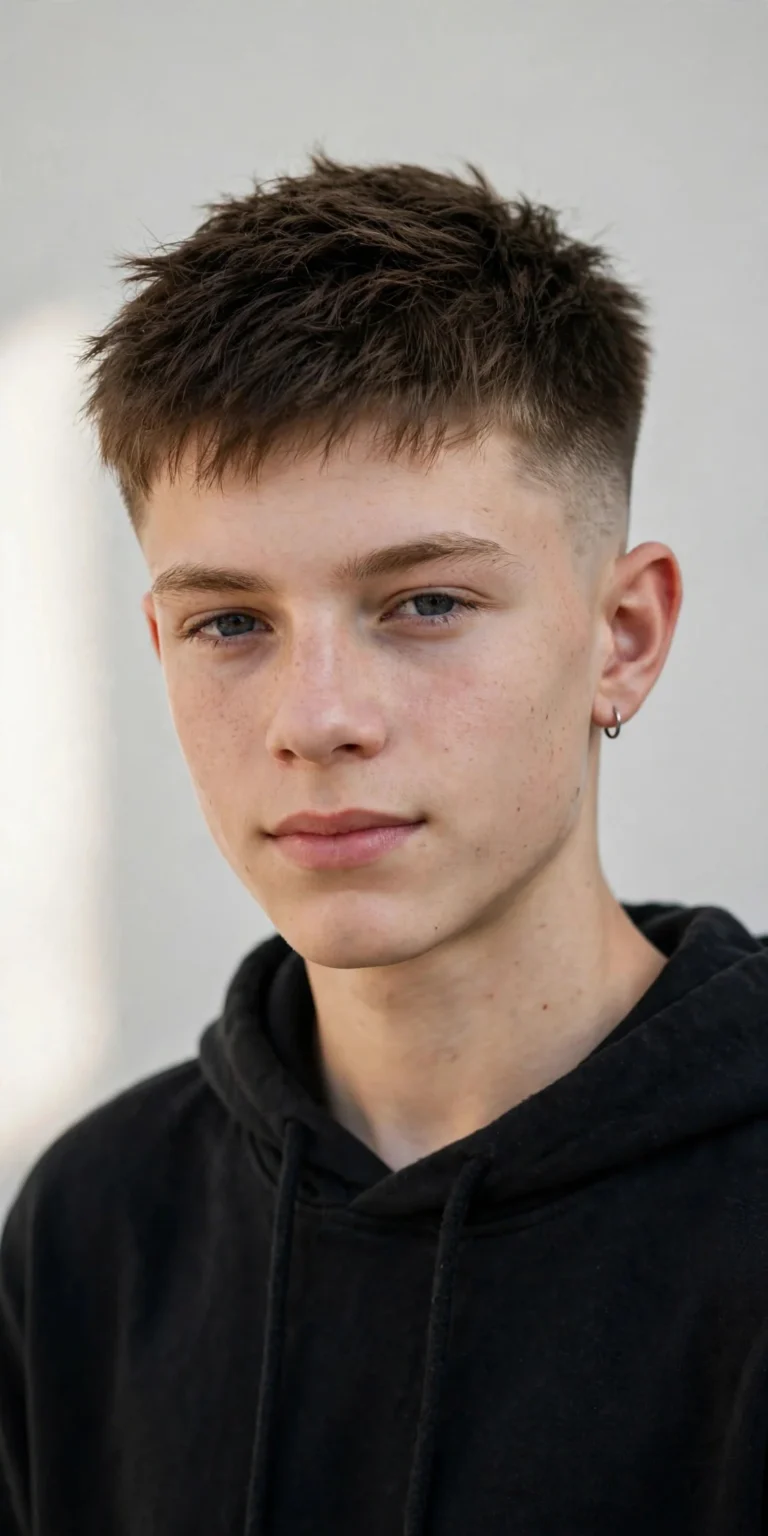
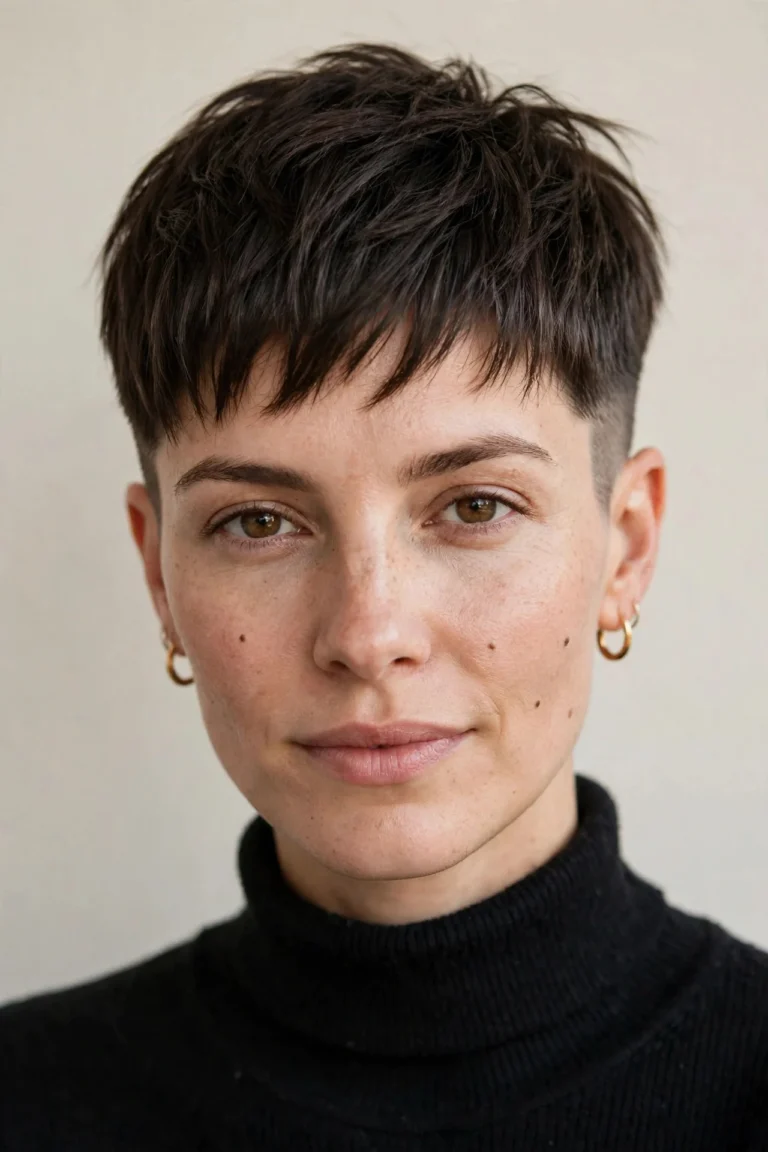
A long pixie sits in the sweet spot between a short crop and a bob. It keeps enough length on top to style a dozen ways, while the sides and back stay short enough to feel light and easy. Women choose it when they want the freedom of short hair without giving up styling options. The trick is the length on top. Get that right and the cut flatters almost every face shape. Below are twelve versions worth showing your stylist, each with honest notes on upkeep and who it suits best.
1The Classic Long Pixie
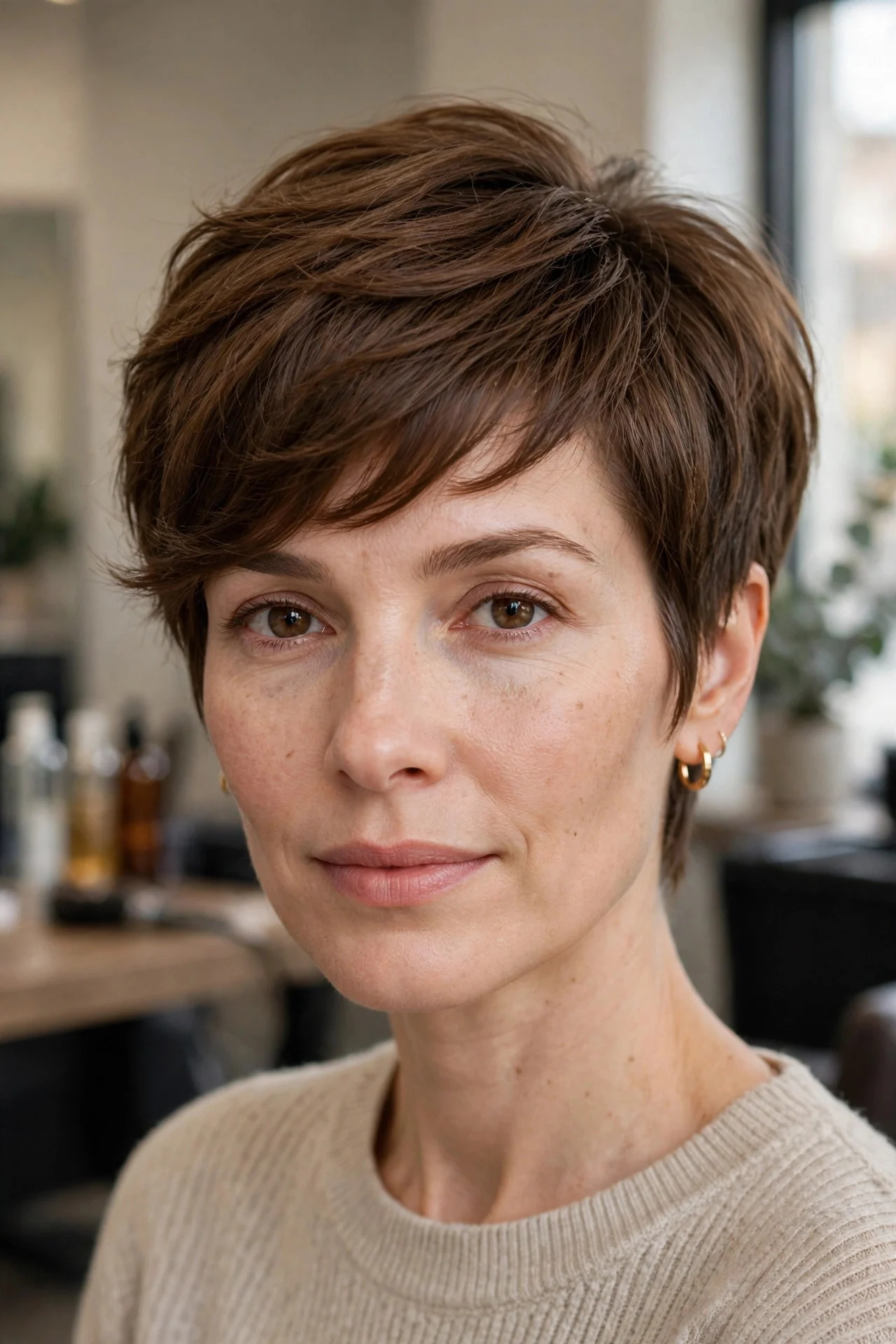
Ask your stylist for a pixie with three to four inches of length on top, tapered sides, and a softly textured nape. This is the version most people picture when they hear long pixie cut women, and it suits oval, heart-shaped, and square faces well. It can be swept to the side, pushed back, or worn with a little height at the crown, so it adapts to both casual days and formal evenings. Maintenance is simple, with trims every five to six weeks to keep the taper neat. The drawback is that the short back grows out quickly, and once the nape gets shaggy the whole cut loses its clean shape.
2Long Pixie With Side-Swept Bangs

This version keeps the top long enough for a deep side sweep that falls across the forehead and past one cheekbone. Ask for the bangs to blend into the longer top layers so there is no harsh line where they begin. It softens a strong jawline and flatters round and square faces, and it gives long faces a flattering horizontal line. Styling takes a round brush and a minute of blow drying to set the sweep in place. The bangs need trimming every three to four weeks, which is the main upkeep cost, and they can fall into your eyes on windy days if you skip styling product.
3The Textured Long Pixie
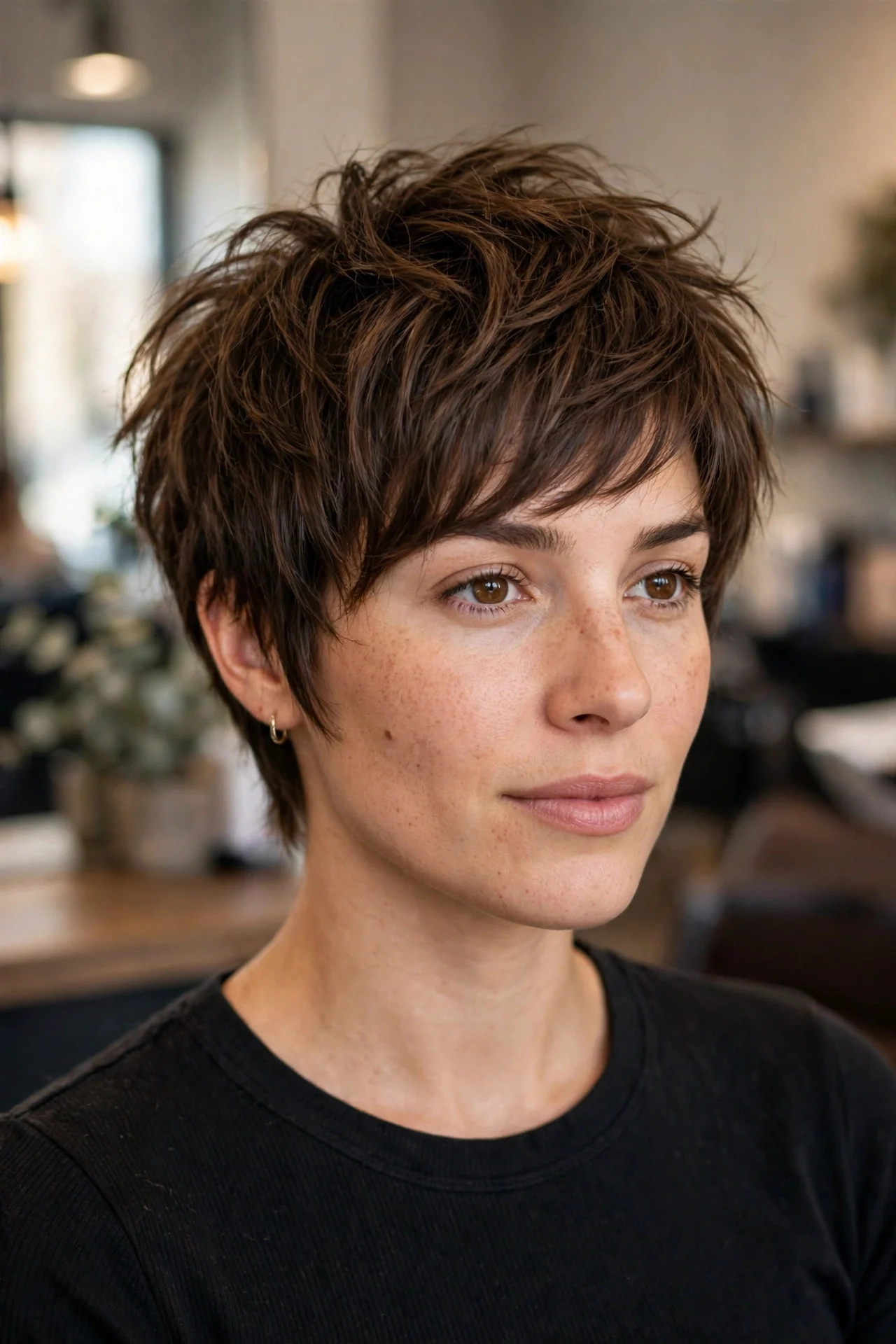
Texture is what keeps a long pixie from looking flat. Ask for point-cut layers through the top and crown, with the ends thinned just enough to create movement and separation. This cut suits straight and slightly wavy hair best, and it works beautifully on fine hair because the texture makes it look thicker than it is. A dab of matte paste scrunched through damp hair is usually all the styling it needs. Trims every six weeks keep the layers defined. The downside is that very thick hair can puff up if the texture is cut too aggressively, so ask your stylist to remove weight gradually rather than all at once.
4Long Pixie With an Undercut
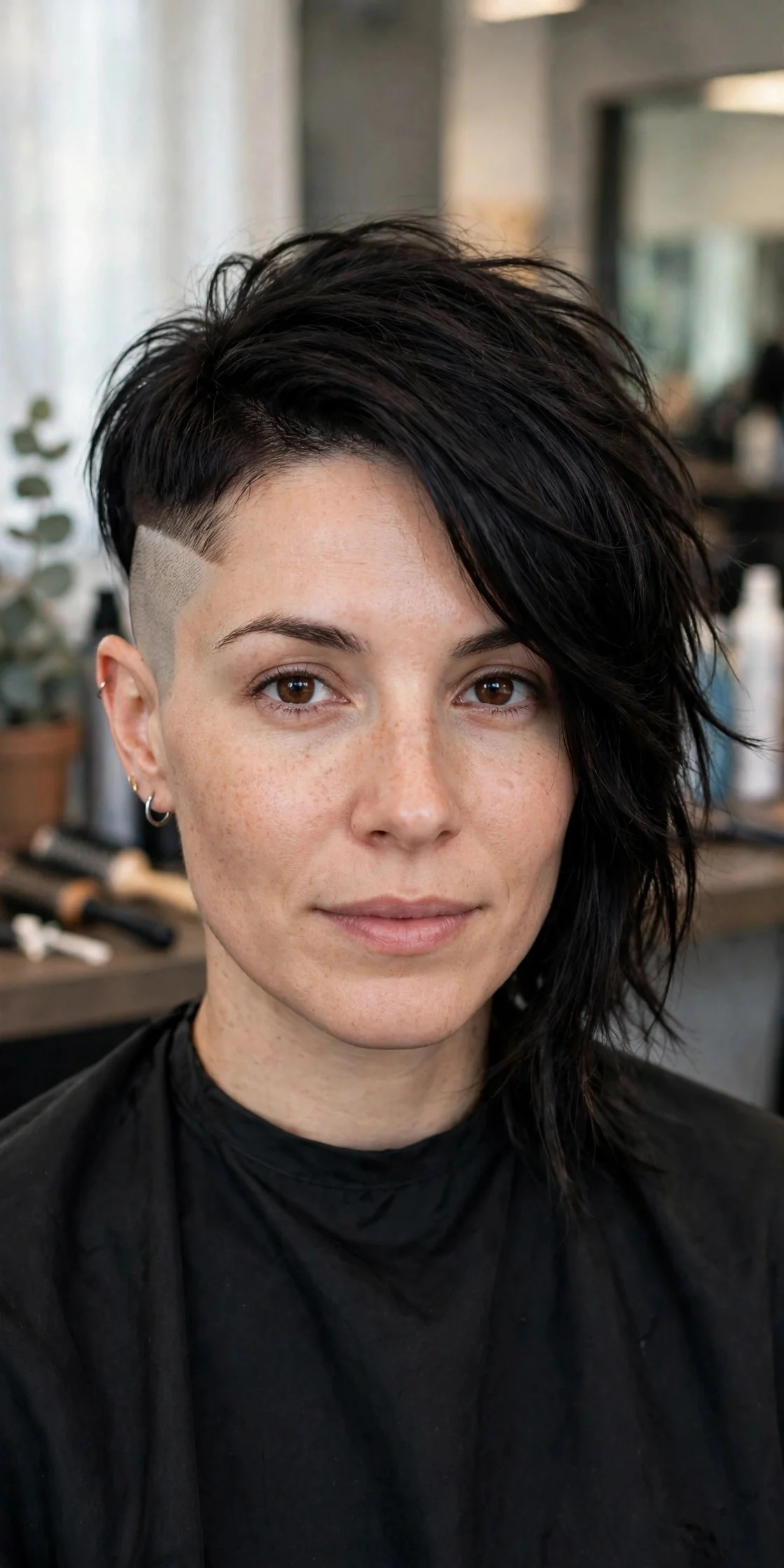
An undercut on one side or at the nape adds edge to an otherwise soft cut. Ask your stylist to clip one side short, or the nape, while keeping the top long enough to sweep over it. The undercut only shows when you want it to, which makes this version surprisingly versatile. It suits oval and heart-shaped faces, and it is a smart choice for thick hair because it removes bulk where you cannot see it. The cut dries fast and feels lighter in summer. The drawback is upkeep. The clipped section grows back stubbly within three weeks, so regular touch-ups are part of the deal, and growing it out takes patience.
5The Wavy Long Pixie
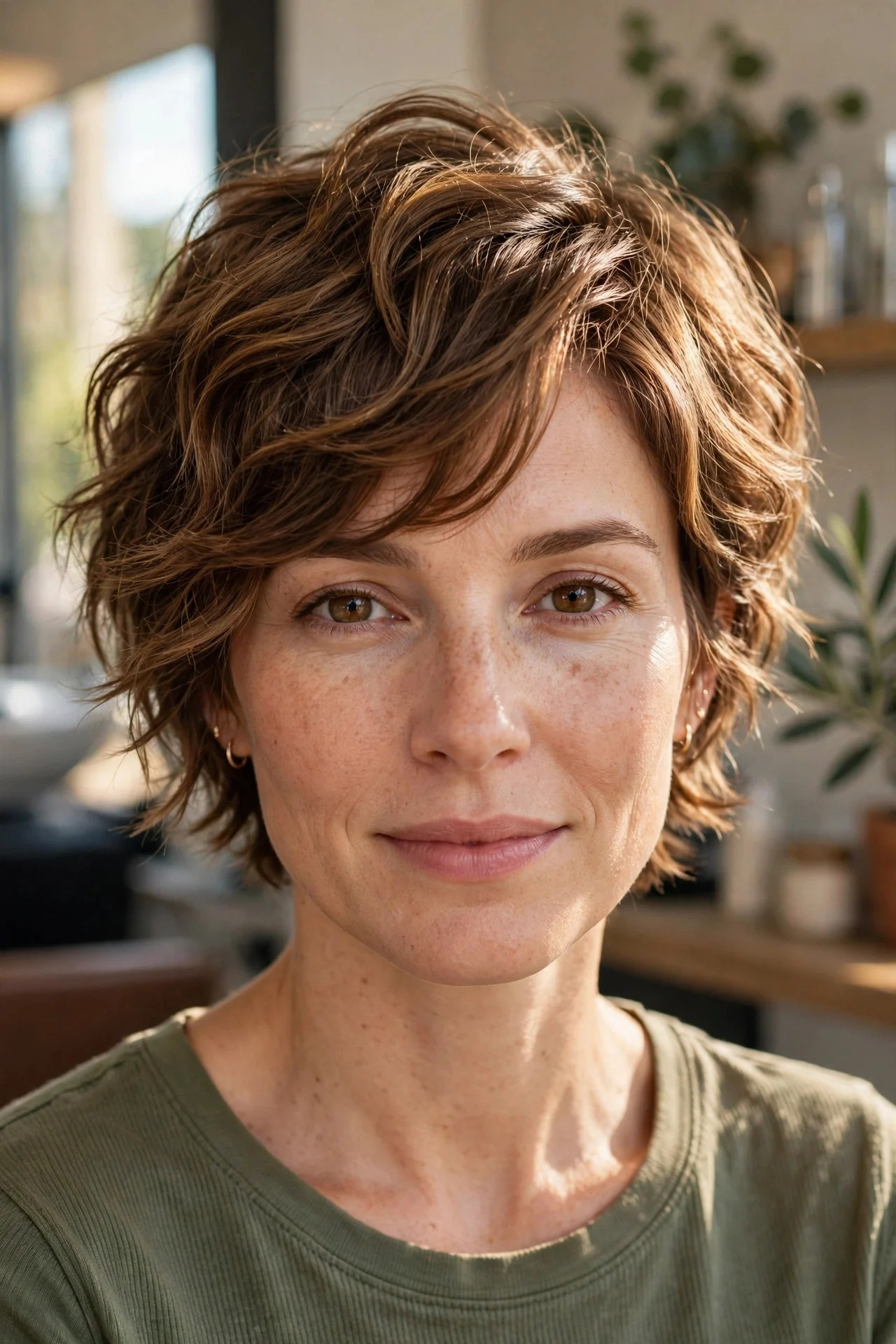
Natural waves give a long pixie an effortless, lived-in feel that straight hair has to work for. Ask for layers that follow your wave pattern, with the top left long enough to scrunch into soft bends. This version flatters most face shapes and is especially kind to thick, wavy hair because the layers let the waves spring up instead of sitting heavy. Styling is simple: a little curl cream on damp hair, then air dry or diffuse. The trade-off is frizz in damp weather, so a smoothing serum is worth keeping nearby, and the cut can look uneven if your waves fall differently on each side.
6Long Pixie With Curtain Bangs
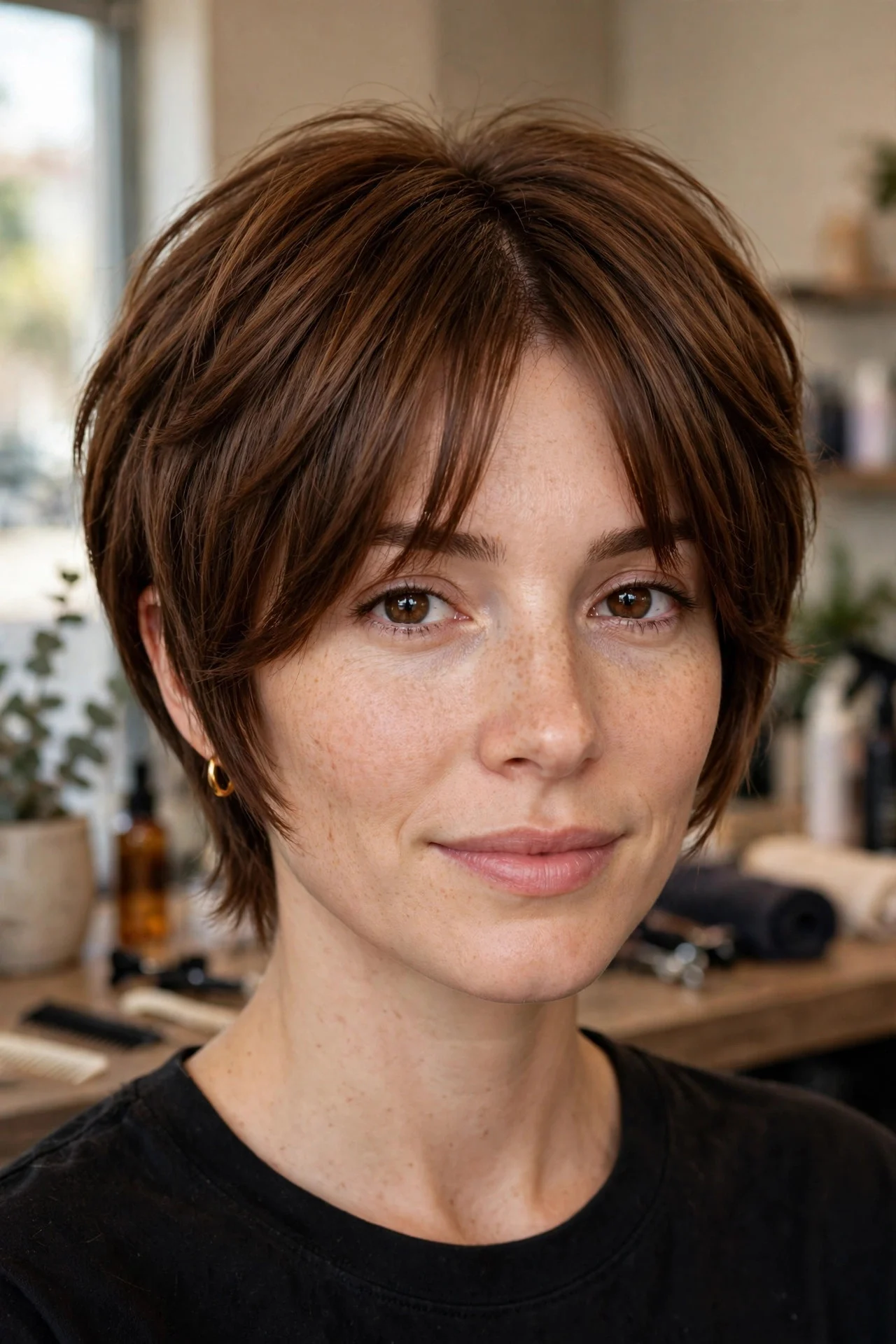
Curtain bangs bring softness to a short cut without the commitment of a full fringe. Ask for a center-parted fringe that starts at the cheekbones and blends into the longer top layers, with the sides kept short and tapered. This version suits long and oval faces beautifully, and it draws attention to the eyes and cheekbones. It works on straight and wavy hair, and it is forgiving while the bangs grow out because the parted ends blend easily into the rest of the cut. Styling is a quick blow dry with a small round brush. The drawback is that curtain bangs show oil faster than the rest of the hair, so dry shampoo becomes a regular habit.
7The Asymmetrical Long Pixie
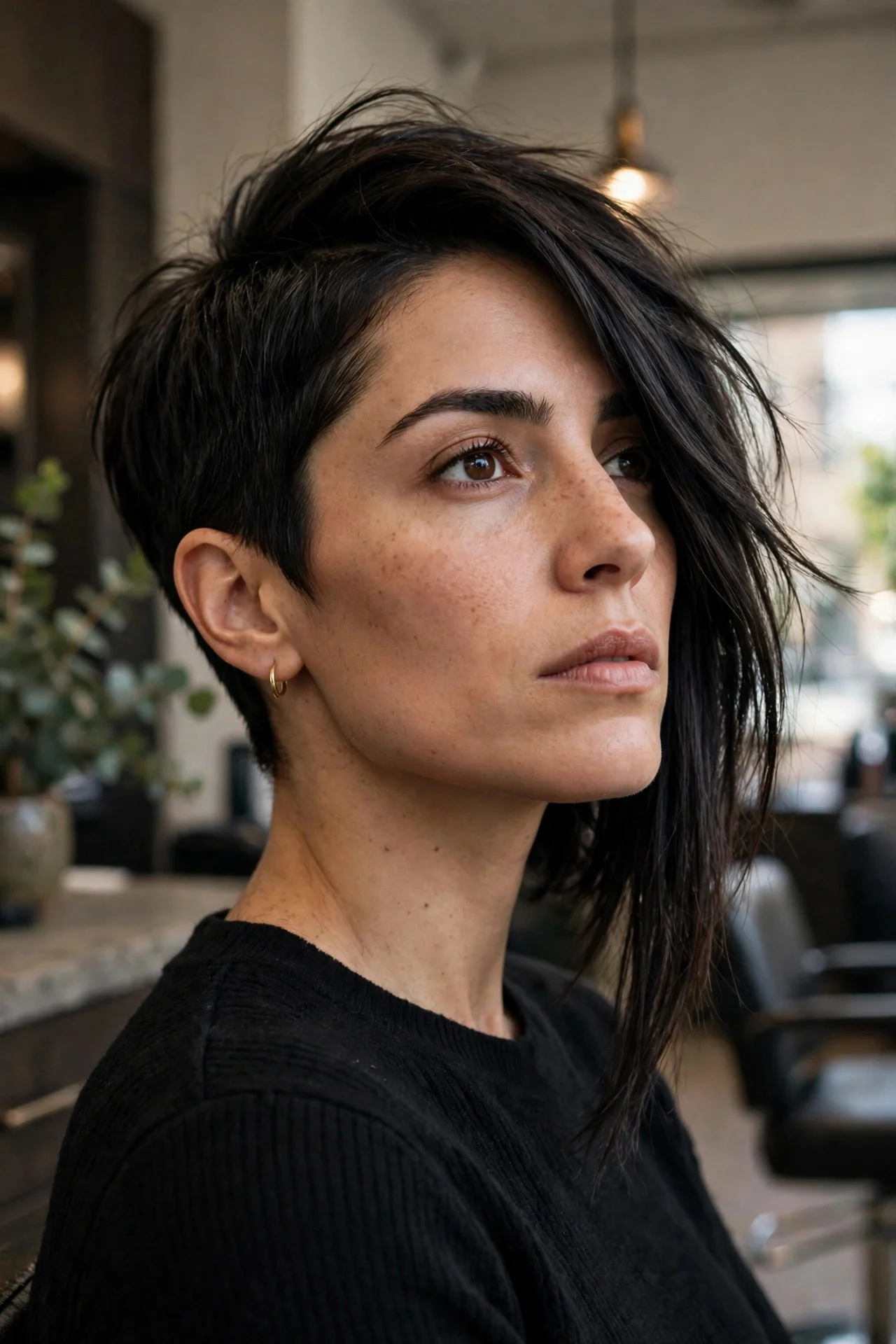
An asymmetrical long pixie keeps one side noticeably longer than the other, usually by two inches or more, which adds instant drama to a simple cut. Ask for the shorter side to sit above the ear and the longer side to graze the jawline, with textured layers throughout so the line never looks severe. It suits oval, round, and heart-shaped faces, and it is a clever way to make fine hair look fuller because the angle creates visual weight. Styling takes a little more attention since the two sides behave differently. The main drawback is upkeep: the asymmetry grows out fast, so you will want a trim every four to five weeks to keep the shape looking deliberate.
8Long Pixie With Highlights
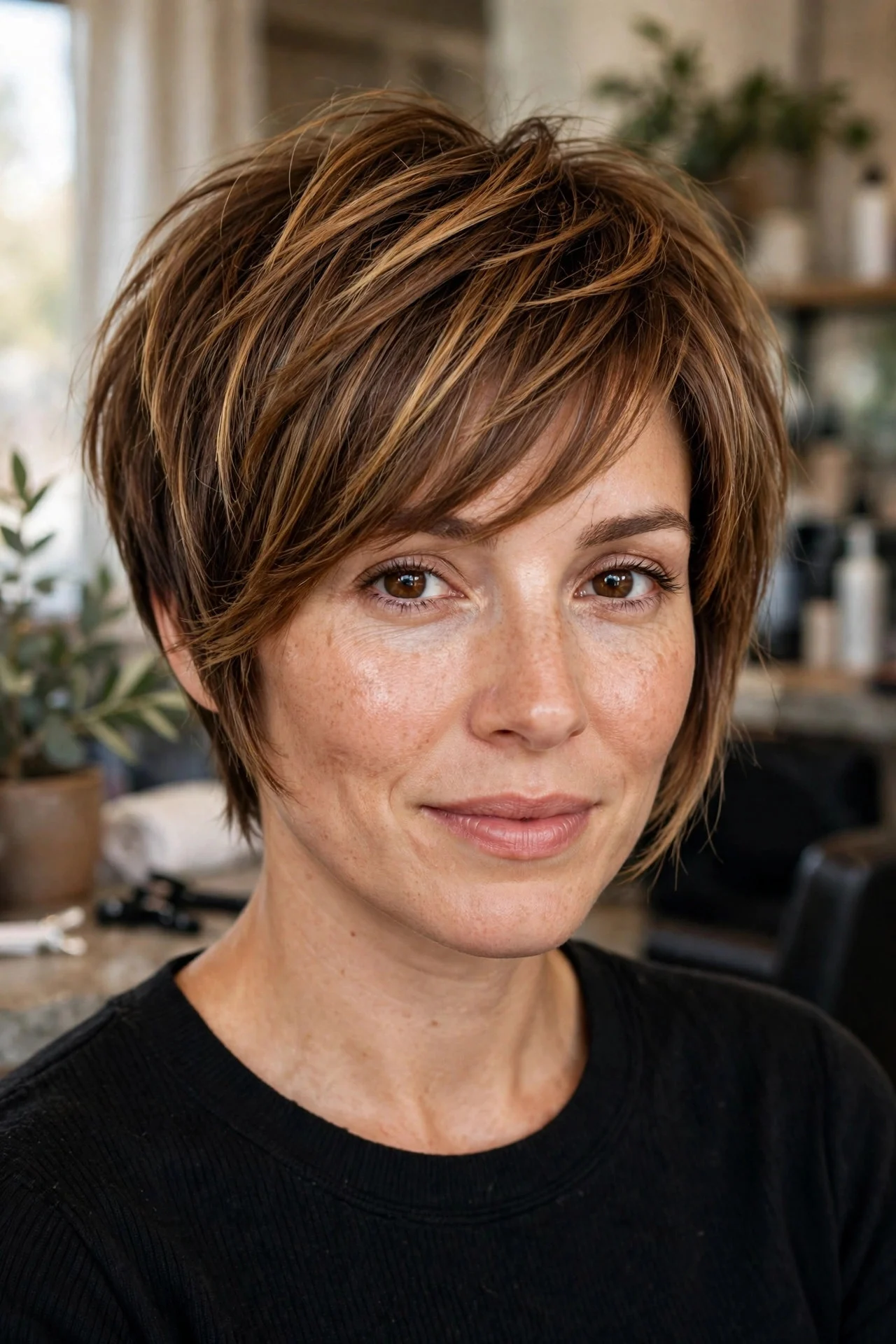
Colour can do half the work in this cut. Ask for a textured long pixie with highlights two shades lighter than your base, placed through the top layers and the longer front pieces. The lighter strands catch the light and make the layers look deeper and more defined, which is especially effective on brown and dark blonde hair. It suits almost every face shape because brightness around the face is universally flattering. Maintenance is the catch here. Highlights need a refresh every eight to ten weeks, and the lightened pieces need a toning shampoo to stop them turning brassy between appointments.
9The Sleek Long Pixie
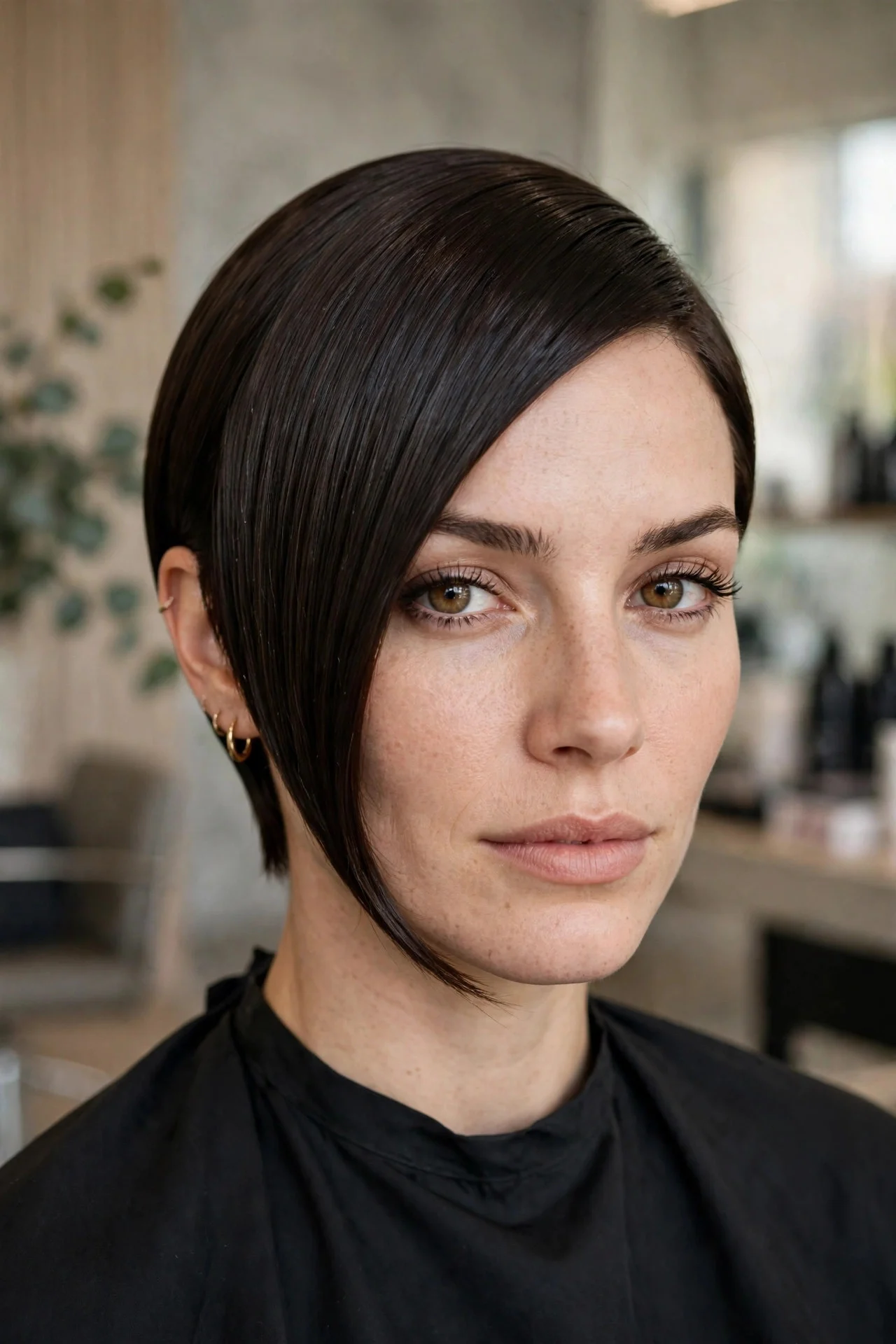
If you prefer polish over texture, the sleek long pixie is the version for you. Ask for a smooth cut with clean lines, longer on top and neatly tapered at the sides and back, with minimal layering so the hair falls in one smooth sheet. It suits oval and heart-shaped faces best, and it looks sharp on straight, fine to medium hair. Styling takes a flat iron and a smoothing serum, and the result is a cut that looks expensive with very little effort. The drawback is that it shows every imperfection, so it needs washing and styling most days, and it can fall flat by afternoon if your hair is heavy or freshly washed.
10Long Pixie With a Shaved Nape
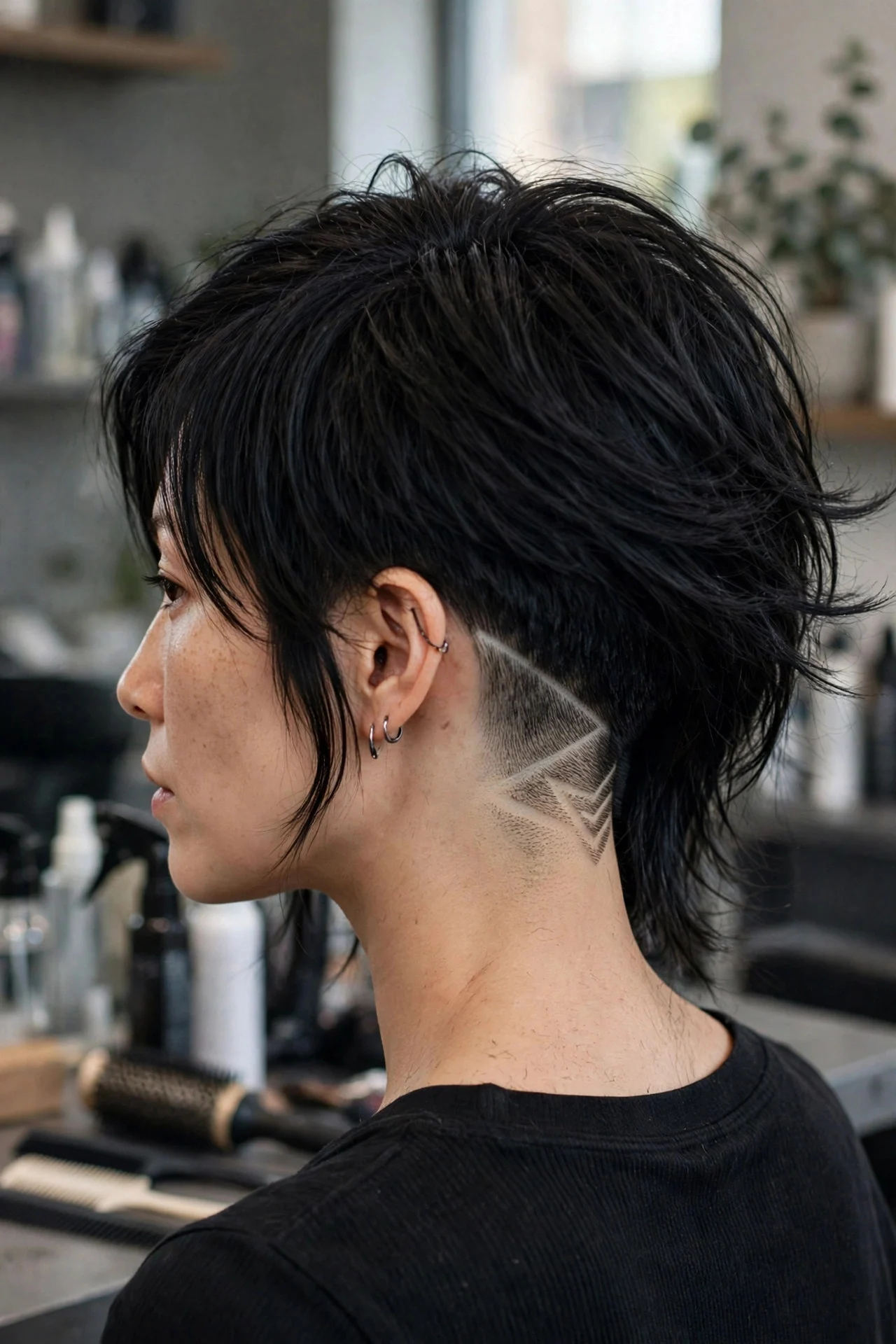
A shaved nape keeps the back of the cut crisp while the top stays long and soft. Ask your stylist to clip the hair at the nape very short, hidden beneath the longer layers on top, so it only shows when you tie your hair up or tuck it behind your ears. It suits thick hair best and stops the pixie from puffing out at the bottom. The cut dries faster and feels cooler in warm weather. The downside is that the shaved section grows back stubbly and needs clipping every three to four weeks, and it can look awkward during the grow-out phase if you decide to let it go.
11The Curly Long Pixie
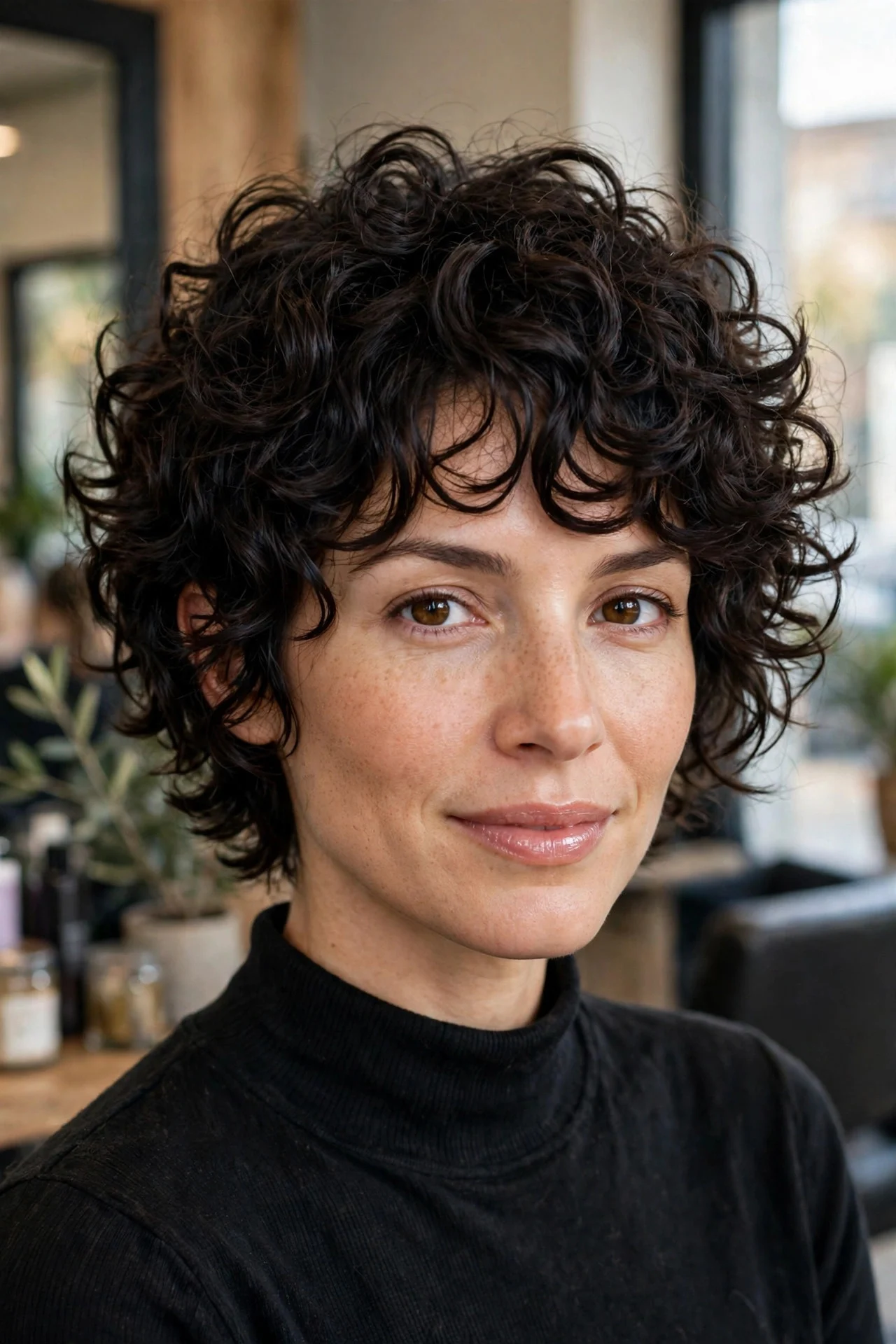
Curls and a long pixie are a natural match because the length on top lets curls form their shape instead of being cropped into a tight cap. Ask your stylist to cut your hair dry, curl by curl, with the top left long enough for the curls to fall softly over the forehead. This cut suits tight curls and loose waves, and it works best on medium to thick hair with natural volume. Wash-and-go styling is realistic here, with a curl cream scrunched in while the hair is damp. The downside is shrinkage, so the cut can look shorter than expected once dry, and a stylist who is not experienced with curls can easily take off too much.
12Long Pixie With a Deep Side Part
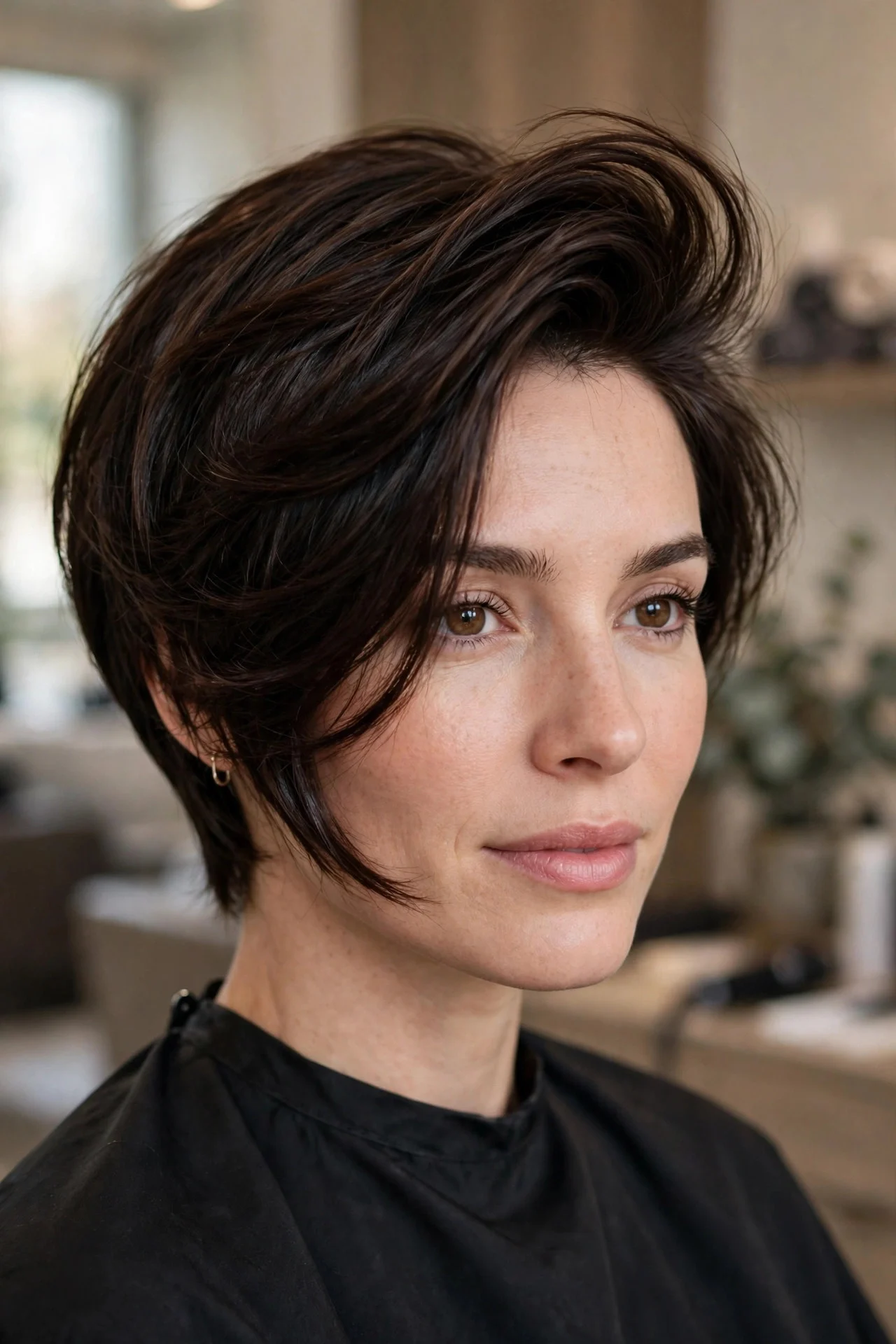
A deep side part changes the whole personality of a long pixie, giving it a polished, elegant lean without losing the ease of short hair. Ask for a cut with extra length on the heavier side of the part and layers concentrated there, so the sweep has weight and movement. This version suits oval and heart-shaped faces, and it is a lovely choice for fine hair because the side sweep creates the illusion of volume at the roots. It photographs beautifully and works for events as well as everyday wear. The drawback is that the part needs resetting each morning, and the sweep can fall flat by afternoon if your hair is heavy or freshly washed.
How to Style and Care for a Long Pixie
Start with the right products, not the most products. A pea-sized amount of matte paste or styling cream gives the top grip and definition without weighing it down, and a light texturizing spray adds separation on second-day hair. Blow dry with your fingers, lifting at the roots for height, then finish with a cool shot to set the shape. On non-wash days, dry shampoo at the roots keeps the volume alive, and a quick pass with a flat iron on the front pieces refreshes the whole cut in under five minutes. Wash two to three times a week to protect the natural oils that give short hair its movement, and book trims on schedule, since this cut depends on its outline more than most. A silk pillowcase helps reduce morning frizz and keeps the shape from flattening overnight.
Frequently Asked Questions
How often does a long pixie need a trim?
Most long pixies look their best with a trim every five to six weeks. Shorter versions and cuts with an undercut or shaved nape need attention sooner, around three to four weeks. Waiting too long lets the back grow heavy and the shape turns from intentional into simply overgrown.
Will a long pixie work on fine hair?
Yes, with the right approach. Ask for textured layers rather than heavy thinning, since too much removal can make fine hair look sparse. A cut with length on top and a side sweep usually gives fine hair the fullest look, and a root-lifting mousse helps the style hold its shape through the day.
Is a long pixie hard to style every morning?
It is one of the easiest cuts to style. Most versions need only a quick scrunch with product and a rough blow dry, and many people can finger style and go. The versions that take more time are the ones with bangs, a deep side part, or a sleek finish that needs a flat iron each day.
What should I ask my stylist for at the salon?
Bring photos of the exact version you want and point out the top length, the side taper, and the bang style. Tell your stylist your hair type, how much time you spend styling, and how often you are willing to come back for trims. A good stylist will adjust the cut to your face shape rather than copying the photo exactly.
Does a long pixie suit curly hair?
Curly hair takes beautifully to a long pixie because the length on top lets curls form their natural shape instead of being cut too short to curl. Ask for a dry cut from a stylist experienced with curls, and expect some shrinkage, so agree on the dry length before any cutting starts.
Keep exploring
If you liked these long pixie cuts for women, check out micro bob haircut ideas, 10 jaw-length bob haircuts, blunt lob haircuts for more ideas.