
I spent years avoiding layers entirely because every time I brought up the idea, someone in my life, usually my mom, would say some version of “but you’ll lose all your length,” as if the two things were mutually exclusive. I believed it for way longer than I should have, mostly because I never actually asked a stylist directly whether it was true. When I finally did, sitting in the chair for an unrelated color appointment, my stylist looked almost offended on my behalf that I’d been avoiding layers for years based on an assumption nobody had ever actually confirmed. She explained, while working through my hair, that the whole “layers mean losing length” idea is really about how dramatically layers are cut, not whether you get them at all, and that long, soft layering can add real movement while barely taking anything off your overall length.
I left that appointment with the same length I walked in with, and hair that moved in a way it genuinely never had before. It’s been my go-to ever since, and if you’ve been stuck in the same “but I don’t want to lose length” hesitation I was, here’s what I’ve learned about how long layers actually work, why the fear is mostly misplaced, and which specific approaches deliver the most movement with the least length sacrifice.
Why the “Layers Mean Losing Length” Idea Isn’t Quite Right
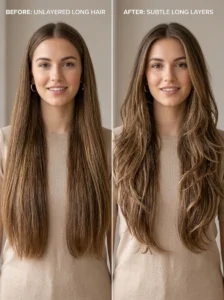
The confusion, as far as I can tell, comes from picturing dramatic, heavily layered cuts, the kind where the shortest layer sits several inches above the longest, creating a lot of visible length difference throughout. That style absolutely exists, and it does involve a meaningful length trade-off in certain sections. But that’s one specific approach to layering, not the only one, and it’s not remotely what most people picturing “long layers” are actually picturing when they use that term.
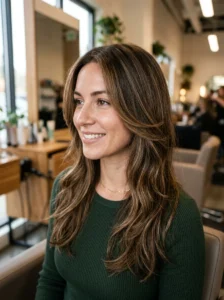
Long layers, done well, involve a much more subtle length difference between the shortest and longest pieces throughout the hair, sometimes as little as an inch or two spread gradually across the whole length rather than concentrated dramatically in one area. The overall length you see when your hair is down barely changes, since the longest pieces, which determine how long your hair looks overall, stay essentially where they were. What changes is everything underneath and throughout, where the subtle variation in length creates movement, bounce, and dimension that a single, uniform length simply can’t produce on its own.
My stylist explained it with a visual I still think about: picture a single-length haircut as a solid, flat sheet, and long layers as that same sheet with soft, gradual waves built into it. The overall size and shape barely changes, but how it moves and catches light is completely different.
What Long Layers Actually Do for Your Hair
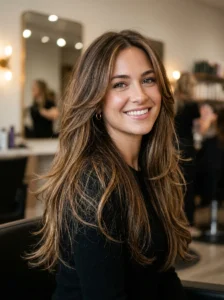
Beyond the obvious visual movement, long layers address a handful of specific issues that a lot of people don’t necessarily connect to layering as the solution, myself included before that appointment.
They reduce the appearance of blunt, heavy ends, which can sometimes make very long hair look thinner or more scraggly at the bottom than it actually is, particularly on finer hair textures where a completely blunt, single-length cut can emphasize thinness at the very ends rather than disguising it.
They add volume and body throughout the length, since the varying layer lengths create natural lift and movement rather than one heavy, uniform mass of hair weighing everything straight down, which matters considerably for anyone dealing with flat or limp hair at longer lengths specifically.
They frame the face more dynamically than a single length typically does, especially when layering is concentrated slightly more toward the front sections, creating a softer, more flattering shape around your features without requiring a dramatic face-framing cut like curtain bangs.
They make styling more versatile, since the built-in movement from layering means curls, waves, and even straight styles all tend to look more dimensional and less flat than the same styling technique would on a completely single-length cut.
Types of Long Layers to Discuss With Your Stylist
1. Subtle, Barely-There Layers

The most conservative option, this involves just a small amount of length variation, often only visible when the hair is styled with some movement or curl, and virtually invisible when hair is worn straight and down. This is close to what I ended up with on my own first appointment and remains a great starting point for anyone still nervous about the whole concept.
2. Face-Framing Long Layers
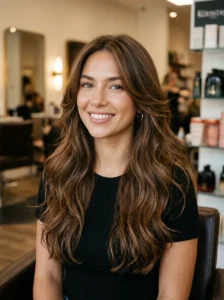
Concentrating the shortest layers specifically around the face, while keeping the rest of the length more uniform, adds movement and dimension right where it’s often most visible in photos, without introducing layering throughout the entire head.
3. Graduated Long Layers
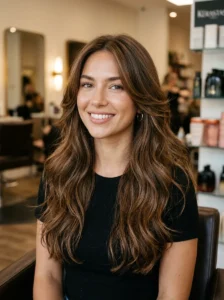
A more gradual, evenly distributed layering pattern throughout the full length creates consistent movement from root to end, offering more dramatic overall texture than subtle layers while still maintaining significantly more length than a heavily layered cut would.
4. Long Layers with a Curved, U-Shaped Perimeter
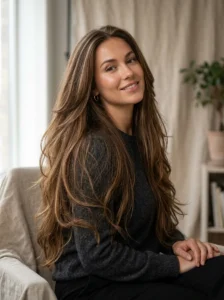
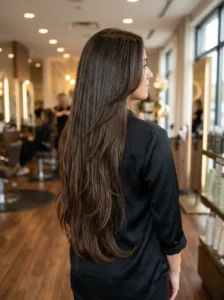
Rather than a completely blunt hemline, cutting the very ends in a soft, curved shape rather than a straight line across adds a gentle, rounded quality to the length itself, which pairs particularly well with layering throughout to create an overall softer silhouette.
5. Long Shag-Inspired Layers
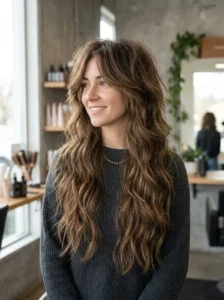
Borrowing some of the choppier, more textured layering typical of a shag cut, but keeping significantly more overall length than a true shag, creates more dramatic texture and movement for anyone wanting a bolder result while still prioritizing length retention.
6. Long Layers with Curtain Bangs
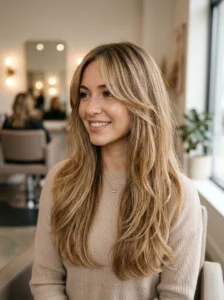
Pairing long, subtle layers throughout with soft, face-framing curtain bangs at the front combines two popular techniques that work naturally well together, since both are built around the same idea of gentle movement rather than dramatic contrast.
Does This Work on Every Hair Type?
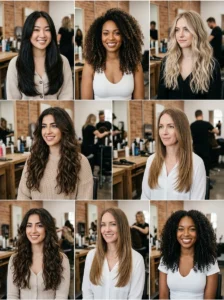
Straight hair shows the movement created by layering very clearly, since there’s no competing natural texture, though very fine straight hair benefits most from subtler, more conservative layering to avoid looking overly thin or stringy at the layered points.
Wavy hair genuinely thrives with long layers, since the layering works with the natural wave pattern to create even more visible movement and dimension than either the layering or the natural texture would produce on its own.
Curly hair absolutely can incorporate long layers, though the cutting needs to account carefully for how significantly curls shrink up once dry, similar to any layered cut on curly hair, to avoid ending up with more dramatic length variation than intended once the curl pattern settles.
Thick, dense hair benefits enormously from long layers, since the layering helps distribute and lighten the overall weight and density, making hair feel less heavy and more manageable without sacrificing the length that’s often part of why people grow their hair out that thick in the first place.
Fine hair benefits from more conservative, subtle layering specifically, since overly dramatic layers on fine hair can occasionally emphasize thinness rather than disguising it, whereas a lighter touch adds movement without going so far that individual layered sections look sparse.
How to Communicate What You Want to Your Stylist
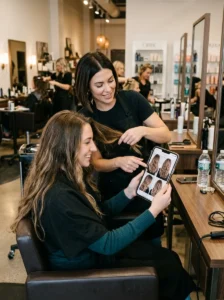
I made the mistake, once I finally committed to getting layers, of not being specific enough about how subtle or dramatic I wanted the result to be, which led to a slightly more noticeable length difference than I’d actually pictured going in. Here’s what I’d recommend asking or discussing instead.
Bring reference photos, and be specific about what you’re noticing in each one, whether it’s the amount of movement, how dramatic the length variation looks, or specifically where the layering seems concentrated.
Ask directly how many inches of difference there will be between your shortest and longest layers, since this single detail determines more about the final look than almost anything else discussed during the consultation.
Be upfront about how attached you are to your current length, and ask your stylist to explain exactly how much, if any, of your overall visible length will change with the specific layering approach being discussed.
Mention your hair type and how you typically wear and style it, since the ideal layering approach for someone who blow-dries and curls daily may look different from what works best for hair that’s mostly left to air dry.
Styling Long Layered Hair
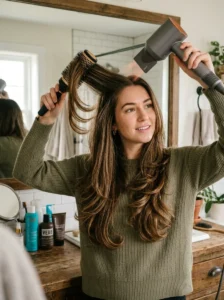
For the most defined, voluminous version of the movement layers create, a round brush and blow dryer, curving sections outward at the ends, emphasizes the built-in layering and creates noticeable bounce and shape throughout.
A curling wand or iron, used loosely through the mid-lengths and ends rather than tightly wound from root to tip, tends to look more natural and dimensional on layered hair than on a single-length cut, since the varying layer lengths already provide some inherent texture for the curls to play off of.
Air drying with a texturizing spray applied to damp hair lets the natural movement from the layering show through with minimal effort, which has become my regular routine on busier days when a full blowout isn’t realistic.
A lightweight volumizing mousse applied at the roots specifically helps lift and separate the different layer lengths, particularly useful for thicker hair where the layers benefit from a bit of extra definition and separation to really show their intended movement.
Maintaining Long Layers
Regular trims, generally every eight to twelve weeks, keep the layering looking intentional rather than growing out into something less defined, though this is genuinely a more forgiving maintenance schedule than a lot of shorter, more precisely shaped cuts require.
Deep conditioning remains important, particularly for the ends of the longest layers, which have often been growing the longest and are more prone to dryness or damage than the shorter, more recently cut sections throughout the rest of the style.
Regular dusting, a very light trim that removes only split ends without meaningfully changing the length or layering, can extend the time between full haircut appointments while still keeping the ends looking healthy, which matters more for long layered styles than shorter cuts since the length itself is often the whole point of choosing this style in the first place.
How Long Layers Interact With Face Shape
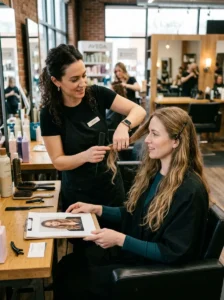
This is something my stylist brought up almost in passing during that first appointment, and it ended up mattering more than I initially gave it credit for. Because long layers can be concentrated in different areas, around the face, throughout the crown, or more evenly distributed across the whole head, the placement decision can be used to subtly complement different face shapes, similar to how bangs are often customized.
Rounder faces tend to benefit from layers concentrated slightly longer around the jaw and chin area, elongating the overall shape rather than adding width at the cheeks, which can happen if shorter layers are placed too high up near the widest part of a round face.
Square or angular faces often look softer with layers that curve slightly inward toward the chin, breaking up sharper angles with movement rather than emphasizing them with straight, blunt-ending layers that echo the jaw’s own strong lines.
Heart-shaped faces, wider at the forehead and narrower at the chin, tend to benefit from layers that add some fullness and movement near the jawline specifically, balancing the proportions between the wider top of the face and the narrower bottom.
Long or oval faces generally have the most flexibility with layer placement, since the goal usually isn’t correcting any particular width or narrowness issue, but rather simply adding movement and dimension wherever it looks most appealing.
Seasonal Considerations for Long Layered Cuts
Something I didn’t think about until I’d been wearing this style for a full year is how differently long layers can feel and behave across seasons, which is worth factoring in in when deciding how dramatic or subtle to go.
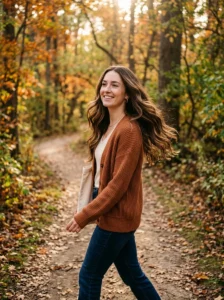
In humid summer months, more textured, wavy styling tends to hold up better than a sleek blowout, and long layers genuinely help here, since the built-in movement works with humidity-induced texture rather than fighting against it the way a single, blunt length sometimes does.
In drier winter months, added moisture and deep conditioning become more important, particularly at the ends of the longest layers, which can become noticeably drier and more prone to static or flyaways in cold, dry air compared to the more recently cut shorter sections.
For anyone who swims regularly, whether for exercise or simply during summer months, layers can actually make post-swim detangling somewhat easier than a single, heavy length, since the varying layer lengths mean less overall weight and tangling potential when hair is wet.
Common Mistakes to Avoid
Not specifying how subtle or dramatic you want the layering to be is probably the most common source of disappointment, since “long layers” alone leaves a lot of room for interpretation between a stylist who leans conservative and one who leans more dramatic by default.
Getting layers cut without discussing your natural hair texture can result in layering that doesn’t actually create the movement you were hoping for, since the same layering pattern can look and behave quite differently depending on whether it’s cut on straight, wavy, or curly hair.
Skipping regular trims, assuming that because you’re not losing significant length, maintenance doesn’t matter as much, can let the layering soften and blend back together over time, gradually losing the movement and definition that was the whole point of getting layers cut in the first place.
Frequently Asked Questions
Will I actually lose noticeable length getting long layers cut in? With subtle to moderate layering specifically, most people notice very little visible length change, since the longest layer, which determines your overall perceived length, generally stays close to where it started. More dramatic layering approaches do involve a bigger visible length difference, so being specific with your stylist about how subtle you want it matters considerably.
How long does it take to grow out long layers if I decide I want a single length again? This depends on how dramatic the original layering was, but subtle, gradual layers tend to grow out fairly gracefully compared to more dramatic layering patterns, often blending back toward a single length within several months without requiring a corrective cut.
Do long layers work well with hair extensions? Yes, and layering can actually help blend extensions more seamlessly into natural hair, since the varying lengths already built into a layered cut can help disguise the transition point between natural hair and extensions better than a completely blunt, single-length cut would.
Can I get long layers if my hair is damaged or has a lot of split ends? Layering can actually help manage the appearance of damaged ends to some degree, since a stylist can remove more damaged length in the shorter layers while preserving overall length in the longest pieces, though a deep conditioning treatment beforehand is generally worth discussing if damage is a significant concern.
How often do I need to see my stylist to maintain long layers? Generally every eight to twelve weeks for a proper trim that maintains the layering pattern, though many people extend this slightly longer than they would with a more precisely shaped shorter cut, since long layers are naturally more forgiving as they grow out.
Final Thoughts
Looking back at all those years I spent avoiding layers based on an assumption nobody had ever actually confirmed for me, I genuinely wish I’d asked the question sooner instead of just accepting it as fact. Long layers, done with the right amount of subtlety for your specific hair and comfort level, add real movement and life to hair without the dramatic length sacrifice most people assume comes with the territory. If you’ve been hesitating the same way I was, it’s worth having an honest, specific conversation with your stylist about exactly how much length variation you’re actually looking at, rather than avoiding the whole idea based on a worst-case version of layering that isn’t the only option available to you.