
I found an old photo of my mom from what must have been 1994, standing in front of a station wagon I vaguely remember from childhood, wearing a haircut I genuinely could not stop staring at. Sleek, blunt, hitting right at the jaw, with this effortless, glossy weight to it that looked more modern than half the haircuts I’d actually gotten in the last five years. I texted the photo to my stylist before I’d even fully thought it through, just the words “can you do this,” and she called me almost immediately, laughing, saying she’d had at least four other clients bring in nearly identical decade-old photos that same month. Turns out I wasn’t discovering some forgotten gem on my own. I’d just caught up to a trend that had already been quietly building momentum for a while, and my mom’s old haircut and I were about to become very well acquainted.
That appointment was almost eight months ago now, and I have genuinely not stopped getting compliments on it since, which says something given how many haircuts I’ve cycled through over the years without anywhere near this consistent a reaction. If you’ve been noticing the 90s bob everywhere lately too, or you just dug out an old family photo of your own and had a similar moment of recognition, here’s what actually defines this specific style, why it’s resonating so strongly right now, and everything I’ve learned about getting it right and living with it since.
What Actually Defines a 90s Bob
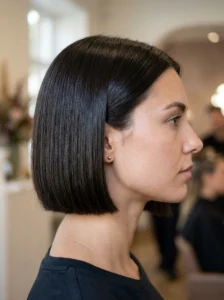
The term gets used loosely enough now that it’s worth being specific about what separates a true 90s bob from the general category of “bob haircuts” that have existed in various forms for the better part of a century. The defining features are a blunt, precisely cut hemline, hitting somewhere between the chin and jawline, minimal to no layering throughout the length, and a glossy, sleek finish that relies more on hair health and a good blowout than on texture or tousled styling.
This is genuinely different from a lot of bobs that have trended more recently, which often incorporate soft layers, deliberate texture, or an undone, effortless finish. The 90s version is almost the opposite philosophy. It’s precise. It’s smooth. The entire visual impact comes from the clean geometry of the cut itself and the healthy shine of the hair, rather than from any added movement or intentional messiness.
My stylist described the difference this way while she worked: a lot of bob variations over the last decade have been about softening the shape, adding layers to create movement and forgiveness for different face shapes and styling preferences. The 90s bob does the opposite. It embraces the sharpness and precision, and that precision is exactly the point, not something to be softened or layered away.
Why This Specific Decade’s Bob, and Why Now

Fashion and beauty trends cycling back around roughly every twenty to thirty years isn’t a new phenomenon, but it’s worth understanding why this particular silhouette specifically has resonated so strongly in the current moment rather than some other haircut from the same era.
Part of it is a broader shift away from the heavily textured, deliberately undone aesthetic that’s dominated for a while now, toward something cleaner and more precise. Textured shags, wolf cuts, and tousled waves have had a long run, and there’s a natural pull toward the opposite extreme once a look has been everywhere for long enough. The 90s bob, with its emphasis on sleekness and precision, represents almost a direct visual rebellion against the messier styles that came right before it.
There’s also something to be said for how well this style translates to the current emphasis on hair health as a status symbol in its own right. A blunt, sleek bob has nowhere to hide damage or dryness the way a heavily layered or texturized cut sometimes can. The style itself signals healthy, well-maintained hair simply by virtue of how clean and glossy it needs to look to actually work, which fits neatly into a broader cultural moment that’s increasingly focused on hair health, scalp care, and visible condition rather than purely on styling tricks.
Finally, and I think this matters more than people give it credit for, it’s simply an extremely flattering, low-drama silhouette that doesn’t rely on chasing an ultra-specific face shape or hair texture the way some more dramatic cuts do. It’s confident without being loud, polished without requiring elaborate daily styling once you understand the basic technique, and it photographs beautifully from nearly every angle, which matters enormously in an era where so much hair inspiration circulates through video and photo content.
How It’s Different From Other Bobs You’ve Probably Seen Lately
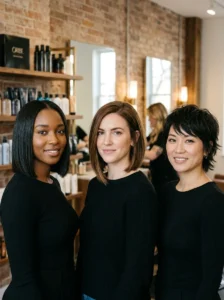
If you’ve spent any time on this site or elsewhere researching bob variations recently, you’ve likely come across the long angled bob, the butterfly cut’s shorter variations, or the bixie, all of which have their own dedicated followings right now. The 90s bob sits apart from all of these in a few specific ways worth understanding before you go into your own appointment.
Unlike the angled bob, which deliberately varies in length between the front and back to create a diagonal line, the 90s bob is typically one consistent length all the way around, or very close to it. There’s no dramatic angle here. The entire perimeter sits at roughly the same length, creating that clean, geometric line rather than a swooping, angular one.
Unlike the butterfly cut or other heavily layered styles, there’s minimal internal layering in a true 90s bob. Where the butterfly cut is specifically built around dramatic contrast between short and long pieces, the 90s bob avoids that contrast almost entirely, relying instead on the weight and density of one consistent length to create its visual impact.
Unlike the bixie or other short, cropped styles, the 90s bob maintains meaningfully more length and doesn’t incorporate the closely cropped sides that define pixie-adjacent cuts. It’s a fuller, weightier style by comparison, closer to what most people would recognize immediately as a classic, substantial bob rather than anything edging toward pixie territory.
Who This Cut Actually Works On
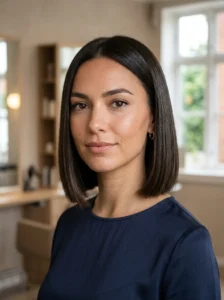
This was a real concern of mine going in, since a completely blunt, unlayered cut has something of a reputation for being less forgiving than softer, layered alternatives. Having lived with it for months now and talked to my stylist extensively about it, here’s the honest breakdown.
Face shape matters here more than it does with some softer, more layered cuts, simply because there’s less built-in flexibility to camouflage or balance different proportions the way layering can. Oval and heart-shaped faces tend to have the easiest time with this style, since the clean line generally complements these proportions without much adjustment needed. Round faces can absolutely wear it, but the length and where exactly the blunt line falls matters considerably, since hitting right at the widest part of the face can occasionally emphasize width rather than balancing it. A skilled stylist can adjust length slightly higher or lower to avoid this specific issue. Square, angular faces sometimes benefit from a very slightly softer, less razor-sharp finish to the ends, even while keeping the overall blunt concept, to avoid too much visual repetition between the jaw’s natural angle and the haircut’s own sharp line.
Hair type plays a significant role in how achievable and how easy to maintain this style actually is. Straight hair is genuinely the easiest match, since the style’s whole visual concept relies on a clean, unbroken line that straight hair naturally supports without much daily effort. Wavy hair can absolutely work, but it usually needs more regular blow-drying and smoothing to maintain that sleek, precise finish, since natural wave will otherwise soften and disrupt the crisp geometry the style depends on. Curly hair presents the biggest challenge for a truly authentic version of this cut, since the entire aesthetic relies on smoothness and precision that curl pattern works directly against. This doesn’t mean curly hair can’t wear a bob at all, just that achieving the specific, sleek 90s aesthetic would require regular straightening, which is worth being honest with yourself about before committing to a cut that fights against your natural texture on a near-daily basis.
Hair thickness and density also factor in more than they might with a layered style. Thicker, denser hair tends to hold this shape beautifully and creates exactly the weighty, substantial look the style is known for. Finer or thinner hair can still wear it, but it may benefit from being kept at a slightly shorter length overall, since a longer blunt cut on finer hair can sometimes look a bit sparse or lack the visual density that makes this style so striking on thicker hair.
Getting the Cut Right at the Salon
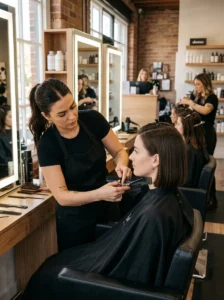
Precision matters enormously for this specific style, arguably more than with almost any other bob variation, since there’s no layering to disguise unevenness the way there would be with a softer, more forgiving cut. Here’s what I’ve learned actually matters when discussing this with your stylist.
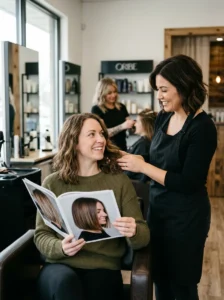
Bring a genuinely clear reference photo, and be specific about the exact length you’re picturing, since even small differences between chin-length and jaw-length change the entire character of the finished style considerably more than they would with a more forgiving, layered cut.
Ask directly about your stylist’s experience with truly blunt, minimally layered cuts specifically, since this is a technically demanding style to execute well, and a stylist more accustomed to soft, layered cuts may naturally default to adding more texture or movement than the authentic 90s aesthetic actually calls for.
Discuss your natural hair texture honestly, and ask what daily maintenance will actually be required to keep the style looking the way it does immediately after the cut, particularly if you have any natural wave or curl that will need to be managed to maintain the sleek finish.
Talk through face shape considerations specifically, including exactly where the blunt line will fall relative to your jaw and chin, since even a half-inch difference in length can meaningfully change how flattering the proportions end up looking on your specific face.
Styling It Day to Day
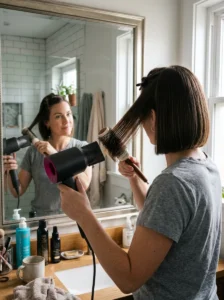
For the full, authentic sleek finish, a round brush and blow dryer, working in sections and pulling the brush all the way through to the ends with tension, creates that glossy, precise look the style is known for. This is genuinely the styling method I use most days, and it takes me somewhere around fifteen to twenty minutes once I got the technique down.
A flat iron, used afterward on just the ends or throughout if extra smoothness is needed, helps eliminate any remaining flyaways or slight bend that the blow-dry alone didn’t fully address, particularly important on days with higher humidity.
A lightweight, smoothing serum or oil applied to damp hair before blow-drying helps control frizz from the very start, rather than trying to fix it after the fact, and makes a genuinely noticeable difference in how long the sleek finish actually lasts throughout the day.
For anyone with naturally straighter hair who wants a lower-effort version of the daily routine, simply air-drying with a smoothing cream applied to damp hair can get reasonably close to the intended look without the full blow-dry and flat-iron routine, though it won’t achieve quite the same precise, glossy finish as the full styling process.
Silk or satin pillowcases genuinely matter more for this style than I expected going in, since friction from a regular cotton pillowcase overnight can create bend and frizz that undermines the sleek finish by morning, requiring a full restyle rather than just a quick touch-up.
Maintaining a 90s Bob
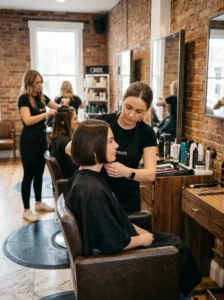
Because there’s minimal to no layering built into this cut, any growth or unevenness shows considerably more obviously than it would with a softer, more forgiving style. Regular trims, generally every four to six weeks, matter more here than with almost any other bob variation to keep that clean, precise line looking intentional rather than growing out into something uneven or shapeless.
Hair health becomes a bigger visible factor with this style than with more textured alternatives, since there’s nowhere for dryness, split ends, or damage to hide within layers or intentional texture. Regular deep conditioning and trims to prevent split ends from becoming visually obvious matter more here than they might with a cut that’s designed around texture rather than smoothness.
A good, moisturizing shampoo and conditioner routine, along with minimizing unnecessary heat styling beyond what’s needed to maintain the sleek finish, helps preserve the glossy quality that’s such a core part of what makes this style work in the first place. Damaged, dull hair simply won’t achieve the same striking effect that healthy, shiny hair does in this particular cut.
Common Mistakes to Avoid
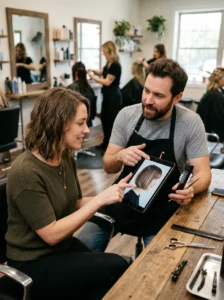
Allowing a stylist to add layers “for movement” without discussing it explicitly beforehand is probably the most common way this style ends up looking like a generic bob rather than the specific, precise 90s aesthetic that was actually requested. Being clear that you want minimal to no layering, and understanding that this is a deliberate choice rather than an oversight, helps avoid this miscommunication.
Underestimating the daily styling commitment, particularly for anyone with natural wave or curl, can lead to frustration if the cut doesn’t naturally fall into the sleek shape it was cut to achieve. Being honest with yourself about how much daily blow-drying or flat-ironing you’re actually willing to do before committing to this specific style prevents a lot of after-the-fact disappointment.
Skipping regular trims because the style “still looks fine” is a mistake that catches up with this cut faster than it would with more layered alternatives, since the entire visual impact depends on a precise, even line that starts losing its sharpness noticeably sooner than a softer cut would.
Choosing this cut purely because it’s currently trending, without considering whether the maintenance level and daily styling requirements actually fit your lifestyle and hair type, can lead to a style that looks beautiful for photos but becomes a genuine daily frustration in practice.
Frequently Asked Questions
Will a 90s bob work if I have naturally curly hair? It’s possible, but achieving the authentic sleek, blunt aesthetic typically requires regular straightening on curly hair, since the style’s whole visual concept relies on smoothness that curl pattern naturally works against. If you’re not willing to straighten regularly, a softer, more texture-friendly bob variation might be a more realistic and satisfying choice.
How is this different from a regular blunt bob that’s been popular in recent years? The core concept is similar, but the 90s specific version tends toward a particular jaw-to-chin length range with essentially zero layering and an emphasis on glossy, healthy-looking sleekness rather than a more matte or textured finish that some recent blunt bob variations have incorporated.
How often will I need to get this cut trimmed? Generally every four to six weeks, somewhat more frequently than a layered style might require, since the precise, blunt line loses its sharp definition more quickly and more visibly as hair grows out compared to a cut with built-in layering to disguise growth.
Does this cut require expensive salon products to maintain at home? Not necessarily expensive, but a good smoothing serum or lightweight oil, a quality round brush, and a reliable blow dryer genuinely make a meaningful difference in how easily you can replicate the sleek finish at home, so it’s worth investing in a few solid basics even if you don’t need premium salon-exclusive products specifically.
Can I still wear this cut with bangs? Yes, and blunt, straight-across bangs in particular pair very naturally with the overall aesthetic of a 90s bob, since both share that same precise, geometric sensibility, though it’s worth discussing with your stylist how the bangs and the bob length will work together proportionally for your specific face shape.
Final Thoughts

Sitting in that station wagon photo of my mom clearly had no idea it would eventually inspire an entire haircut decision decades later, but here we are, and I understand now exactly why this particular silhouette has had the staying power to come back around and resonate so strongly with an entirely new generation of people who weren’t even around to see it the first time. It asks more of you in terms of maintenance and precision than some of the softer, more forgiving styles that have dominated recently, but the payoff, at least in my experience, has genuinely been worth the extra fifteen minutes of blow-drying most mornings. If an old family photo has ever stopped you in your tracks the way that one did for me, it might be worth bringing it in and starting the same conversation I did.