
I’ve had long curly hair my entire adult life, and for a significant chunk of that time, I avoided layering almost entirely because every time I tried it, the shape seemed to last about three weeks before collapsing into something shapeless and frustrating. I’d walk out of the salon loving the cut, and by the following month, I’d be wondering where all that carefully placed structure had gone.
It took finding a curly hair specialist, rather than a general stylist who happened to also work with curls, to understand what I’d been doing wrong all along. The layering itself wasn’t the problem. The technique, the maintenance routine, and my own styling habits were what determined whether a long layered curly cut held its shape or fell apart within weeks. Several years and many cuts later with this approach, I want to share everything that’s actually made the difference.
Why Long Layered Curly Cuts Often Lose Their Shape
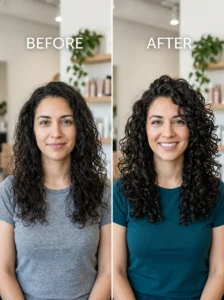
Before getting into solutions, it’s worth understanding the actual mechanics behind why this specific combination, long length plus heavy layering, is particularly prone to shape loss compared to shorter curly cuts.
Long hair carries significant weight, and that weight pulls down on curl pattern more than shorter lengths do. When a cut relies on layers cut at specific lengths to create shape and movement, that same weight can gradually stretch out the curl pattern over weeks, causing layers that were once distinct and shaped to relax into a more uniform, shapeless mass.
This isn’t an inevitable outcome, though. It happens specifically when the cutting technique doesn’t account for this weight factor, or when maintenance and styling habits don’t actively work to preserve the structure the cut was designed to create.
The Cutting Techniques That Actually Hold Shape
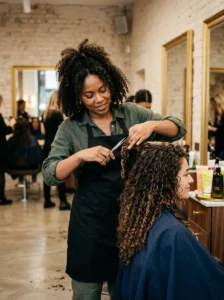
This is where my own understanding shifted most significantly, through conversations with my specialist and watching the actual technique used during my appointments.
Dry cutting with curl-by-curl assessment. Rather than cutting wet hair and hoping it falls correctly once dry, a specialist cuts dry, assessing exactly how each curl’s specific spring and weight will behave, planning the layering around that individual behavior rather than a generic, uniform approach.
Strategic weight distribution, not just length variation. A cut designed to hold shape over time considers not just where layers should be shorter or longer, but how to distribute the overall weight of the hair so no single area becomes weighed down disproportionately, which is what often causes shape collapse.
Internal layering versus visible perimeter layering. Some of the most successful long layered curly cuts I’ve had relied heavily on internal layers, cut within the interior sections of the hair rather than at the visible perimeter, which removes weight and adds shape-supporting structure without creating obvious external layer lines that can look uneven as they grow out.
Avoiding over-thinning. Just as with shorter curly cuts, removing too much density through thinning shears can actually undermine a cut’s ability to hold shape, since some natural density and weight distribution is what helps curls maintain their structured layering rather than collapsing.
1. The Long Layered Shag
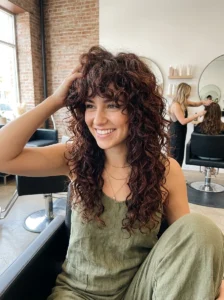
Heavy layering throughout long curly hair, with the most dramatic layers concentrated at the crown and gradually blending into longer length. When cut with proper attention to weight distribution, this style maintains its voluminous, dynamic shape remarkably well over time.
This is the cut I’ve had for the past two years, with regular maintenance trims, and it remains one of the longest-lasting shapes I’ve ever achieved with long curly hair.
Best for: Medium to thick curl density, those wanting maximum volume and movement.
2. The Internally Layered Long Cut

Long length with minimal visible perimeter layering, but significant internal layering hidden within the interior sections. This creates movement and prevents the bottom-heavy weight that often causes shape loss, while maintaining a clean, relatively uniform outer silhouette.
Best for: Those wanting long hair with minimal visible layer lines.
3. The Long Curly Layered Lob Hybrid


Layering concentrated specifically in the upper portion of long hair, while the lower lengths remain comparatively less layered, creating a structure that combines volume at the top with weight and length retention at the bottom.
Best for: Medium curl density, those wanting balanced volume and length.
4. The Face-Framing Layered Cut
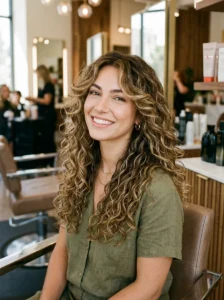
Long, relatively minimal overall layering, but significant, well-placed face-framing layers cut specifically to maintain their shape around the face regardless of how the rest of the length behaves over time.
Best for: All curl densities, those wanting a low-maintenance approach to shape retention.
5. The Graduated Long Layer Cut

A more gradual, evenly distributed layering technique throughout the entire length, rather than dramatic, concentrated layering at any single point, creating a structure that tends to grow out and lose shape more gradually and evenly than more dramatic layering approaches.
Best for: Those wanting longer intervals between maintenance trims.
6. The Curly Layered Cut With Weight Line
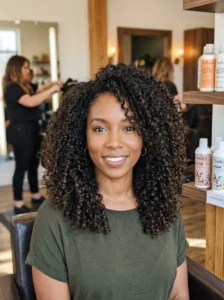
A specific technique where a deliberate weight line is maintained at a particular length, with layers built strategically above that line, creating a structure that resists the gradual collapse that can happen with more uniform layering throughout.
Best for: Thick curl density, those wanting maximum shape longevity.
How Often You Actually Need Trims to Maintain Shape
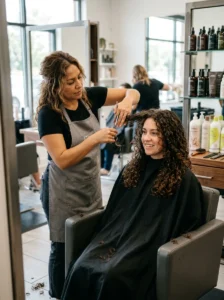
This is a question I get asked frequently, and the honest answer depends significantly on the specific cut and your curl pattern, but here’s what’s worked for me and what my specialist has confirmed through years of working with long curly clients.
For a heavily layered shag-style cut, trims every eight to ten weeks help maintain the dramatic shape that makes this style work in the first place. Letting it grow significantly longer between appointments allows the weight to gradually overcome the layering structure.
For more subtle, internally layered cuts, the interval can often stretch to ten to twelve weeks, since the less dramatic layering technique tends to grow out more gracefully without as noticeable a loss of shape.
For face-framing-focused layering with minimal layering elsewhere, trims can sometimes stretch even further, since the bulk of the cut’s structure depends on a smaller, more easily maintained section rather than the entire head of hair.
Styling Habits That Help Preserve Shape Between Trims
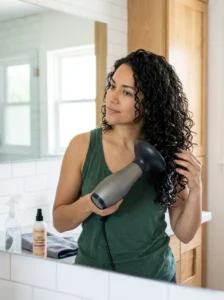
Beyond the cutting technique itself, daily and weekly styling habits make a significant difference in how long a layered shape actually holds.
Scrunch with intention at the layered sections specifically. Rather than applying product evenly and scrunching uniformly throughout, I’ve learned to focus extra scrunching attention at the areas with the most dramatic layering, encouraging those specific curls to spring up and maintain their distinct shape rather than just blending into the overall length.
Avoid excessive heavy product at the roots and crown. Heavy products can weigh down exactly the areas most responsible for maintaining a layered shape’s volume and structure, undermining the cut’s design over time.
Sleep with hair loosely secured, not weighed down. A loose, high pineapple style while sleeping helps prevent the crushing and flattening that can accelerate shape loss, particularly for layers concentrated at the crown.
Refresh strategically rather than fully restyling daily. Rather than wetting and restyling my entire head every single day, which can actually accelerate wear on a layered shape through repeated handling, I do a more targeted refresh, focusing product and scrunching specifically where shape tends to relax first.
Deep condition regularly to maintain curl elasticity. Healthy, well-conditioned curls hold their spring and shape significantly better than dry, more fragile curls, which directly impacts how long any layered cut maintains its intended structure.
How to Find a Stylist Who Can Execute This Successfully

Given how much the cutting technique itself matters for shape longevity, finding the right stylist is arguably the single most important factor in this entire process.
Look specifically for curly hair specialists with experience in long, layered cuts. A specialist might have excellent short curly cut experience but less specific expertise in the particular challenges that long, heavily layered curly hair presents.
Ask directly about their approach to weight distribution. A stylist who can clearly explain how they plan to distribute weight and avoid bottom-heavy collapse demonstrates a level of technical understanding that significantly increases your chances of a shape that actually holds.
Request to see examples of their long layered curly work specifically, ideally including some time-lapse or multiple-week-later photos. Many stylists share immediate after photos, but seeing how their cuts hold up weeks later provides much more useful information about longevity.
Discuss your specific maintenance habits and routine honestly. A good stylist will factor in how you actually plan to style and maintain your hair between appointments, adjusting the cutting technique accordingly rather than assuming an idealized styling routine you might not actually follow.
My Honest Experience Over the Past Several Years

Since switching to a curly hair specialist and understanding these specific techniques, the difference in how my long layered cuts hold their shape has been dramatic compared to my earlier years of general stylist appointments.
Where I used to watch my layering essentially disappear within a month, I now comfortably maintain a clearly shaped, dynamic cut for the full eight to ten weeks between appointments, with only gradual, expected softening rather than the complete shape collapse I used to experience.
The investment in finding the right specialist, even though it sometimes meant a higher price point or a longer wait for appointments, has been worth it many times over in terms of how consistently my hair has looked the way I actually want it to look, rather than just for the first few weeks after each cut.
Final Thoughts
If you’ve experienced the same frustrating cycle I did for years, loving a long layered curly cut immediately after the appointment only to watch the shape disappear within weeks, I want you to know that this isn’t an inevitable feature of long curly hair. It’s almost always a combination of cutting technique and maintenance habits that can genuinely be addressed.
Finding a stylist who understands the specific mechanics of weight distribution for curly hair, combined with a few adjustments to your own styling routine, can make the difference between a cut that holds its intended shape for months and one that collapses within weeks. It took me years to find that combination, but I genuinely hope this saves you some of that same trial and error.