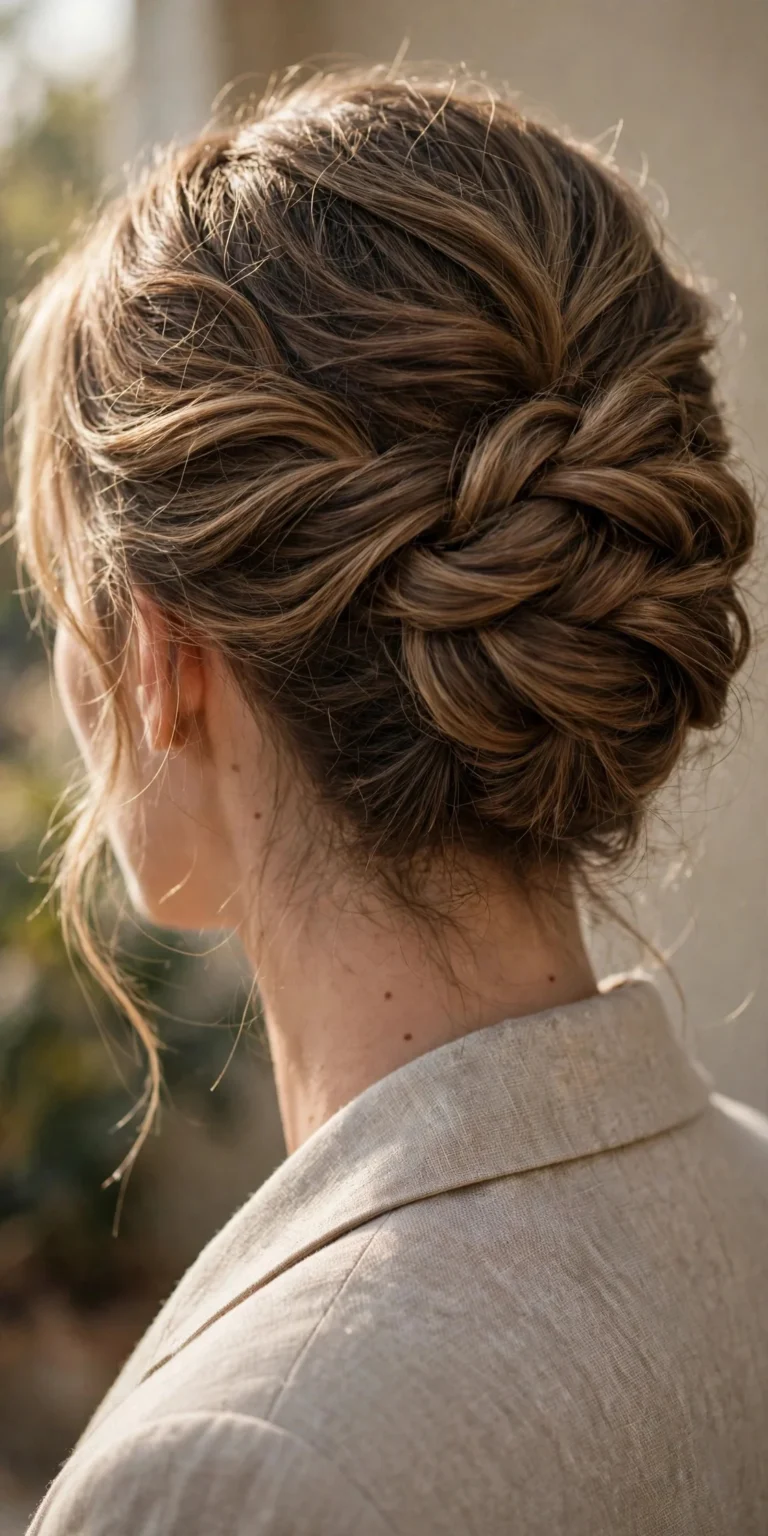
If you have thick hair, you know the frustration. You twist your hair up, snap a claw clip on, and within twenty minutes it is sliding down your head like it is trying to escape. The clip is not the problem. Thick hair just needs a different approach than the one-size-fits-all tutorials show.
These ten steps cover everything: prepping your hair so the clip actually grips, the core styles that work on dense hair, placement tricks for volume, and fixes for the sagging, slipping, and breakage that thick-haired people deal with daily. Once you get the technique right, a claw clip becomes the fastest updo you own.
1Prep Thick Hair So the Clip Grips
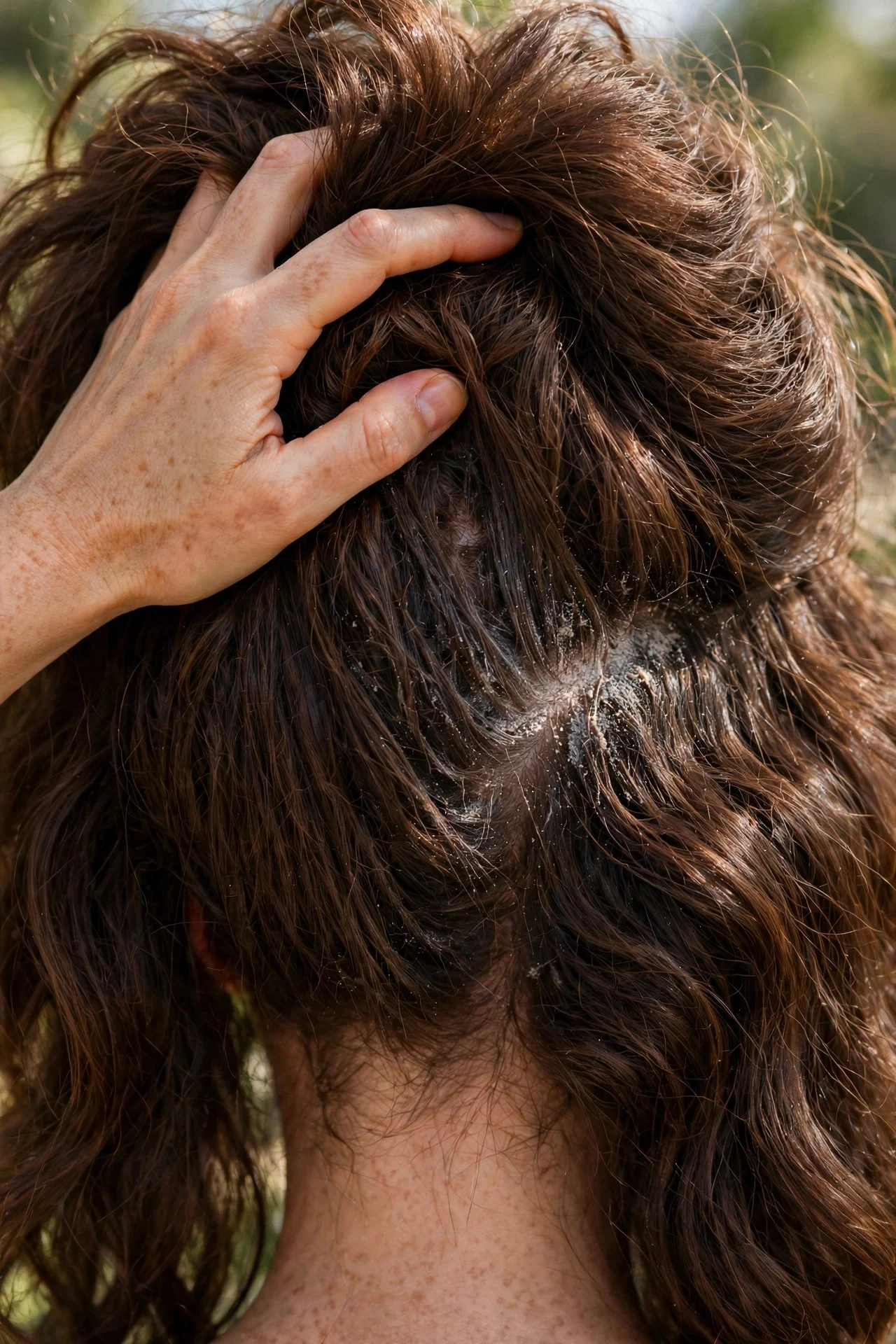
Claw clips slide right off clean, slippery hair, so never start on freshly washed, silky strands. Day-two hair is ideal, but if you just washed, rough up the texture first. Spritz a light texturizing spray or dry shampoo through the roots and mid-lengths, then flip your head upside down and shake. You want a little friction and air between the strands. Run your fingers through to separate the hair into movable pieces instead of one solid sheet. Skip heavy oils or serums near the crown, since anything slippery at the grip point makes the clip slide. This two-minute prep is the difference between a clip that holds for eight hours and one that gives up before lunch.
2The Classic Twist-and-Clip
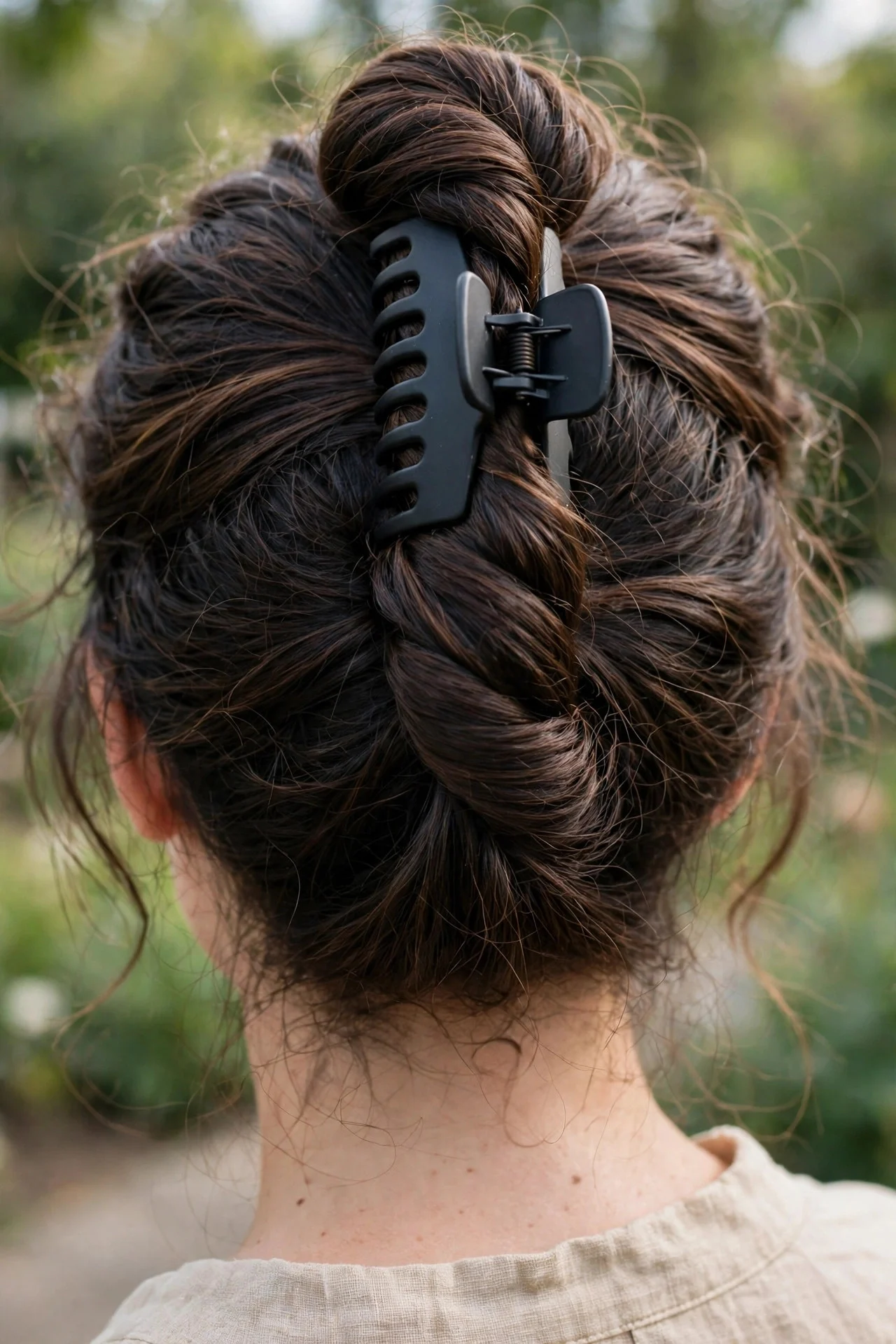
Gather all your hair at the back of your head like a low ponytail. Twist the length upward in one direction, keeping the twist snug but not yanked tight. As the twist reaches the crown, fold any remaining ends down and let the twist coil against your head. Open a large claw clip and clamp it vertically over the twist, catching the folded ends and a bit of scalp hair for anchor. For very thick hair, do not try to twist the entire mass into one rope. Split it into two twists side by side, then clip over both. The clip should feel secure without pulling. If your scalp aches within minutes, the twist is too tight or the clip is too small.
3The Half-Up Claw Clip

Take the top half of your hair from temple to temple, twist it once, and secure it with a medium claw clip at the back of the crown. Let the bottom half hang loose. This is the easiest style for thick hair because you are only asking the clip to hold half the weight. It works on second-day hair, post-workout hair, and everything in between. Pull a few face-framing pieces loose for softness. If the half-up section feels heavy, split it into two smaller twists and use two medium clips side by side instead of one large one. This distributes the weight and looks intentional rather than overloaded.
4The Flipped Ponytail Clip
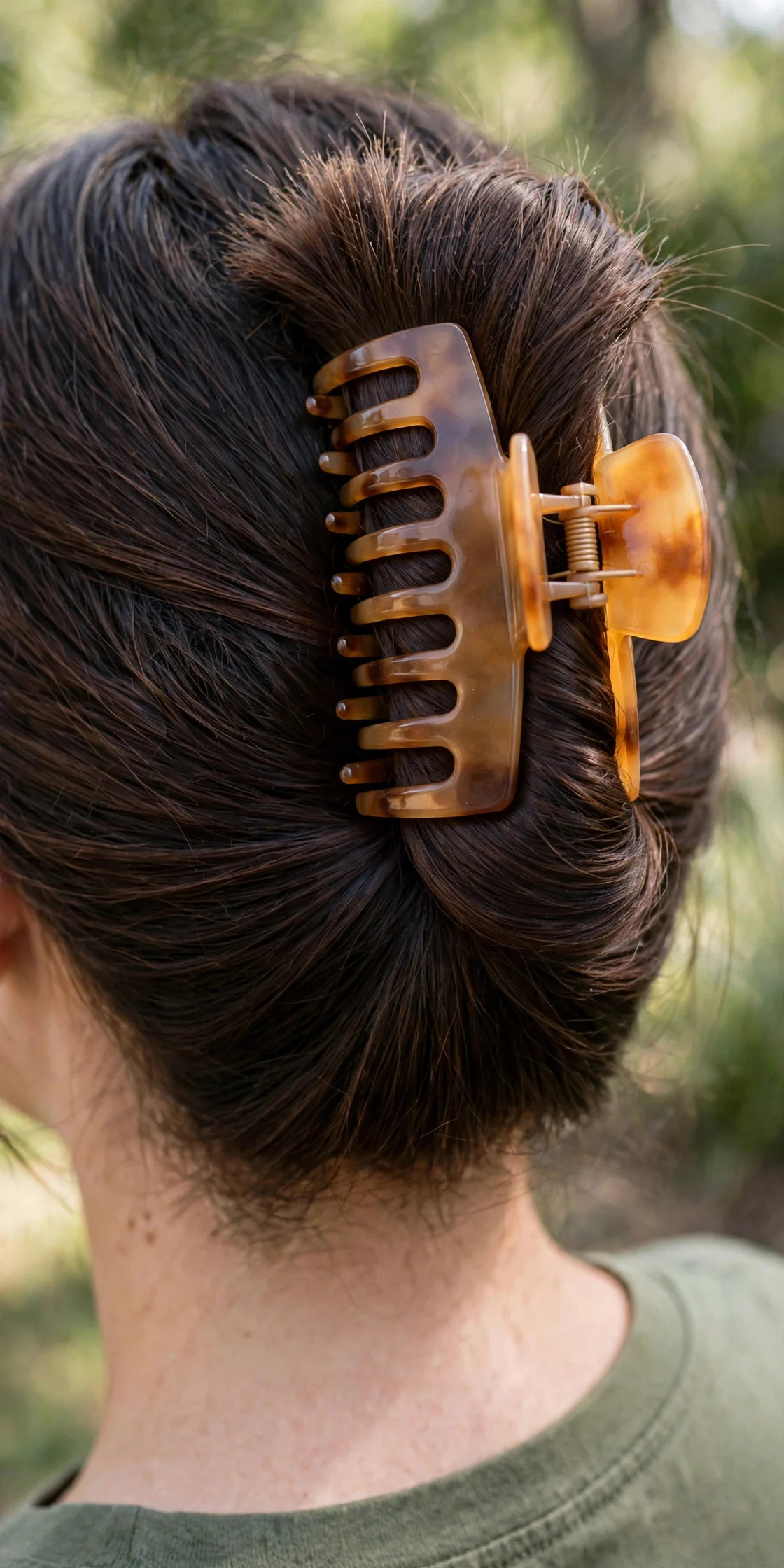
Flip your head upside down and gather your hair into a high ponytail position, but do not use an elastic. Twist the ponytail loosely, then flip it forward over the top of your head so the ends point toward your forehead. Clamp a large claw clip horizontally across the base where the twist meets your head, catching the folded hair. Flip your head back up and arrange the ends. This creates a voluminous, lifted style with the ends cascading forward, and it distributes thick hair’s weight across a wider area than a vertical clip. It is a great option for long, heavy hair that drags a vertical clip downward.
5Low Twisted Bun With a Clip
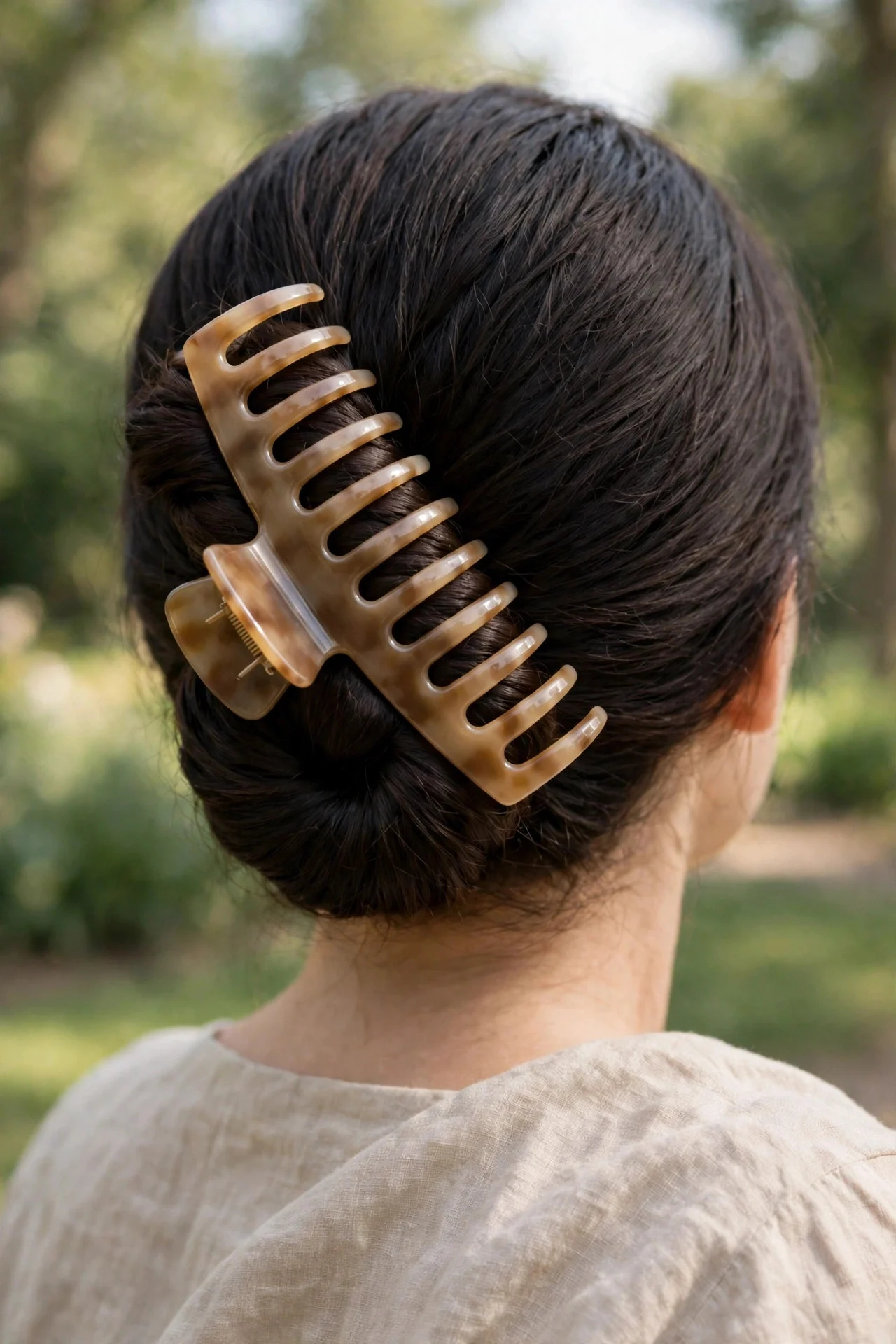
Gather your hair at the nape, twist it into a low coil, and wrap the ends around the base to form a bun. Instead of pinning it, clamp a medium-to-large claw clip over the bun, catching the coil and some hair underneath for support. This is more secure than a clip alone because the bun shape holds itself together; the clip just locks it in place. It works beautifully for work or formal settings. For extra hold on very thick hair, use two clips in an X pattern over the bun. Tuck in any poking ends with the clip’s teeth rather than leaving them loose.
6French-Twist Style With a Large Clip
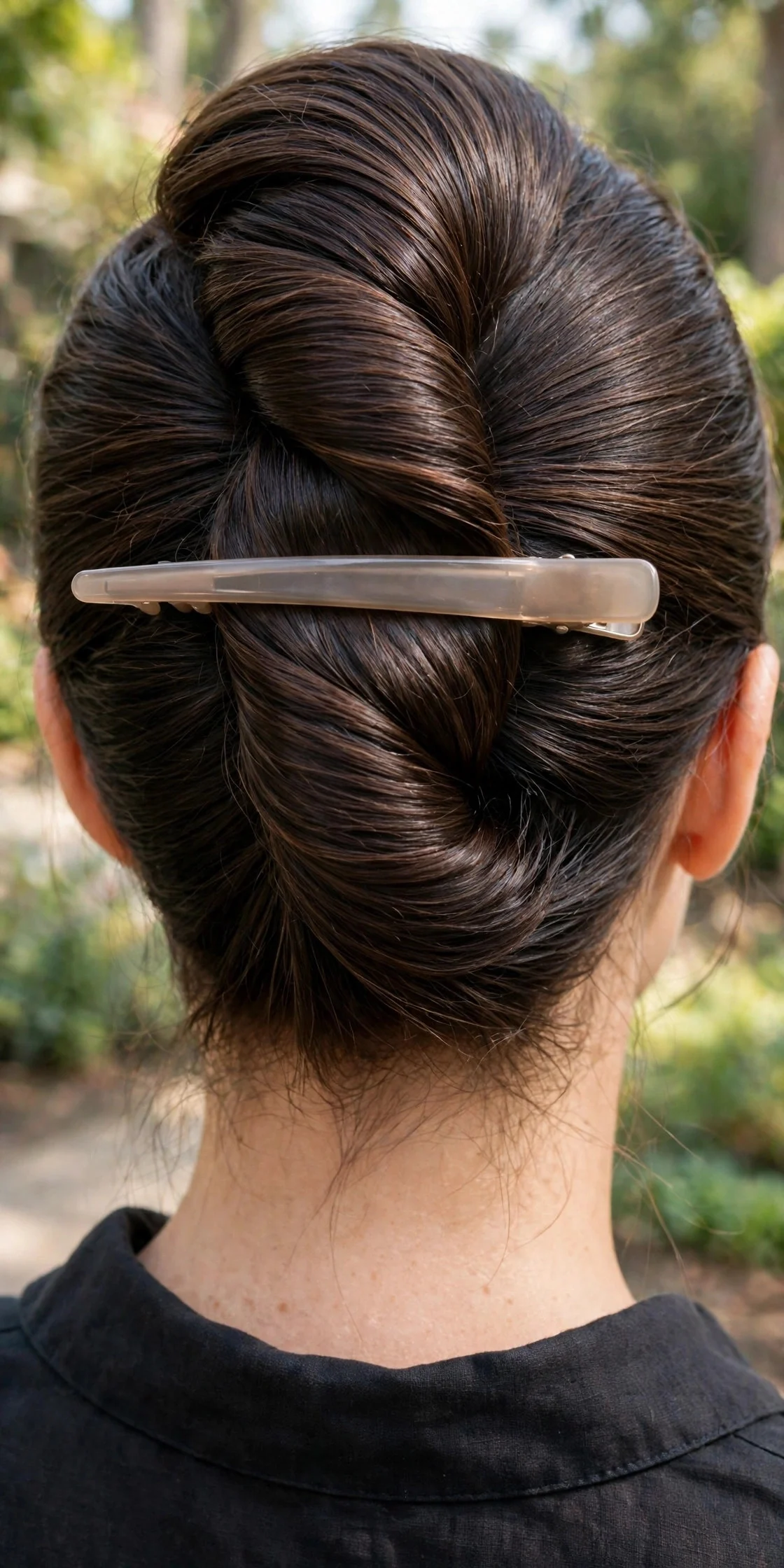
Sweep all your hair to one side, then roll it upward and inward against the back of your head like a French twist, tucking the ends into the roll. Clamp a large claw clip vertically along the roll to hold it. This gives you an elegant, polished look without a single bobby pin. The key for thick hair is to not roll too tightly; a slightly looser roll is easier for the clip to grip and looks more modern. If the roll feels bulky, flatten it slightly against your head before clipping. This style holds best on hair with some texture, so do the prep step first.
7Double-Clip for Very Thick Hair
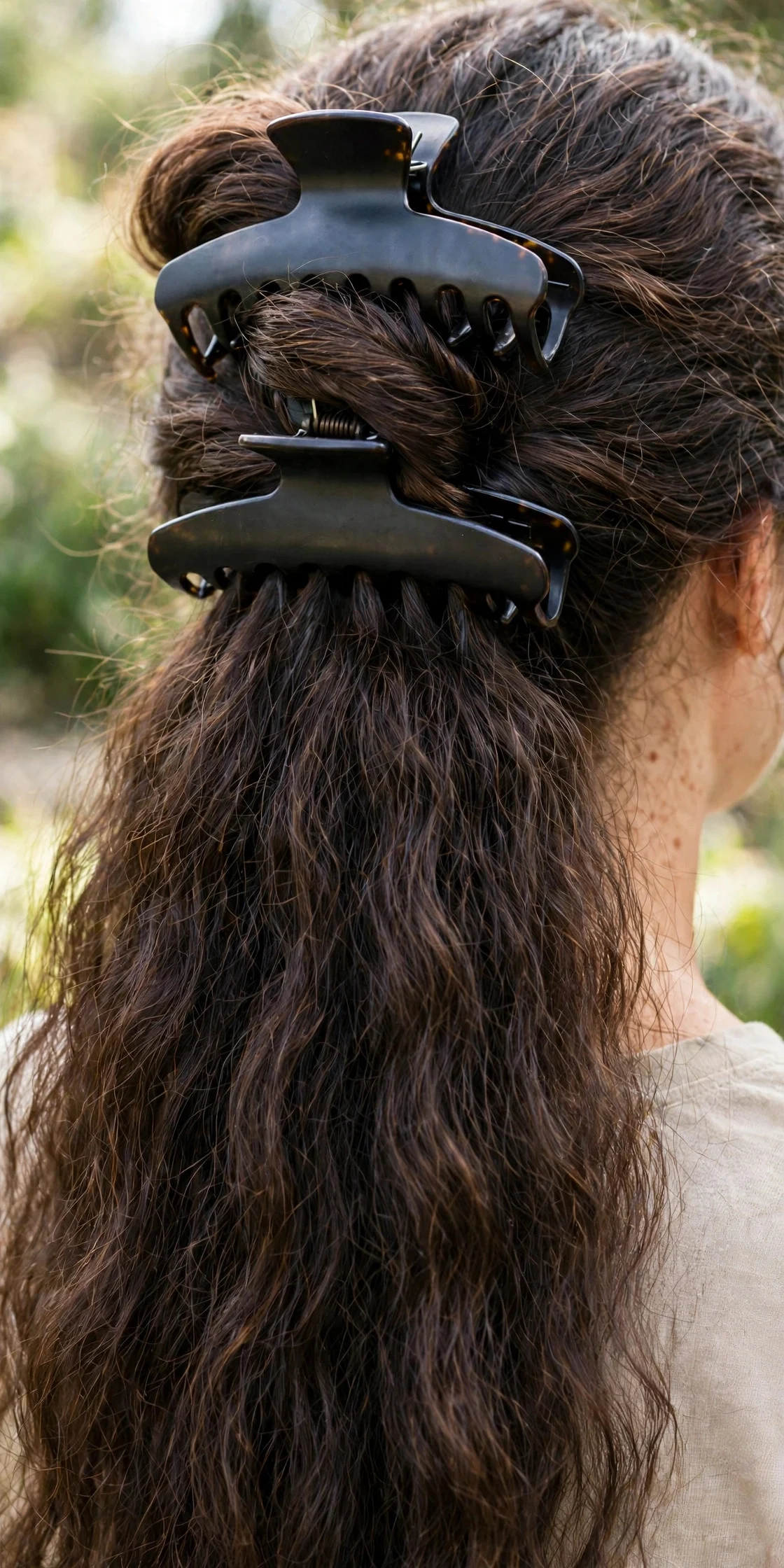
When one clip is not enough, use two. Twist your hair up as usual, then place one large clip vertically over the main twist and a second medium clip horizontally across the bottom to catch any escaping weight. Or split your hair into a top and bottom section, twist each separately, and clip them one above the other. Two clips distribute the load so neither one is overworked, and the style actually lasts longer than a single-clip attempt on very dense hair. Match the clips or deliberately contrast them; both look intentional. This is the solution for hair so thick that a single large clip physically cannot close around it.
8Clip Placement for Volume at the Crown
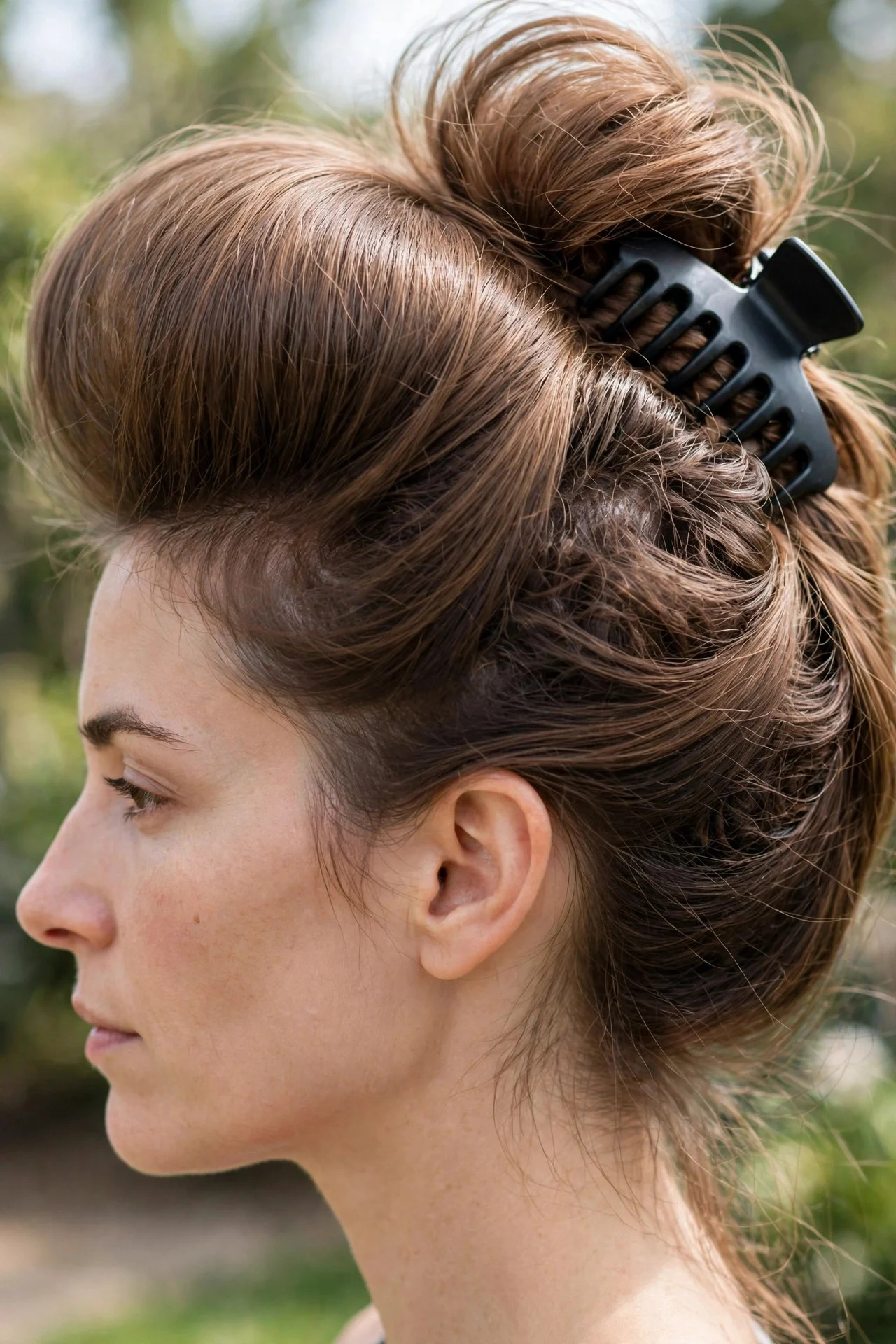
Where you place the clip changes the whole silhouette. Clamp it higher on the back of your head for lift and a more youthful look. Place it lower near the nape for a sleek, sophisticated feel. For maximum crown volume, tease the roots lightly at the crown before twisting, then position the clip so it pushes the hair slightly upward rather than pulling it flat. Do not clamp the clip directly on top of the crown; offset it slightly to one side for a more natural, less severe look. If your hair is heavy, a higher placement actually holds better because gravity works with the clip’s grip rather than against it.
9Securing Layers and Face-Framing Pieces

Layers and shorter face-framing pieces are the first to escape a claw clip on thick hair. Before twisting, gather these shorter pieces and twist them into the main mass rather than leaving them loose. If they still poke out, use the clip’s teeth to catch them deliberately, or secure them with a small bobby pin hidden under the clip. For a softer look, intentionally pull a few pieces loose around your face after clipping, then set them with a tiny bit of pomade so they stay wispy rather than falling flat. Do not try to force very short layers into the clip; they will just pop out and create bulk. Let them frame your face instead.
10Taking It Down Without Breakage
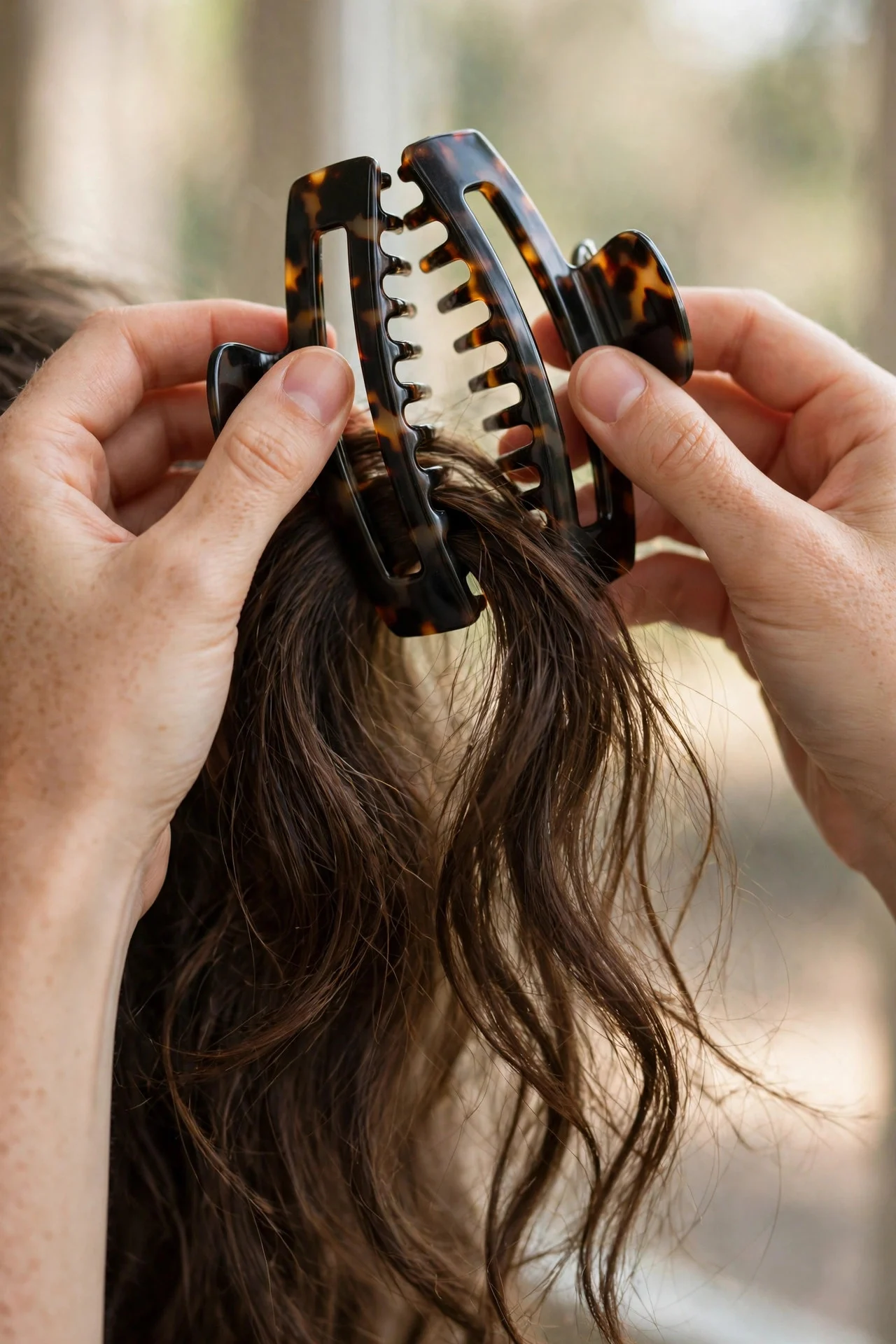
How you remove the clip matters as much as how you put it in. Open the clip fully before pulling it away; dragging a half-open clip through thick hair snaps strands. Untwist gently rather than yanking. If your hair feels knotted, apply a leave-in conditioner or detangling spray before brushing. Never sleep in a claw clip; the pressure points cause breakage and headaches. Give your hair a break between clip days, especially if you wear it daily. Rotate with loose styles or a silk scrunchie to avoid stressing the same sections. Your hair will thank you with fewer split ends and less crown breakage over time.
Choosing the Right Claw Clip for Thick Hair
Not all claw clips are created equal, and thick hair exposes the weak ones fast. Look for clips with strong, tight springs (test them in the store), wide-set teeth that can actually wrap around dense hair, and a matte or textured finish that grips better than slippery plastic. Avoid tiny, decorative clips; they are for fine hair. The sweet spot for thick hair is 4 to 5 inches long. If you have very long, very thick hair, go even larger or plan on the double-clip method. Replace clips when the spring loosens; a tired clip is a sliding clip.
Will a claw clip damage thick hair?
Less than most alternatives, if you use it right. Claw clips do not crease hair like elastics and do not pull like tight buns. The main risks are snapping hairs if you drag the clip out half-open, and breakage at pressure points if you wear it in the same spot daily. Open fully to remove, rotate placement, and do not sleep in it.
What size claw clip is best for very thick hair?
Look for clips 4 to 5 inches long with teeth that open wide. The clip needs to wrap around a fistful of hair with room to spare. If the teeth barely meet when you try to close it, the clip is too small and it will pop open within the hour.
Why does my claw clip keep sliding down?
Almost always it is one of three things: the hair is too clean and slippery, the twist is too thick in one spot for the jaws to grip, or the clip is too small. Add texture with dry shampoo, flatten and spread the twist before clamping, and size up your clip. A tired spring can also cause sliding, so check that too.
Keep exploring: if you loved these twists, try our 14 Claw Clip Updos for Thick Hair (2026) for more full updo ideas, or switch to a softer look with 14 Half-Up Claw Clip Hairstyles That Stay Put (2026). For evenings when you want something dressier, the 12 Low Chignon Hairstyles for Elegance (2026) are a natural next step.