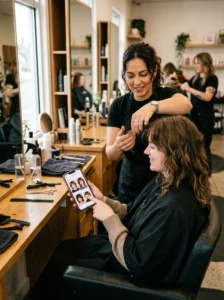
I spent a solid twenty minutes in my stylist’s chair going back and forth between two photos on my phone, one a classic, clean bob and the other a dramatically layered, textured wolf cut, genuinely unable to pick between the two competing directions I wanted to take my hair. My stylist finally took my phone, looked at both photos side by side for a moment, and said something that hadn’t occurred to me at all: “Why are you treating these like they’re mutually exclusive?” I didn’t have a good answer, mostly because I’d never actually seen the two concepts combined before and had just assumed, without really thinking it through, that a bob meant clean and simple while a wolf cut meant dramatic and textured, and that choosing one meant giving up the other entirely.
That conversation turned into the exact haircut I now have, and it remains one of my favorite decisions precisely because it doesn’t ask me to choose between the polish of a bob and the texture and drama of a wolf cut. If you’ve found yourself torn between these same two directions the way I was, here’s everything worth knowing about the specific hybrid that resolves that tension, and how to make sure you get a version that actually balances both elements well rather than favoring one over the other.
What Actually Defines a Bob Wolf Cut
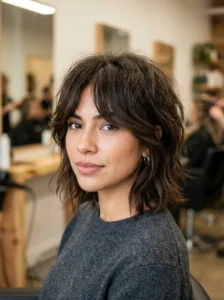
This hybrid combines the bob’s classic, chin-to-shoulder length parameters with the wolf cut’s characteristic heavy layering, concentrated volume at the crown, and softer, curtain-style face-framing pieces. Rather than the more precise, often single-length hemline typical of a classic bob, this version incorporates the wolf cut’s deliberately choppy, textured ends, while still maintaining the overall shorter length range that defines a bob in the first place.
My stylist explained the balancing act involved this way while cutting mine: the challenge with this specific hybrid is making sure the wolf cut’s dramatic layering doesn’t overwhelm the bob’s inherent shape and structure, while also making sure the bob’s cleaner lines don’t get so dominant that the wolf cut’s textured, undone quality gets lost entirely. Getting that balance right requires a stylist who understands both concepts well enough to blend them intentionally rather than just applying heavy layering to a generic short haircut and calling it a day.
Why This Combination Resonates With So Many People

Both the bob and the wolf cut have maintained significant, dedicated followings for different reasons, the bob for its timeless, versatile polish and the wolf cut for its dramatic movement and textured, effortless-looking personality. This hybrid essentially offers a way to access both appeals simultaneously rather than requiring a choice between them, which explains a lot of its growing popularity among people who’ve felt torn between these two directions exactly the way I was.
It also solves a practical styling dilemma that a lot of people run into with each style individually. A completely blunt, precise bob can sometimes feel like it requires a certain amount of daily precision to look intentional rather than simply unstyled, while a full-length wolf cut, with its more dramatic overall length and layering, can occasionally feel like more haircut and commitment than someone actually wants. The bob wolf cut offers a shorter, generally lower daily maintenance overall length while still delivering real textured drama, without asking for either the precision-styling commitment of a classic bob or the significant length commitment of a full wolf cut.
Which Hair Types Work Best With This Hybrid
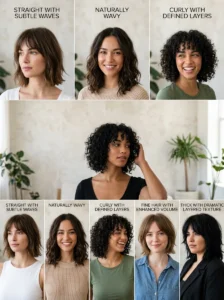
Straight hair can achieve this look, though it typically requires more active daily styling, texturizing spray and some strategic loose curling, to encourage the separation and movement between layers that the wolf cut element of this hybrid depends on.
Wavy hair pairs beautifully with this combination, since the natural texture already provides movement that works directly with the heavier layering, requiring considerably less daily effort to achieve a finished, dynamic look than straighter hair would need.
Curly hair genuinely thrives here, since natural curl provides exactly the kind of dynamic texture the wolf cut element depends on, though the cutting needs to carefully account for curl shrinkage given how significant that effect becomes at this shorter, bob-length range specifically.
Fine hair benefits considerably from the heavier layering incorporated into this hybrid, since the varying layer lengths create the illusion of noticeably more volume and density than a completely blunt, single-length bob would achieve on the same hair type.
Thick, dense hair can carry the more dramatic version of this hybrid beautifully, with plenty of volume for the heavier layering to create real visual texture without any individual section looking sparse.
Getting the Balance Right at the Salon
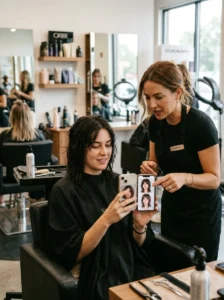
Bring reference photos of both a classic bob and a wolf cut, rather than assuming your stylist will automatically understand the exact balance you’re picturing between the two, since this hybrid can lean more toward either direction depending on interpretation.
Discuss specifically how much of the wolf cut’s dramatic layering you want incorporated, since this determines whether the finished result reads more like a heavily textured bob or more like a shorter wolf cut, and there’s a real range of possible balances between those two poles.
Ask about face-framing pieces specifically, since this element remains a core part of what makes the wolf cut recognizable, and deciding how prominent you want these curtain-style pieces to be changes the overall character considerably.
Mention your natural hair texture honestly, and ask realistically how much daily styling will be needed to achieve and maintain your desired balance between the bob’s structure and the wolf cut’s texture.
Styling a Bob Wolf Cut Day to Day
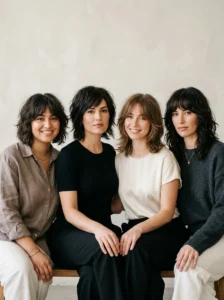
For a version leaning more toward the wolf cut’s textured, dramatic side, a texturizing spray or mousse applied to damp hair before diffusing or air drying encourages genuine separation between the incorporated layers.
A small curling wand, used loosely through just the shorter top layers and face-framing pieces rather than throughout the entire cut, adds definition to those specific elements without smoothing away the overall bob shape underneath.
For a version leaning more toward the bob’s cleaner, more polished side while still retaining some wolf cut texture, a round brush and blow dryer, focused on maintaining the overall bob silhouette while allowing the layered pieces some natural movement, achieves a more put-together, less overtly textured finish.
Dry shampoo or a light texturizing powder applied at the roots specifically helps maintain volume and grip throughout the day, particularly useful at this shorter length where flatness can become noticeable more quickly than it would with longer hair.
Maintaining This Hybrid Style

Regular trims, generally every six to eight weeks, matter significantly with this cut, since both the bob’s overall shape and the wolf cut’s layering contrast soften and blend together as hair grows out, and letting either element go too long between appointments can shift the balance you originally intended.
Finding a stylist genuinely comfortable blending both concepts, rather than someone who specializes heavily in one or the other, makes a real difference in how well the hybrid actually holds its intended balance between visits, since an overly bob-focused approach or an overly wolf-cut-focused approach can gradually pull the style toward one direction over successive appointments.
Investing in a quality texturizing product for daily maintenance matters here, particularly for straighter hair types wanting to maintain visible separation in the layered sections without it simply falling flat into a more generic, undefined bob shape.
How Face Shape Factors Into This Hybrid
Round faces tend to benefit from keeping the bob’s overall length slightly longer, closer to the jaw or just below, while concentrating the wolf cut’s dramatic layering more toward the crown rather than close to the cheeks, avoiding added width at the widest part of the face.
Square or angular faces often look particularly striking with this hybrid, since the wolf cut’s inherent softness and movement helps break up strong jaw and cheekbone structure more effectively than a completely blunt, precise bob would on its own.
Heart-shaped faces, wider at the forehead and narrower at the chin, tend to benefit from slightly more volume and layering concentrated near the jaw specifically, helping to visually balance a wider top against a narrower chin.
Long or oval faces generally have the most flexibility with this style, since there’s less specific correction needed, allowing more freedom to lean into whichever balance between bob structure and wolf cut texture appeals most without much concern about it being unflattering.
Color Choices That Complement This Hybrid

Dimensional color, whether through balayage or subtle highlights, tends to enhance the wolf cut layering element particularly well, since the varying tones catch light differently across the different layer lengths, adding visible depth that a flat color wouldn’t achieve to the same degree.
A solid, rich single-process color also works nicely for anyone wanting the cut’s structure and texture itself to be the primary visual focus, letting the shape do the talking without additional dimensional color competing for attention.
Face-framing highlights specifically, concentrated on the curtain-style pieces that are central to the wolf cut element of this hybrid, can draw additional focus to that area, reinforcing the face-framing quality that helps distinguish this style from a more standard layered bob.
Common Mistakes to Avoid

Not communicating a clear balance preference between the bob and wolf cut elements can lead to a stylist defaulting toward whichever concept they’re more personally comfortable executing, resulting in a finished cut that leans more heavily toward one style than you actually intended.
Choosing a stylist without specific experience blending these two particular concepts can lead to a less intentional-feeling result, since simply adding heavy layering to a generic short haircut doesn’t automatically create the specific, balanced hybrid this style is meant to achieve.
Skipping regular trims, assuming the shorter overall length makes maintenance less critical, can let the intended balance drift noticeably as both the bob’s shape and the wolf cut’s layering contrast soften with growth.
Frequently Asked Questions
How is this different from just asking for “a layered bob”? A generically layered bob typically involves softer, more evenly distributed layering throughout, while this specific hybrid incorporates the wolf cut’s more dramatic, concentrated layering pattern and characteristic face-framing pieces, creating a considerably more textured, undone finished look than a standard layered bob achieves.
Will this cut work on very short hair, or does it need to start at a specific length? It generally works best somewhere in the classic bob length range, from chin to just past the shoulders, since going much shorter starts to lose the length needed for the wolf cut’s layering to properly develop its intended texture and movement.
How much daily styling does this hybrid actually require? This depends considerably on your natural hair texture and which direction you’re leaning within the hybrid, with wavy or curly hair requiring less daily effort than straight hair, and a version leaning more toward the wolf cut’s textured side generally requiring more active styling than a version leaning more toward the bob’s cleaner structure.
Can I adjust the balance between the two elements at a later appointment if I decide I want more or less of one? Yes, this is one of the genuine advantages of understanding this as a spectrum rather than one fixed combination, and discussing an adjustment with your stylist at a future appointment, leaning further toward either the bob or wolf cut side, is entirely possible as your preferences potentially shift.
Does this cut work well with bangs, or does it typically go without them? It can absolutely incorporate bangs, and softer, curtain-style bangs in particular tend to integrate naturally with the wolf cut’s existing face-framing pieces, creating a cohesive overall look rather than bangs that feel disconnected from the rest of the layering.
Final Thoughts
Looking back at those twenty minutes spent going back and forth between two photos I’d assumed represented an either-or decision, I’m genuinely glad my stylist pointed out that I’d been treating two compatible ideas as mutually exclusive without any real reason to do so. This hybrid exists specifically for anyone who’s found themselves torn between the same two competing appeals, and understanding it as a genuine spectrum, rather than one fixed look, means you can find the specific balance between polish and texture that actually suits your own preferences rather than feeling like you have to fully commit to one direction at the expense of the other.