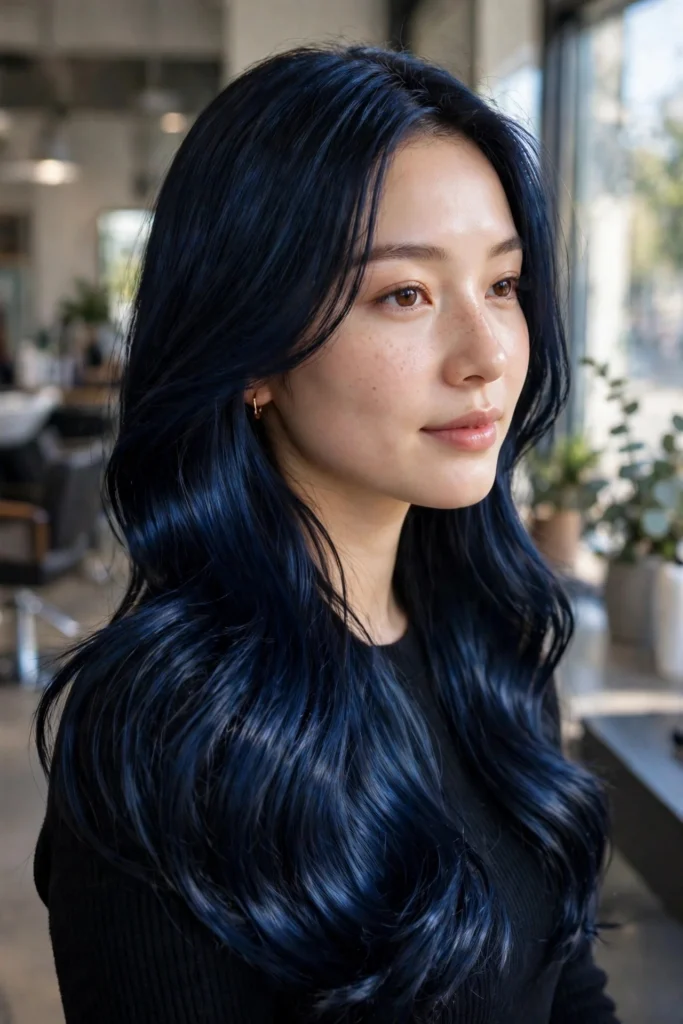
Plain jet black can fall flat in photos, but blue black fixes that. It is a level 1 or 2 base loaded with blue reflect, so it reads almost black indoors and flashes deep navy in sunlight. In 2026, cool-toned dark hair is everywhere.
The best part is how low-commitment the classic version is: no bleach, no brassy grow-out. Whether you go all-over midnight or try hidden navy panels, there is a version for your hair type and schedule. Here are twelve to bring to your colorist.
1All-Over Midnight Blue Black
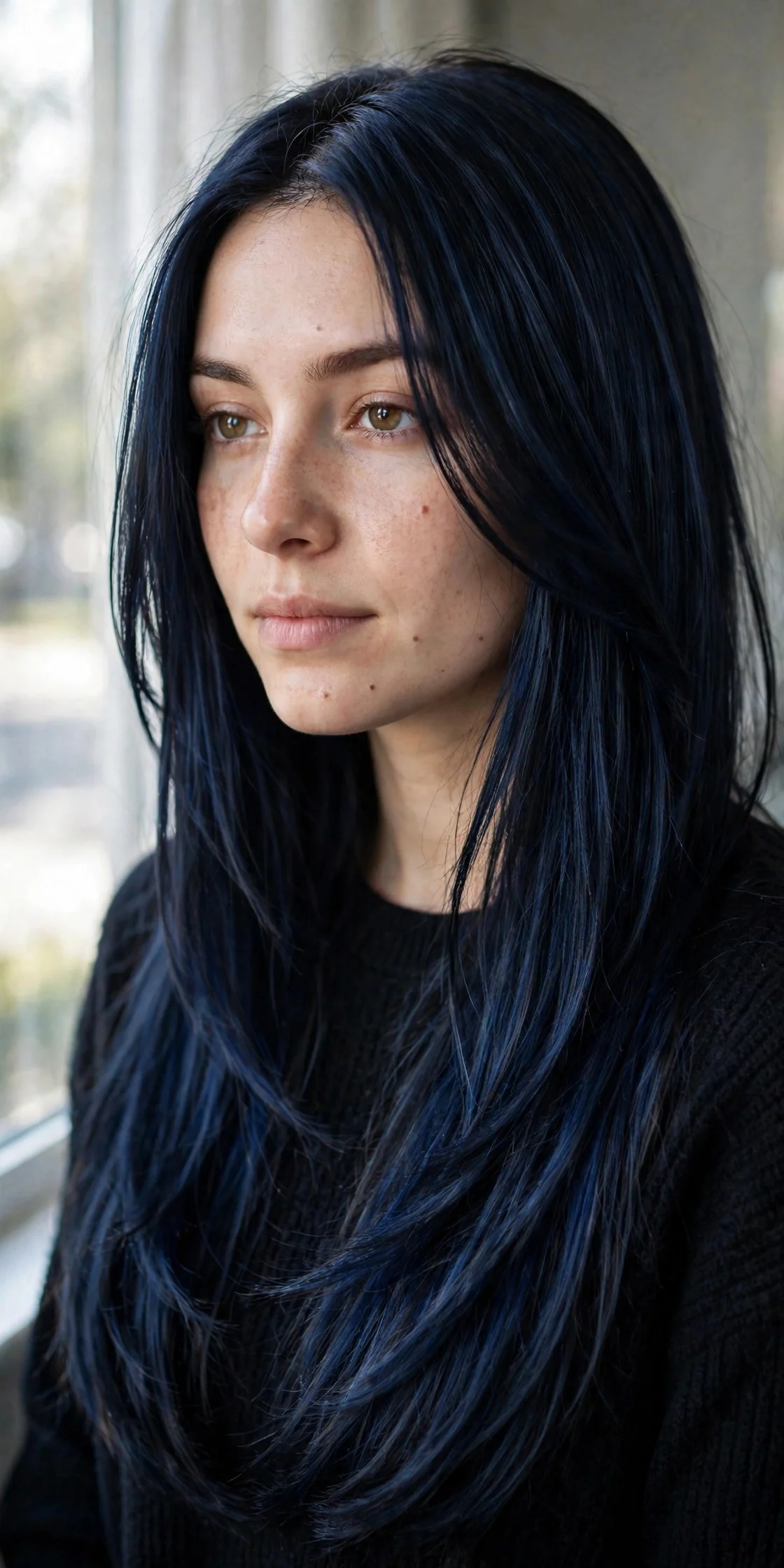
The classic. Ask for a level 1 to 2 base with a blue-black formula, like 1B with a blue booster or a demi 2A with navy additive. No lightener is needed on virgin dark hair, so the appointment stays under two hours. It suits deep, cool, and neutral skin tones, and flatters warm skin too. Straight and wavy textures show the navy reflect most. Maintenance: a blue color-depositing conditioner every other wash, and root touch-ups every 8 to 10 weeks. The drawback: on hair lighter than level 5, the blue fades to murky green-gray by week four unless refreshed.
2Navy Money Piece
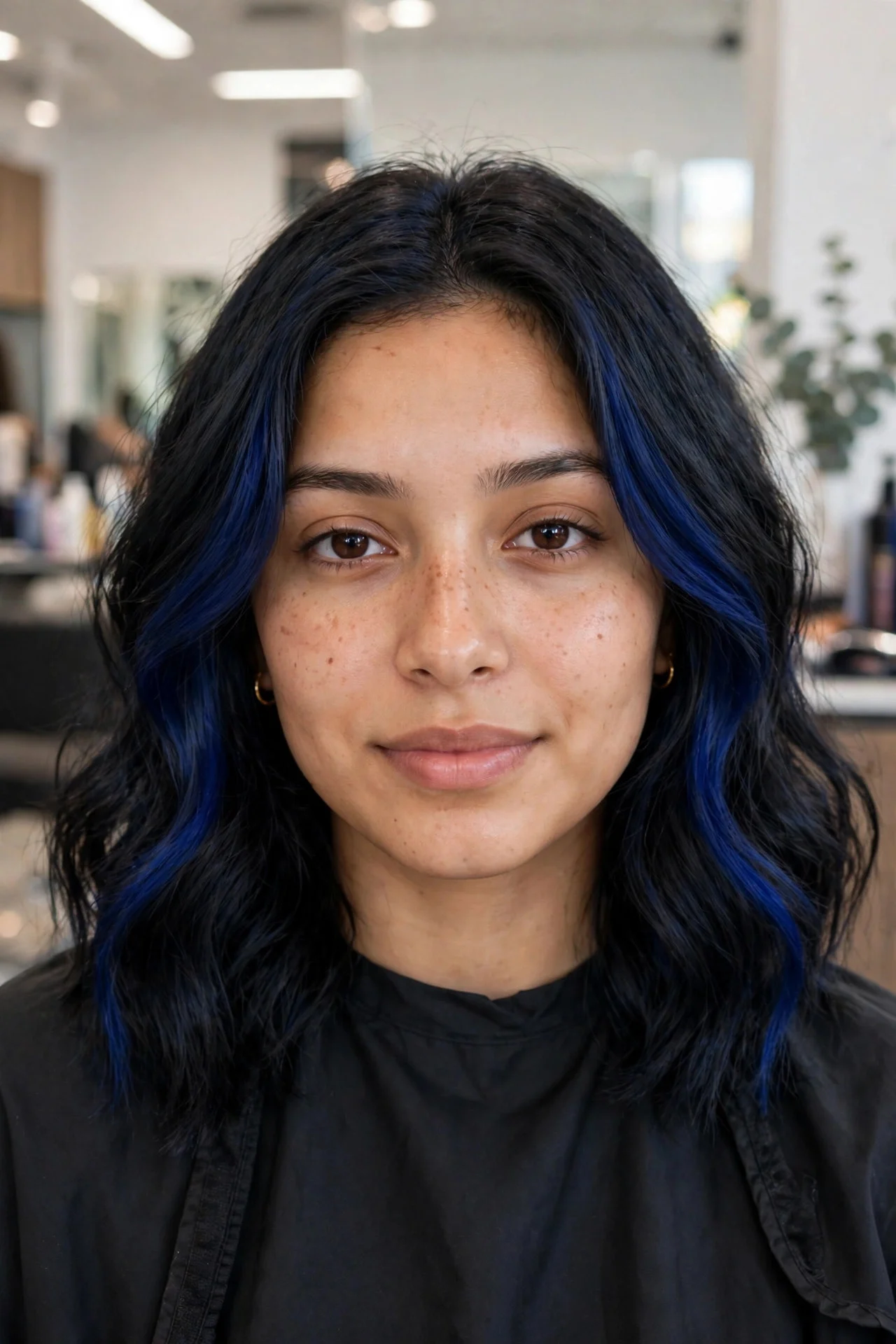
Keep the base a rich level 2 blue black and ask for a chunky face-framing highlight lifted to level 7, toned with a navy demi like 6B plus a blue additive. The contrast frames your face and photographs beautifully. It suits round and square face shapes, since the bright panels visually slim the cheeks, and works best on medium to long hair. Refresh the navy toner every 4 to 6 weeks; lifted pieces fade fastest. The drawback: that section needs lightener, so budget for a bond builder, and expect the bright blue to soften to dusty denim between appointments.
3Smoky Blue Shadow Root
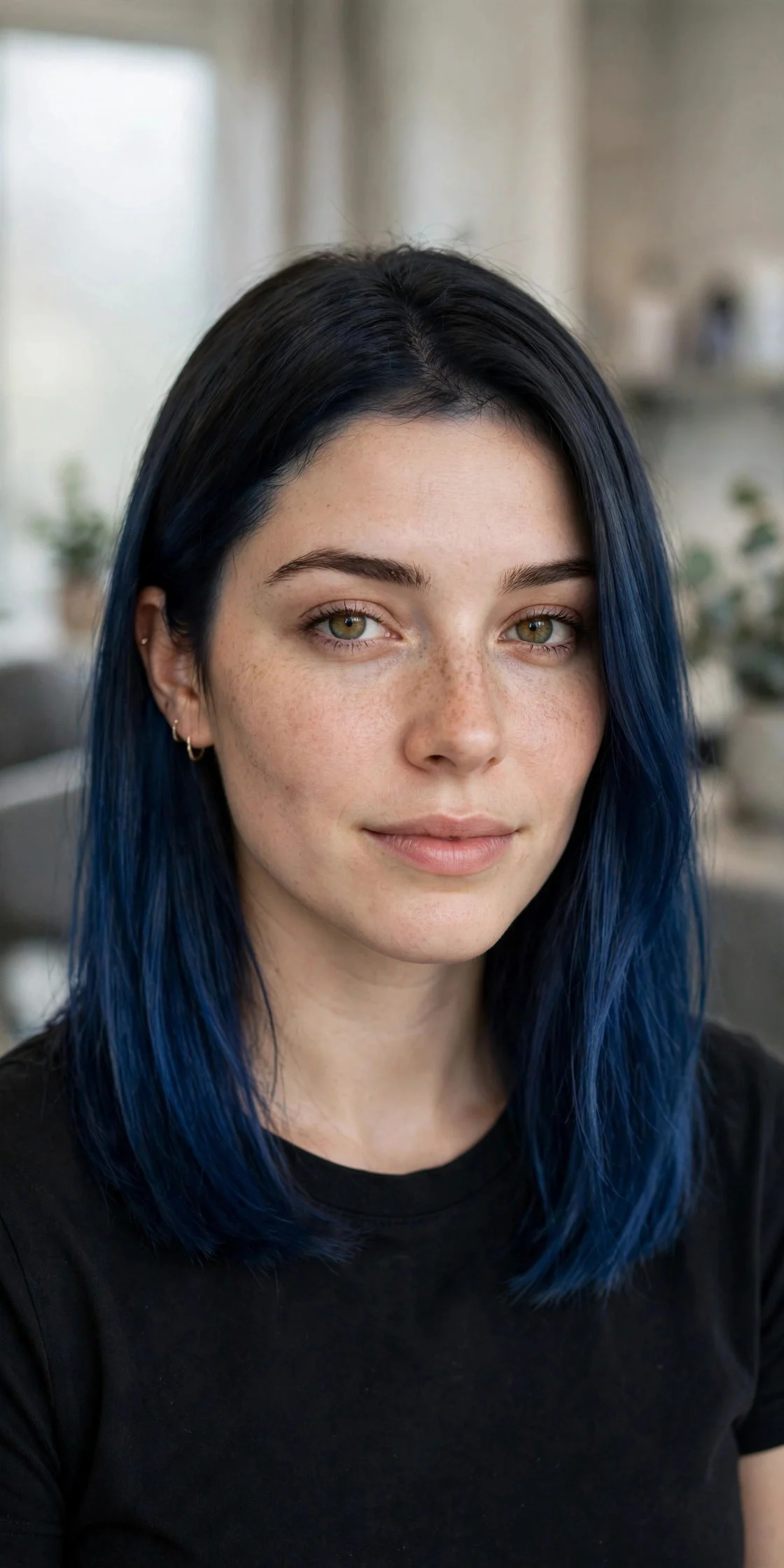
A root melt: your natural level 2 or 3 root blends into a smokier blue mid-length. Your colorist applies a demi in 3A at the root and melts it down into a 4 to 5 blue-violet. Grow-out is nearly invisible, making this the most low-maintenance option: stretch appointments to 12 to 14 weeks. It suits anyone who hates harsh regrowth lines, and the smoky finish flatters cool and olive skin tones. The drawback: if your natural root is warm brown, the blue tint can look muddy rather than smoky, and your colorist may need to cool the root down first.
4Blue Black Balayage on Long Layers
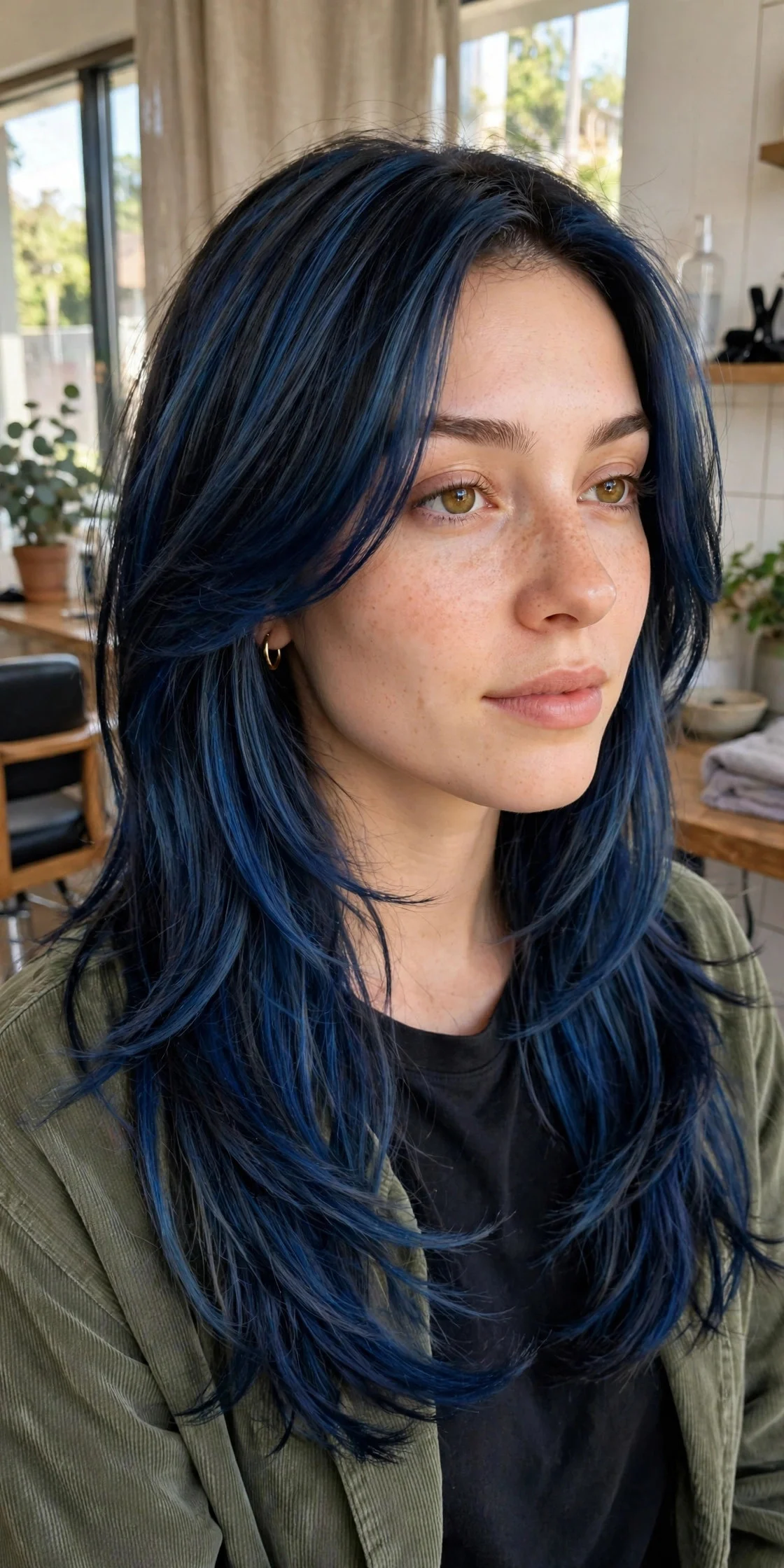
Hand-painted balayage keeps the top deep blue black at level 2 while the mids and ends lift to level 5 or 6 and get glazed with navy. The feathered placement means no foil lines and a soft 10 to 12 week grow-out. It suits long, layered cuts best, since layers catch light differently and show off the dimension. Warm and neutral skin tones do well since the color stays darker around the face. The drawback: a full session runs 3 to 4 hours and costs more than all-over color, and the lifted ends need regular bond treatments to stay shiny.
5Glass-Hair Blue Black Bob

A blunt bob at chin to collarbone length, colored all-over level 1 blue black with a clear gloss on top, gives a liquid, mirror-shine finish. Ask for a demi formula (1A with a blue additive) so the color stays translucent and reflective instead of flat. The sharp cut slims the jawline, suiting oval, heart, and round faces. Fine to medium hair shows the shine best. A gloss refresh every 6 weeks keeps the mirror effect. The drawback: blunt ends show every split end and every bit of fade, so trims every 6 to 8 weeks are non-negotiable.
6Hidden Navy Peekaboo Panels

Your colorist foils an underlayer or a few interior panels, lifts them to level 7 or 8, and saturates them with a vivid navy or cobalt demi. Worn down, your hair looks like classic blue black; flip it or pull it up and the color flashes. It suits conservative workplaces and schools, plus thick hair that hides panels well. Curly hair shows peekaboos beautifully when the curls separate. The hidden placement stretches appointments to 8 to 10 weeks. The drawback: vivid blue bleeds, so pillowcases and light-colored tops will take a hit for the first two weeks, and chlorine turns it green fast.
7Blue Black Pixie Cut
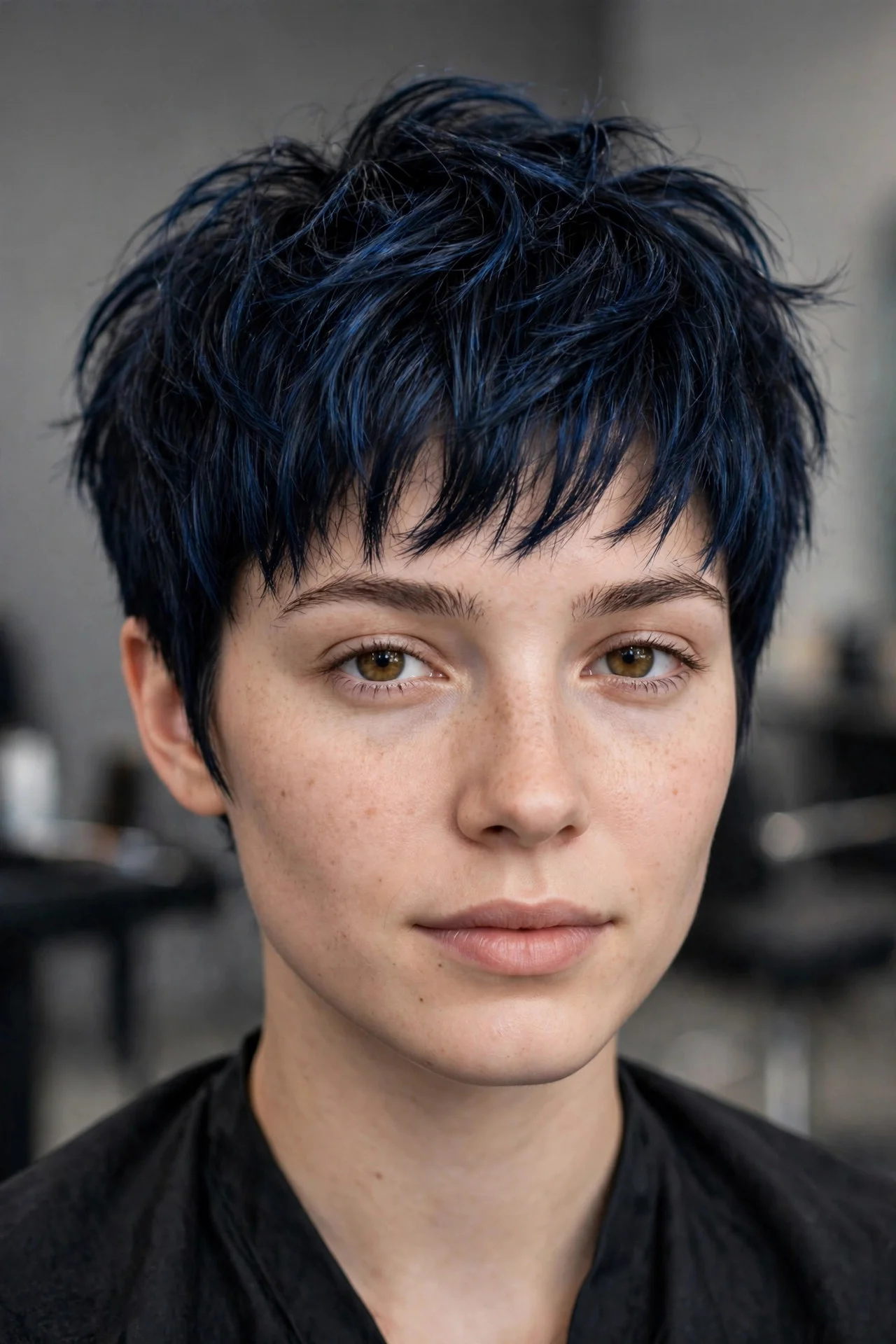
A textured pixie in all-over blue black (level 2 with blue reflect) looks sharp and modern, with the short length making the navy shine extra visible. No lightener is needed on dark hair, and the single-process color keeps the appointment quick and affordable. It suits oval, heart, and diamond faces; keep some length on top if your face is round. Fine hair looks thicker in dark shades, which is a bonus. Trims every 4 to 5 weeks keep the shape, with root touch-ups riding along. The drawback: growing out a pixie is a months-long awkward phase, and roots show faster on short hair.
8Foilayage with Cool Ash Lowlights
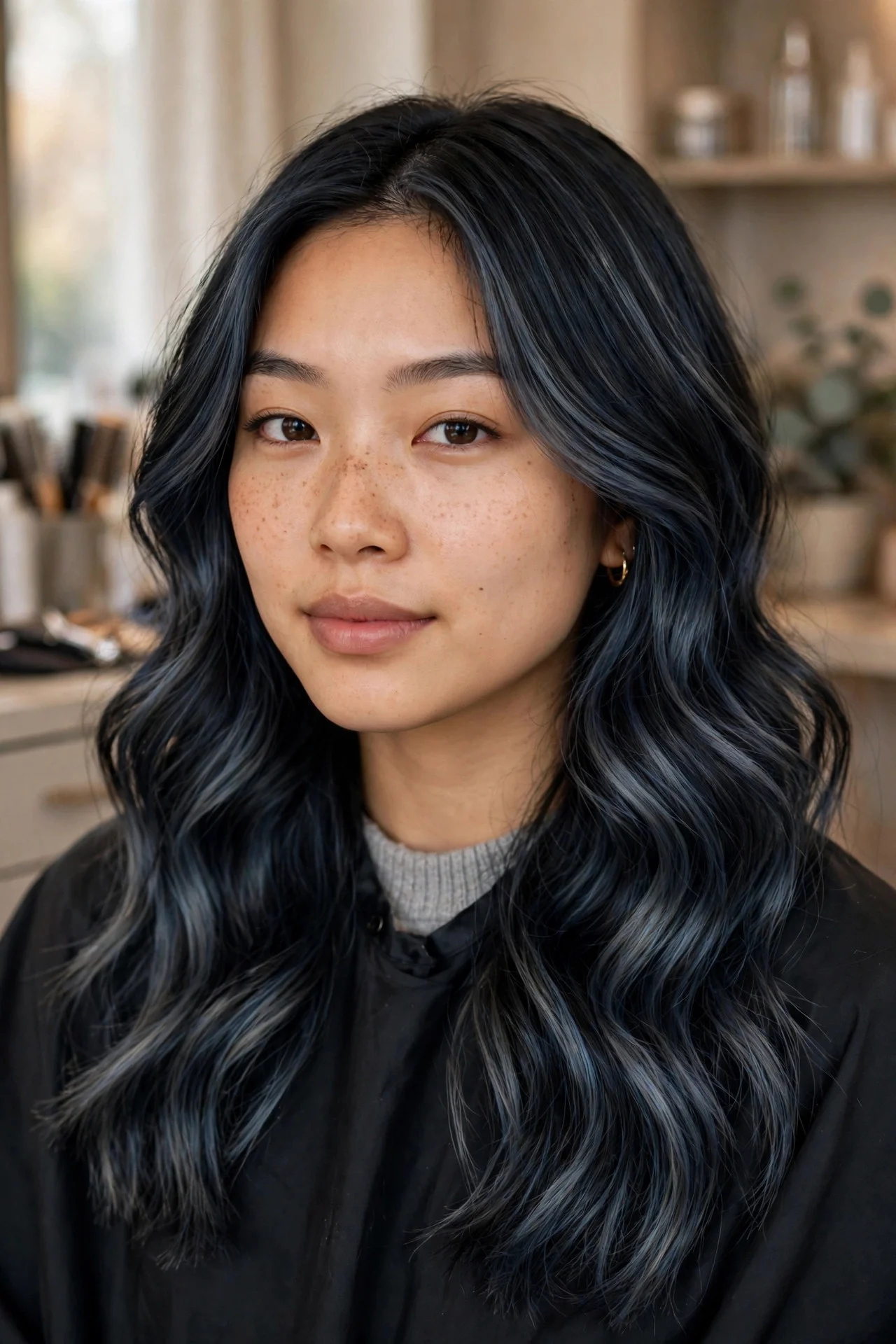
For hair with old highlights or a craving for movement, your colorist weaves fine foilayage pieces lifted to level 8, then tones everything with a smoky blue demi and drops in ash lowlights at level 4. The result is blue black with depth instead of a flat dark sheet. It suits medium to thick hair, straight or wavy, and neutral to cool skin tones. The woven placement grows out softly, so 10 to 12 weeks between appointments works. The drawback: this is the priciest option on the list, often a full-day appointment, and a heavy hand with ash toner can push the whole head gray.
9Soft Demi Blue Black

Not ready for inky drama? A demi-permanent level 3 formula with a whisper of blue gives cool dark richness without the commitment. It washes out gradually over 6 to 8 weeks, so there is no regrowth line at all. This suits first-time color clients, fine or fragile hair that cannot take permanent dye, and warm skin tones that want cool hair without a clash. It also works as a trial run before going full midnight. The drawback: demi color fades noticeably with every wash, especially on porous ends, so the shade can look uneven by week five unless you use a blue-depositing mask weekly.
10Dimensional Blue Black Curls
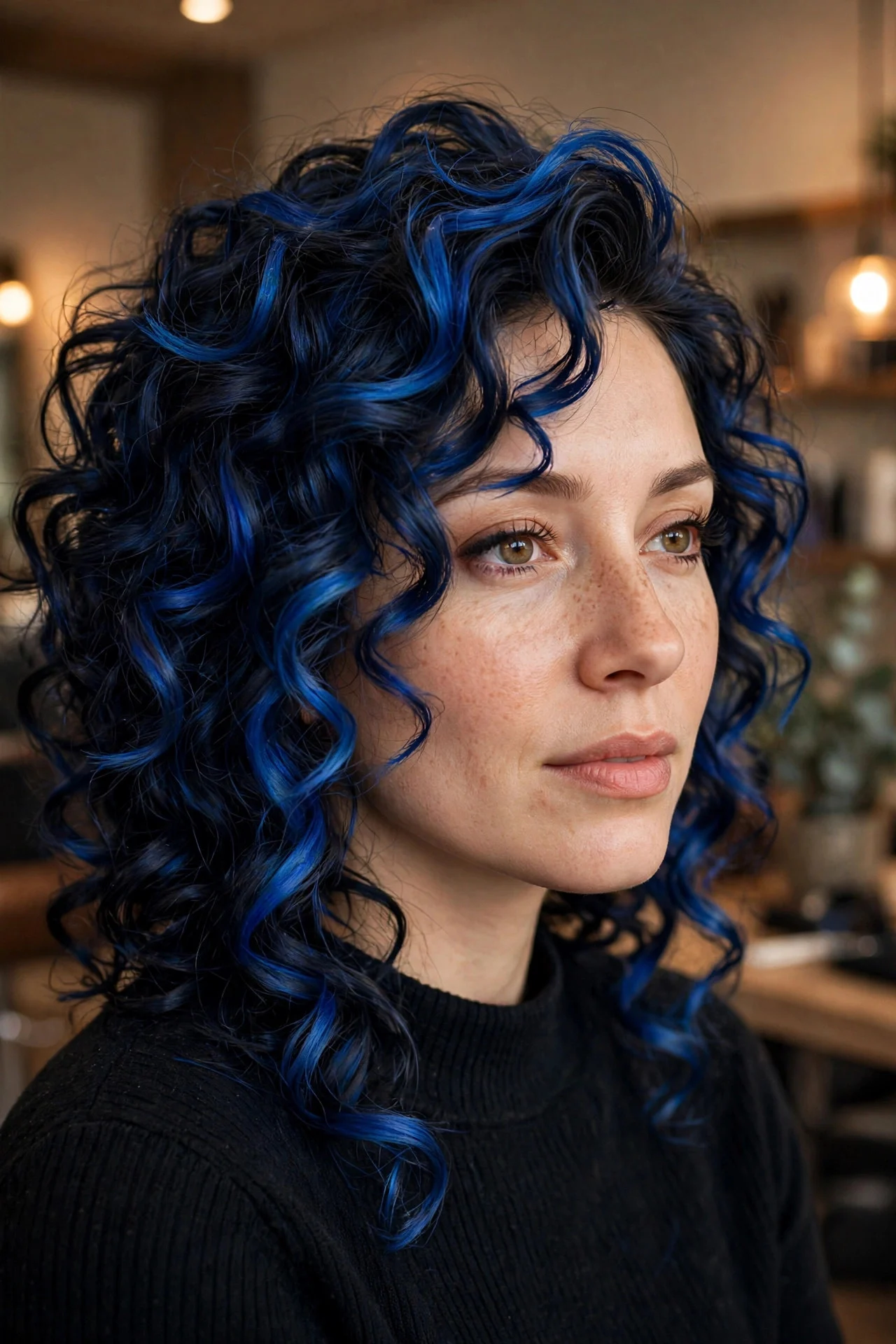
On curly and coily hair (type 3A to 4C), your colorist paints navy and deep sapphire pieces through the curls using balayage or pinturas technique, keeping the base at level 2. Curls catch light at different angles, so the blue shifts as you move. It suits all skin tones since the base stays near-black. No bleach is needed on already-dark hair; vivid pieces may need a gentle lift. Refresh the vivid pieces every 6 to 8 weeks. The drawback: curly hair is naturally drier and vivid color fades faster on porous curls, so weekly deep conditioning is mandatory.
11Midnight Ombre
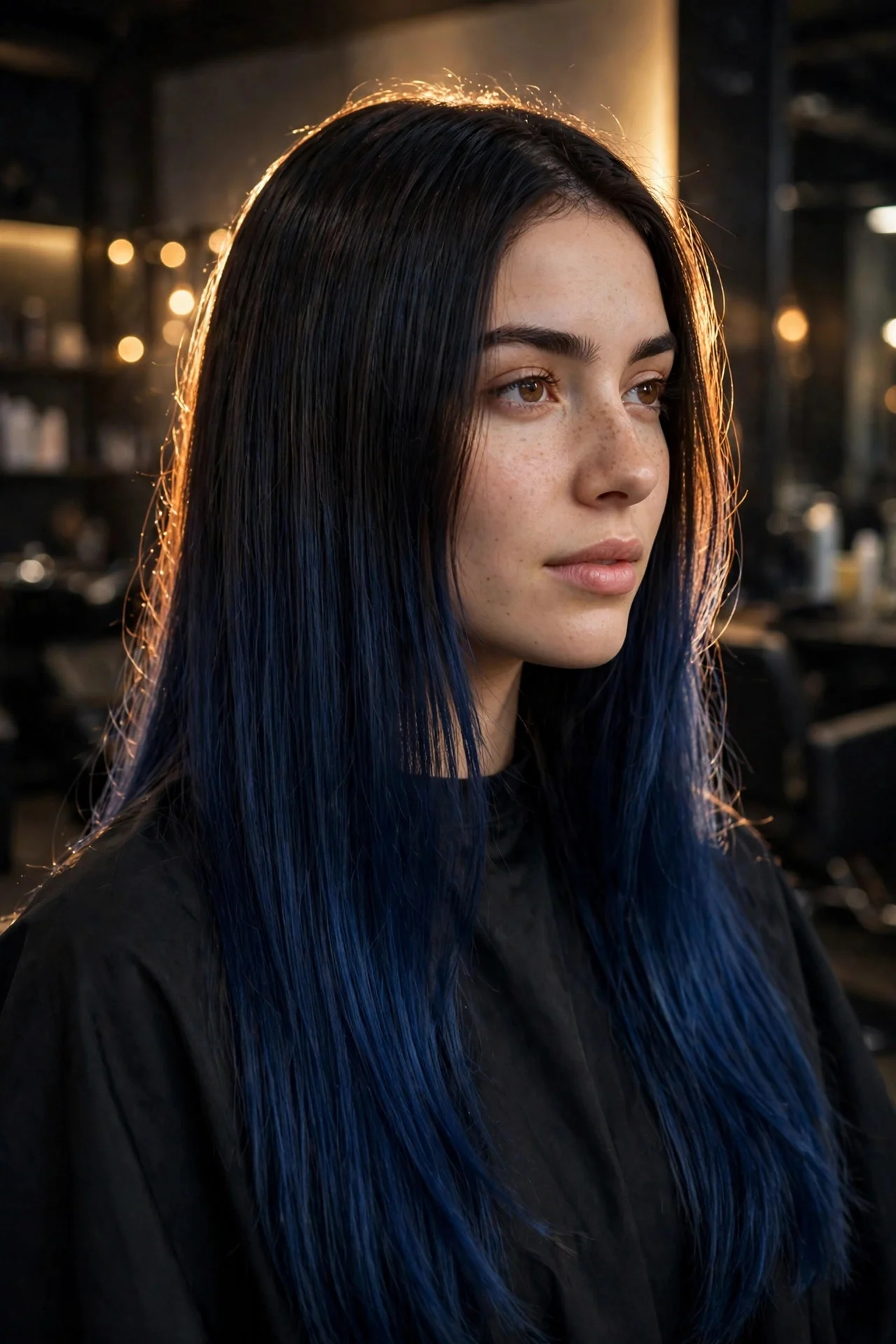
A true ombre keeps roots at your natural level 2 or 3 and melts down to navy, almost electric blue ends around level 6 or 7. Lightener goes only on the bottom third, so damage stays limited and many people go 4 to 6 months between appointments. It suits long hair best and flatters warm skin tones, since the face stays framed by natural dark hair. The drawback: the ends take the most damage and fade fastest, so they can go brassy-green while the top still looks perfect, meaning you will be toning the bottom half far more often.
12Teal-Tinted Blue Black Ends
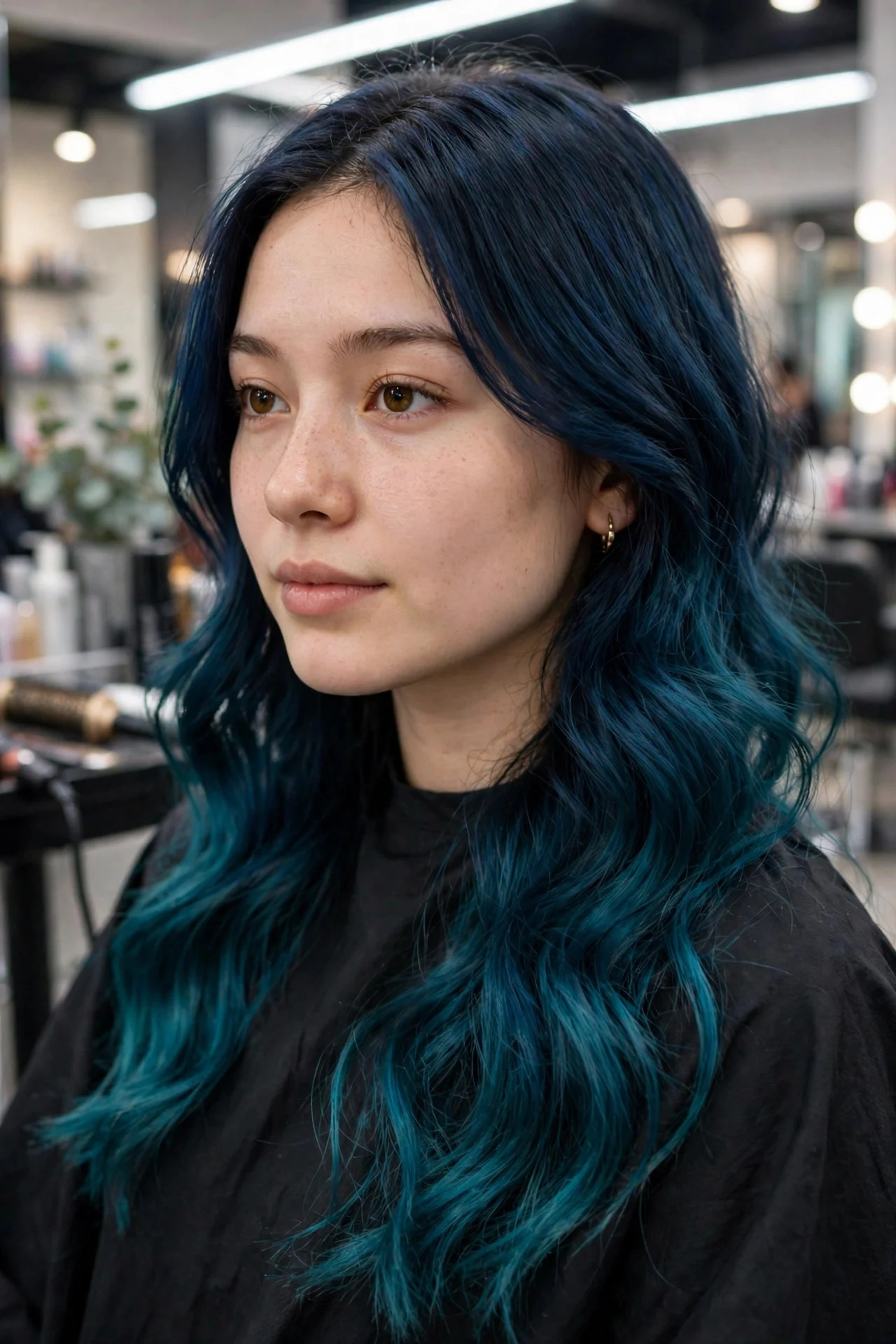
For the adventurous: a blue black base at level 2 with the last few inches glazed in deep teal, using a level 6 lift plus a teal demi. It is the most fashion-forward option here. It suits cool and neutral skin tones, as long as the ends are healthy enough to lift. Because only the ends are vivid, grow-out is graceful and you can cut the color off if you tire of it. The drawback: teal is the fastest-fading fashion color there is, so expect a refresh every 3 to 4 weeks and noticeable bleeding onto light fabrics.
How to Keep Blue Black Looking Fresh
Wash in cool water with a sulfate-free, color-safe shampoo, two or three times a week. A blue or navy color-depositing conditioner every other wash replaces the pigment rinsing strips out. Skip purple shampoo unless ends are lifting brassy; on blue black it can over-tone and dull the navy. A clear or blue gloss every 6 to 8 weeks seals the cuticle and restores shine. Use heat protectant; hot tools fade cool tones fast. Before swimming, wet your hair and add leave-in conditioner; chlorine turns blue green.
Styling Tips for Blue Black Hair
Shine sells this color, so finish with a lightweight hair oil or shine spray on the mids and ends. Sleek blowouts, glass-hair straightening, and polished waves show the navy reflect best. Keep hot tools at or under 375 degrees and always use protectant. For second-day hair, a boar-bristle brush redistributes oils and boosts gloss. Skip heavy waxes and matte pastes, which absorb light and flatten your dimension.
How long does blue black hair color last?
On virgin dark hair, all-over blue black lasts 6 to 8 weeks before the blue reflect starts fading. Vivid navy pieces fade faster, usually 3 to 5 weeks. Cool water, sulfate-free products, and a color-depositing conditioner stretch every version longer.
Can I get blue black hair without bleaching?
Yes, if your hair is naturally dark brown or black. Blue black is a dark shade, so colorists apply it directly over level 2 to 5 hair with no lightener. Bleach is only needed for brighter navy, teal, or peekaboo pieces, which need a lift to level 6 or higher.
Does blue black hair suit warm skin tones?
It can, with the right version. Warm skin pairs best with blue black that stays darker around the face, like the shadow root, balayage, or ombre options. Very warm or golden skin looks best with the blue kept subtle rather than vivid.
Is box dye or salon color better for blue black?
Salon color wins for evenness and tone control, especially since blue dyes grab unevenly on porous ends. A quality blue black box dye still works for a simple all-over refresh on healthy dark hair. Skip the box for dimension, vivid pieces, or color correction.
How do I remove blue black if it is too dark or too blue?
Too-dark results fade with clarifying shampoo and warm water over a week or two. If it is too blue, a warm-toned gloss at the salon neutralizes it. Skip at-home bleach or color remover; blue pigment is stubborn and DIY removal often leaves patchy green that costs more to fix.
Hooked on dark, dimensional color? Keep exploring: espresso brown hair color ideas, lived-in brunette hair ideas, and expensive brunette hair ideas.