
I have fine hair, and I also have a genuine soft spot for 90s hair nostalgia, which has led me down a slightly frustrating path over the years. So many of the iconic 90s styles I loved looking at seemed designed for thick, voluminous hair, and I spent a fair amount of time assuming the entire decade’s aesthetic just wasn’t accessible to someone with my hair type.
It wasn’t until I started actually researching the specific techniques behind these styles, rather than just admiring the photos, that I realized plenty of iconic 90s looks were either originally created with fine hair in mind, or can be adapted with the right cutting and styling approach. I’ve spent the past several months testing this theory on my own hair, and I want to share exactly which 90s styles genuinely work for fine hair, and how to execute them in a way that feels current rather than costume-like.
Why Some 90s Styles Naturally Suit Fine Hair

Before getting into specific styles, it’s worth understanding why this particular decade’s aesthetic, more than some others, actually has real crossover potential for fine hair specifically.
A lot of 90s hairstyling embraced movement, layering, and a slightly undone quality rather than the rigid, heavily set styles of earlier decades. This emphasis on natural movement and lighter, more piece-y layering tends to work well with fine hair’s natural tendencies, rather than fighting against them the way some other eras’ more structured, voluminous styles can.
That said, not every 90s trend translates directly. The key is identifying which specific techniques and silhouettes complement fine hair’s characteristics, and adapting accordingly.
1. The Face-Framing Layers
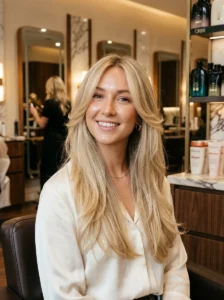
Long layers concentrated specifically around the face, a defining feature of so much 90s hairstyling, work beautifully on fine hair because they add movement and visual interest without requiring the bulk or thickness that some other layering techniques depend on.
This was actually the first style I tried in my own 90s-inspired exploration, and the face-framing effect created visible dimension that my hair had been lacking with my previous, more uniform layering.
Best for: Fine to medium-fine hair, most face shapes.
2. The Center-Parted Straight Style
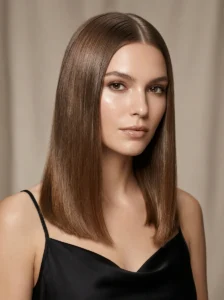
Stick-straight hair with a precise center part was everywhere in 90s minimalism, and it remains genuinely well-suited to fine hair, which often takes to a sleek, straight finish more easily than thicker hair types that can sometimes look stiff when fully straightened.
Best for: Fine, naturally straight or easily straightened hair.
3. The Money Piece (90s Style Chunky Highlights, Modernized)

While the original 90s version often used much chunkier, more dramatic highlighting techniques, a modernized, finer version of face-framing highlights captures the same spirit while remaining flattering and current. This brightening effect specifically around the face works well on fine hair by adding visual dimension without requiring volume.
Best for: All fine hair colors, especially those wanting a brightening effect.
4. The Half-Up Claw Clip Style

Though claw clips have had their own recent revival, the half-up styling technique itself is deeply rooted in 90s hair culture, and it remains one of the most practical, flattering options for fine hair specifically, since the lifted top section creates the illusion of more volume than the hair actually has.
I wear a version of this style at least a few times a week now, and it remains one of the quickest ways I’ve found to add apparent fullness to my naturally flat-leaning hair.
Best for: Fine to medium hair, all lengths from shoulder-length and longer.
5. The Soft Shag With Curtain Bangs

The 90s shag, with its layered, slightly tousled texture, translates remarkably well to fine hair when executed with the right layering technique, concentrating volume and movement at the crown rather than throughout the entire length in a way that could thin out the overall appearance.
Best for: Fine to medium hair, those wanting texture and movement.
6. The Sleek, Low Ponytail
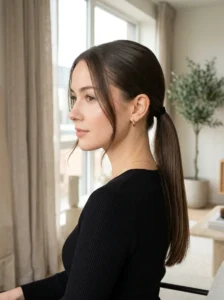
A smooth, low ponytail, often styled with a few face-framing pieces left loose, was a 90s minimalist staple that remains genuinely practical and flattering for fine hair, since the sleek styling doesn’t rely on volume to look polished and intentional.
Best for: Fine hair, all lengths long enough to gather into a ponytail.
7. The Side-Parted Volume Blowout

A deep side part combined with a soft, voluminous blowout was a recognizable 90s silhouette that can be specifically adapted for fine hair through strategic root-lifting techniques during the blow-drying process, achieving the look’s signature volume despite finer hair density.
Best for: Fine to medium-fine hair, those willing to invest time in blow-drying technique.
8. The Wispy, Piece-y Bangs

Soft, wispy bangs, rather than a thick, full fringe, were a common 90s detail that works particularly well on fine hair, since this lighter bang style doesn’t require the density that a heavier, blunt fringe demands to look intentional rather than sparse.
Best for: Fine hair, most face shapes.
9. The Tousled Bob

A bob with soft, undone texture rather than a sleek, heavily styled finish captures a distinctly 90s energy while remaining genuinely manageable for fine hair, which often achieves natural-looking texture and movement more easily than artificially created volume.
Best for: Fine to medium hair, chin-length to shoulder-length.
10. The Subtle Crimped Texture
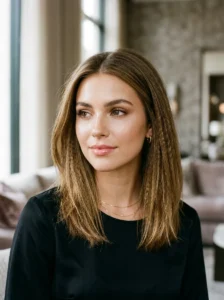
While dramatic, all-over crimping can be overwhelming on any hair type, a subtle, strategically placed crimped texture, concentrated at the mid-lengths and ends, adds genuine textural interest to fine hair without requiring the volume that more aggressive styling techniques depend on.
Best for: Fine hair wanting added texture without bulk.
How to Adapt These Styles Specifically for Fine Hair
Beyond the individual style recommendations, a few overarching principles have made the biggest difference in my own attempts to recreate these 90s looks successfully.
Prioritize face-framing layering over all-over volume. Many iconic 90s styles relied on overall thickness that fine hair simply can’t replicate without significant product buildup. Shifting the focus to face-framing layers and strategic styling creates a similar visual impact without fighting against your hair’s natural density.
Use lightweight, not heavy, products. A lot of 90s styling relied on heavier gels and mousses that can genuinely weigh down fine hair. Modern, lightweight formulations can achieve similar texture and hold without the flattening effect.
Embrace shorter to medium lengths over very long hair. Several of the most successful adaptations on this list work specifically because the length is moderate rather than extremely long, which helps prevent fine hair’s natural tendency to look thin and stringy at greater lengths.
Focus on root volume specifically, even for straight styles. Even the sleek, straight 90s looks benefit from a small amount of root lift, which prevents fine hair from looking completely flat against the scalp, even in styles meant to read as smooth and minimal.
What Doesn’t Translate Well
In the interest of being genuinely useful rather than suggesting every single 90s trend works universally, here are a few styles from the era that I’d honestly recommend skipping if you have fine hair, based on my own testing and research.
Extremely chunky, heavy highlights. The original, very dramatic two-tone highlighting popular in the 90s can actually emphasize thinness in fine hair, since the high contrast draws attention to individual sections in a way that can look sparse rather than dimensional.
Heavily teased, all-over volume. Some of the bigger, more dramatically teased 90s styles genuinely require a hair density that fine hair doesn’t have, and attempting to replicate them exactly often results in a look that feels more effortful than effortless.
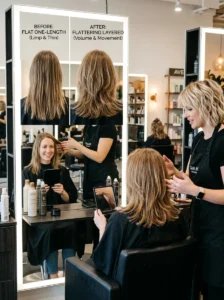
Very long, one-length hair with minimal layering. While this was a recognizable 90s silhouette, it tends to be one of the least flattering options specifically for fine hair, since the uniform length and lack of layering can emphasize thinness rather than disguise it.
My Honest Favorite From This List

After testing most of the styles on this list over the past several months, the face-framing layers combined with the half-up claw clip technique has become my genuine go-to combination. It captures the spirit of 90s styling I was originally drawn to, while requiring minimal daily effort and consistently making my fine hair look fuller and more intentional than my previous, more uniform cut ever did.
Final Thoughts
Discovering that so much of my favorite 90s hair nostalgia was actually accessible to my fine hair, once I understood the right adaptations, genuinely changed how I think about pulling inspiration from past decades. The era’s emphasis on natural movement and face-framing detail, rather than just raw volume, makes it more compatible with fine hair than I originally assumed.
If you’ve been holding back from trying these nostalgic styles because you assumed your fine hair couldn’t pull them off, I’d genuinely encourage giving a few of these adapted versions a try. The 90s might be more wearable for your hair type than you think.